Started our day very early today. Up at 4, left the hotel at 5. Caught a flight from Ahmedabad to Lucknow. We had morning tea/lunch on arrival. I do not do well uncaffeinated.
Lucknow seems like a fairly relaxed city, with lots of beautiful new buildings. 2.5 million people.
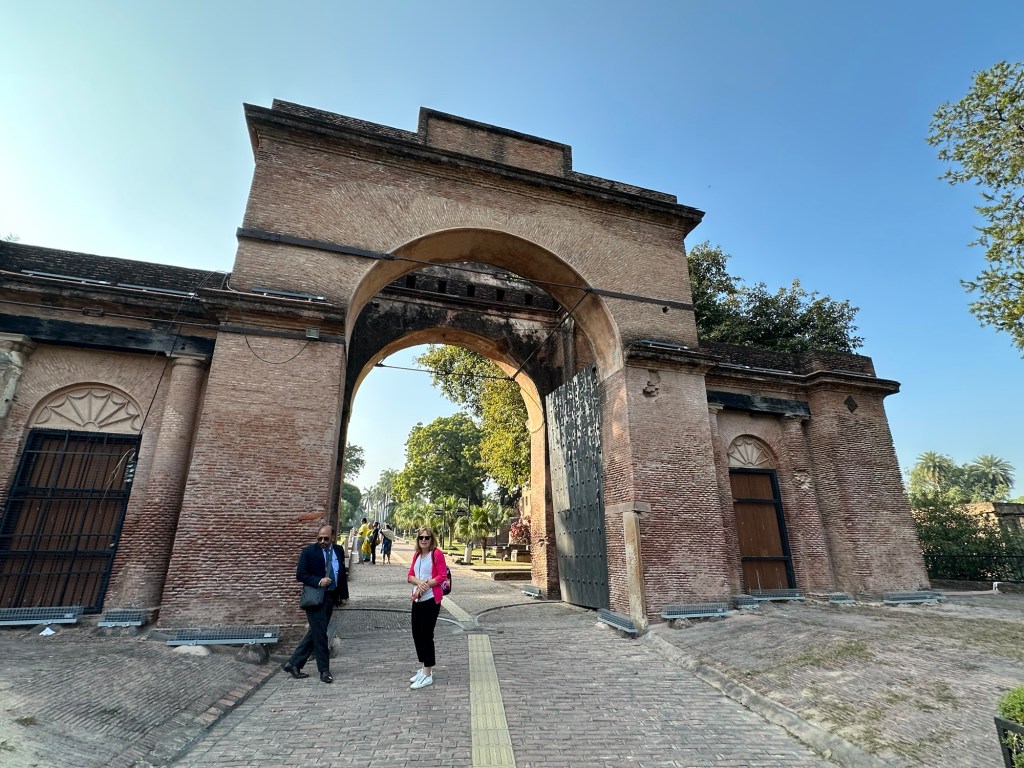
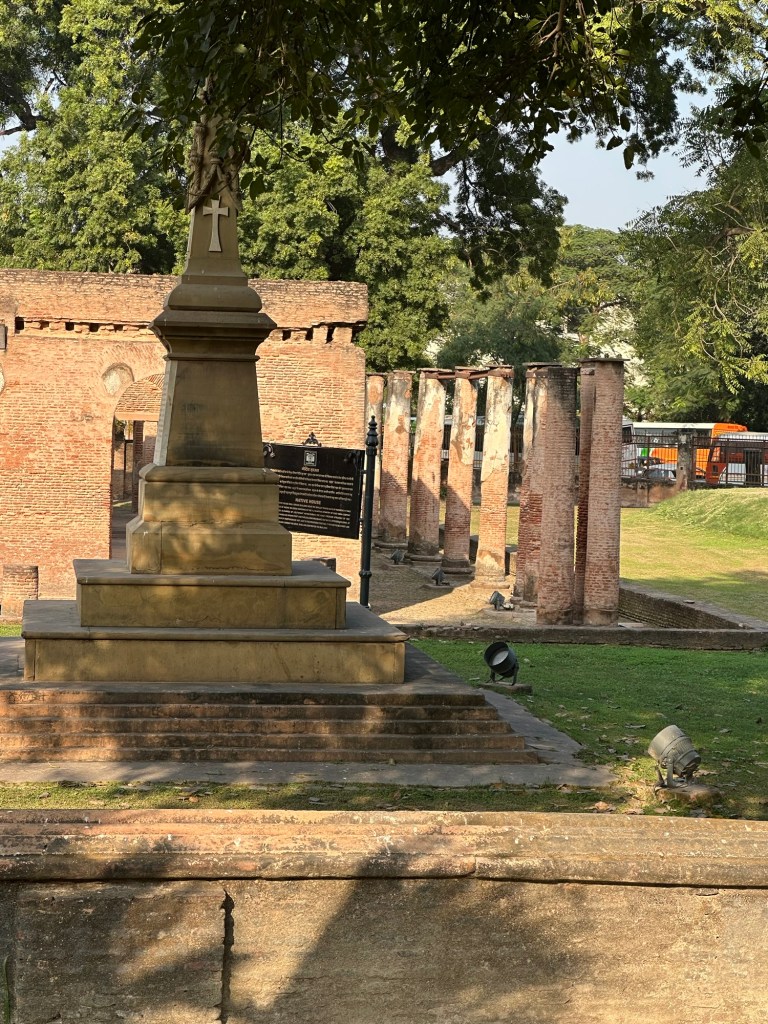
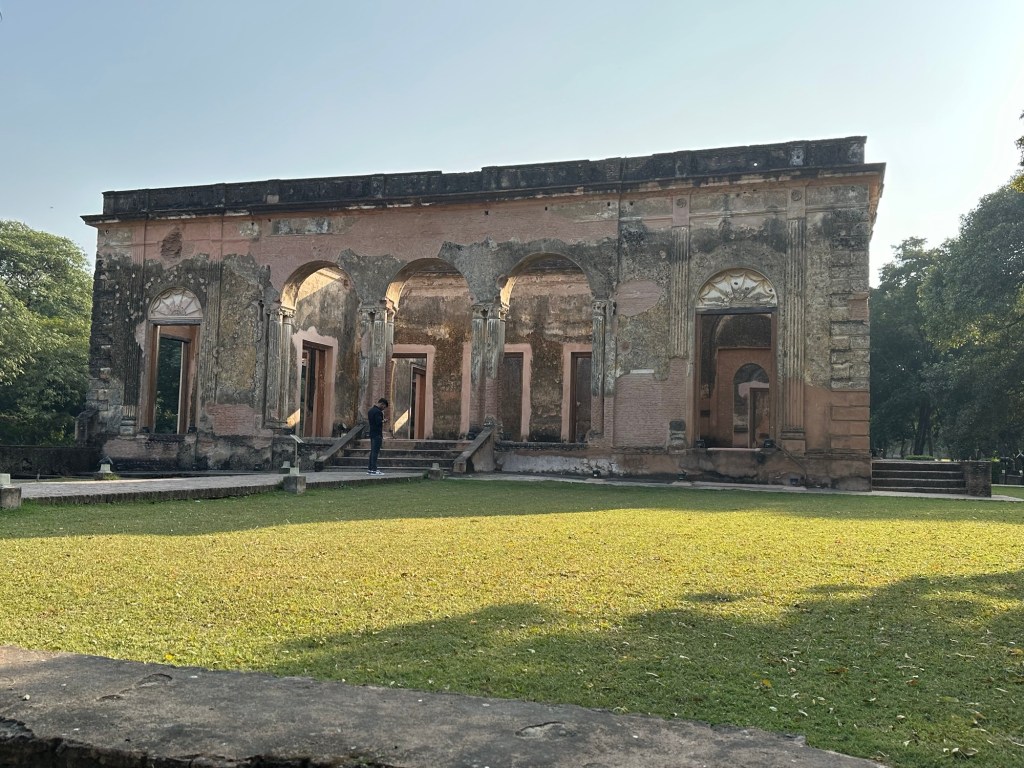
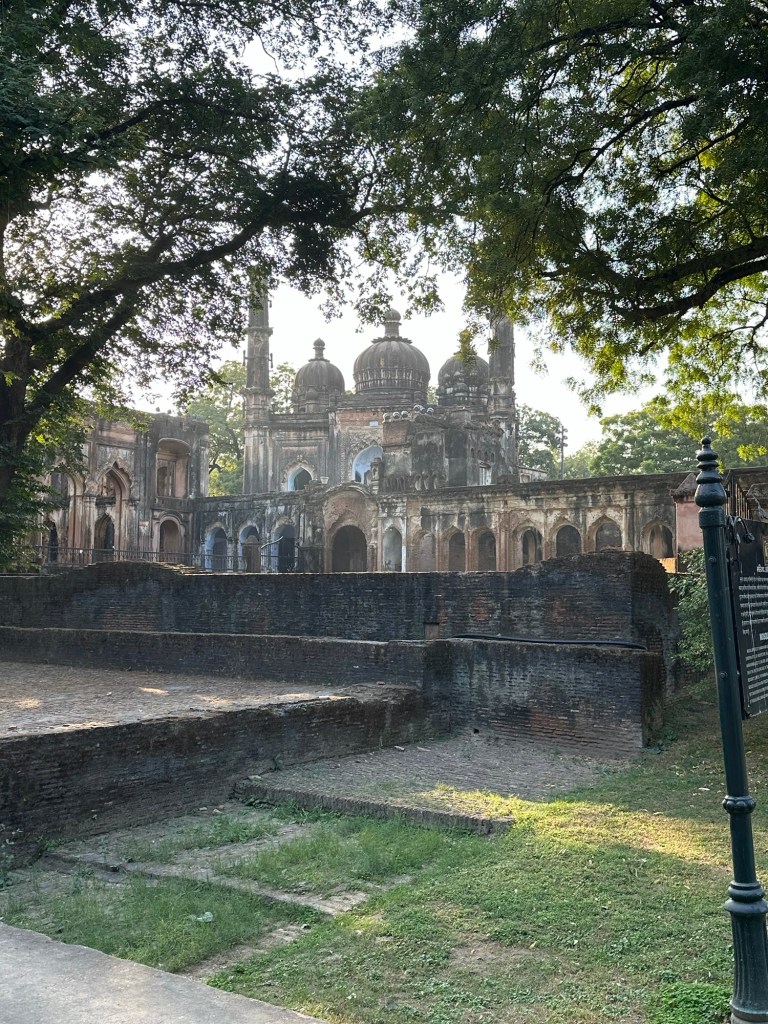
We spent the afternoon doing a guided tour of a really significant building. The British Residency in Lucknow was besieged in 1857, when this part of India was under the control of the British East India Company.
The Residency was built in about 1760, and became a complete village of over 3000 people. The siege was lifted after 6 months, and the building left in ruins. It is the middle of a beautiful park. The siege and its relief were a turning point in history, as after this the British decided to formally take control of India, and reduce the influence of the Company.
It was so lovely to walk in a green and peaceful place in the middle of all this madness.
Really, really interesting.
On the way back we stopped to eat some street food: famous Lucknow round samosas. Delicious. Also had chai served in pottery cups that are cheaply made and designed to be thrown out.
Back to the hotel for pleasant drinks in the bar (no longer in a dry state) and an early night.
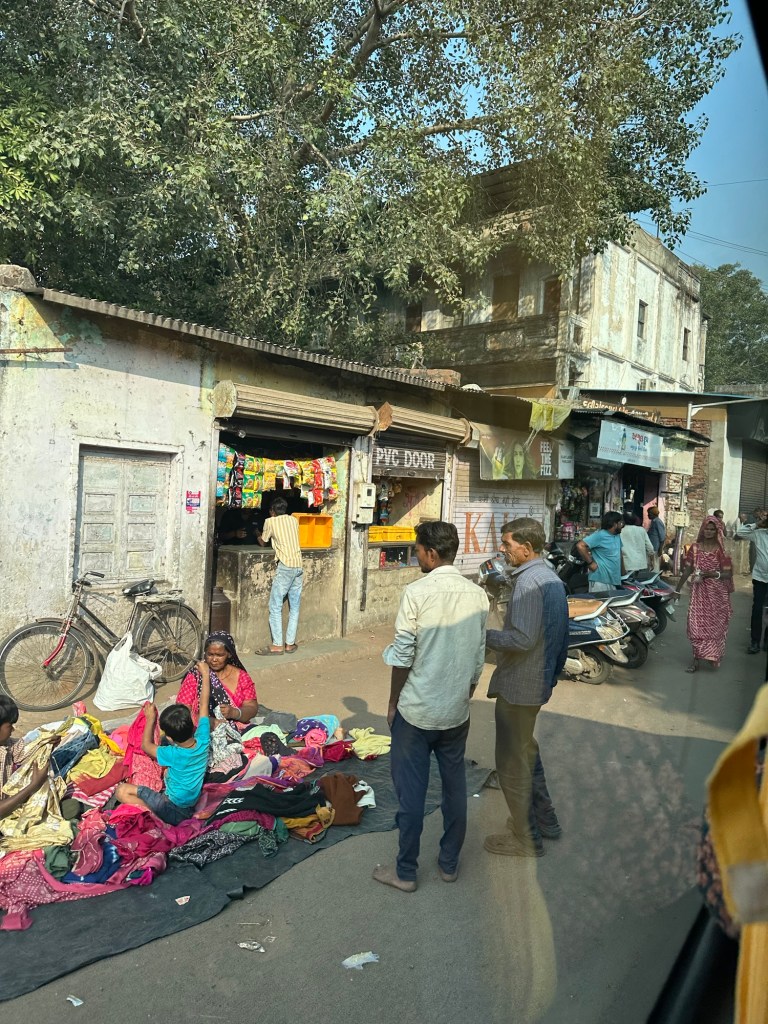
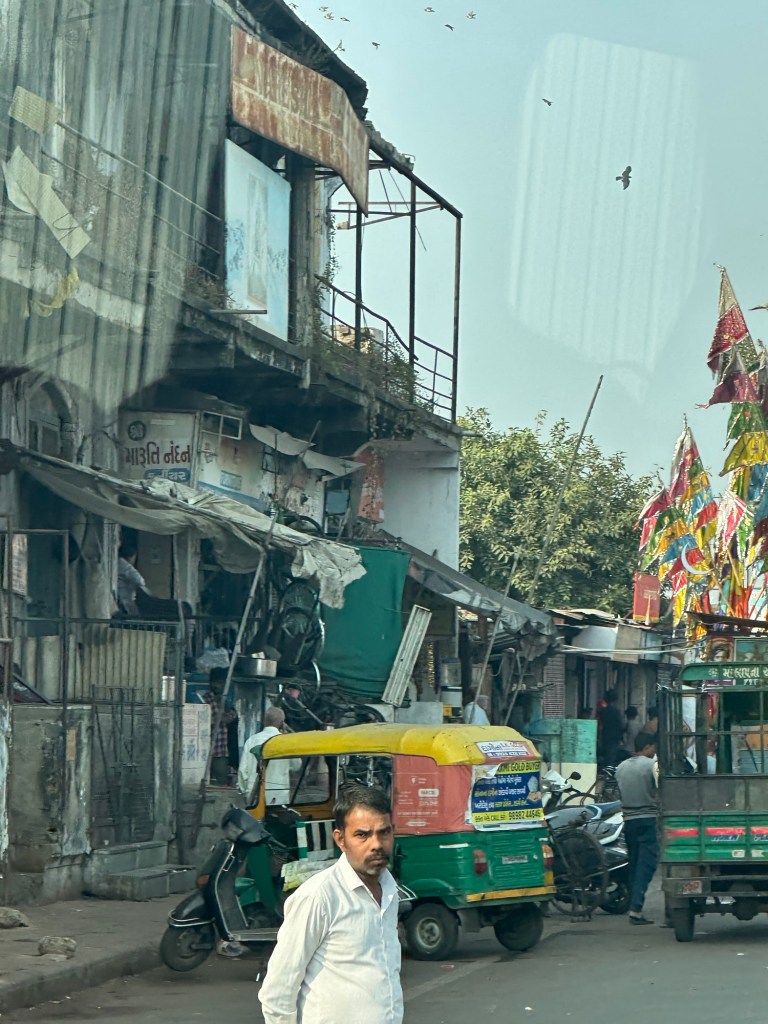
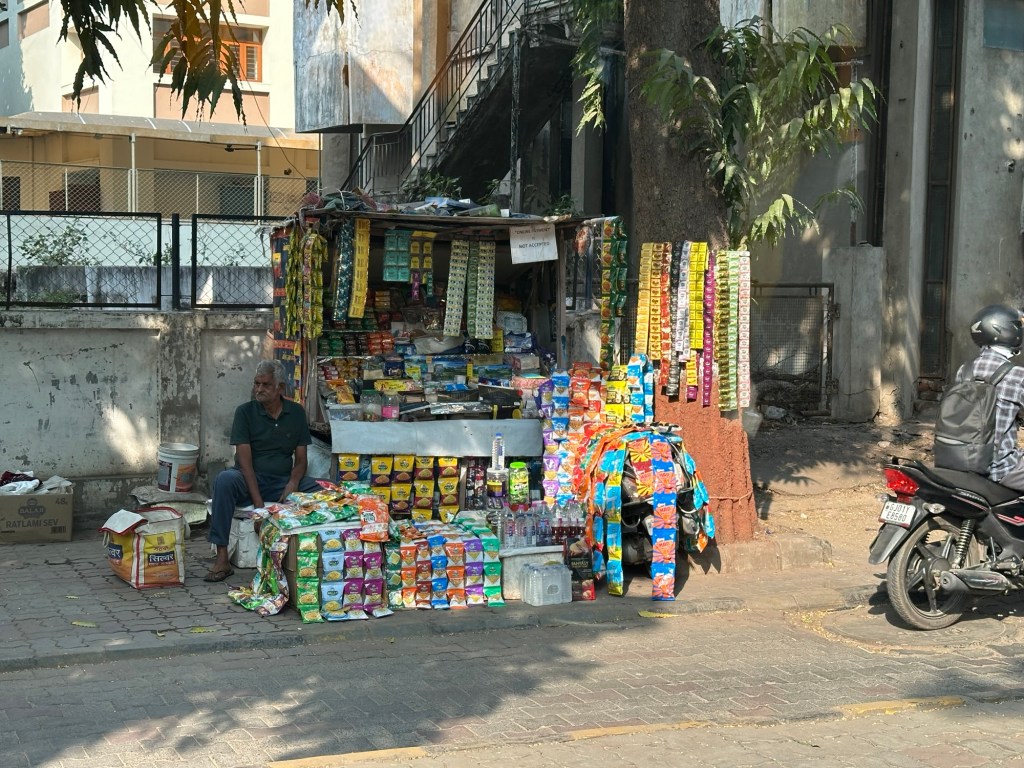
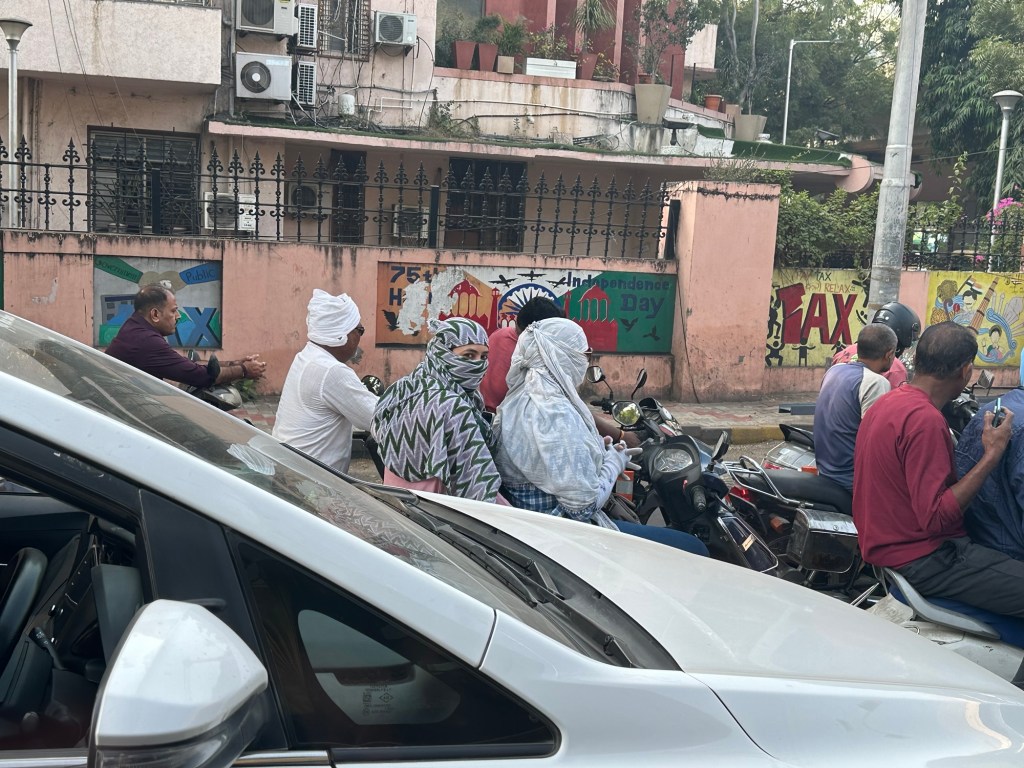
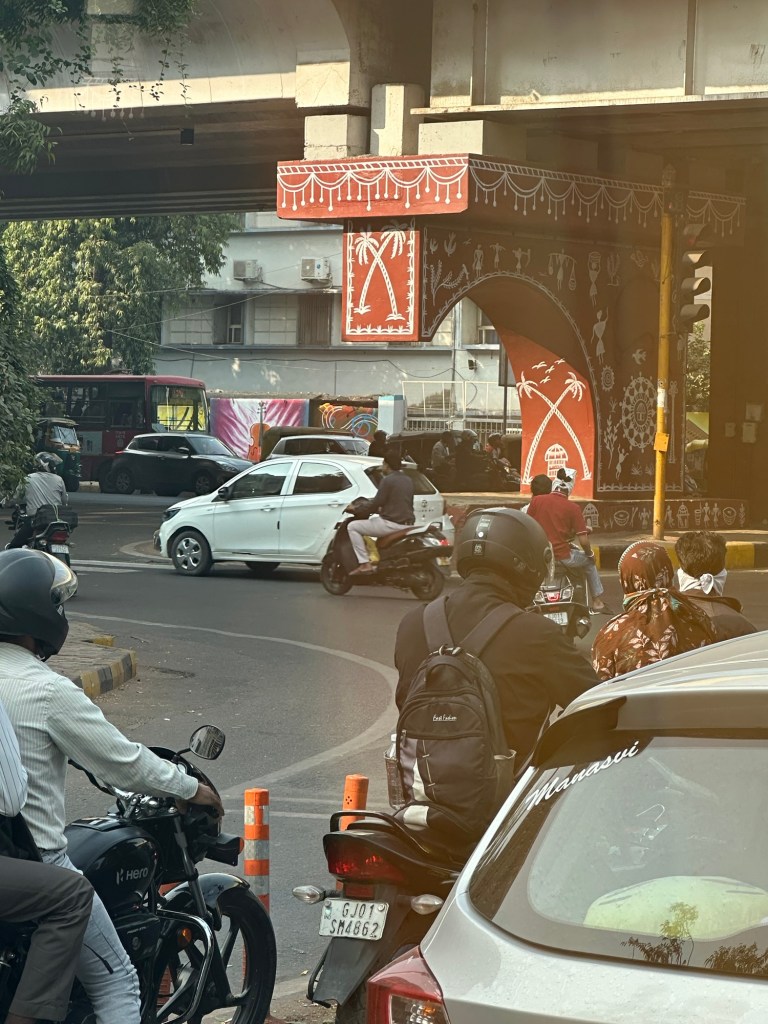
As you can see, a bit grubby and mildly chaotic, but seems very liveable.
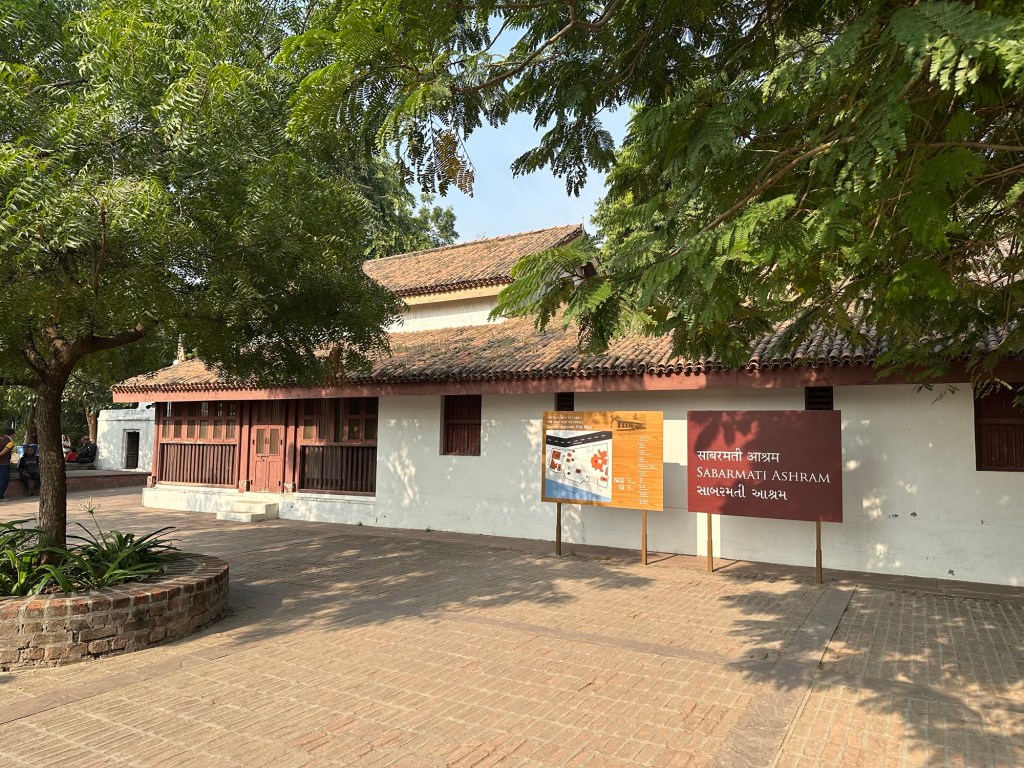
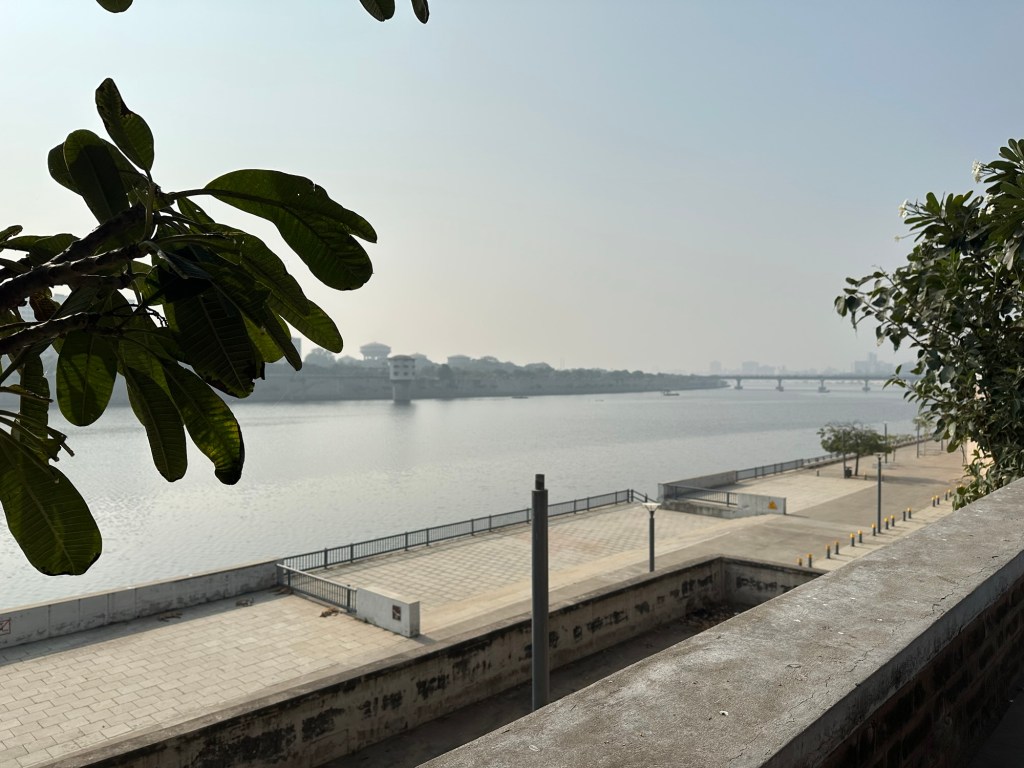
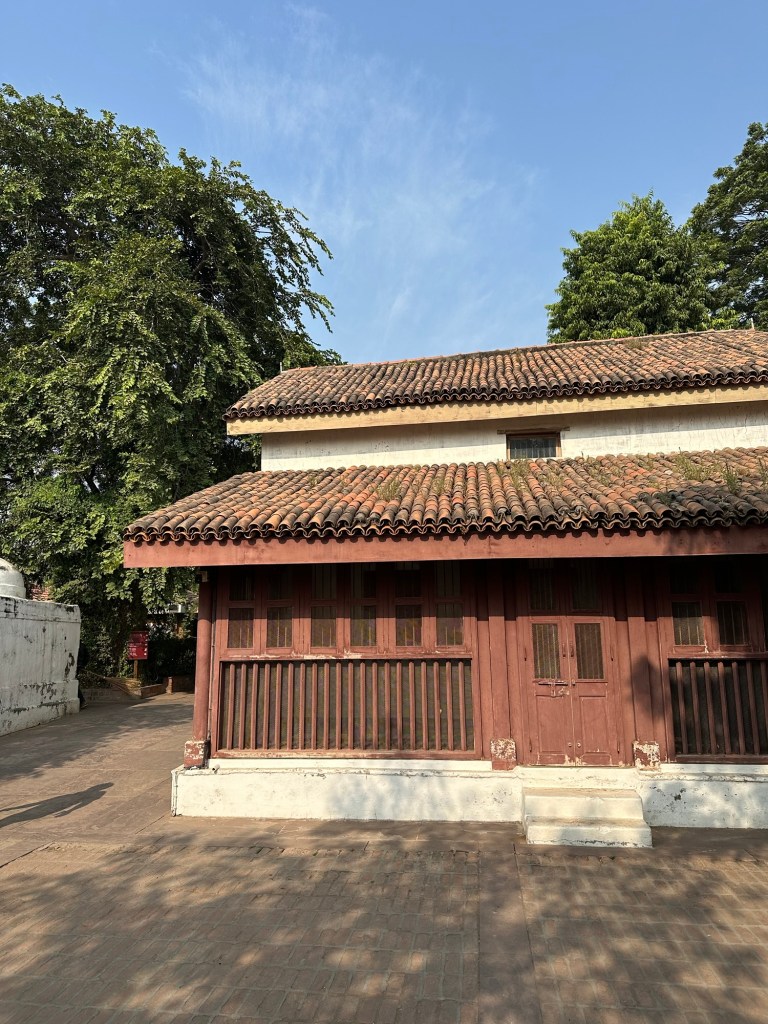
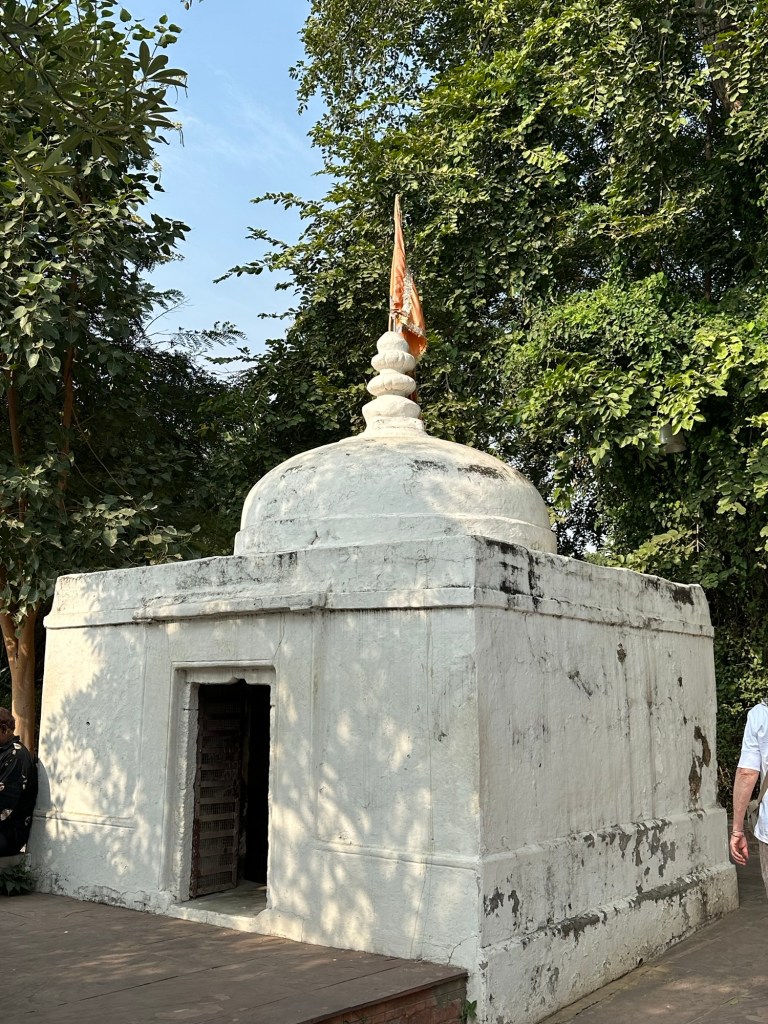
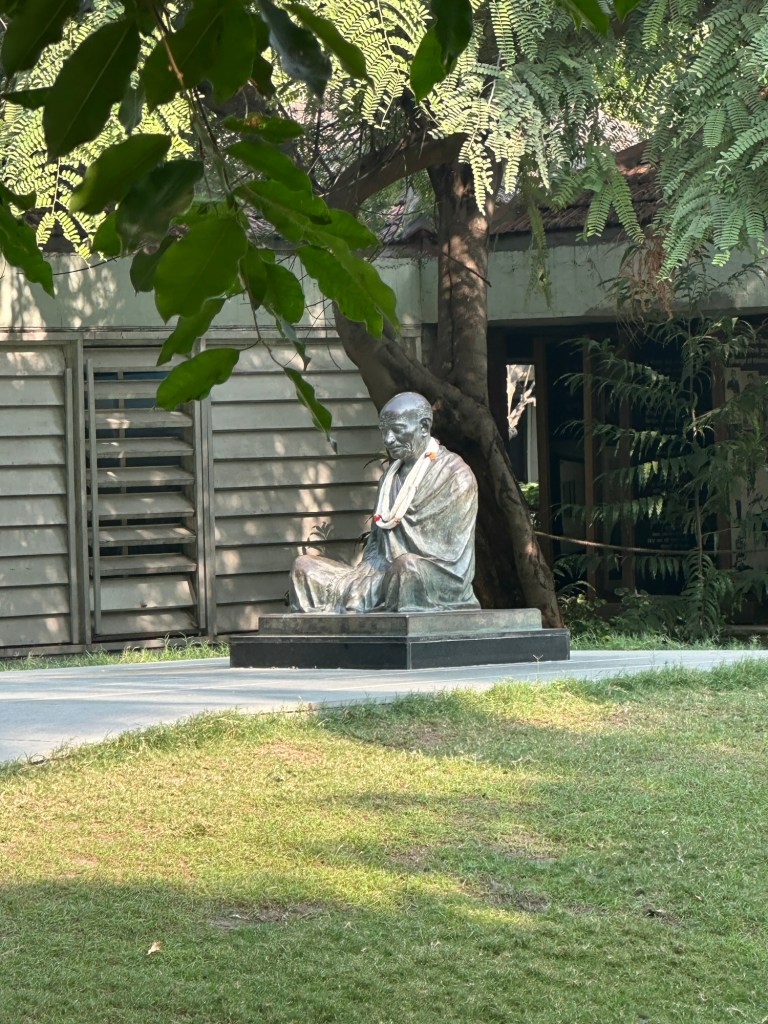
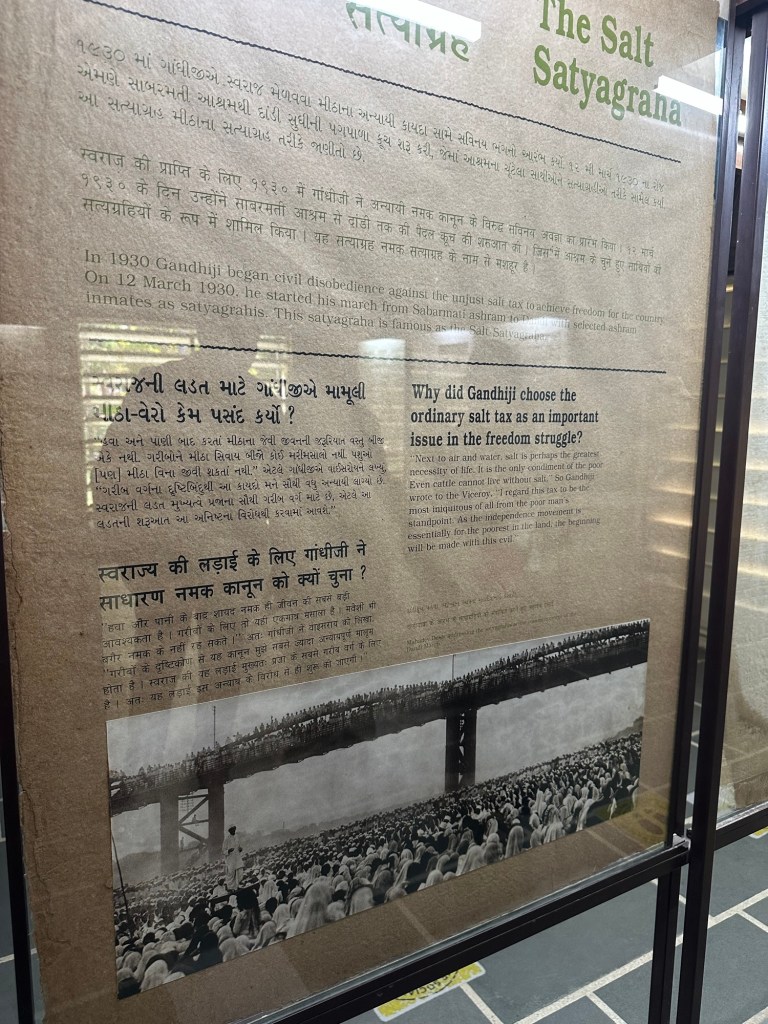
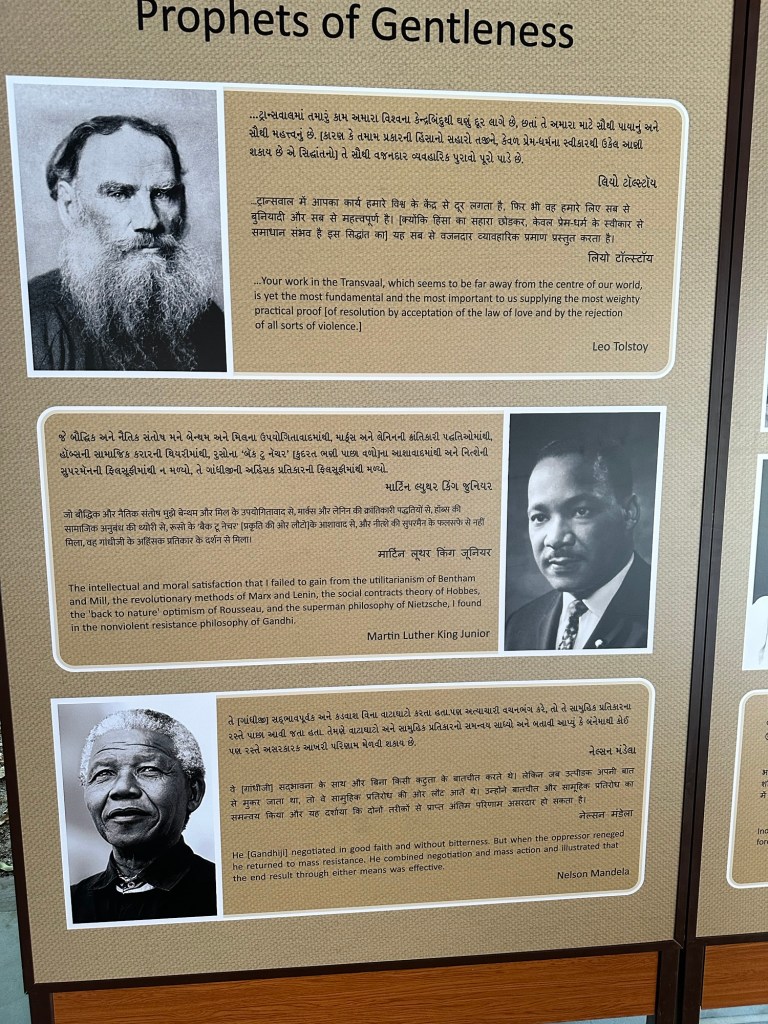
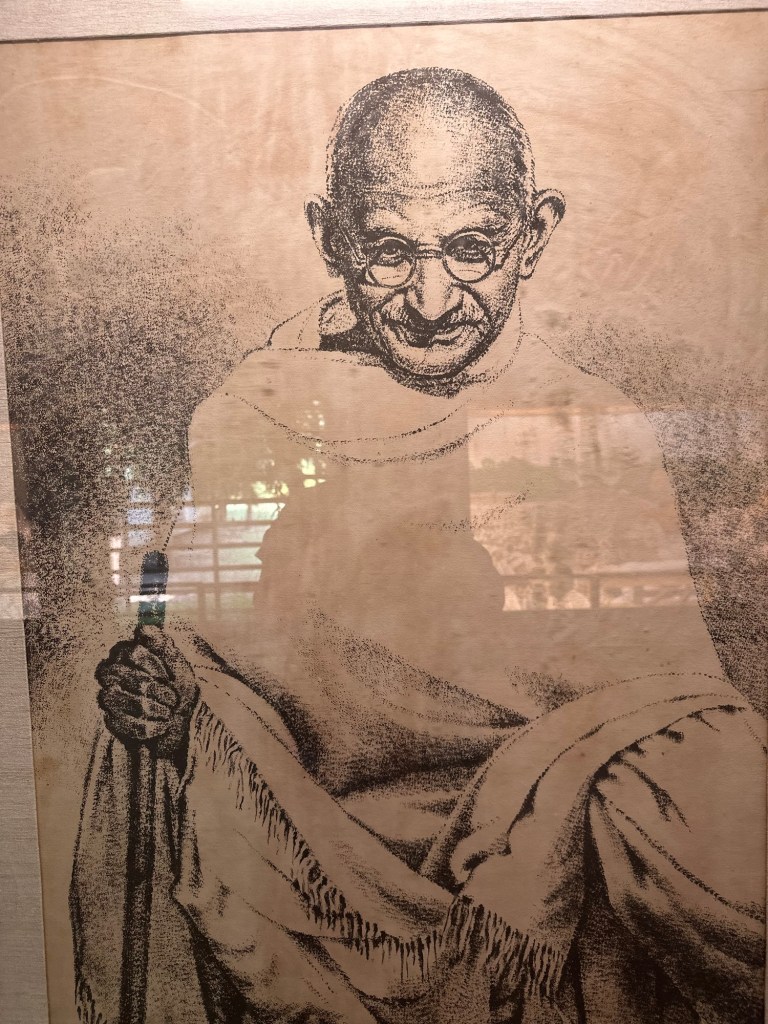
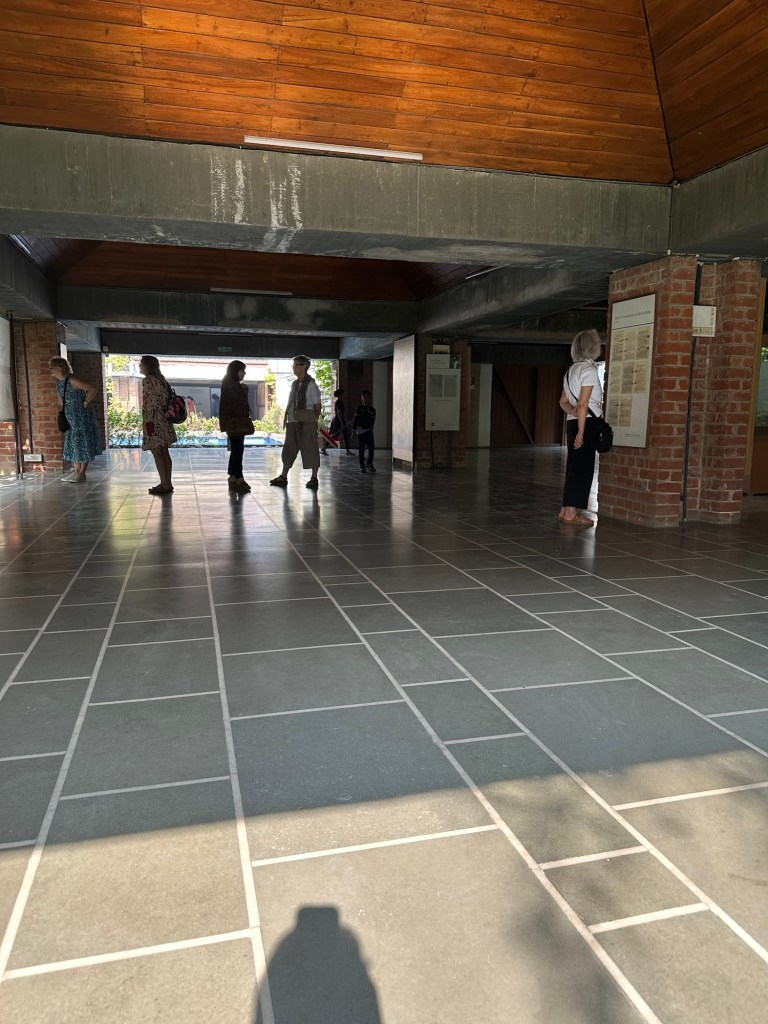
Our first destination was the ashram where Mahatma Gandhi lived between 1917 and 1930. It was from here in Ahmedabad that he organised his first non-violent protests. He lived a peaceful, prayerful life in a lovely cottage by the river.
The ashram complex now includes a stunning building designed by Charles Correa. It houses exhibitions relating to Gandhi’s life and work.
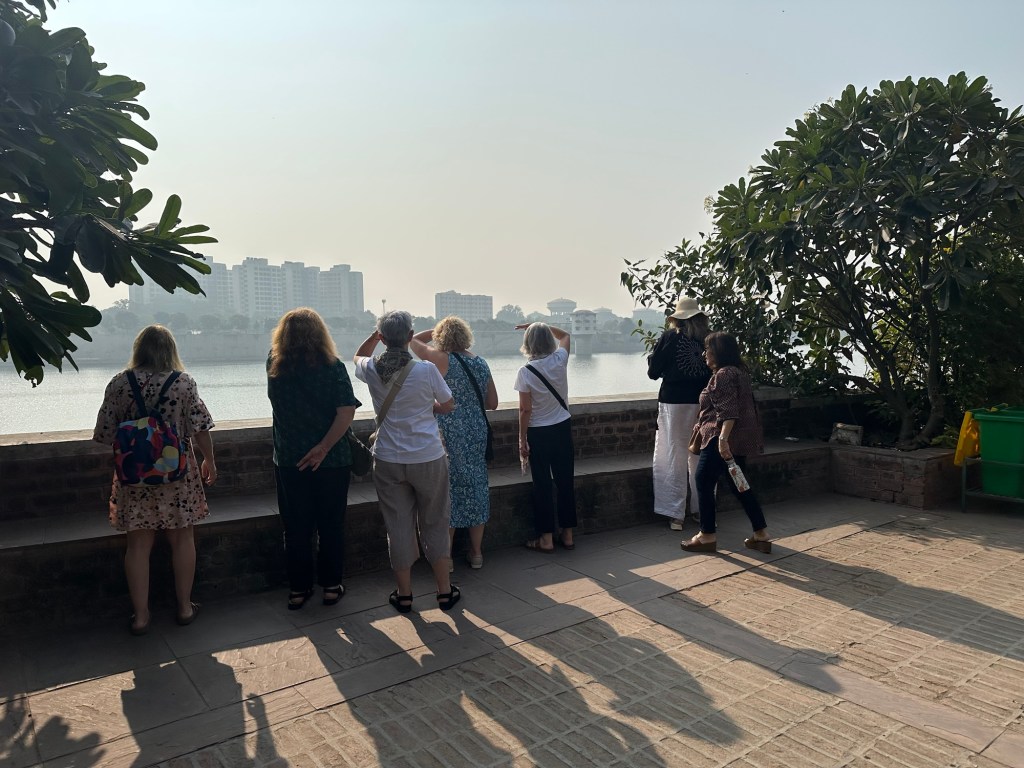
Part of our group
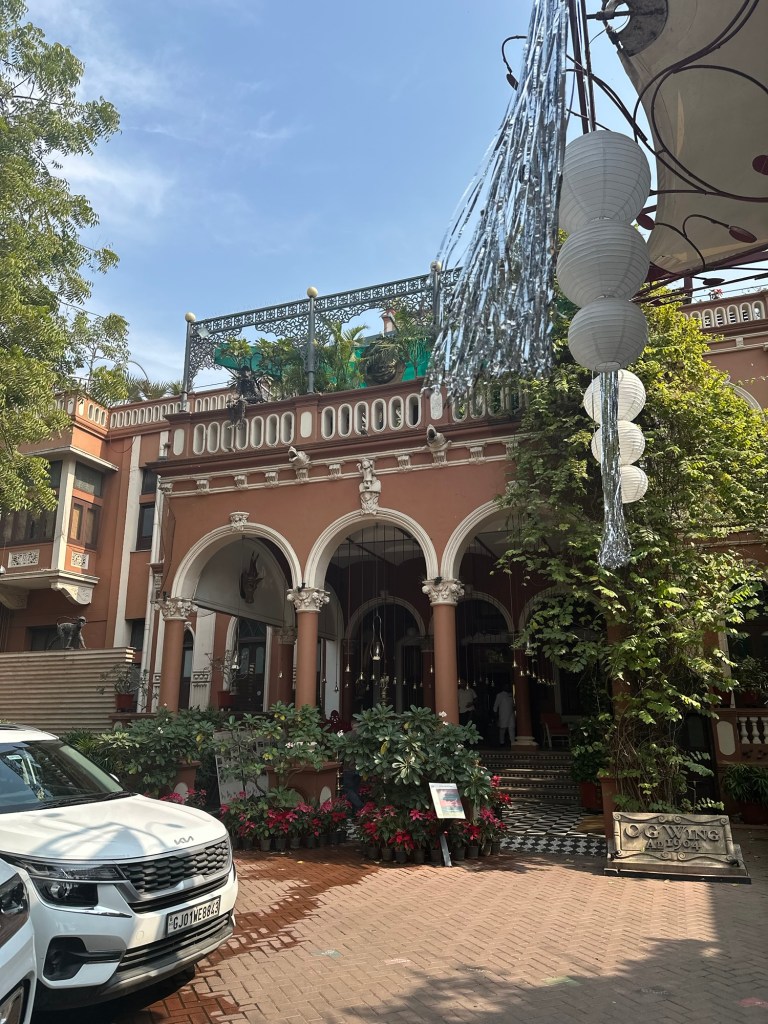
We had lunch at a cute little restaurant called The Greenhouse at a hotel called the House of MG.
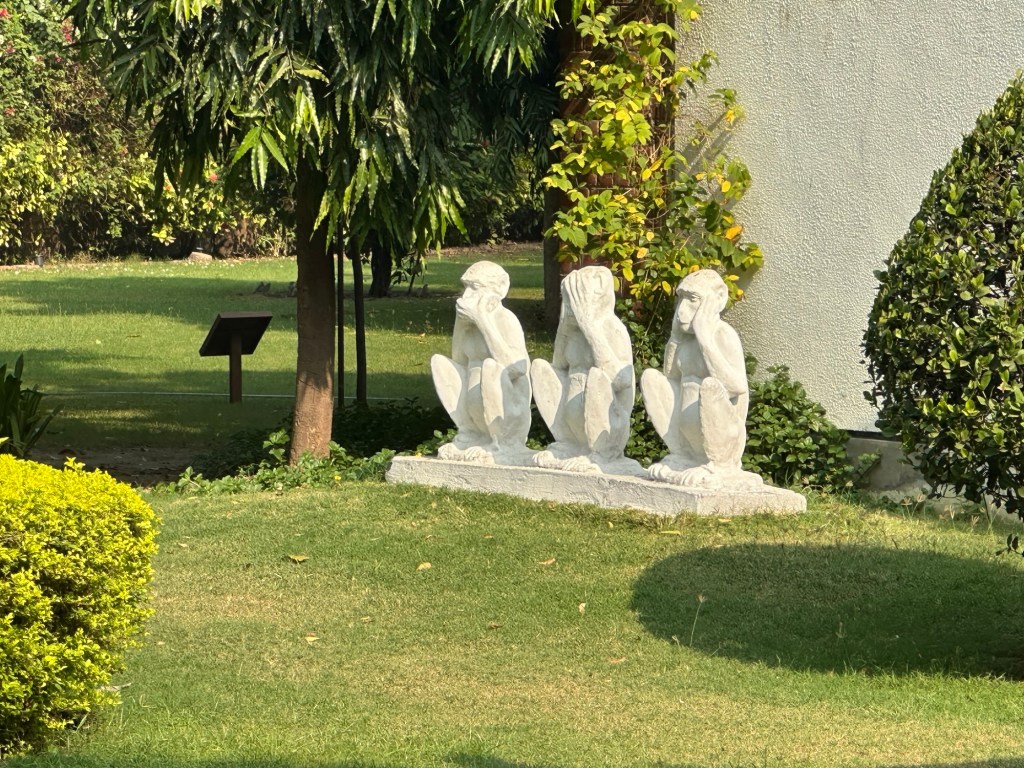
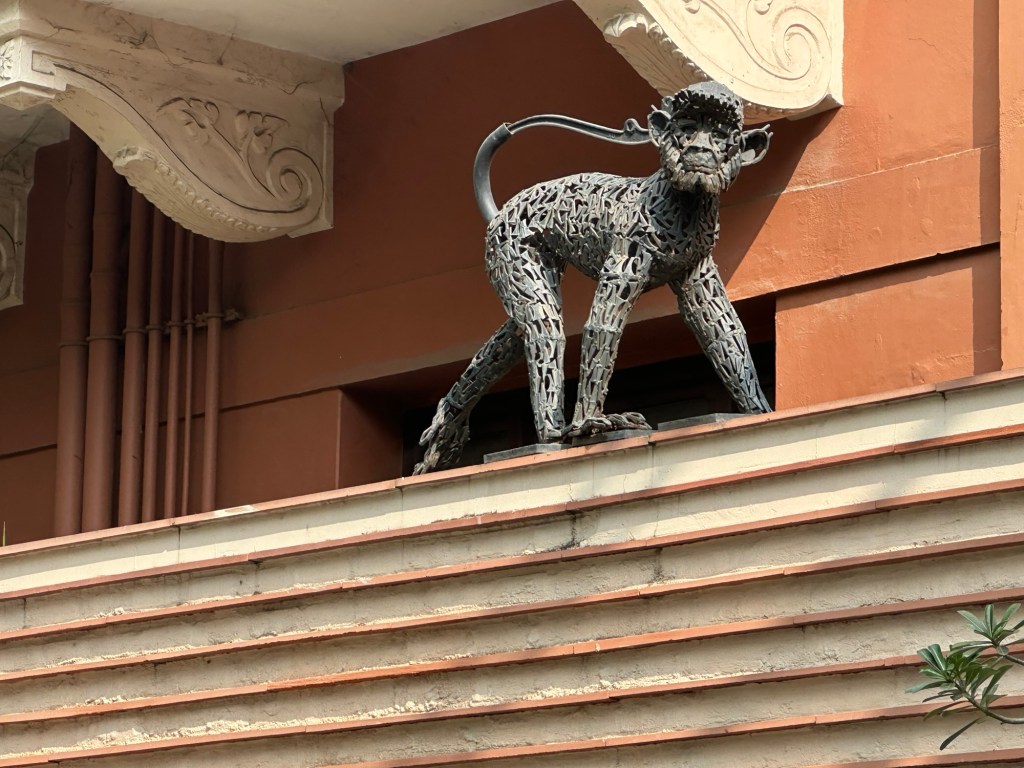
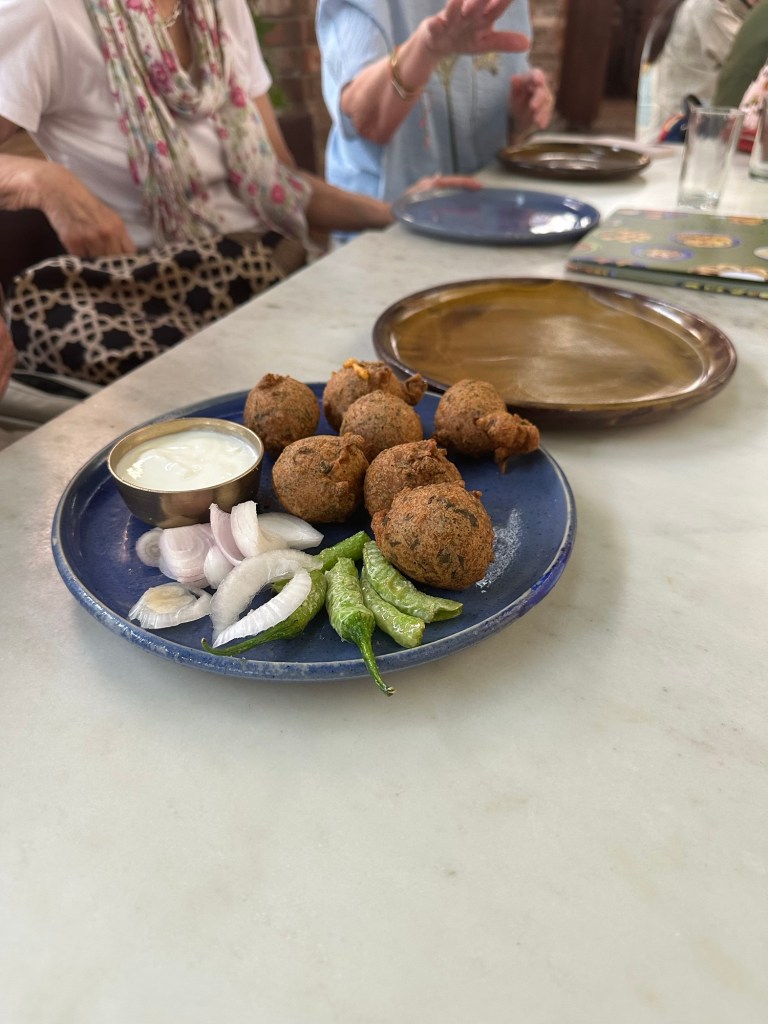
Lots of monkeys here, but this one is a statuePakoras
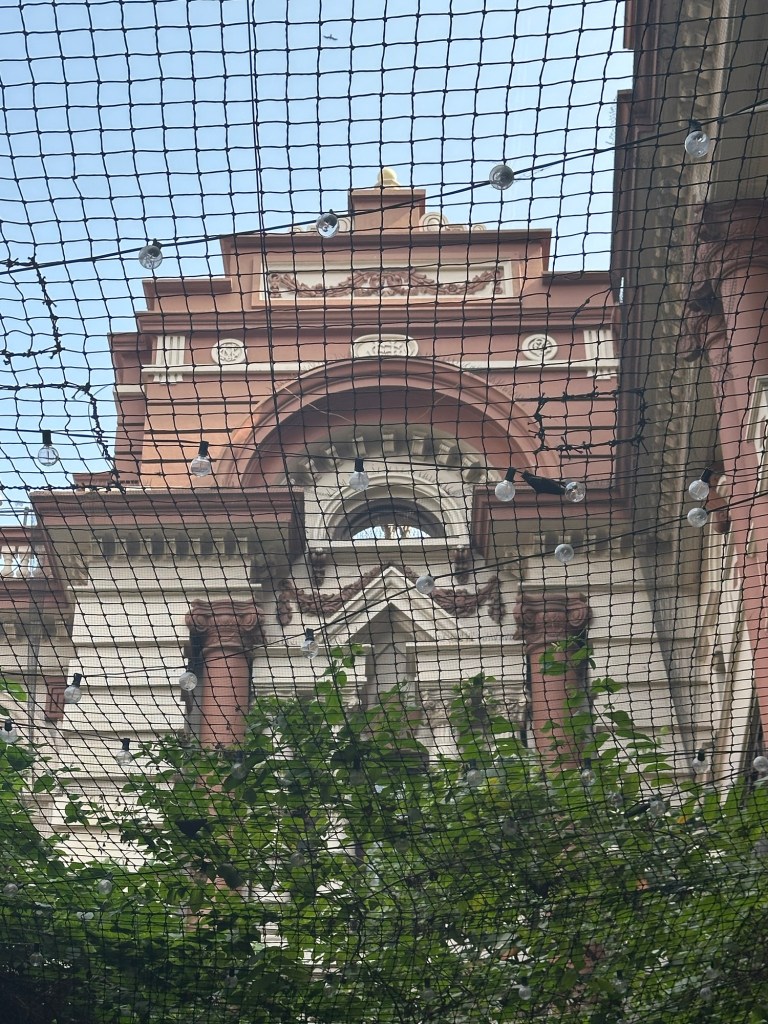
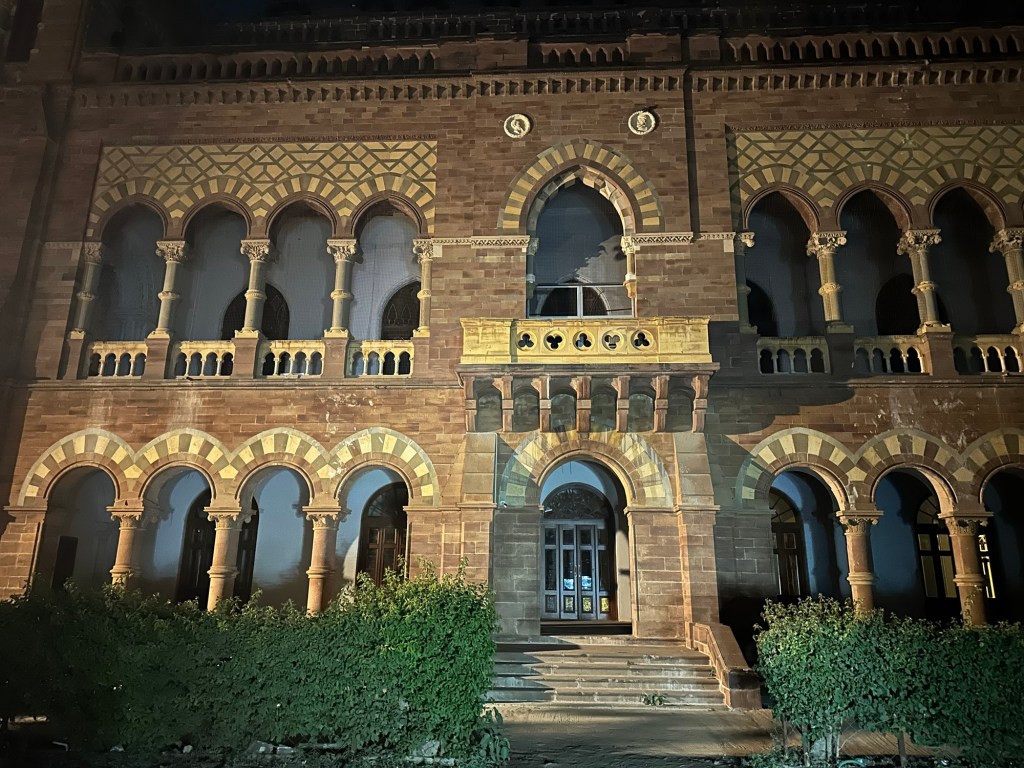
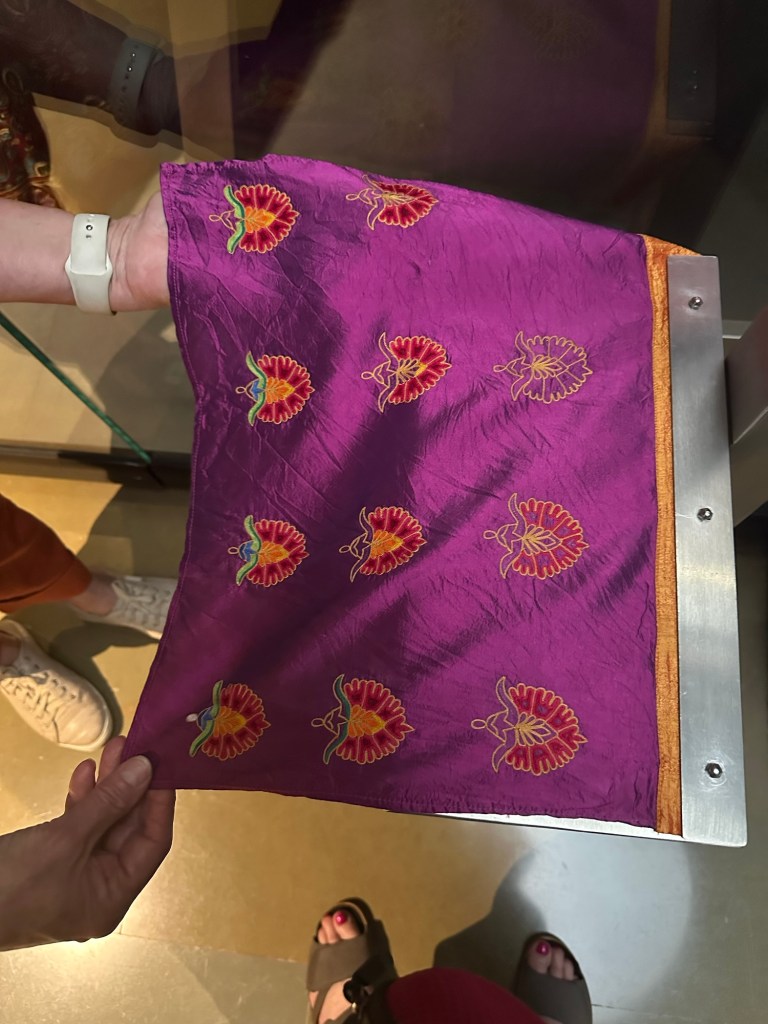
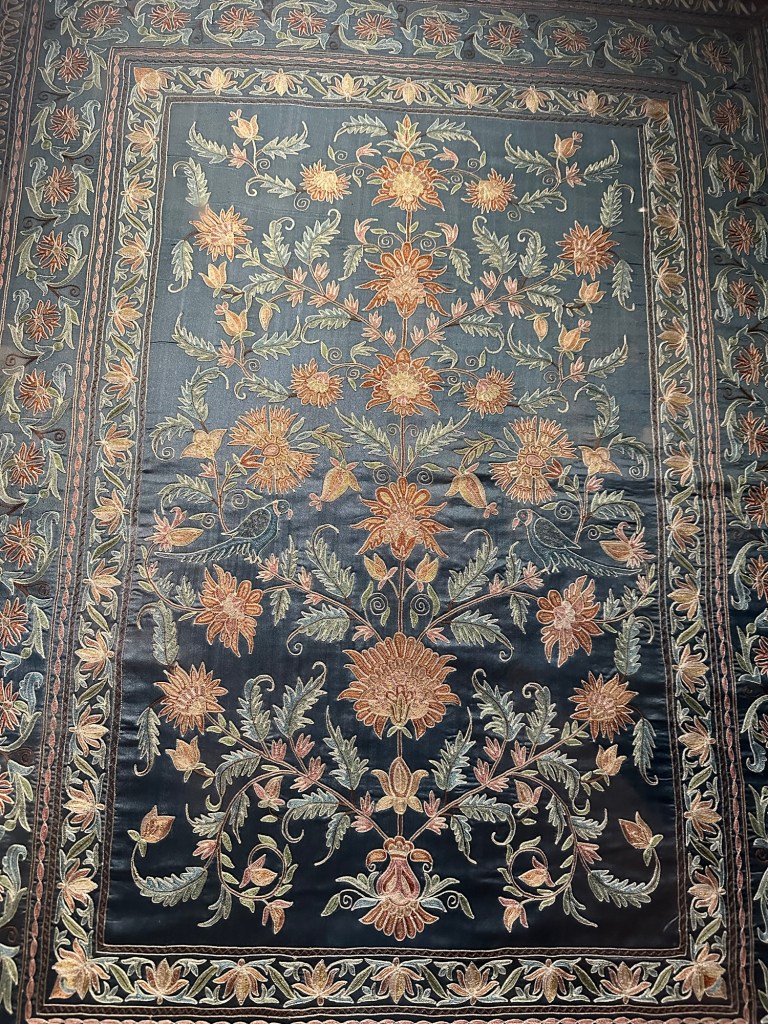
After lunch, we were taken to the Calico Museum of Textiles. A mind blowing experience. The museum is privately run, and is housed in an old palace in a beautiful garden. Possibly the best collection of Indian textiles anywhere. It includes wall hangings from emperors’ tents, costumes, saris and much more. Glorious ancient rooms full of amazing stuff.
Very strangely run. Only 20 people at a time allowed, only twice a day, (so we were really lucky to have seen it). The guide is a weird old witch who speaks only broken English, imparts limited information and CONTROLS YOUR EVERY MOVE while you are there. The place is full of security and they are so protective. No photos allowed. As usual here, the exhibits are poorly conserved, despite their immense value.
Very glad to have seen it, but slightly weirded out by it. Also found it problematic to walk around on cold stone floors without shoes for so long.
In a nearby building, there was an exhibition of modern art relating to the dye indigo. Really amazing pieces. Also nearby was an exhibition of carpets and weaving from Turkmenistan, which we also enjoyed.
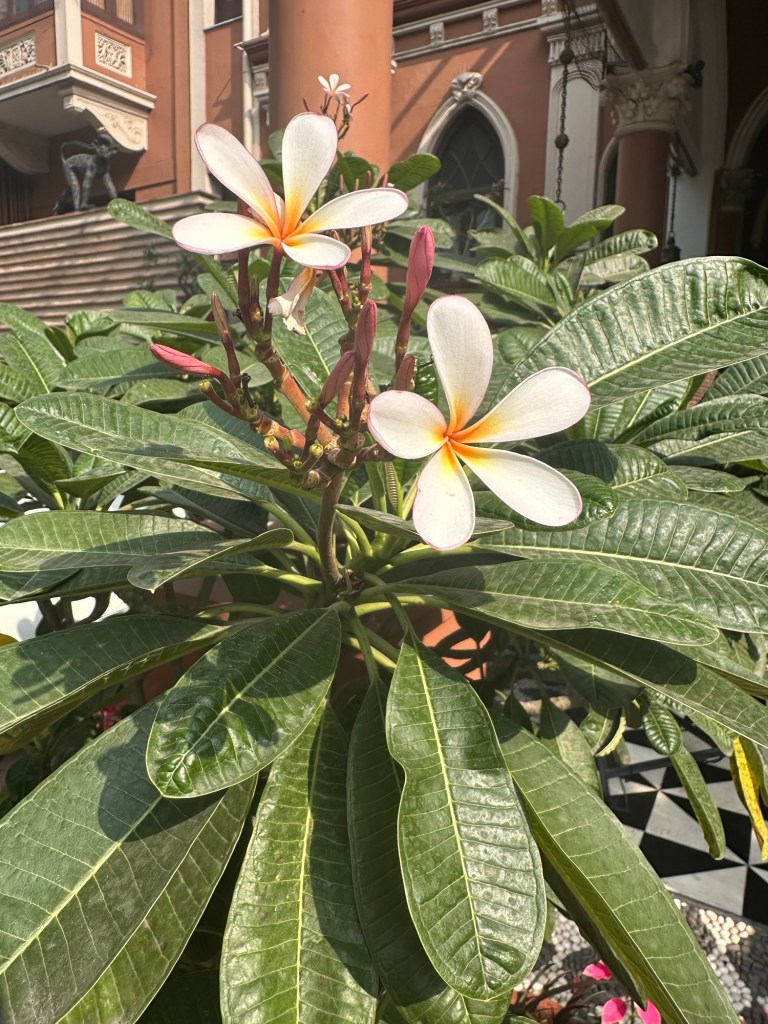
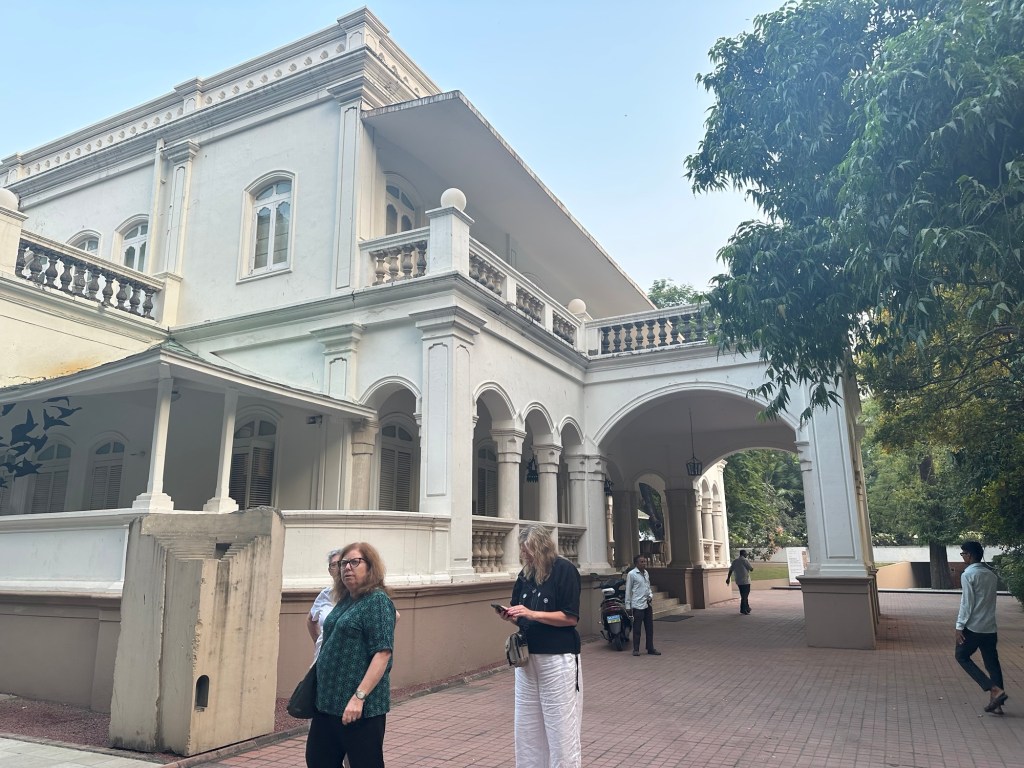
Indian frangipanisWhere the art exhibits were
Had a delicious dinner at the rooftop restaurant of the House of MG.
Not much to report. We spent very long day in the bus travelling from Bhuj to Ahmedabad, the capital of the state of Gujarat.
Along the way we saw the usual weird and wonderful variety of vehicles. Also various crops. And some trains. This part of India is very flat, and also quite industrialised.
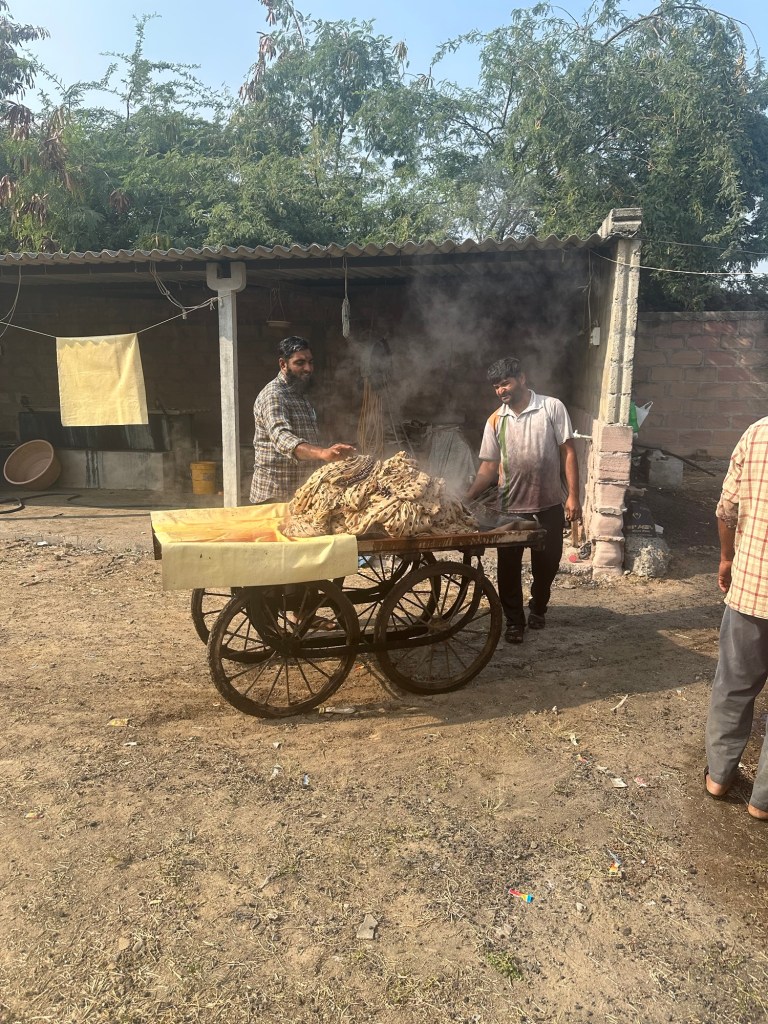
We stopped for lunch at a pleasant roadside cafe, and had aloo pratha. Spicy pancakes with potato filling. Everything around here is pretty much vego, so we have not had meat for days. No eggs, chicken or fish either.
Also developing a passion for the Indian version of Coke, which is called “Thumbs Up”. We can only drink bottled drinks here, and it makes a change from plain water. Sometimes we have lassi, mostly the salty one.
This part of India is alcohol-free, so no gin and tonics after a hard day on the tourist trail!
As we got closer to the coast, we saw quite a few different types of birds: egrets, ducks, cormorants, and some beautiful kingfishers.
Ahmedabad seems to be a really large city, located on a river. It seems clean and well organised compared to other places we have been. Actually has working traffic lights, that people pay attention to. There are monkeys roaming the streets getting up to all kinds of mischief.
I think we are going to have dinner in the hotel. We are here for two nights, and so far the hotel is a big step up from FT Bhuj branch.
Not many photos today. We more or less stayed in Bhuj.
Our first stop was the town museum, the Museum of Kutch. A beautiful collection of artefacts from Palaeolithic through to last century. Stone carvings, amazing textiles, silver. Sadly, it does not appear that preserving the past is a priority here.
We then went back into the old town (most of Bhuj was destroyed by an earthquake in 2000) to visit the palace of the Maharajahs of Kutch. The palace is also in poor condition but contains some very interesting rooms and artefacts. Beautiful mirrors, chandeliers and tiles from the 17th century. Also no photography allowed.
Near the palace there are a few nice shops selling textiles. We did our usual raid. I bought several lengths of cotton. Really nice prints.
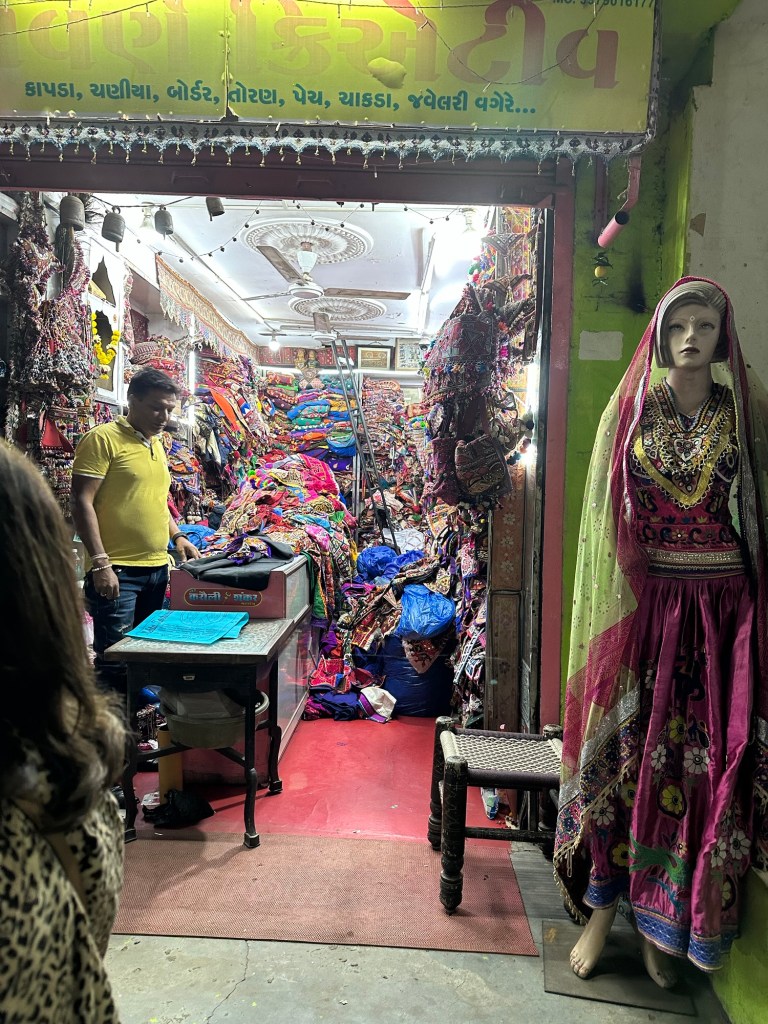
We then headed off in the bus for our lunch stop. We had a detour to a little shop that was selling an amazing array of heirloom-quality local embroideries and other textiles. Many people bought things, but I was overwhelmed by the variety. I did not buy anything.
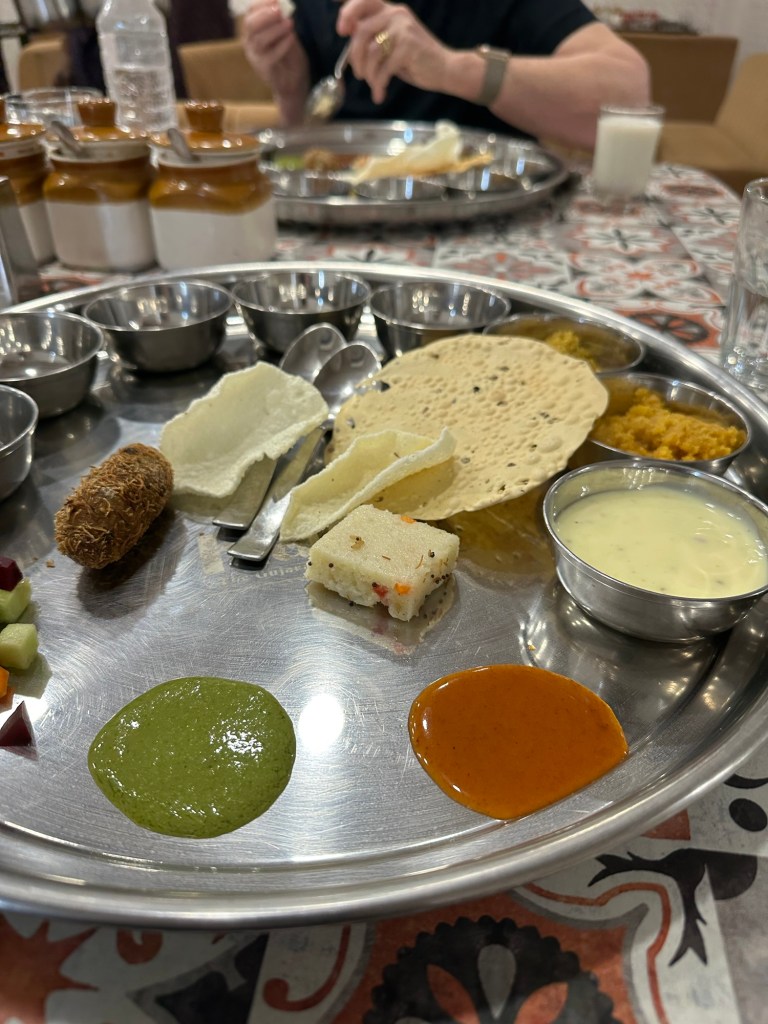
Lunch was in quite a posh hotel. A beautiful Gujarati-style thali, beautifully served.
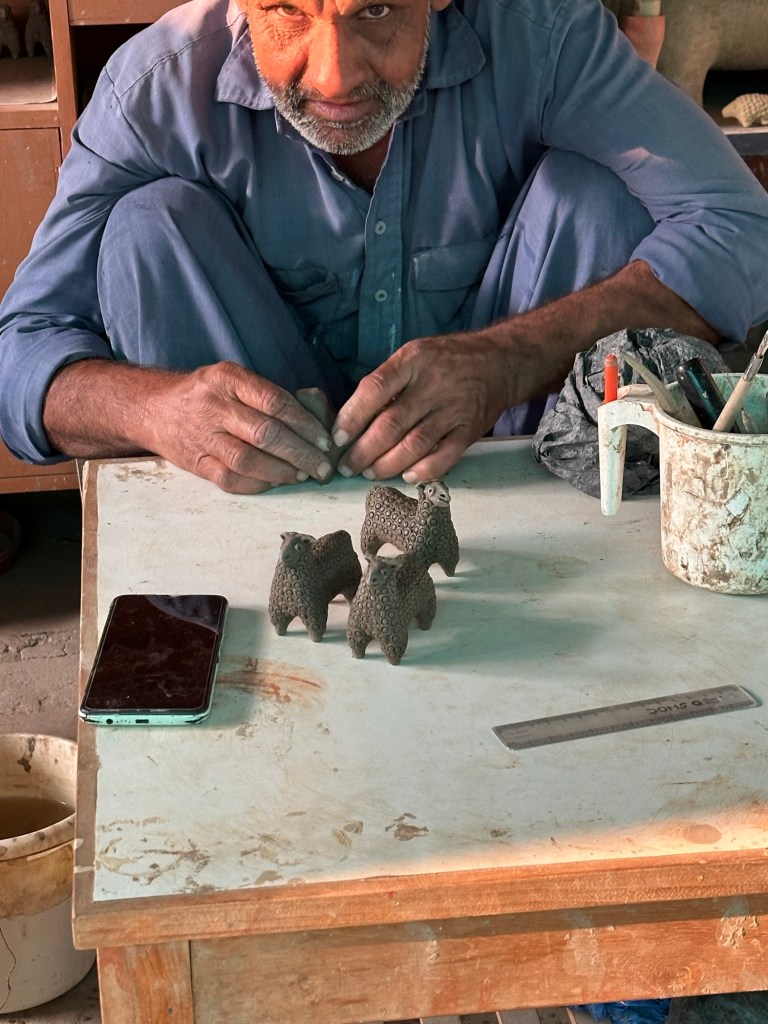
Later we headed to another village to visit an artisans collective. We saw hand-weaving and dyeing of raw cotton, as well as some pottery and other crafts.
Another great shop, where my purchasing paralysis left me, and I was able to pick up hand-woven dress fabric and an elephant for the collection.
Back to town for a rest and dinner.
We are off early tomorrow to travel to Ahmedabad, the capital of Gujarat.
Another fascinating day. We left Bhuj in our little bus (the Spice Bus) and drove south. The countryside was much more lush than in the north, with occasional hills and creeks. Lots mired in things growing- cotton, palm trees, sugar cane.
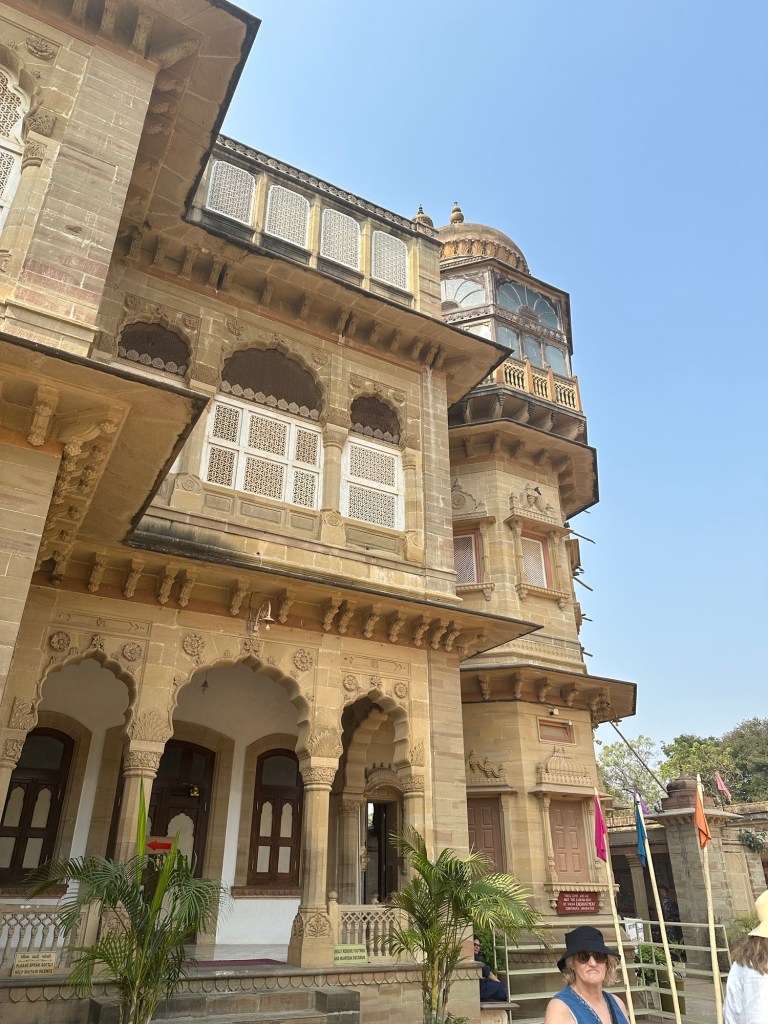
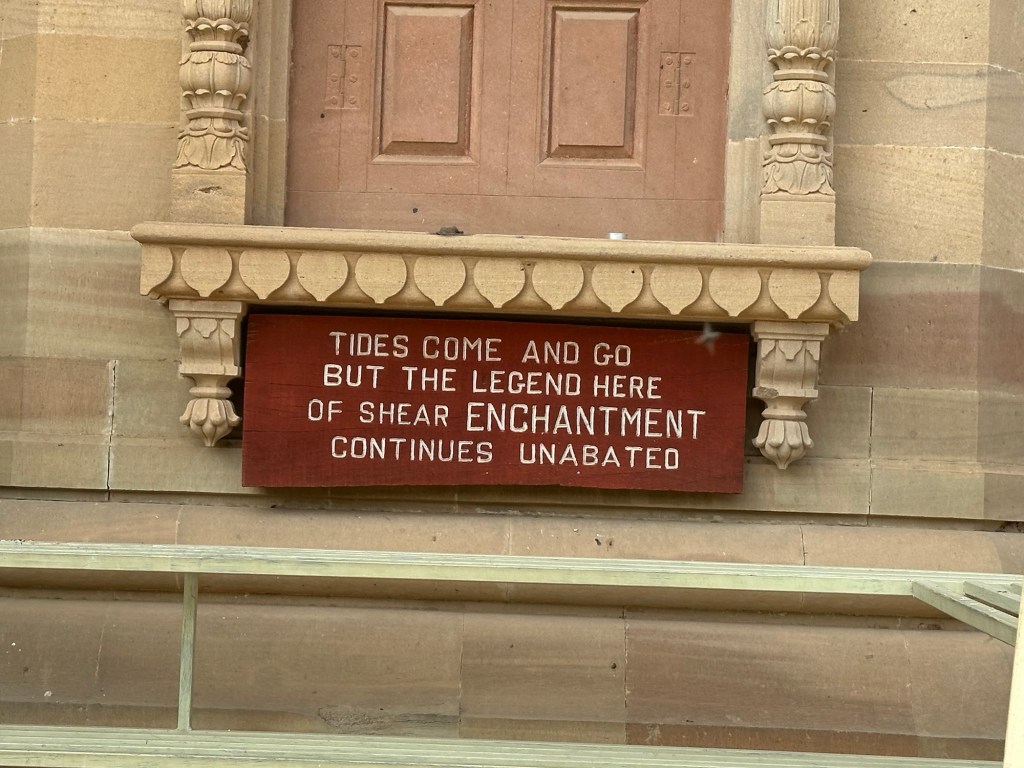
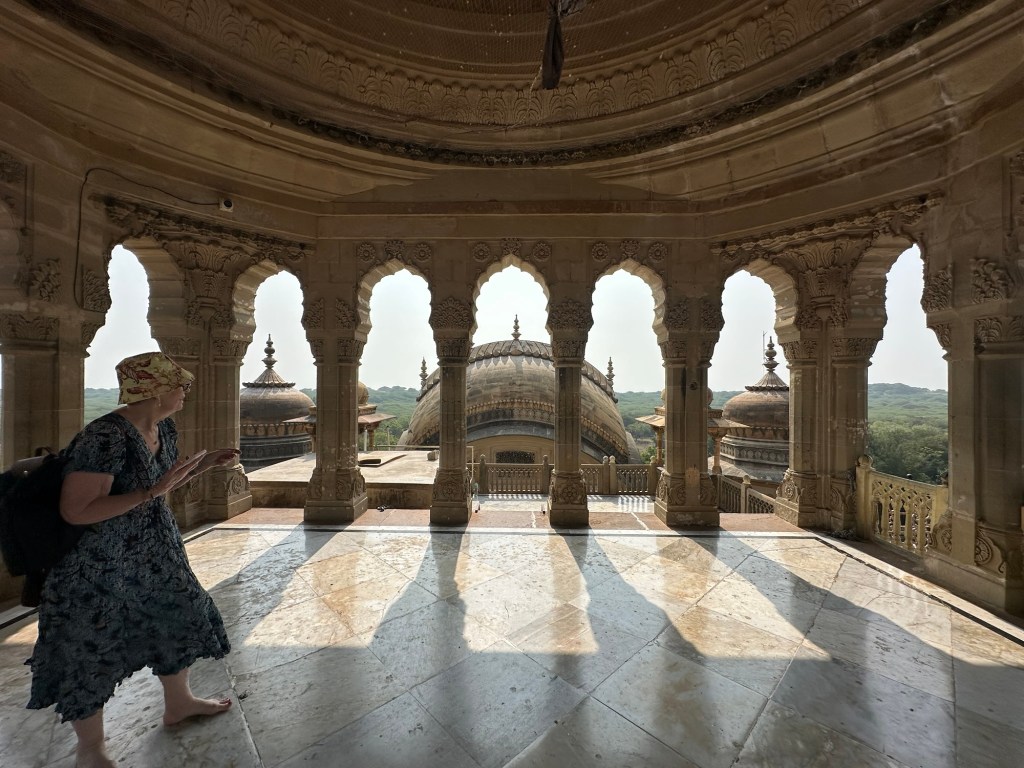
Our first stop was the summer palace of the last maharajah of Kutch . It is called Vijay Vilas Palace, and it is near Mandvi. Absolutely stunning.
Our guide Sunita
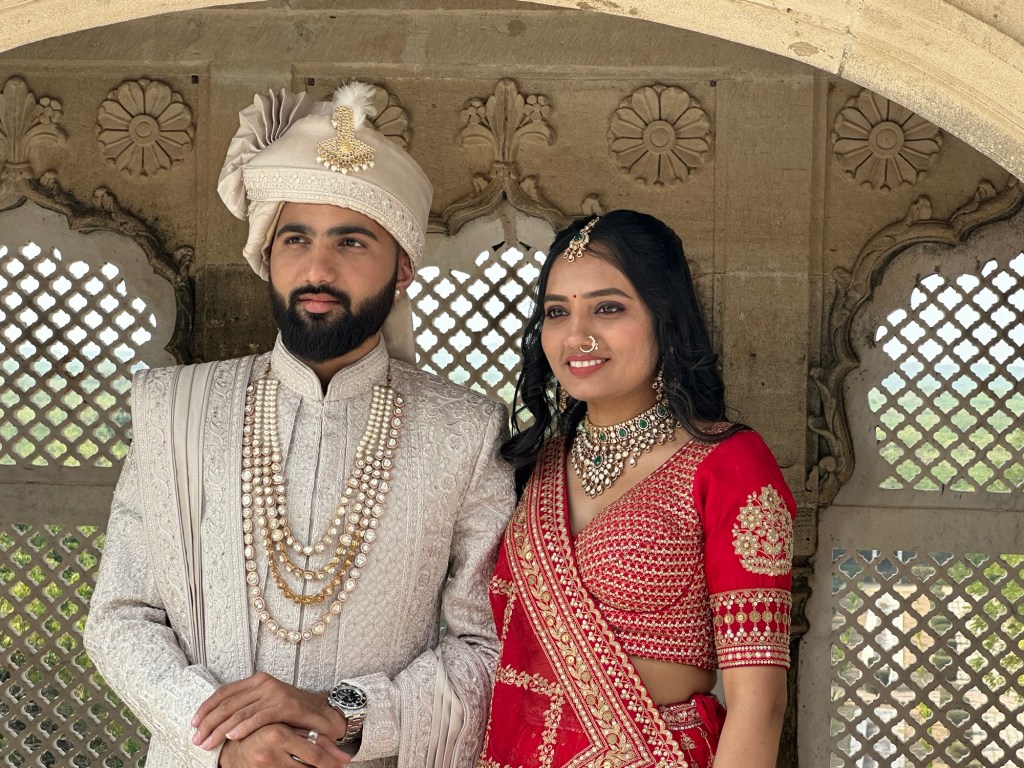
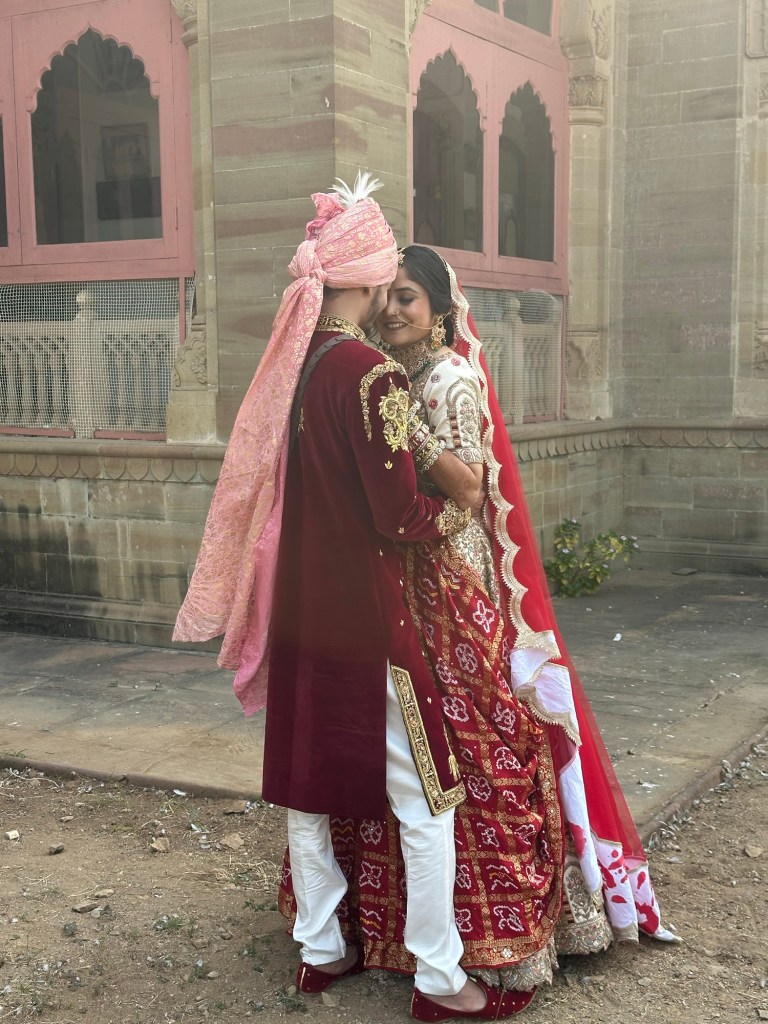
While there we came across two different wedding parties have pictures taken. Glorious clothes.
We had lunch at a beautiful beach camp. Best naan ever. Later we paddled in the Arabian Sea! Warm and waveless.
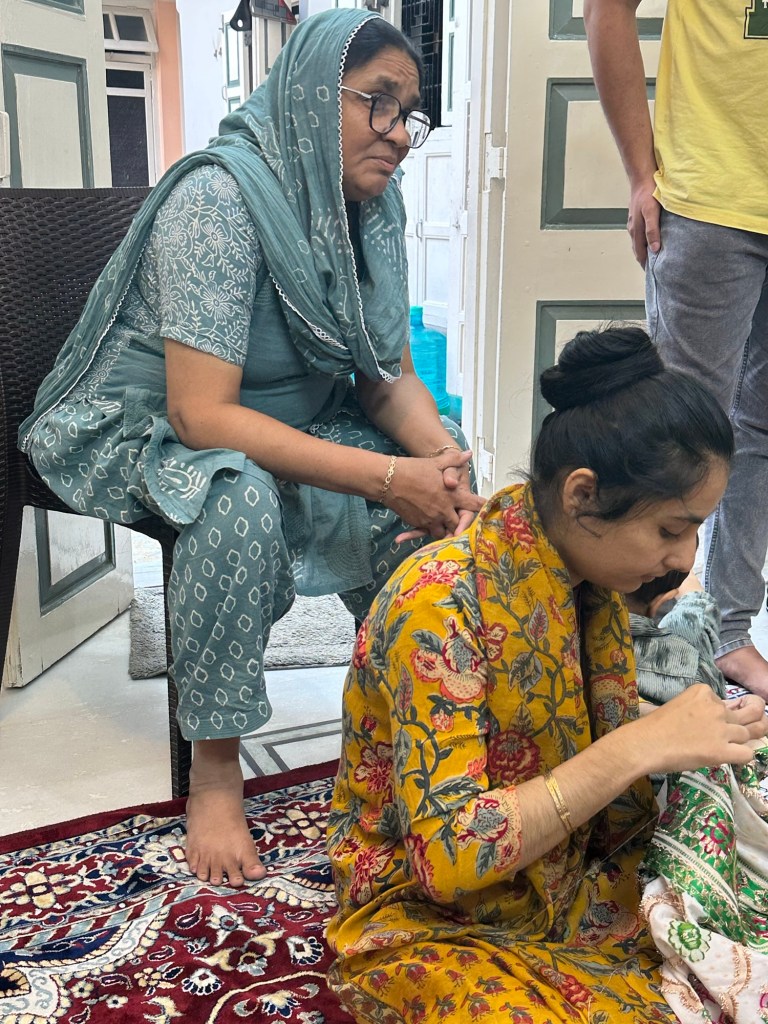
Our afternoon stop was another village Munda. We went the home of one of the fabric traders. His family taught us about the traditional tie-dyeing techniques used in the village.
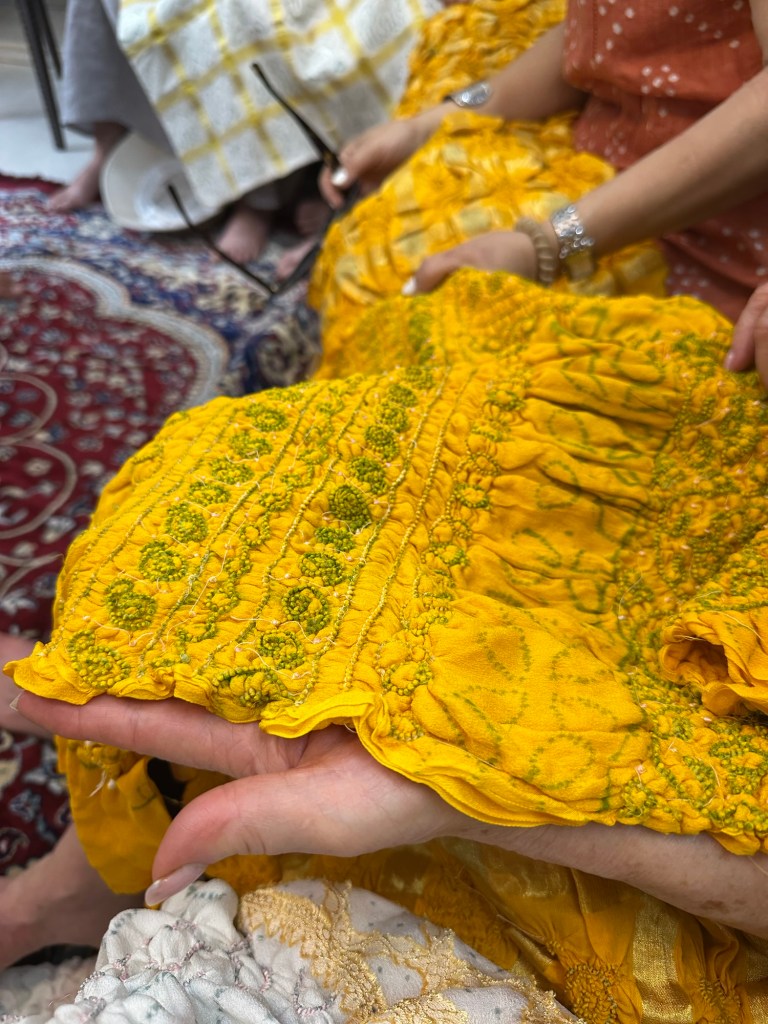
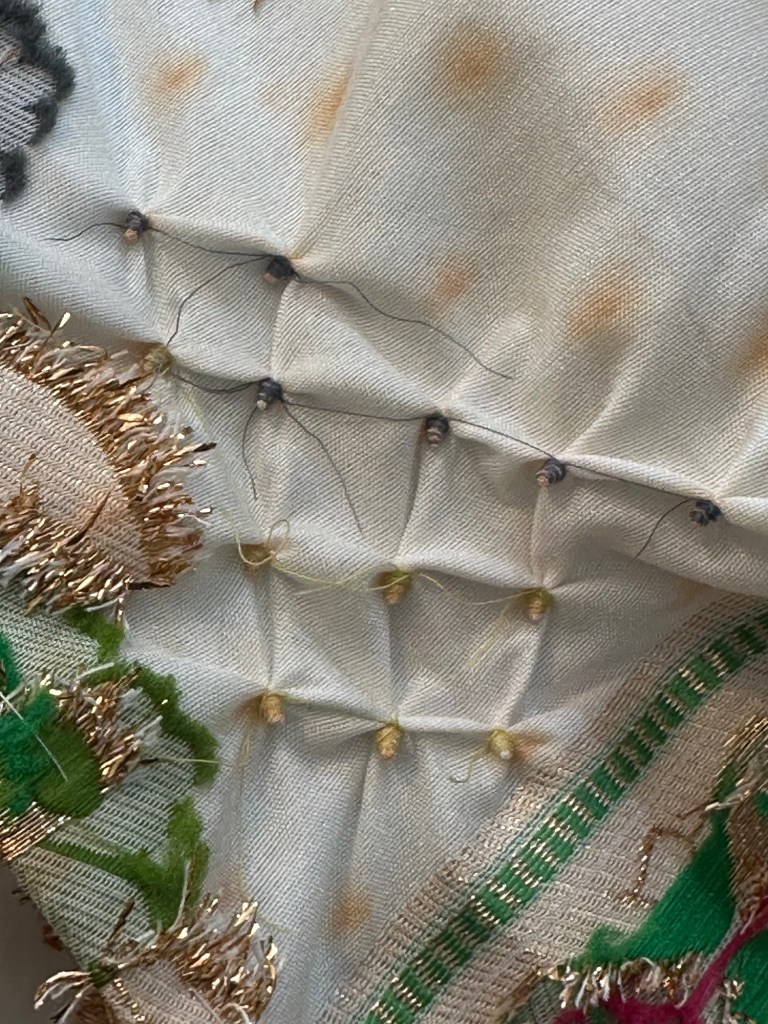
All kinds of silks and cottons are used. The fabric doubled over and tiny threads used to tie off minute sections, resulting in a spotted effect. Up to four colours can be used. Gorgeous multi-generational household, all working together.
The designs on a wedding sariTyingAfter one dyeingThe tiny knots
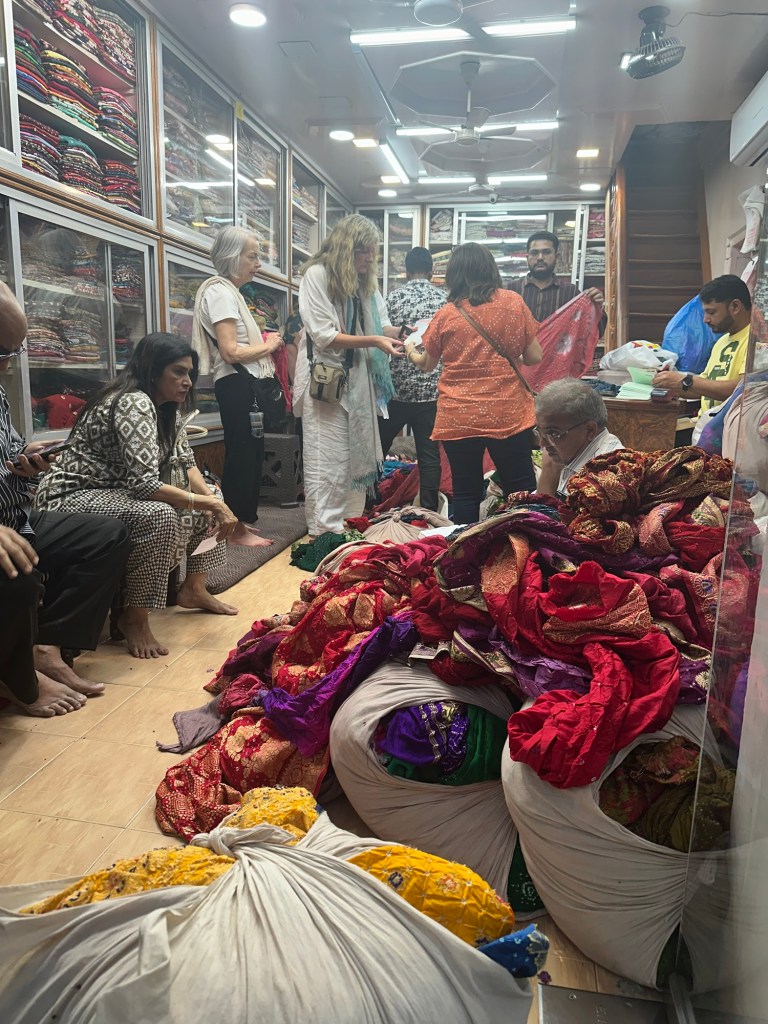
Naturally we felt obliged to visit their shop!
The Spice Girls…
The journey home was long, but entertaining. Due to road closures on the highway, we had to detour through several small villages. There was a massive traffic jam, which provided much entertainment for the villagers.
A very long day in the bus. We are doing very civilised 9.30 starts. We headed north and spent the day watching local craftspeople work. The first village was called Nirona.
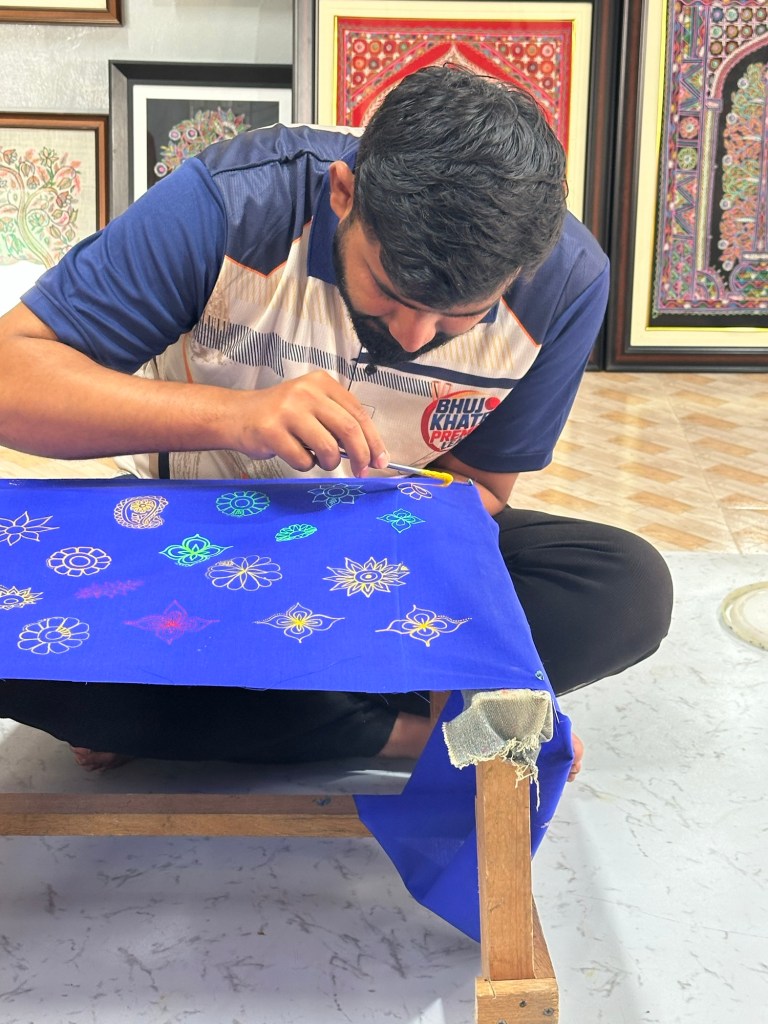
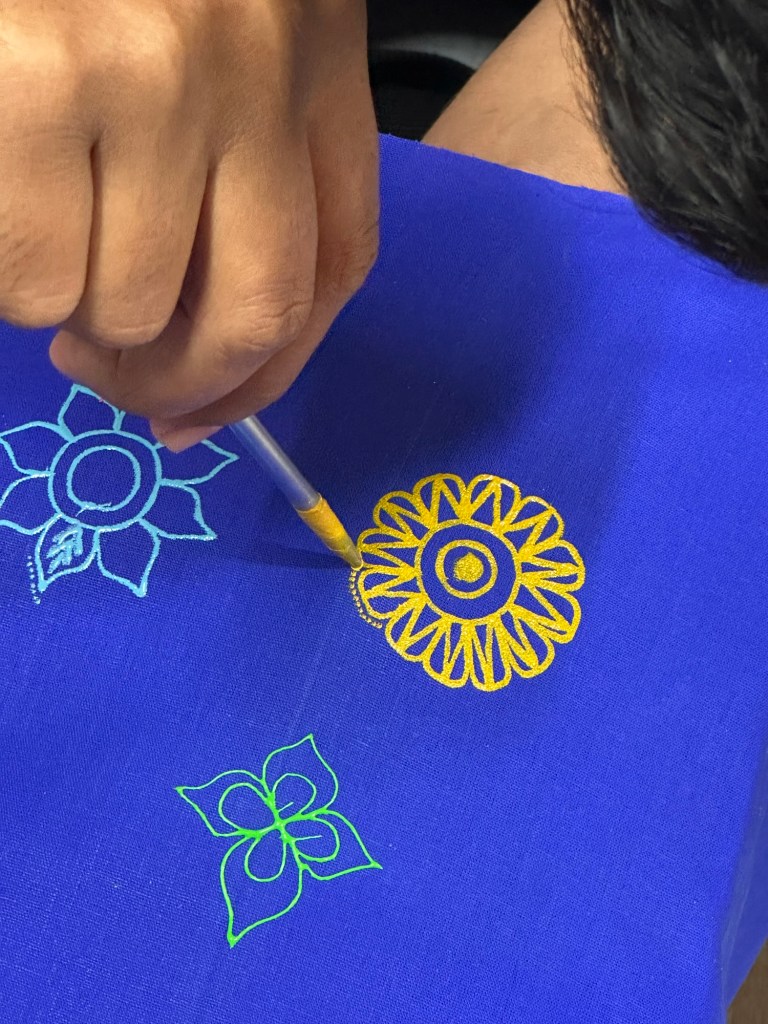
We first learned about a fabric painting technique called Rogan. The paint is a mixture of castor oil gum (the castor oil is grown locally) mixed with pigment. The paint is applied with a very fine stylus. Beautiful patterns.
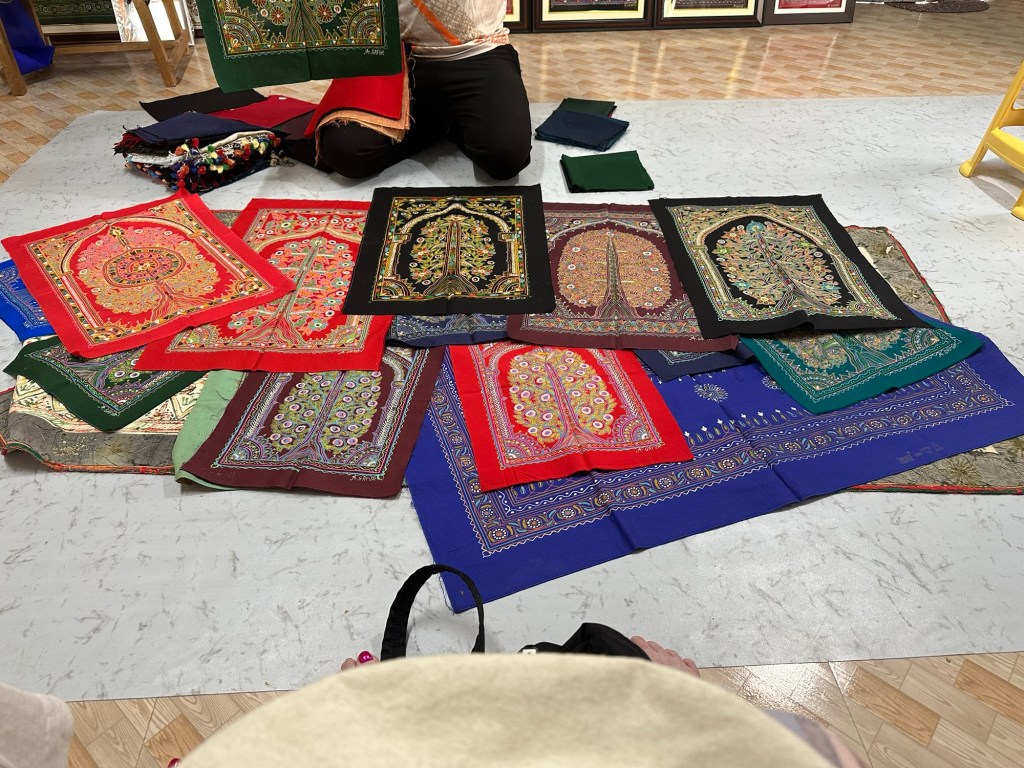
Of course, we had to buy some…
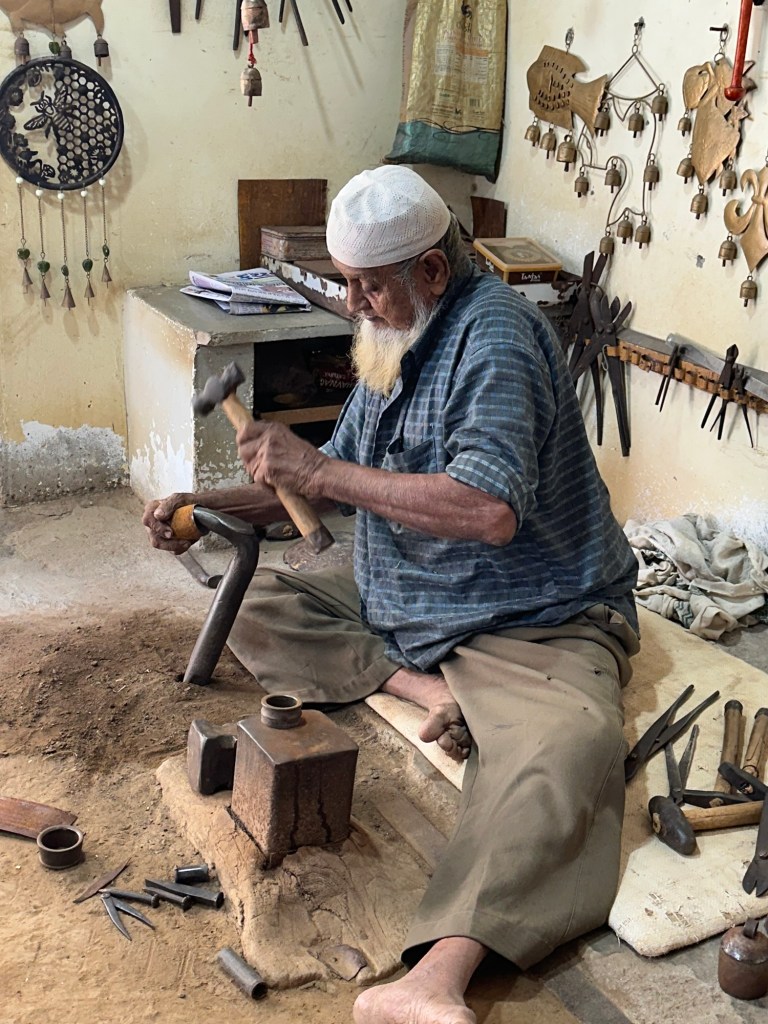
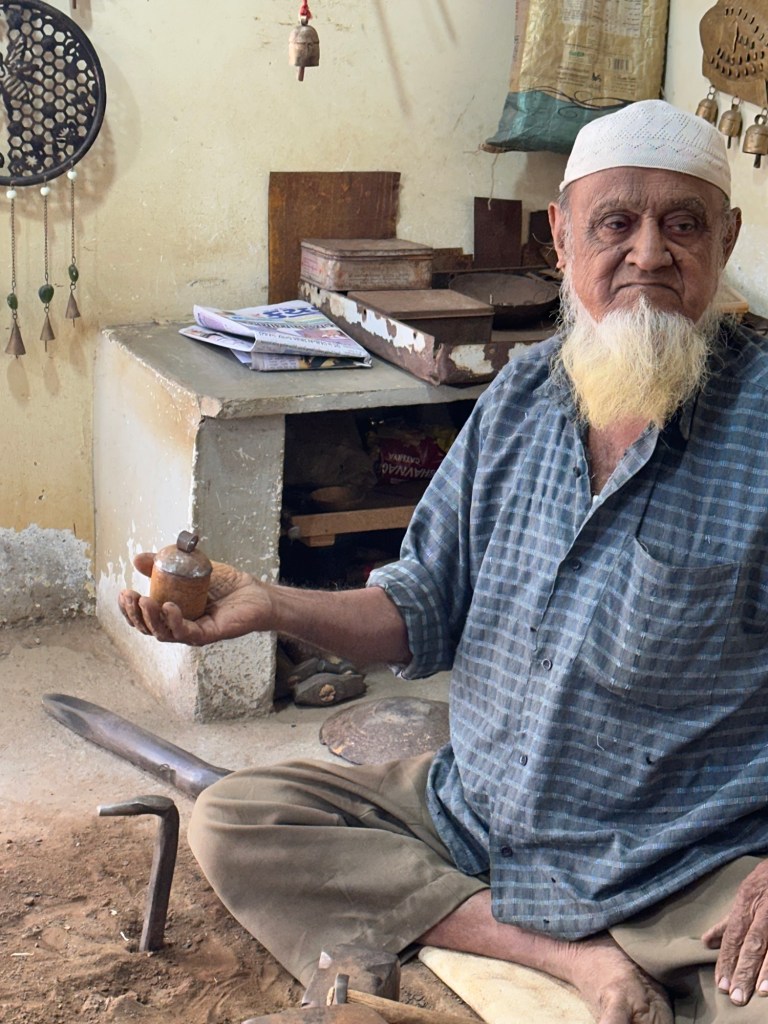
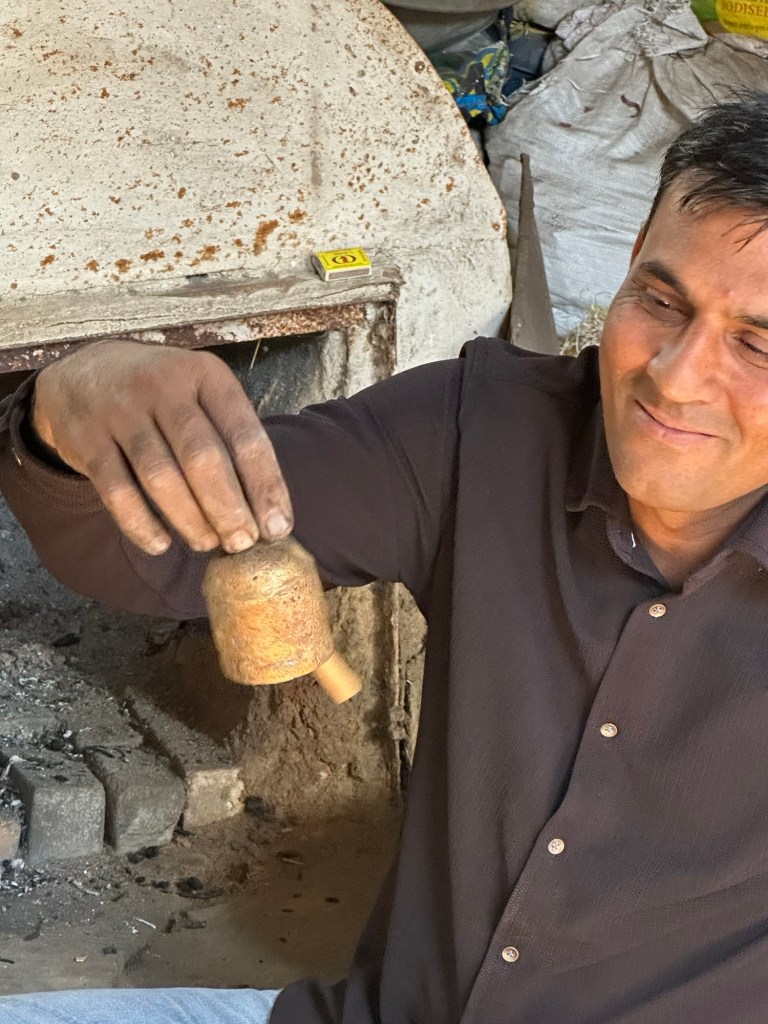
Next we watched a man making cowbells from scrap metal. They also use copper and bronze. The bells can be tuned to individual sounds, and are used to identify the owner of a herd of sheep, goats, camels or whatever. So fascinating to watch a flat piece of metal being hammered into shape.
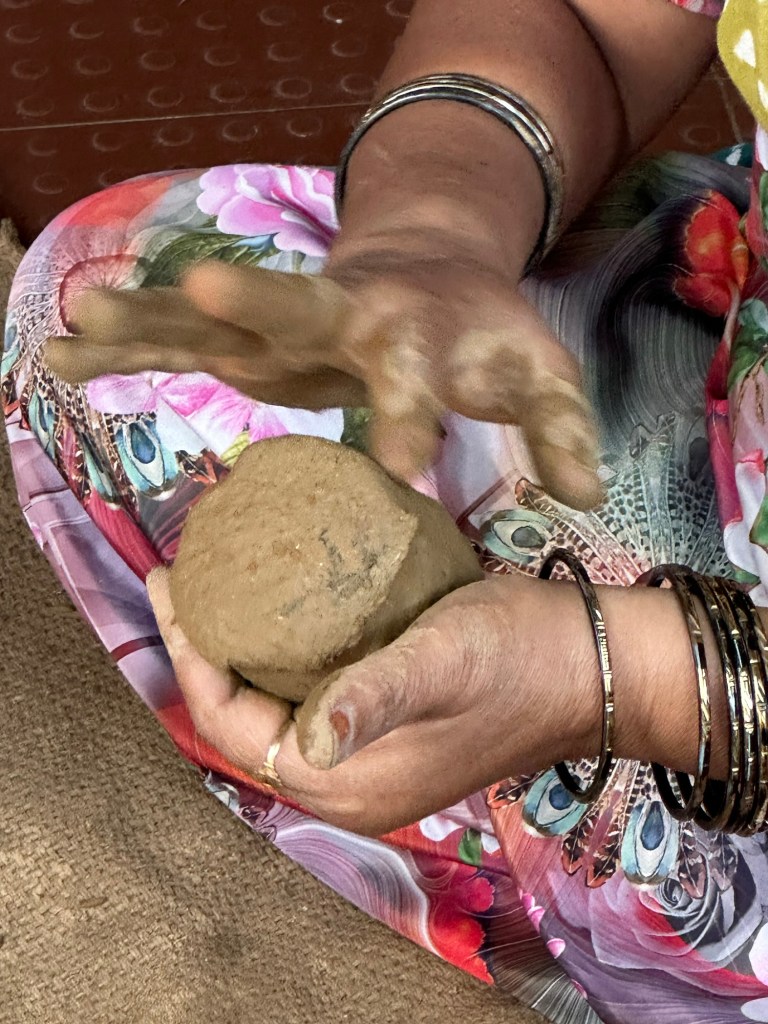
After completion, the bells are coated with a fine crumb of scrap metal and then get a thin coating of damp clay and cotton fibres.
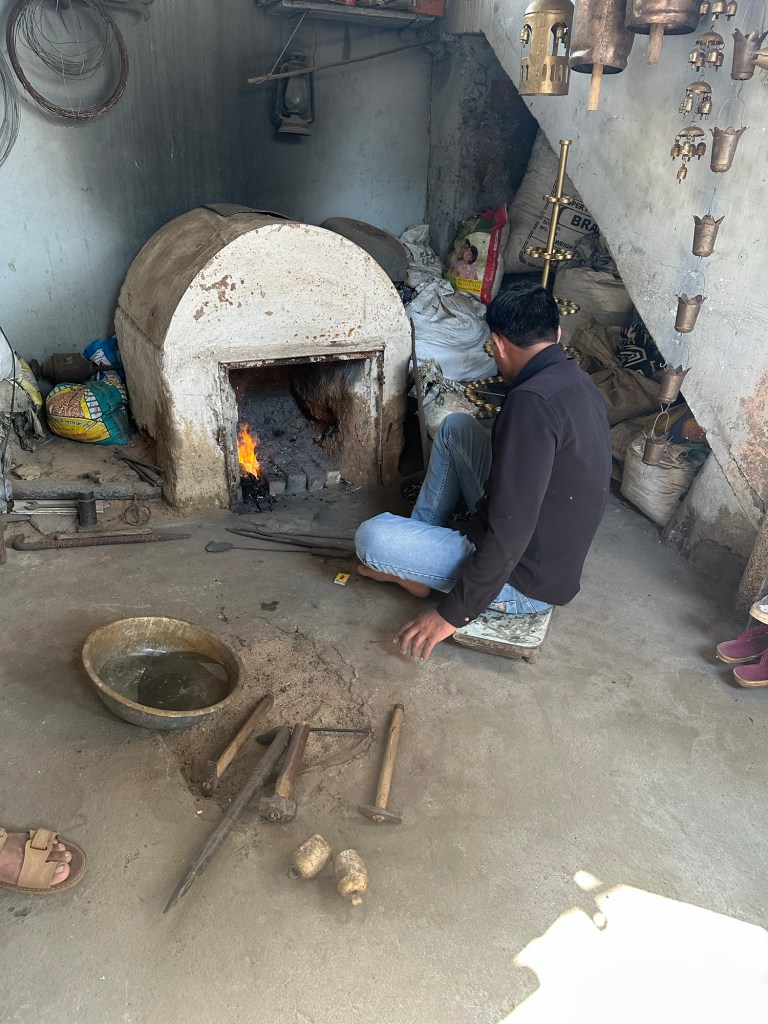
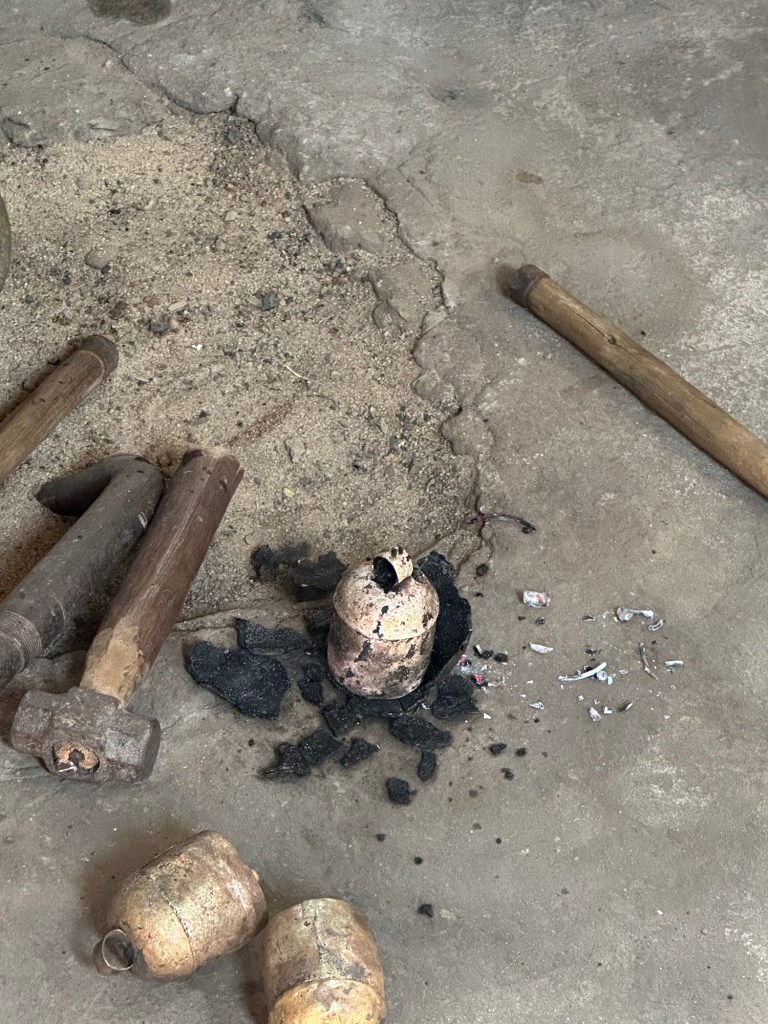
They are then fired in a kiln. The metal/clay coating is then chipped and washed off, and the result is really pretty patination. They get a bit more hammering for tuning, and the wooden clanger bit is added.
Again, purchases were made…
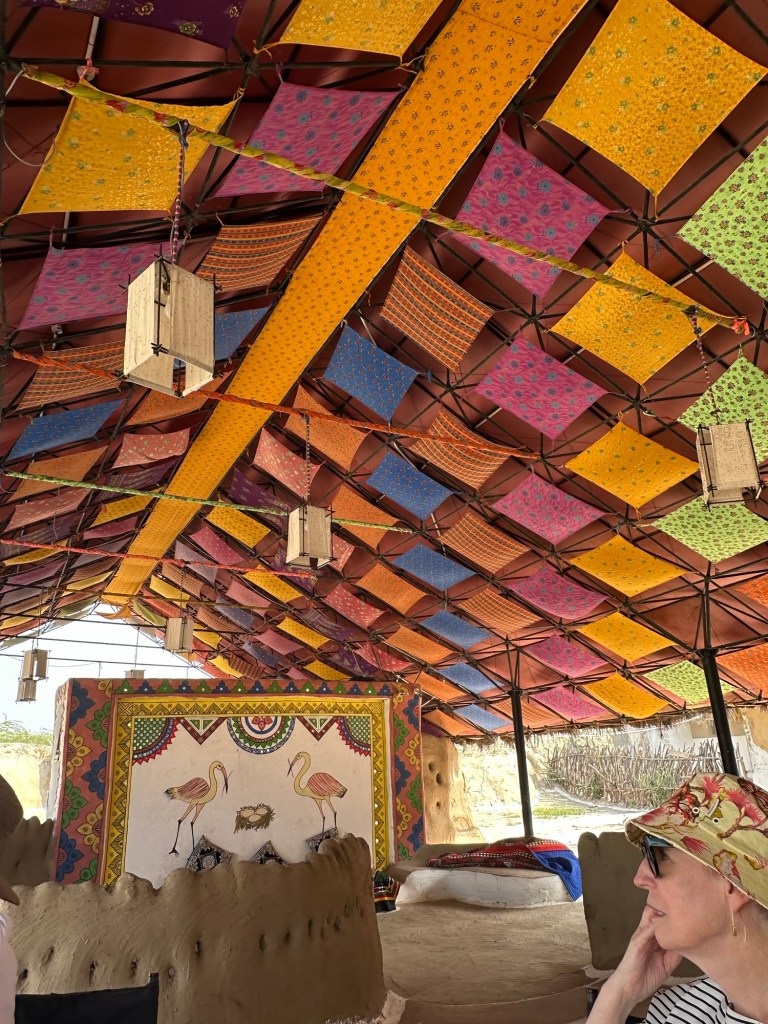
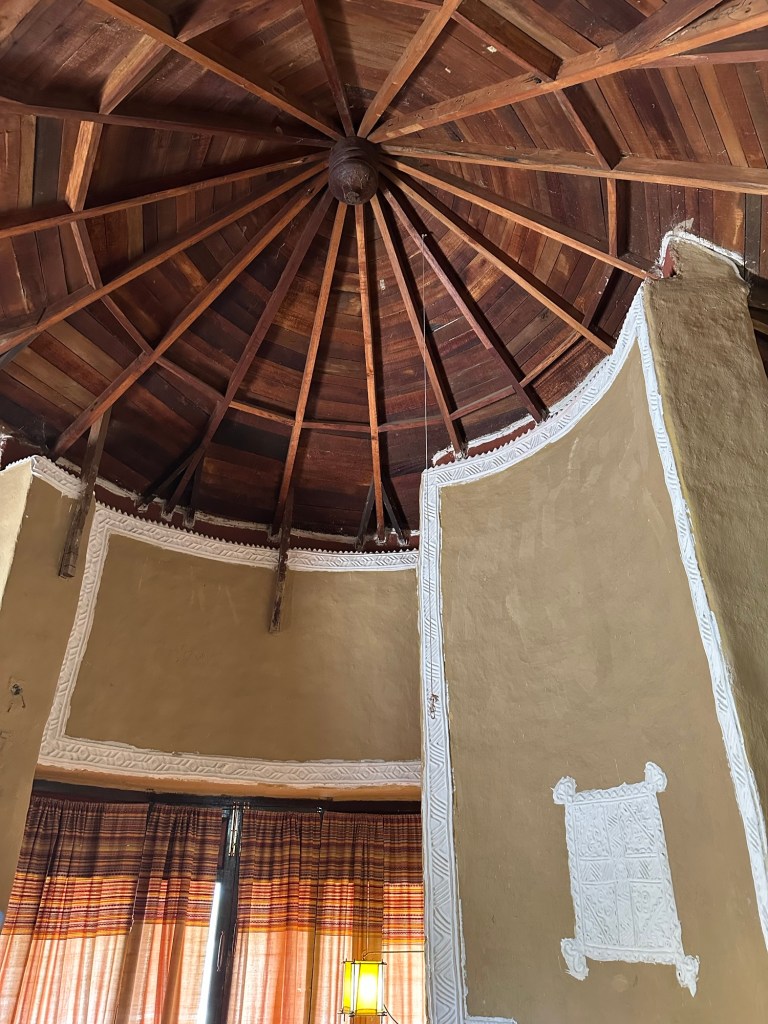
We had lunch at a really beautiful desert camp. The outdoor restaurant had an amazing ceiling. We checked out the guest rooms, which were traditional circular Kutchi mud brick construction with thatched rooves.
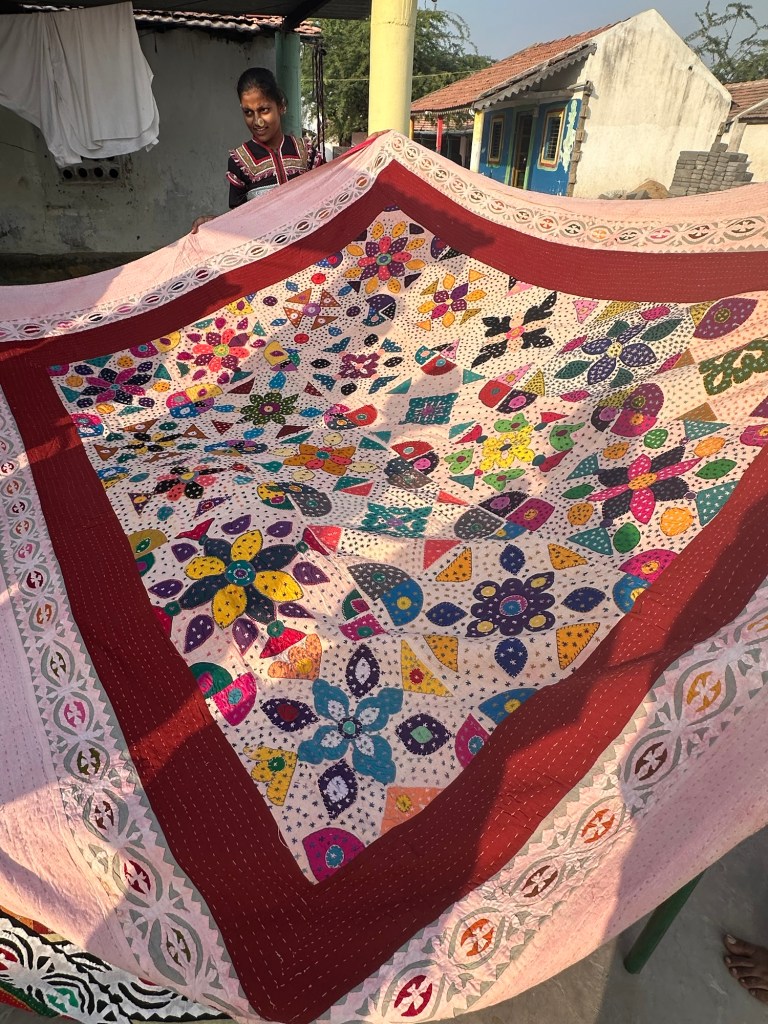
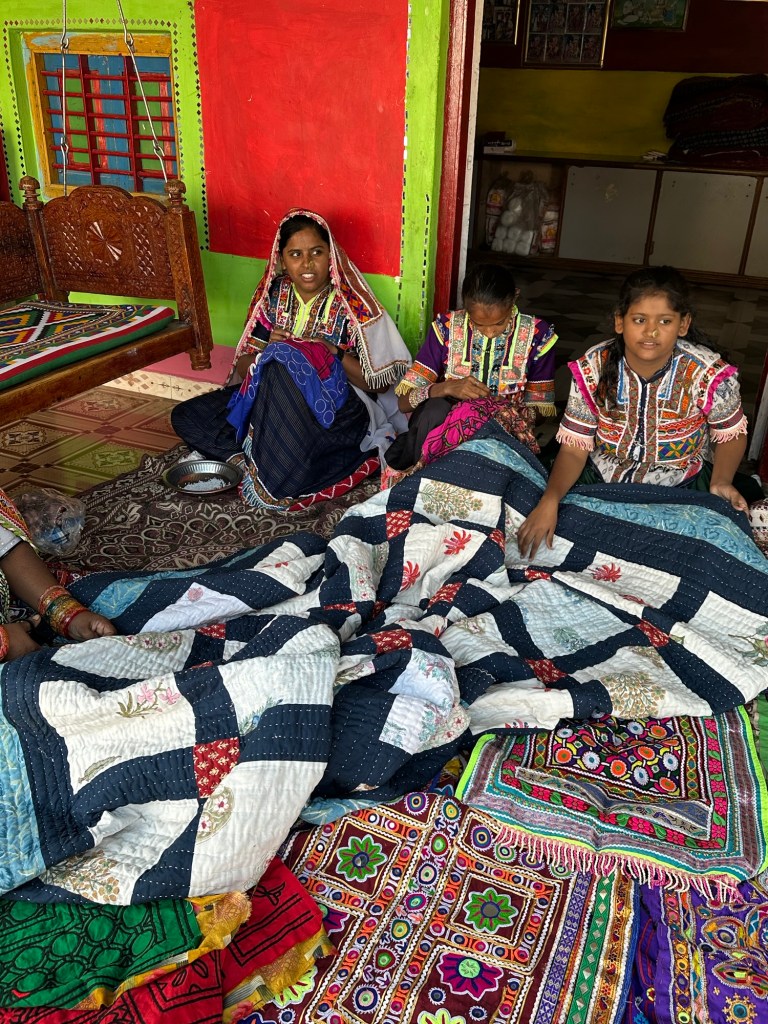
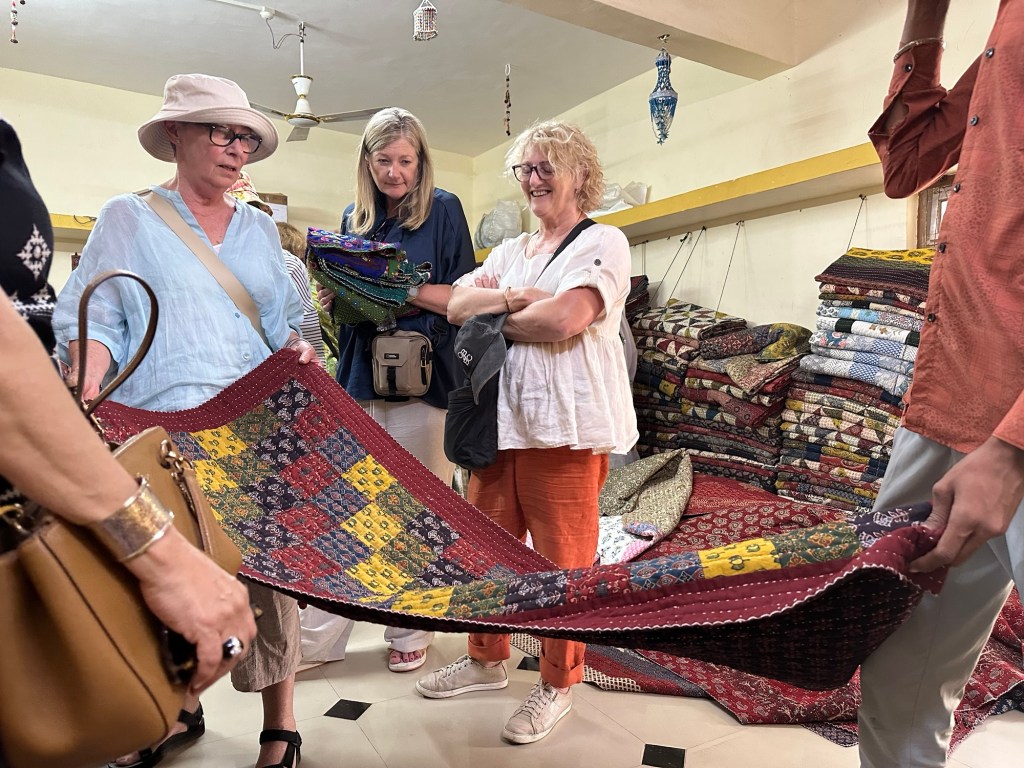
Later in the afternoon we went a village where they make Kantha quilts out of block-printed cottons. Really beautiful designs. Also some interesting bead work and embroidery. MUCH purchasing ensued.
Our little bus was loaded up with quilts, yoga mats, etc.
In the evening, we were scheduled to visit the famous Rann of Kutch. We had been told that the salt pans of the White Desert were still covered in rain water, but we still went. You could see a little bit of salt, but it was mostly a spooky kind of wetland with no vegetation or animal life. Quite weird. It has also been turned into a kind of selfie circus, with music and neon lights. Very disappointing.
The Rann of Kutch
Back late to the Bhuj branch of Fawlty Towers, where we all having a delightful time not electrocuting ourselves and losing our laundry.
A long day of travel. Nothing exciting. Sydney to Singapore, a layover of a few hours, and then Singapore to Delhi.
Having expected queues and bureaucracy and confusion, I found the arrival process smooth and streamlined. No fuss.
I emerged from the airport into heavy pollution. Really poor air quality.
A short drive to the East Park Inn, a clean and pleasant hotel. Slept well.
An interesting technique. The view from my balcony.
Day 2
I had breakfast in the hotel.
At 9 o’clock, I met with the local tour guide Prahlad, and the other person on the tour Rachel.
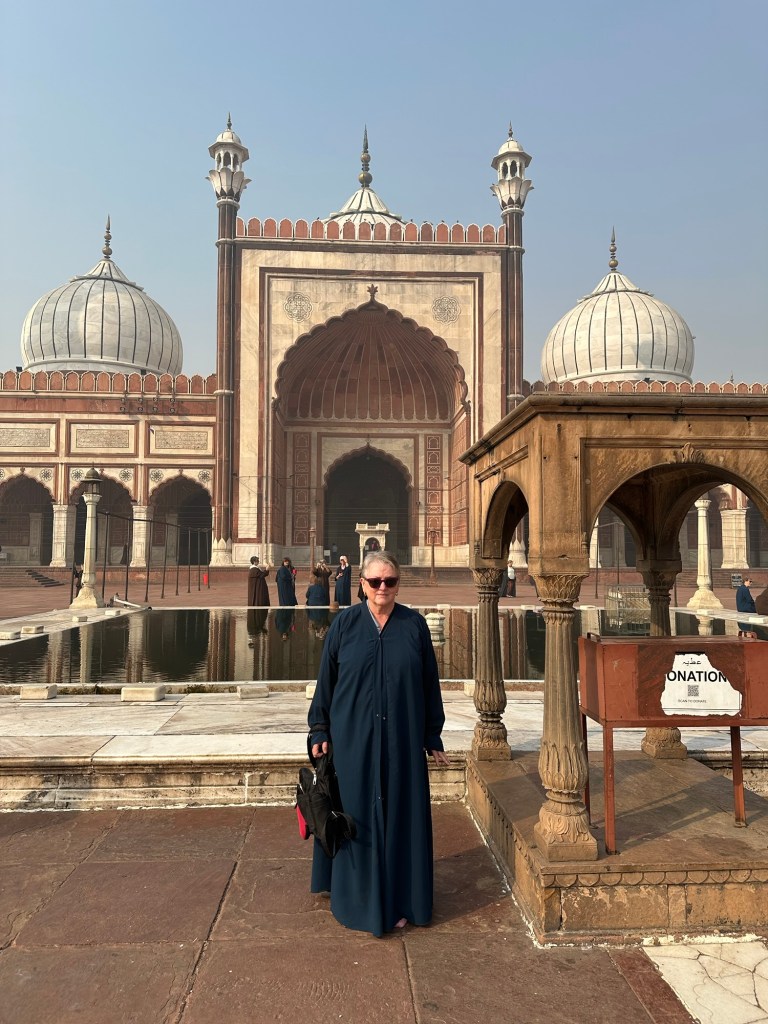
We went to see the Jama Mosque in Old Delhi. The traffic on the way was chaotic to say the least, with lots of creative lane-changing and lots of honking.
Dressed for mosque visiting
The mosque was built in the 17th century by the Moghul emperor. Made of red sandstone. The courtyard holds 25000 worshippers. Really impressive.
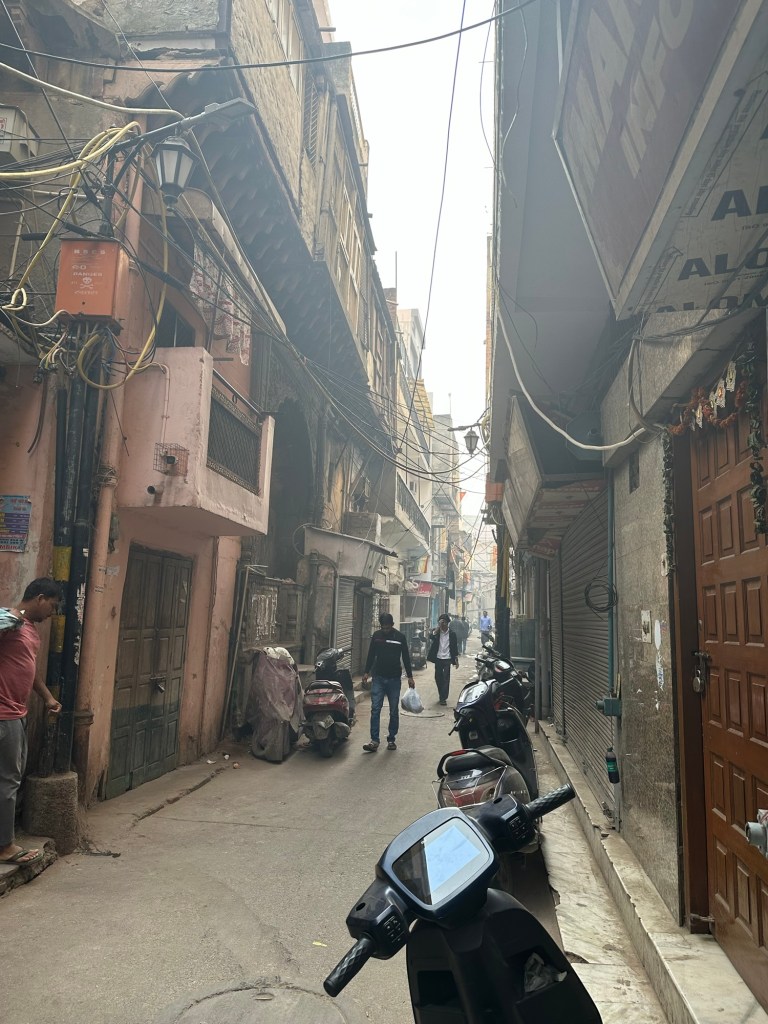
We then walked through the narrow streets of Old Delhi, where there are tiny shops (many selling wedding finery) and old mansions converted into hotels. Would definitely not have ventured there alone.
Old Delhi
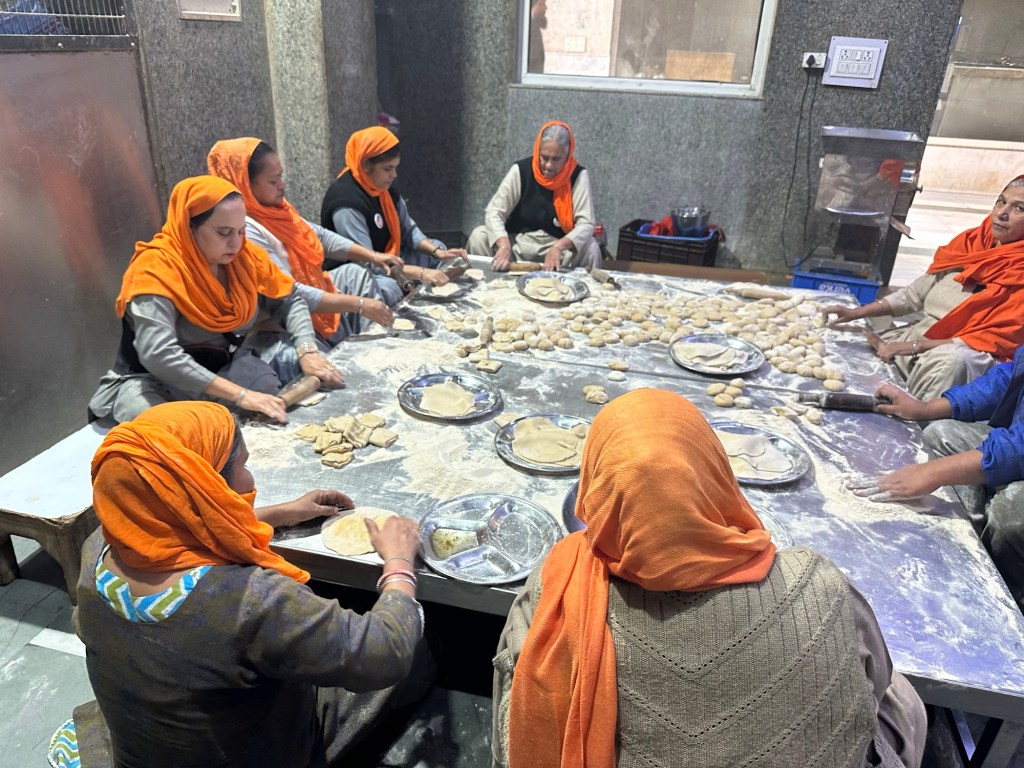
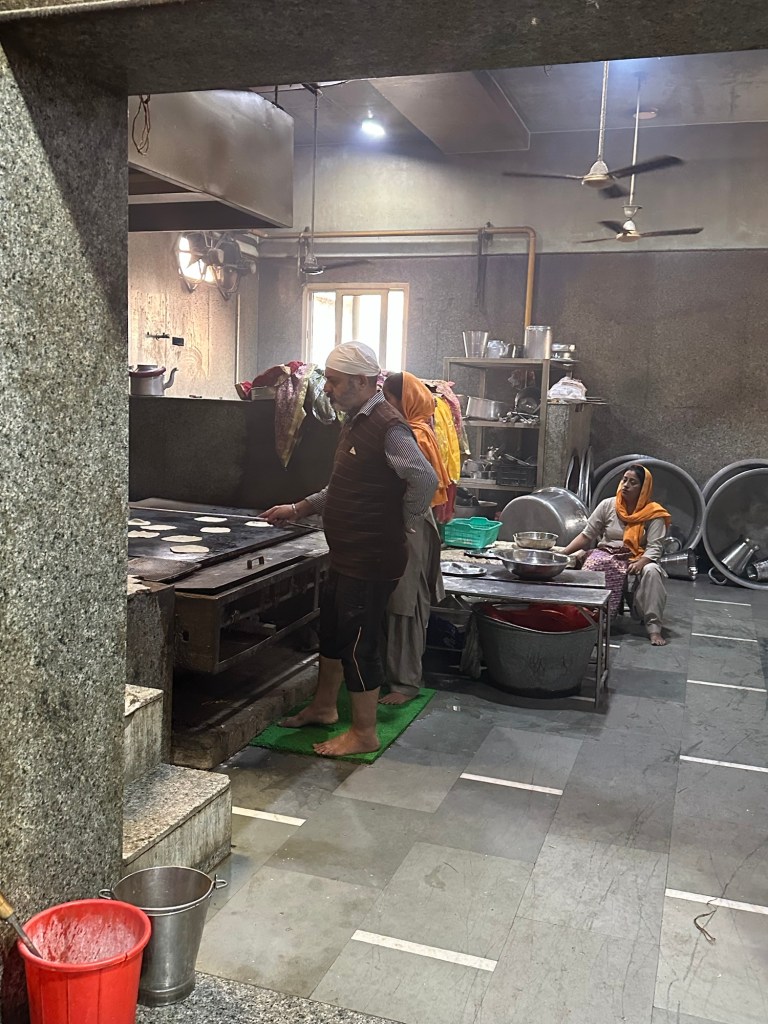
We eventually came to an amazing Sikh temple. Our guide filled us in on the history of the place, and also explained the Sikh religion in some detail. We were able to observe the prayers and also visited the communal kitchen where food is prepared for whoever wants it.
Ladies making roti.
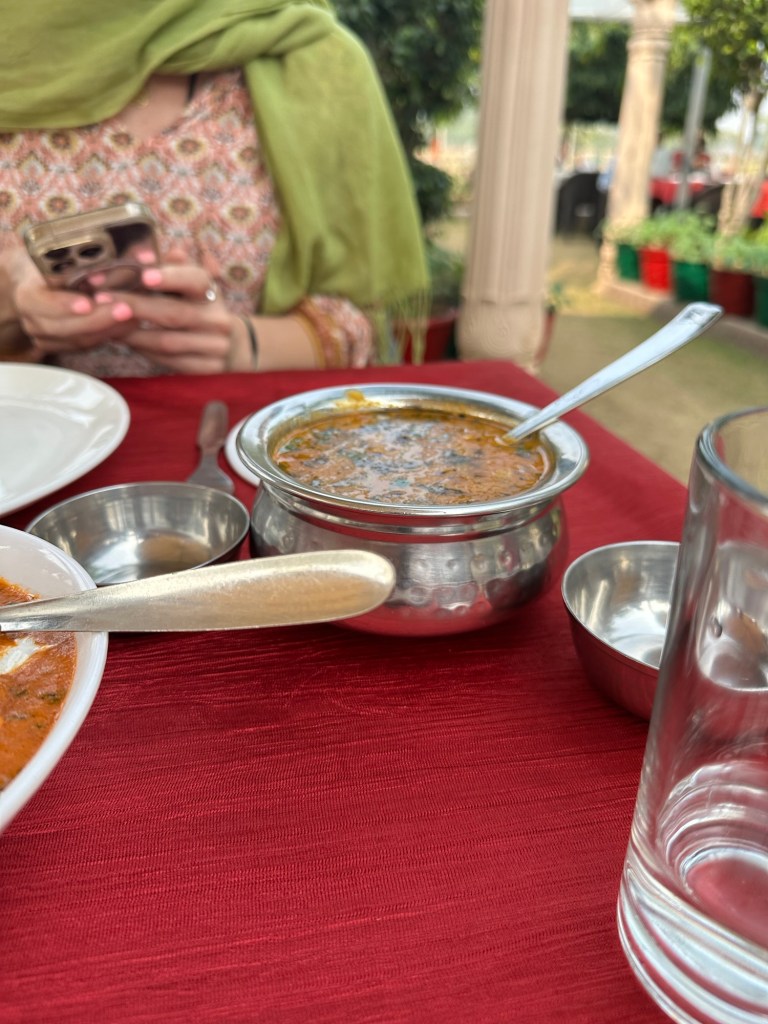
The rest of the day was spent travelling to Agra by car. About 4 hours journey. We stopped along the way for lunch, and had a very pleasant meal. Both Rachel and I thought the flavours quite mild, so we are assuming the locals are cutting back on the spices for our benefit!
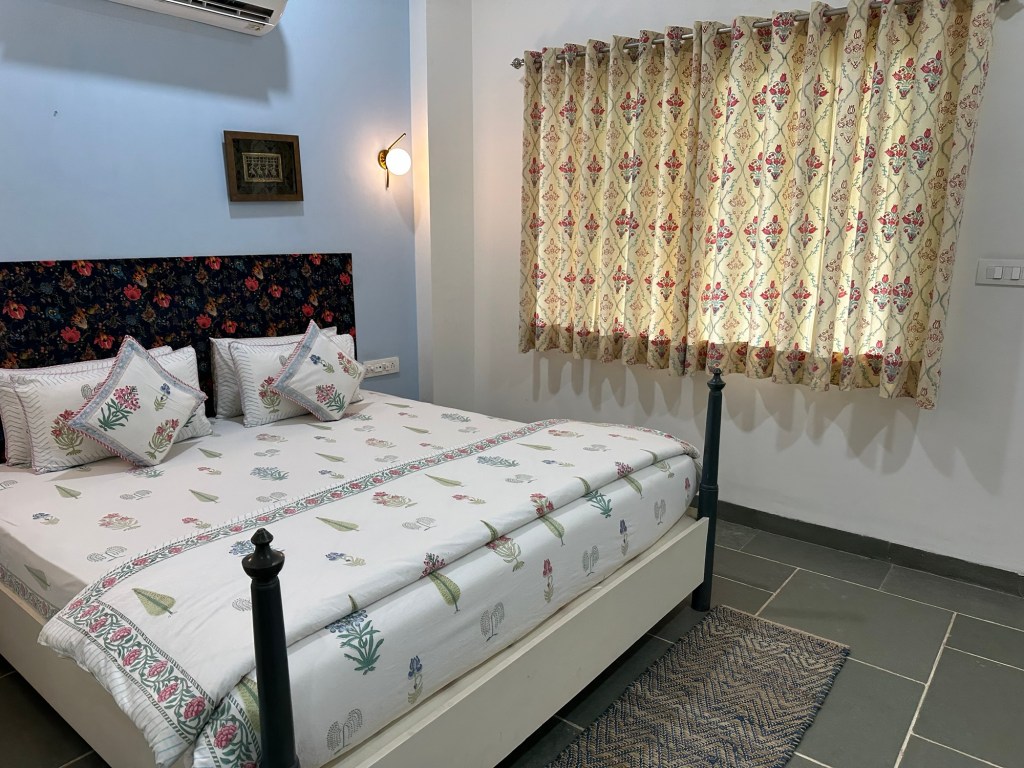
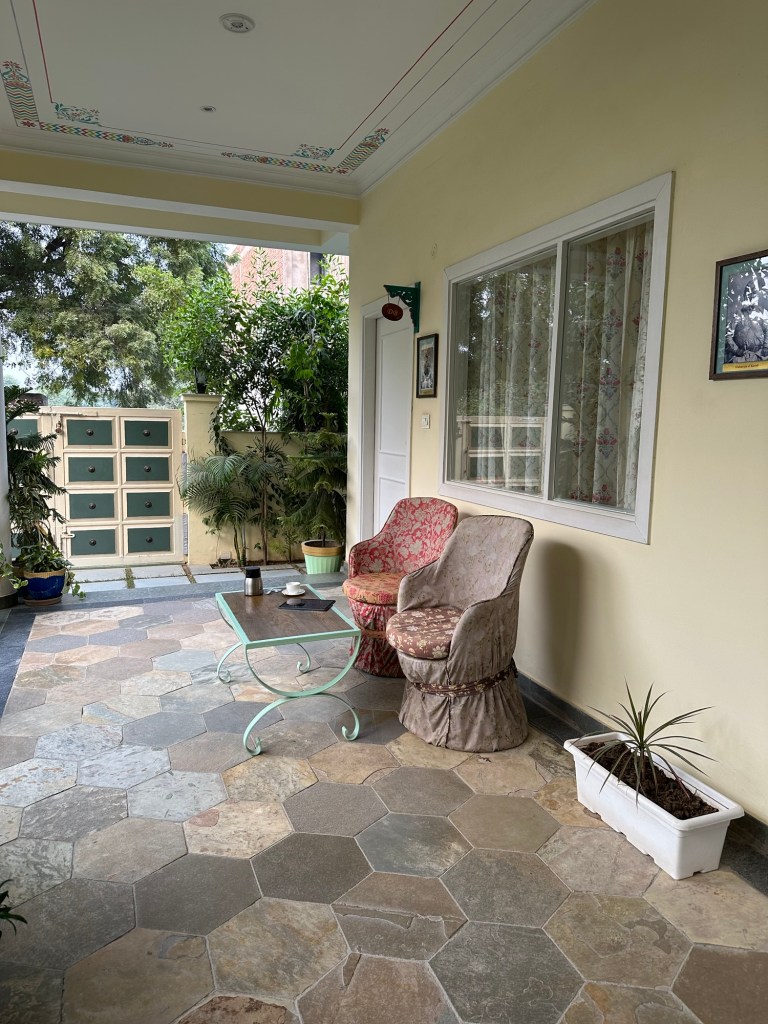
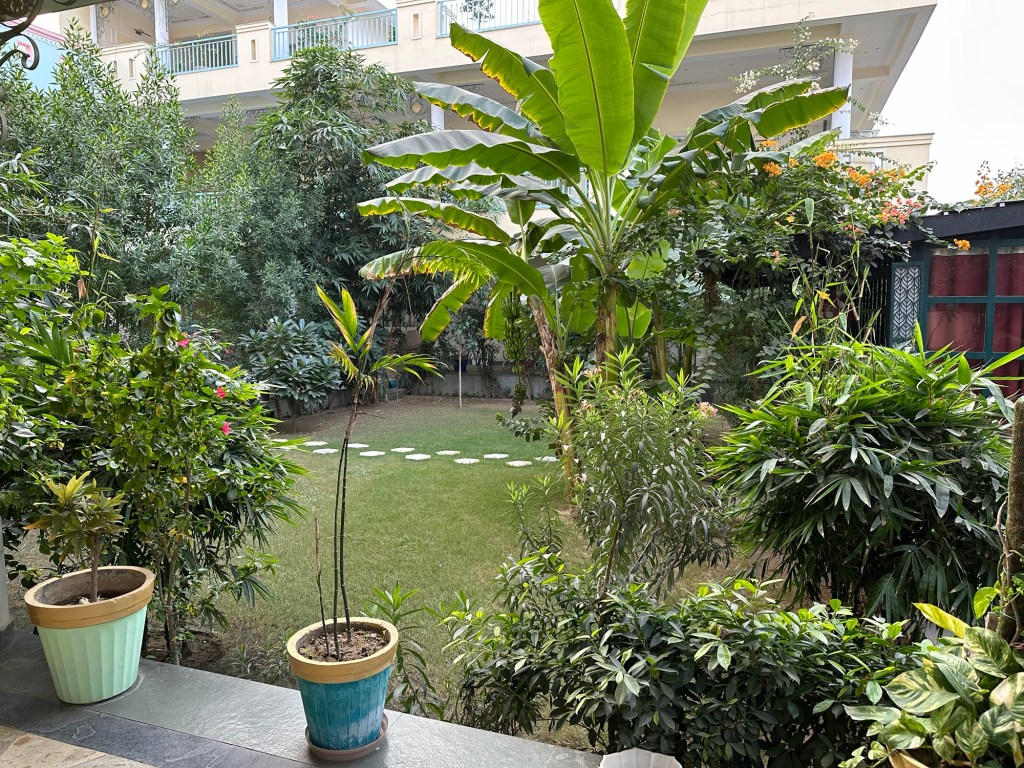
Late afternoon we arrived Agra, a small city of only 2.5 million! Our hotel is truly delightful. it is called the Da Bungalow.
Terrace outside the roomHotel garden
Day3
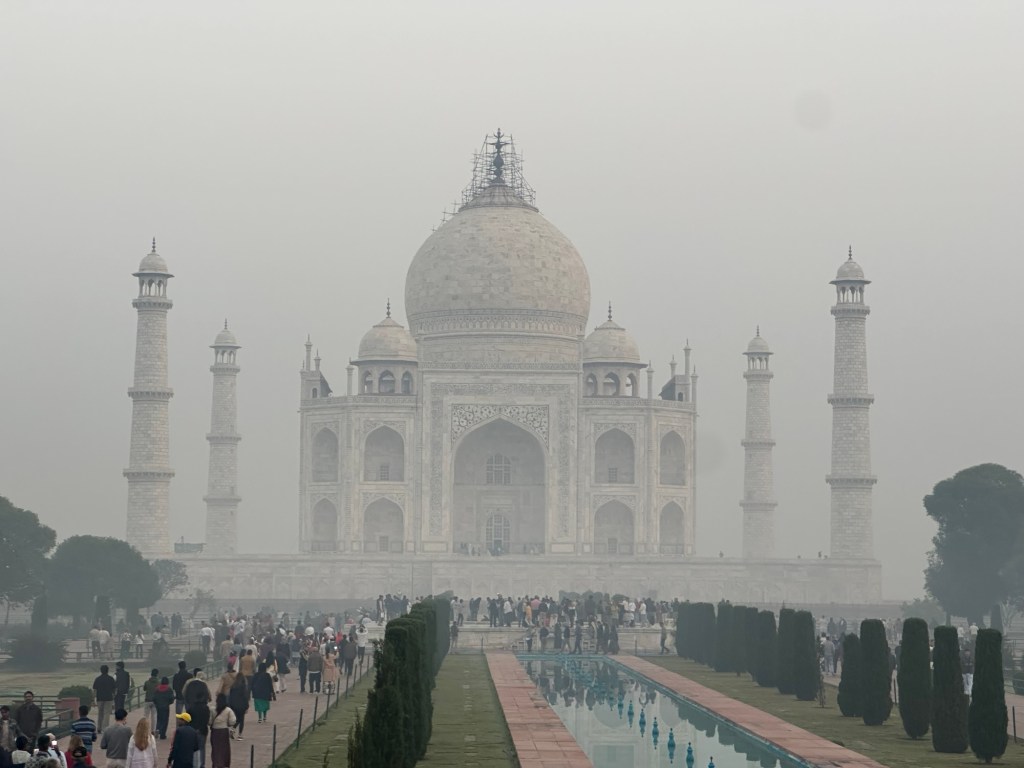
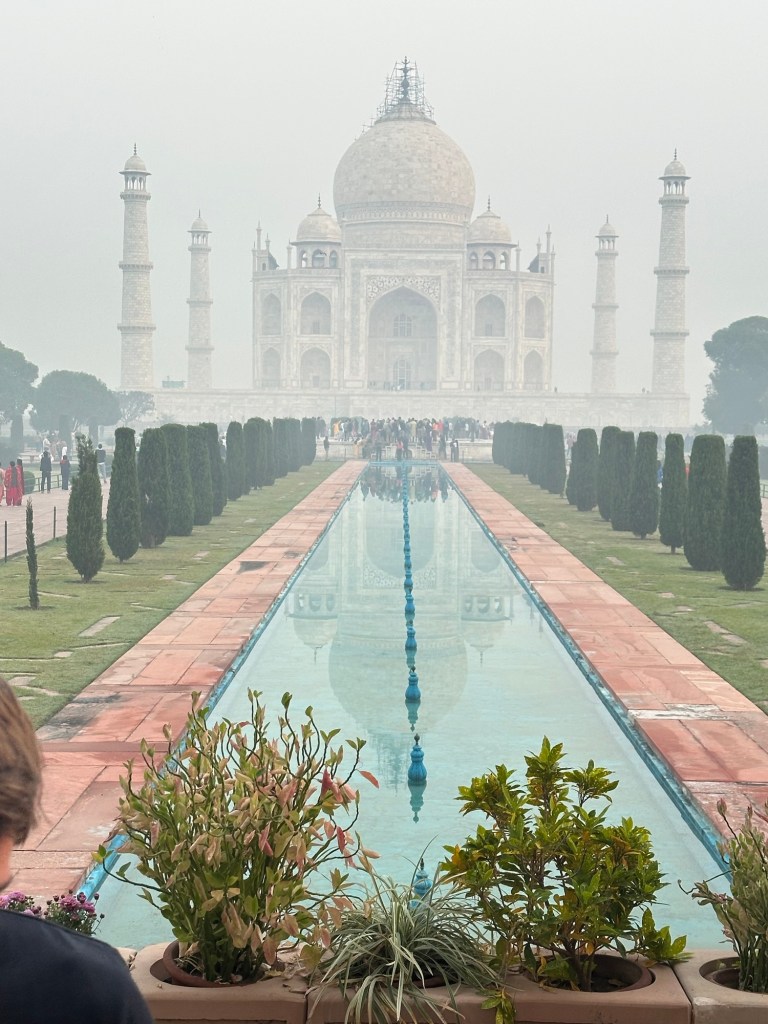
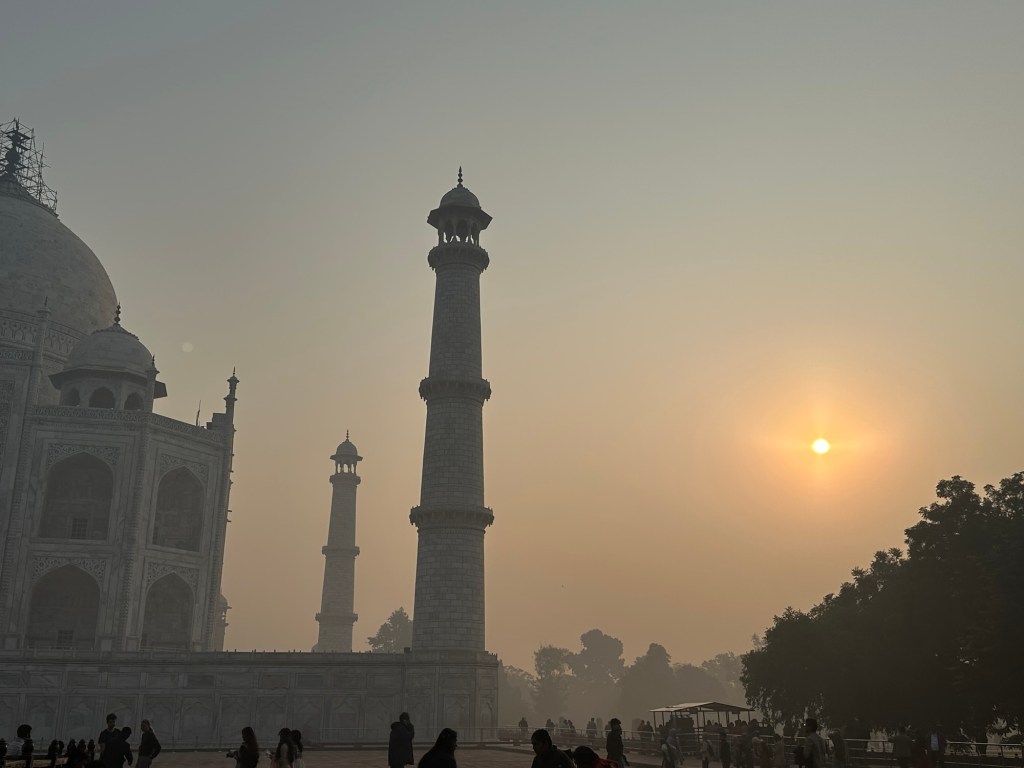
We were up very early to queue up for the 6.10am opening of gates of the Taj Mahal. The idea is to be there when the sun rises. There was a thick blanket of fog which made things slightly surreal.
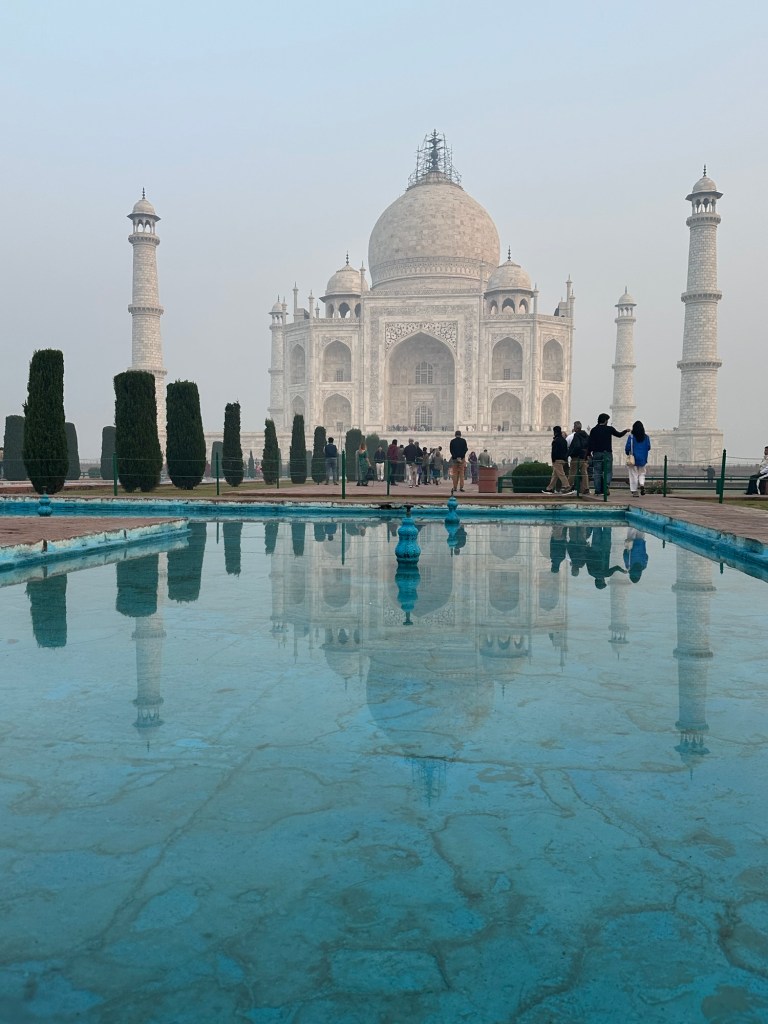
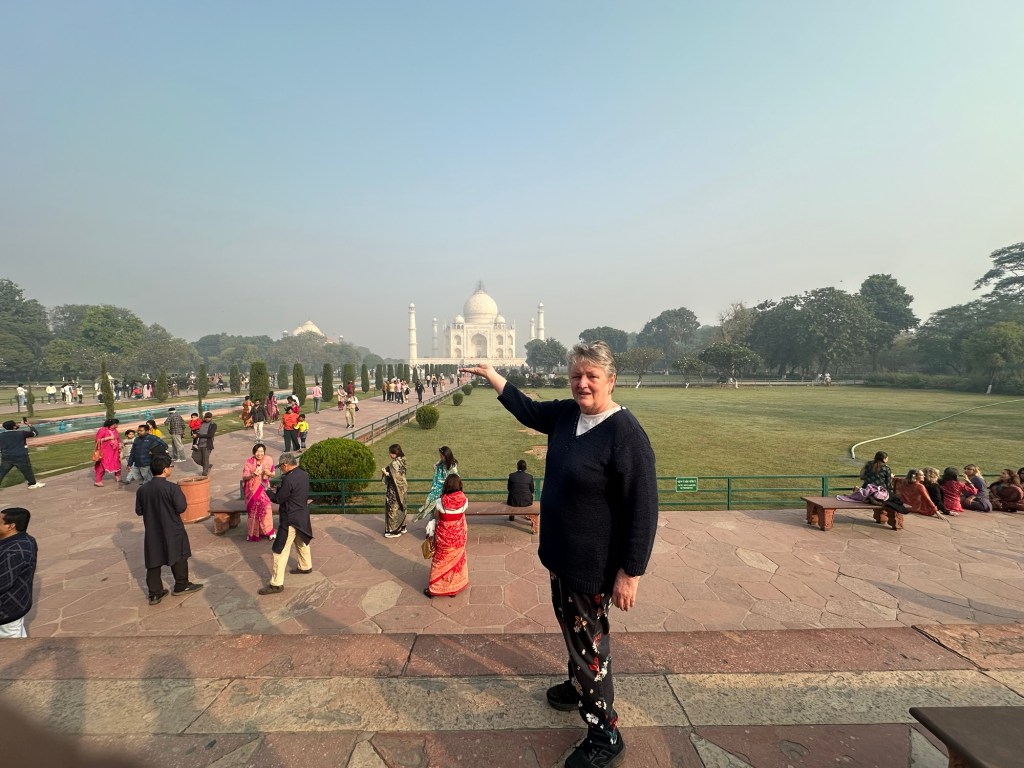
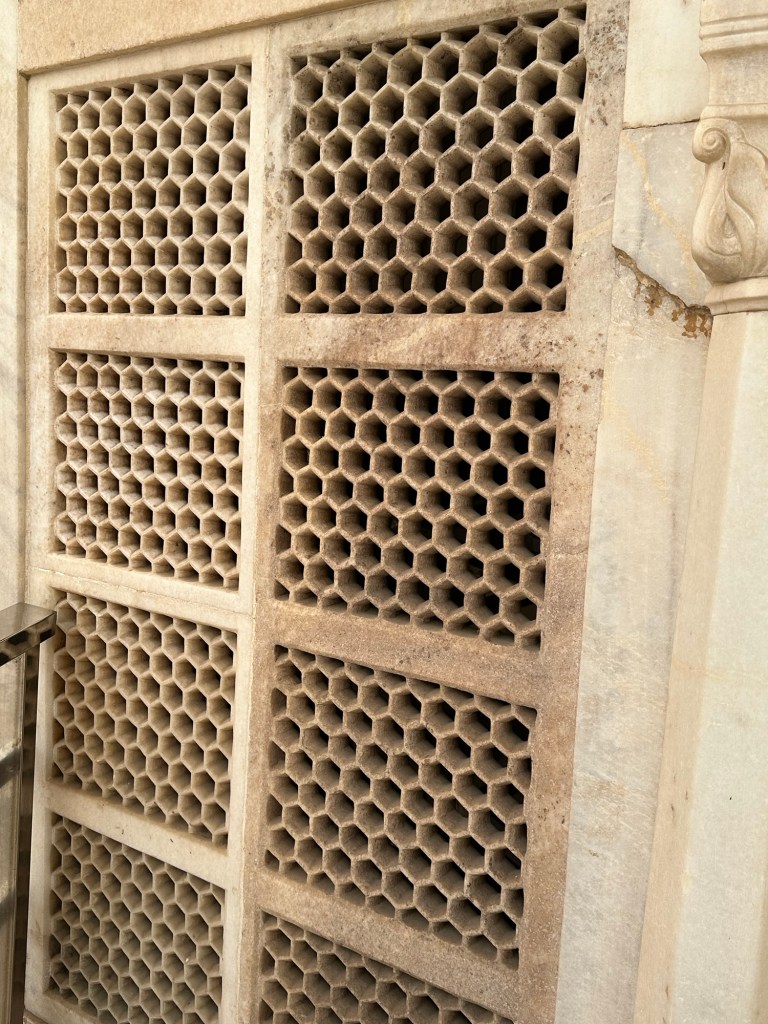
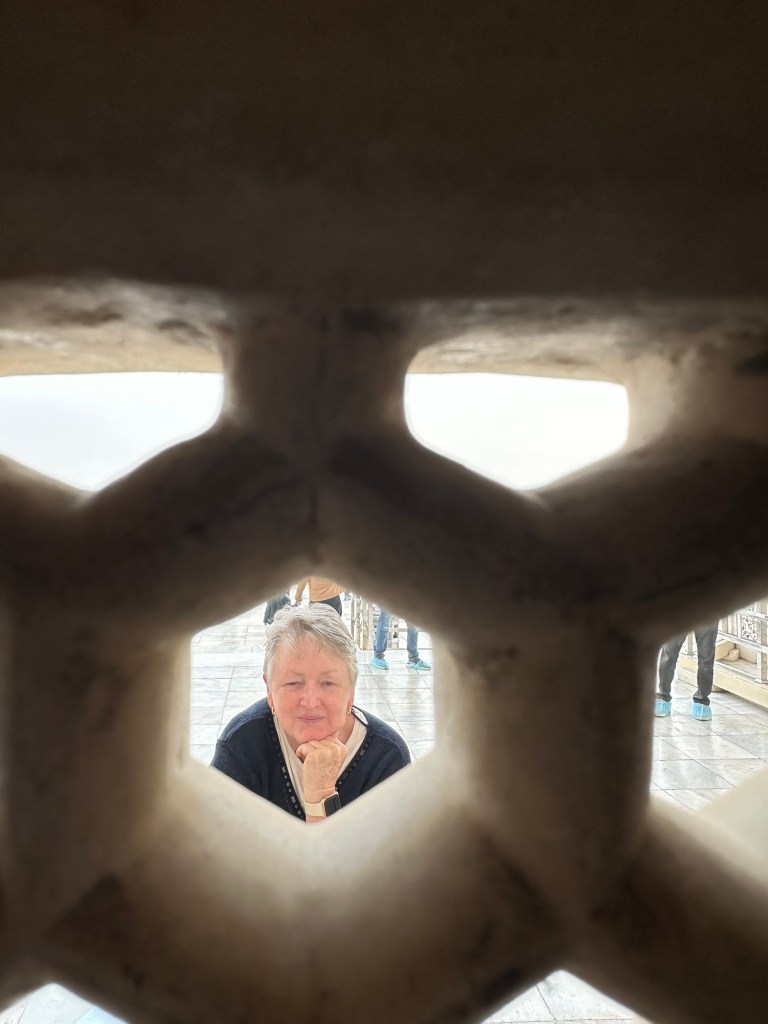
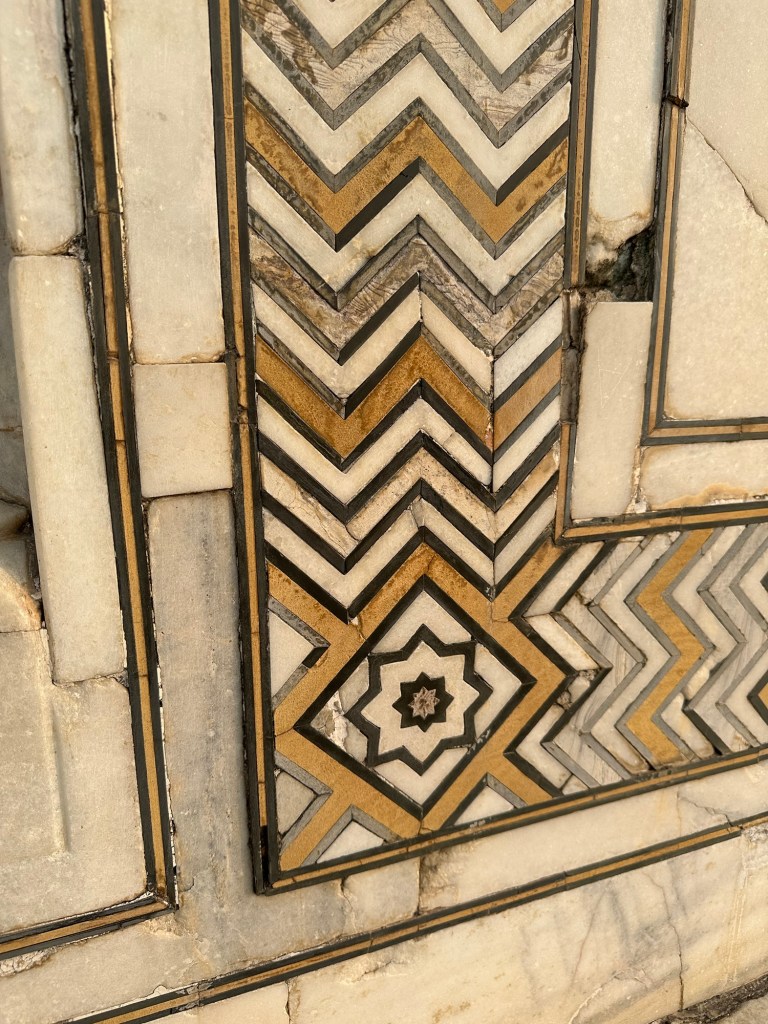
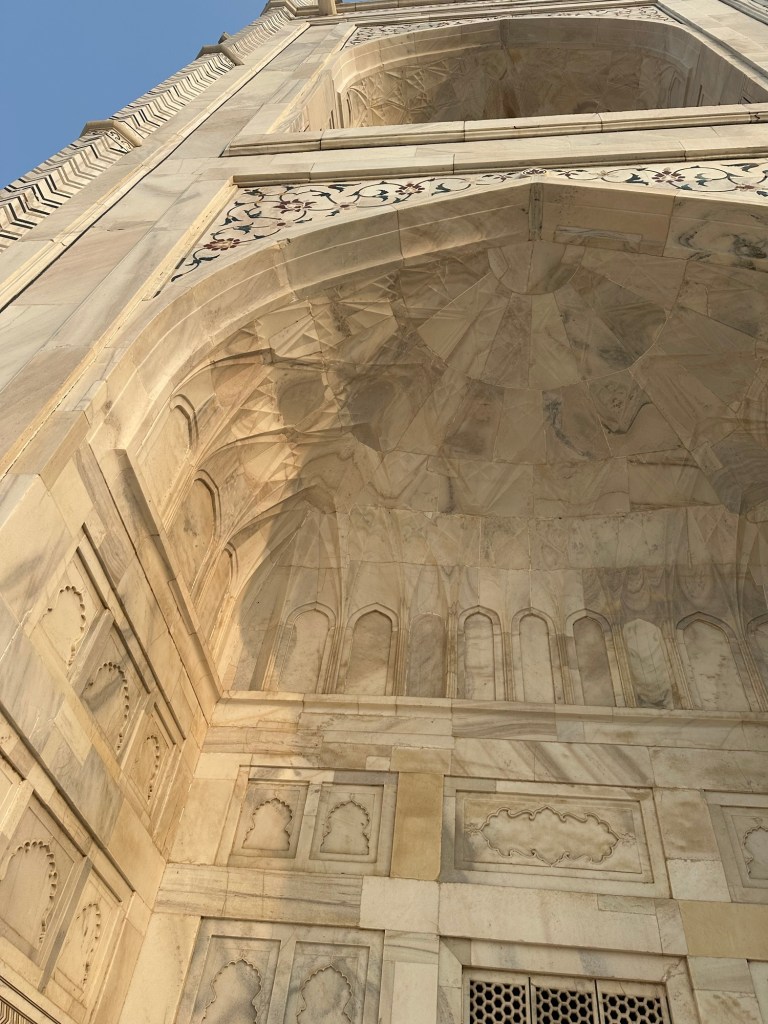
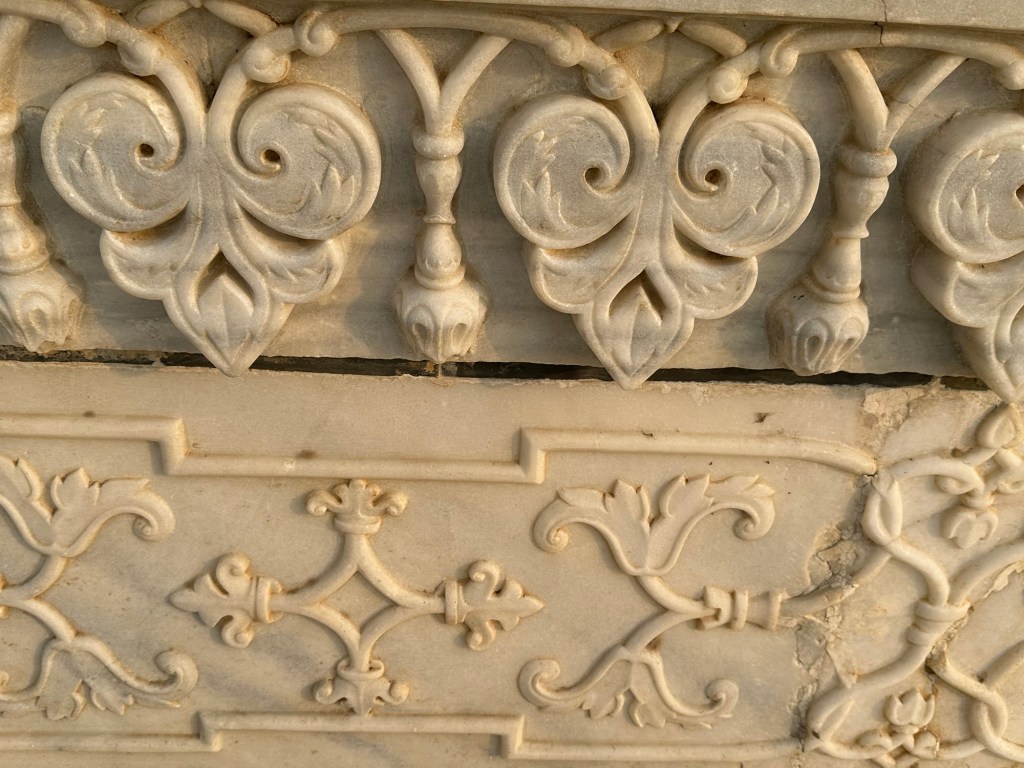
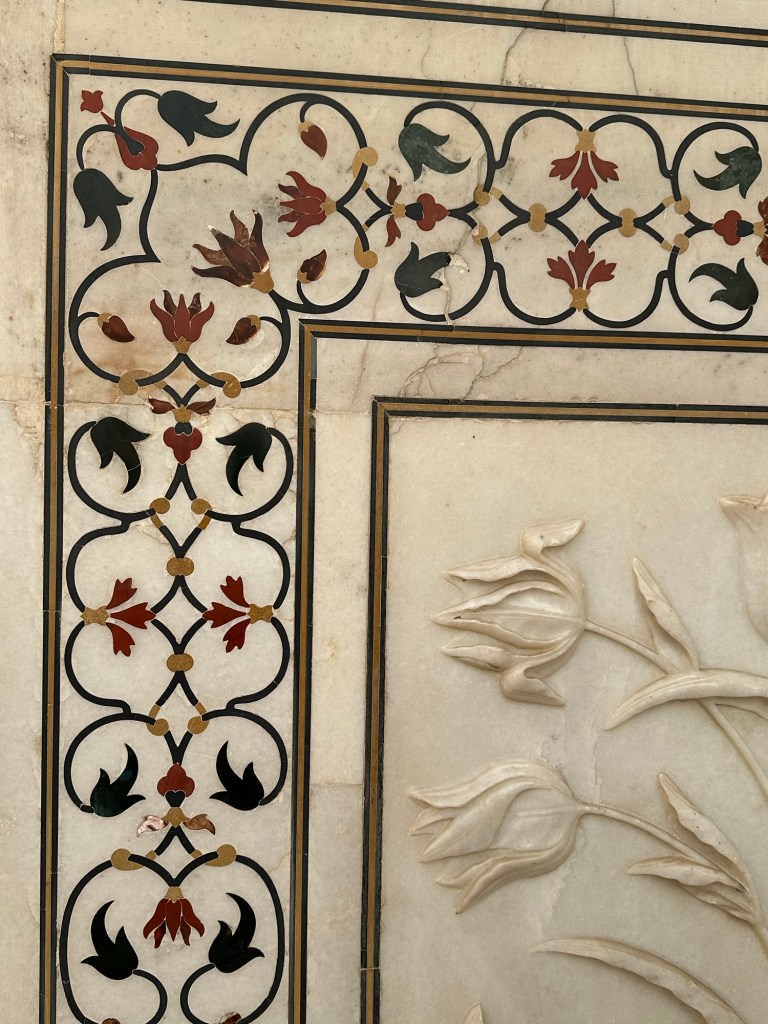
I don’t know how to describe what we saw. Surely the most incredible building anywhere. So much more than you have ever imagined. From a distance it appears gleaming white, but it is actually a soft pale greyish marble, carved everywhere with intricate patterns and inlaid with brilliant colours. Perfectly symmetrical apart from the tomb of Shah Jehan, which added as an afterthought. Let the pictures tell the story….
In the mist…Being sillyCarved from single slabs of stoneThe sun did show up eventually Intricate details
I had always dreamed of seeing this building. It was better than I ever expected. A beautiful story immortalised in stone. I feel very lucky.
Fun fact:
After the 20000 foreign workers who had built the Taj were finished building, they were forcibly kept in India. Their descendants still live in Agra, and are employed to do maintenance and repairs on the building. 17 generations of workers working on one building!
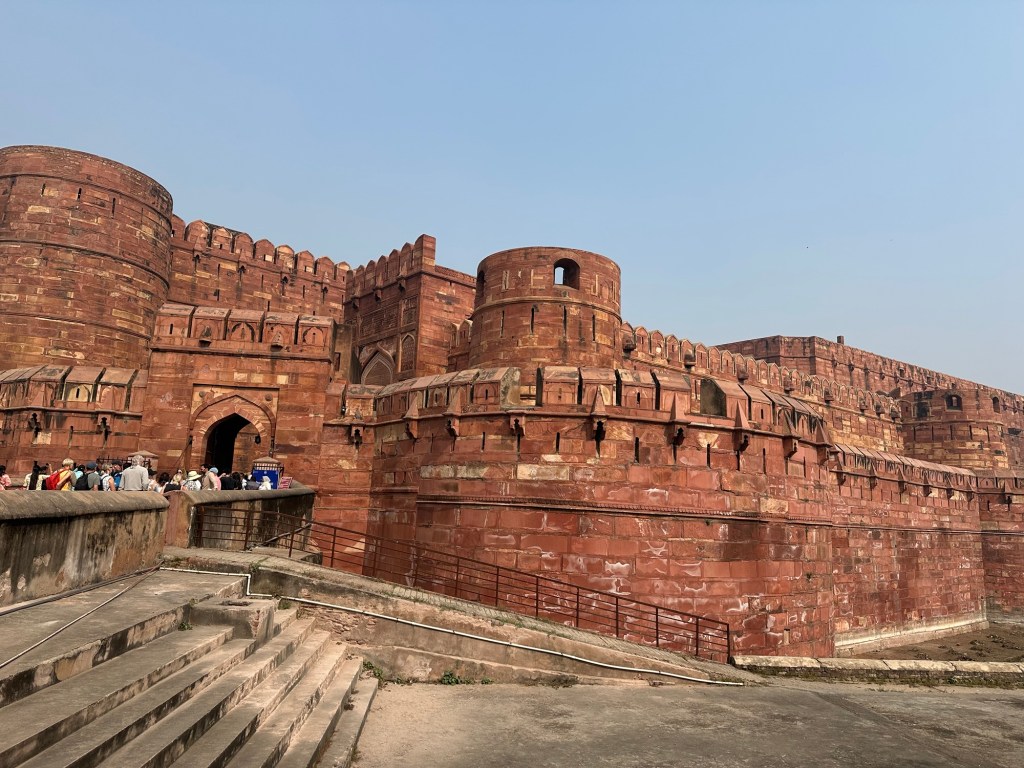
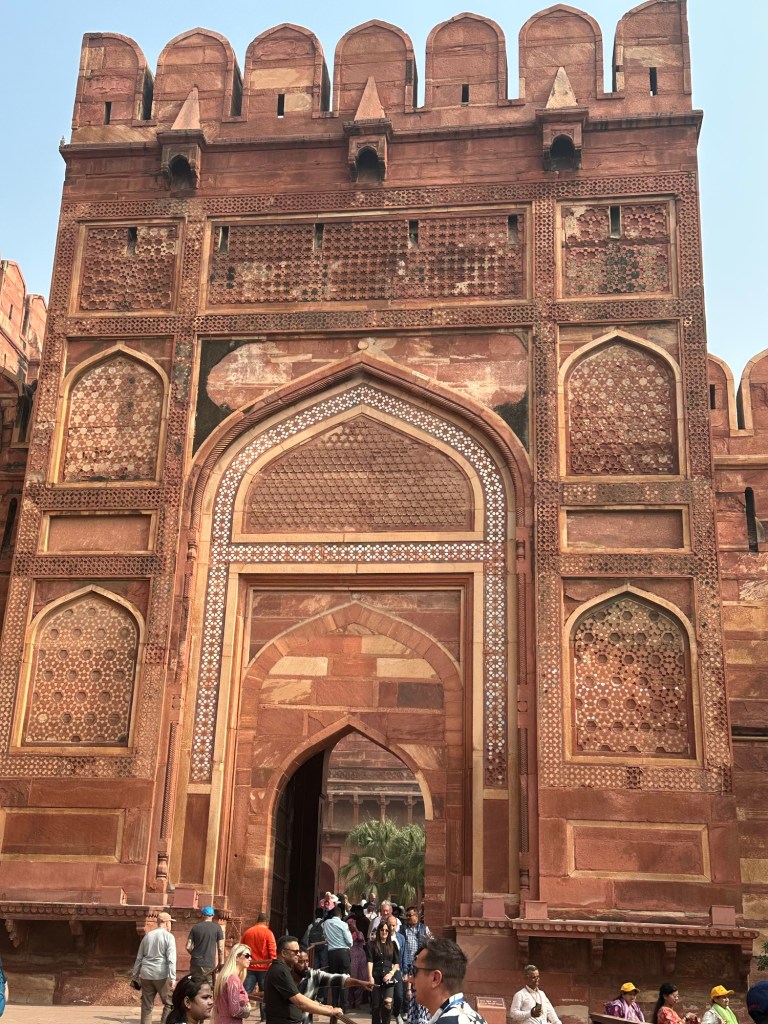
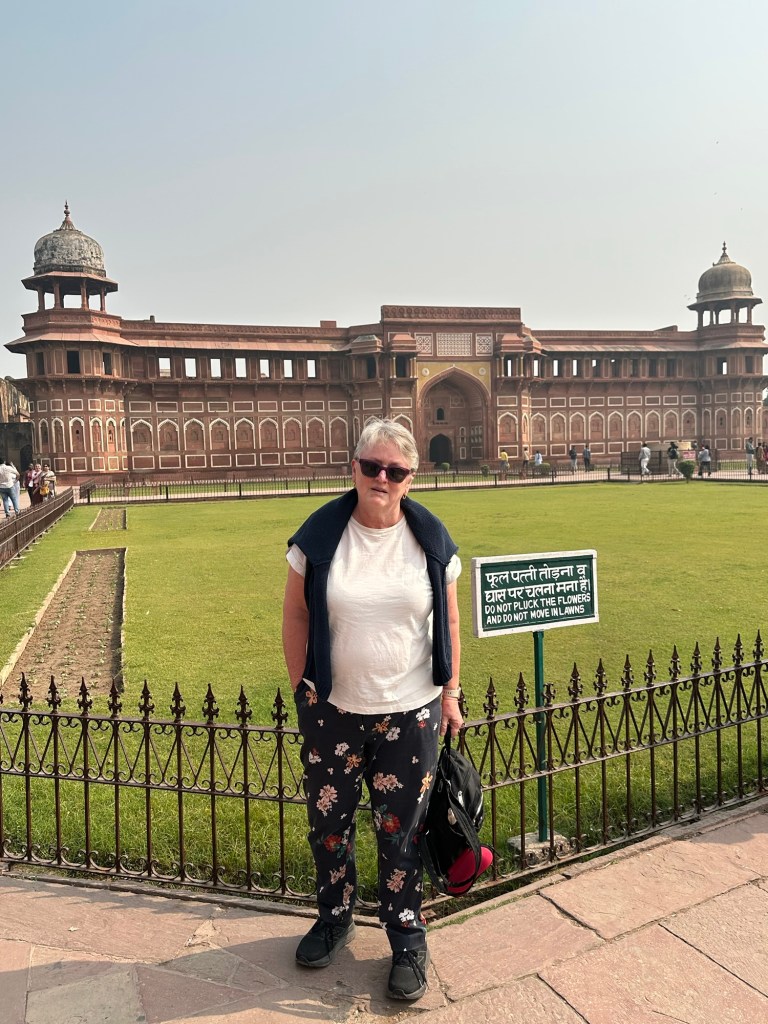
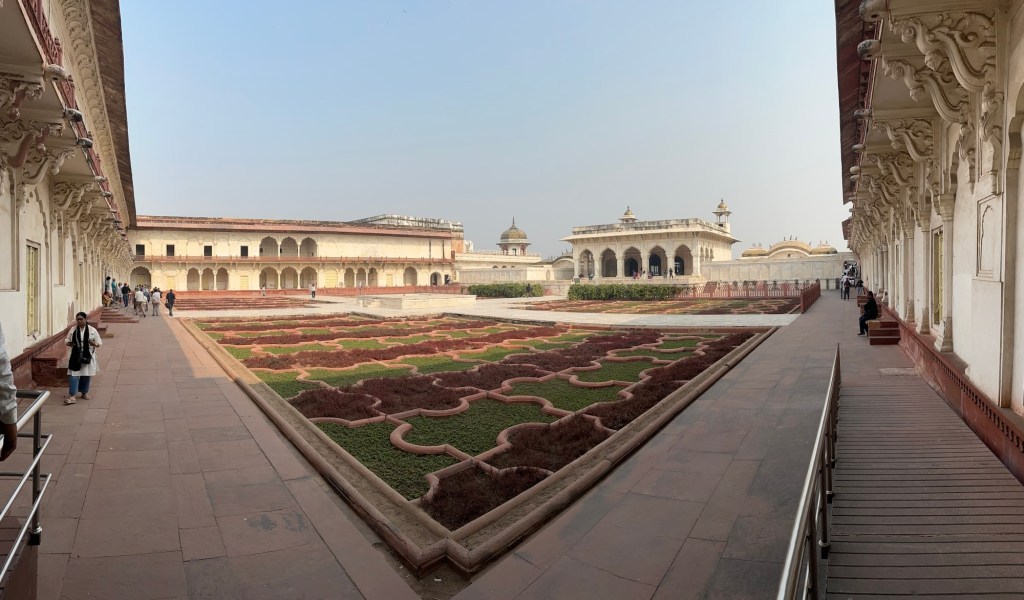
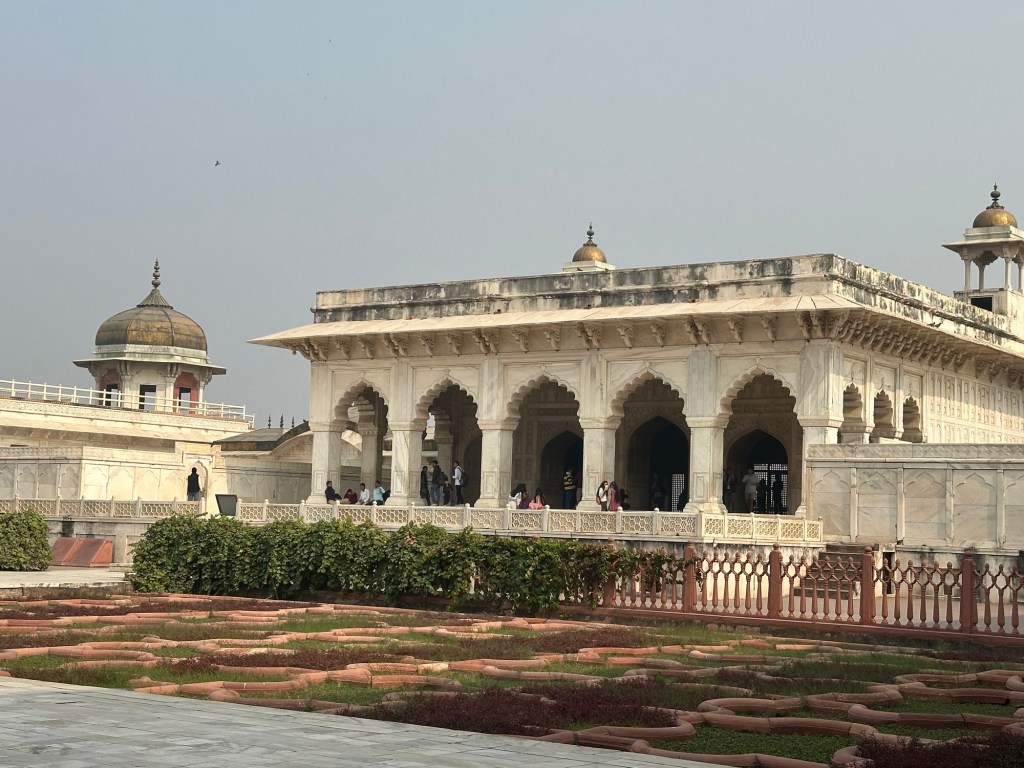
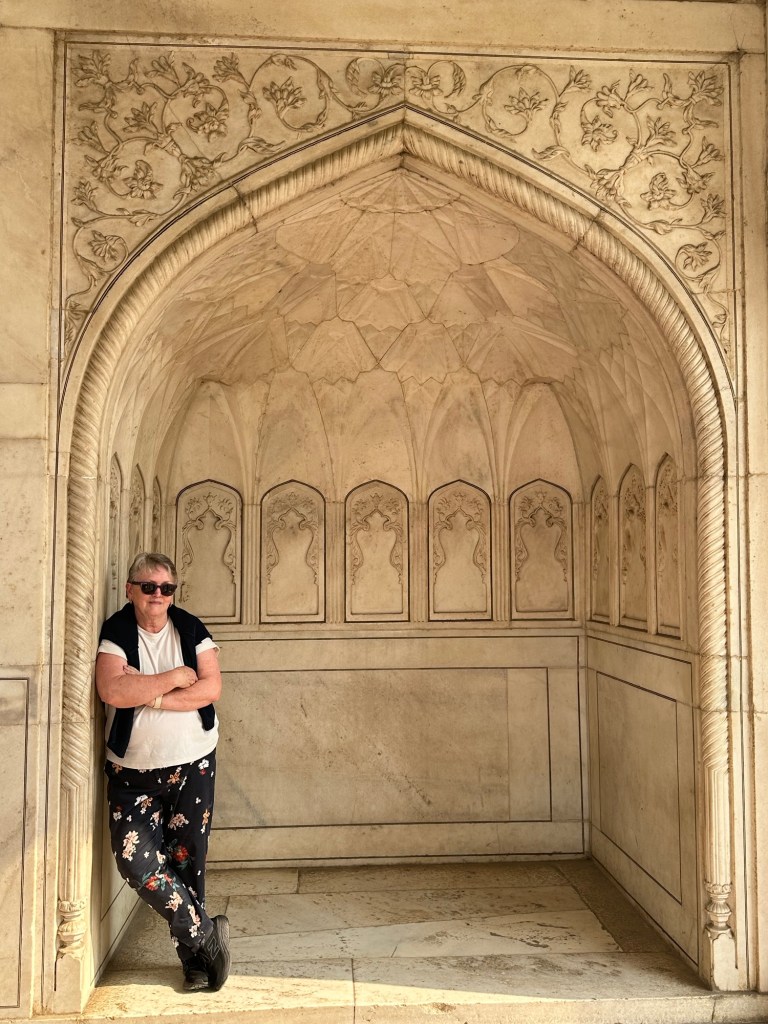
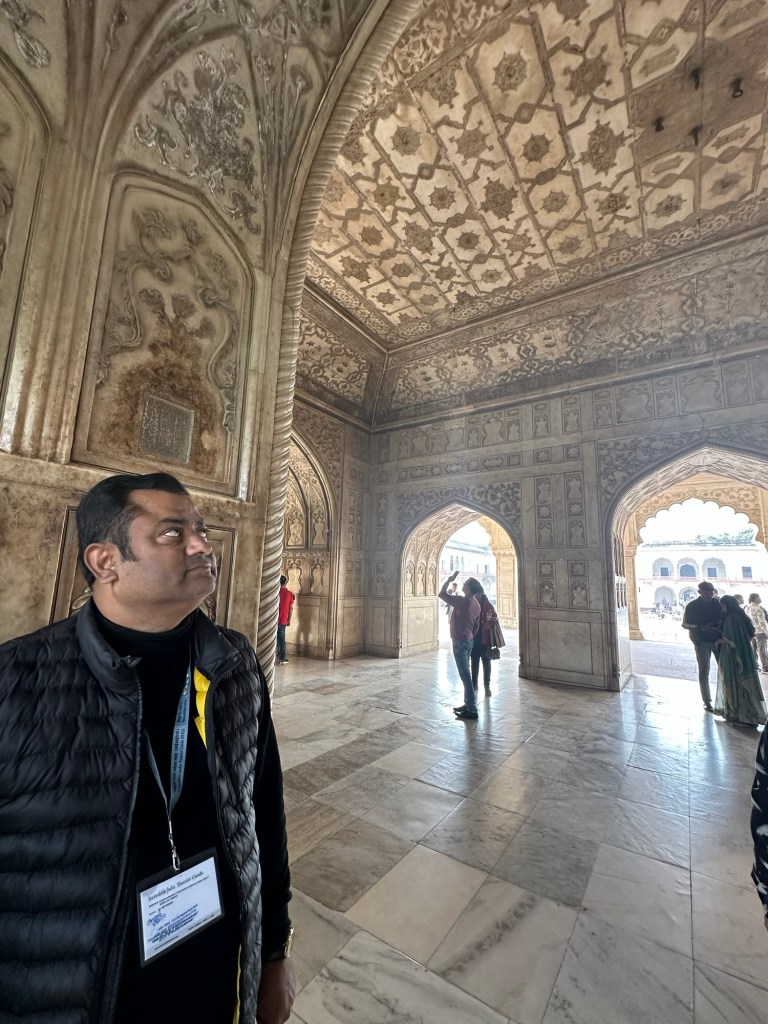
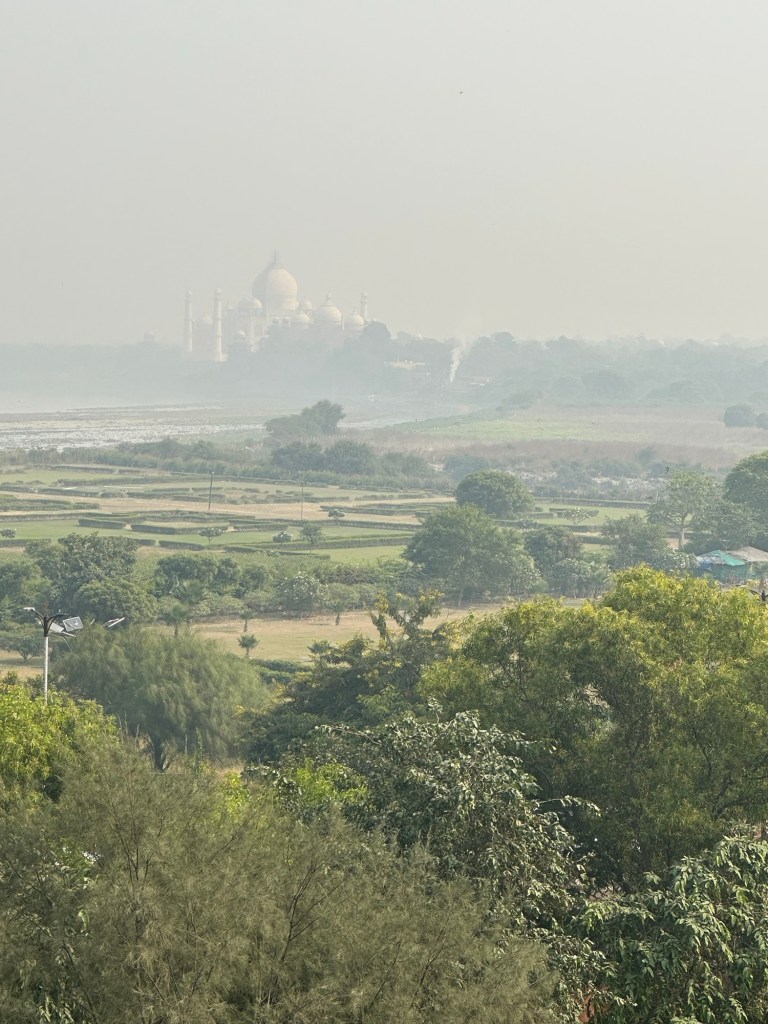
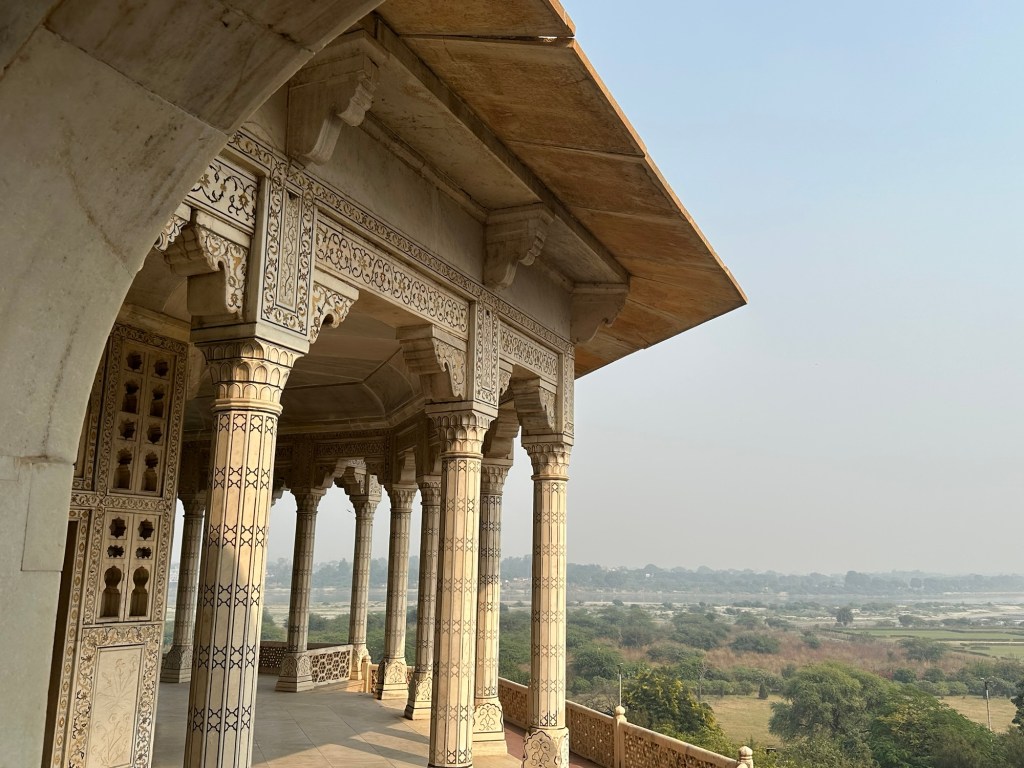
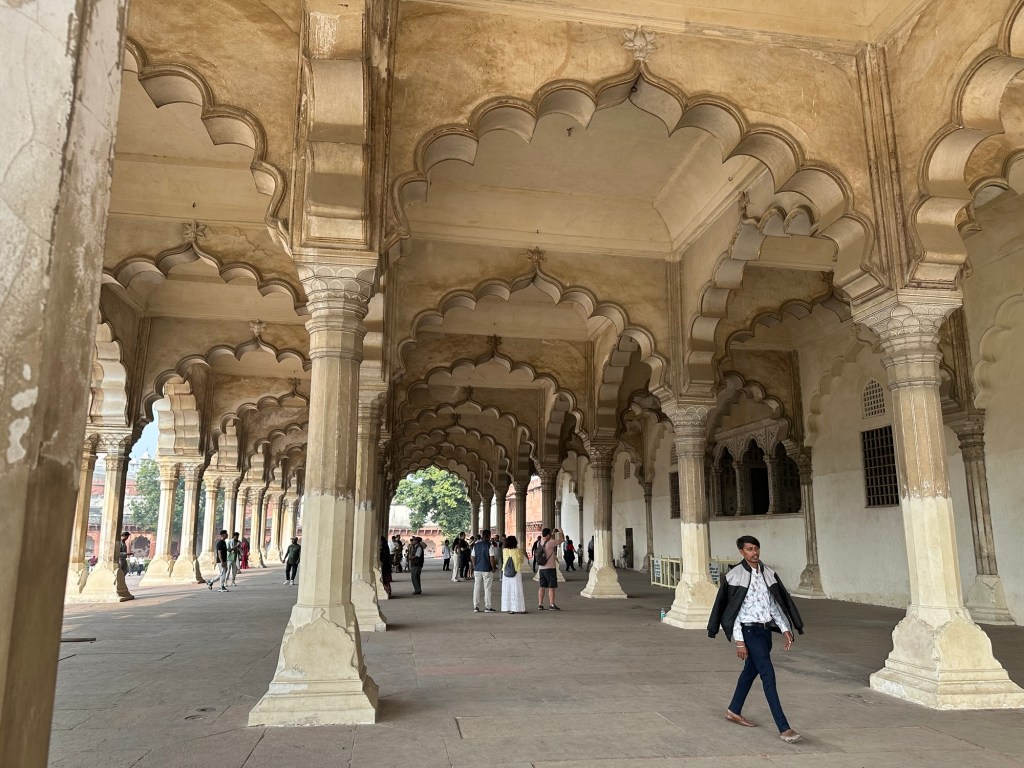
Later in the day, we visited the Red Fort in Agra. Also built by Shah Jehan, the 5th Moghul emperor, it is almost equally stunning. It faces the Taj across a river. A sampling of the various buildings inside the red sandstone walls….
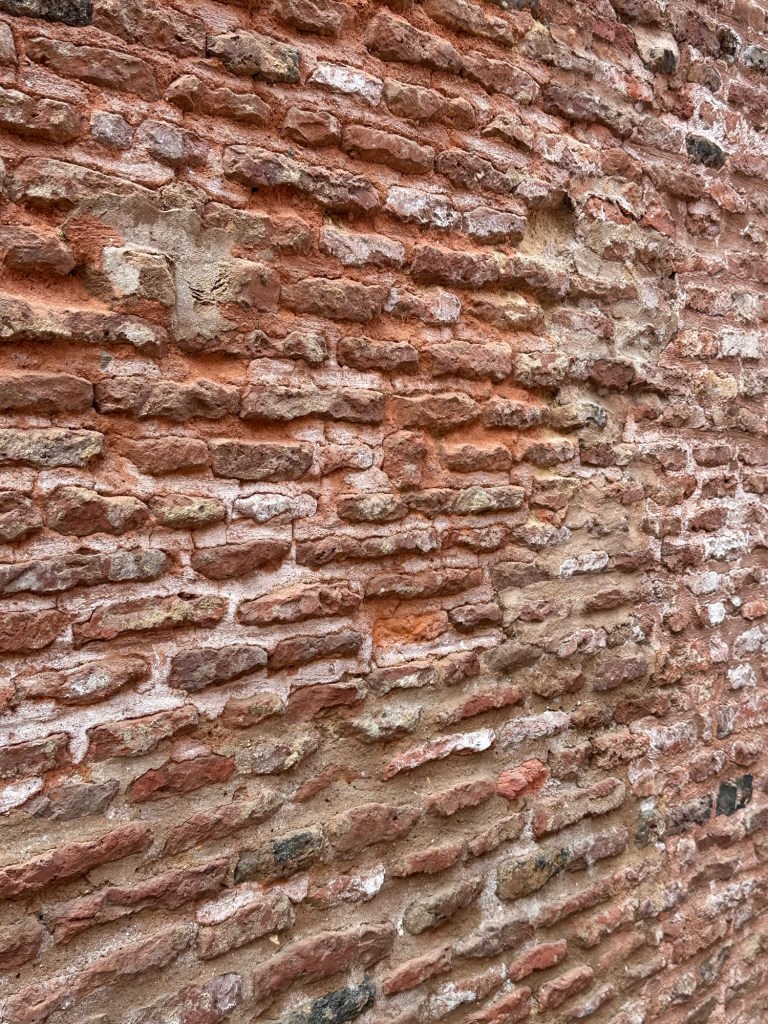
The wallOur guide KhurranThe view of the TajShah Jehan’s wind palaceThe audience room
Shah Jehan built this fort after his beloved wife Mumtaz Mahal was buried in the Taj. Unfortunately his son and heir turned on him, and kept him under house arrest in the Red Fort for 8 years prior to death, so that he could rule in his stead. He was imprisoned in the beautiful wind palace.
A fascinating place…
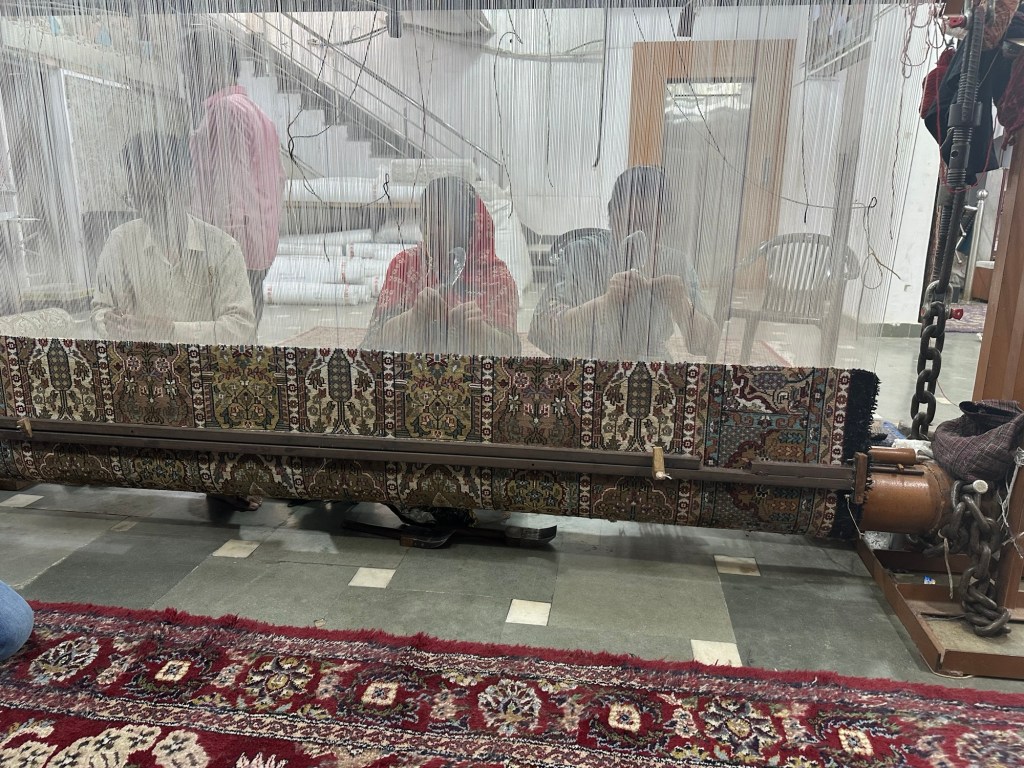
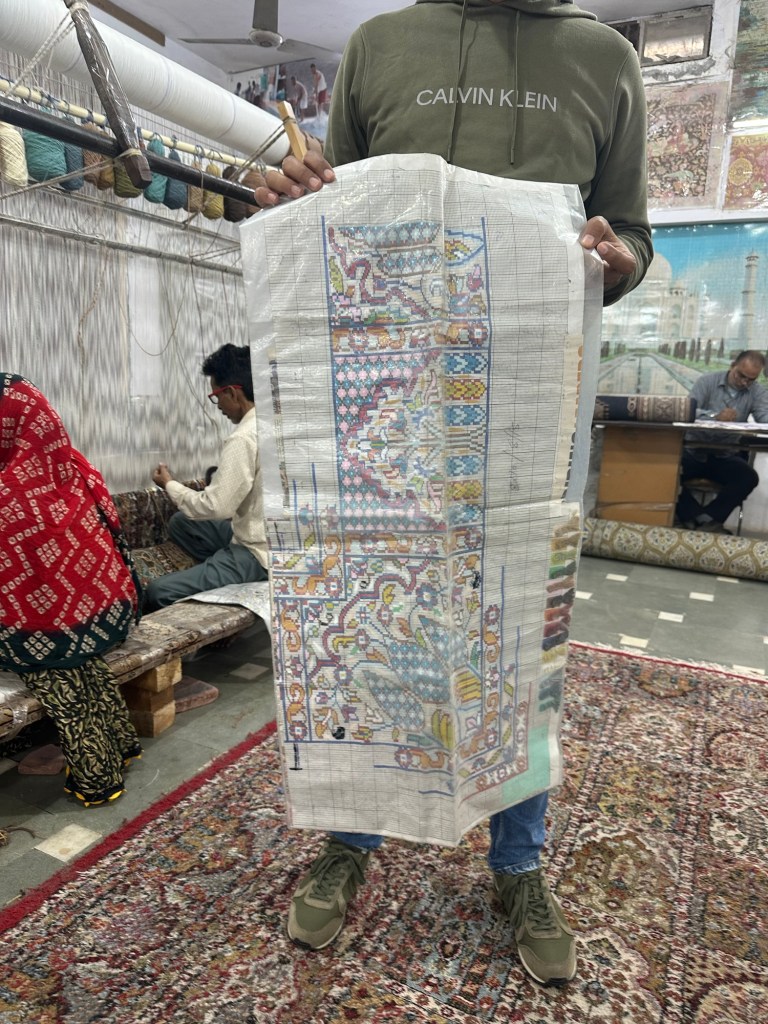
Day 3 ended with a visit to rug-making cooperative, where we watched weavers at work. They were so beautiful, and I succumbed. A small Agra rug is now on its way to Toukley. ……
Day 4
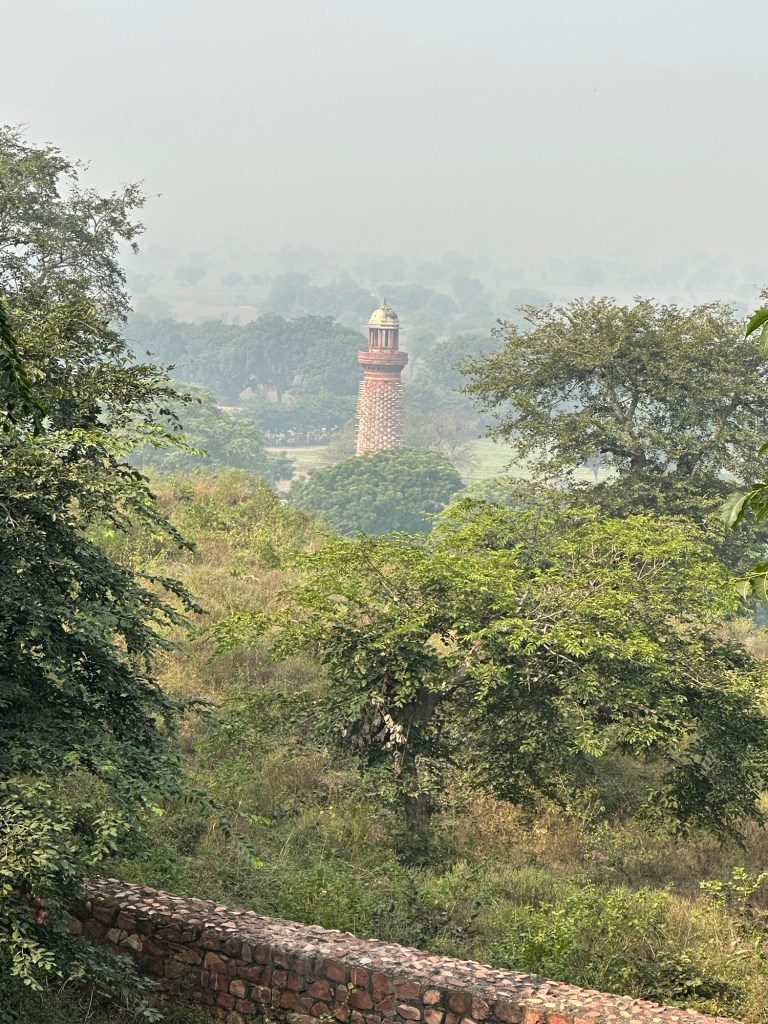
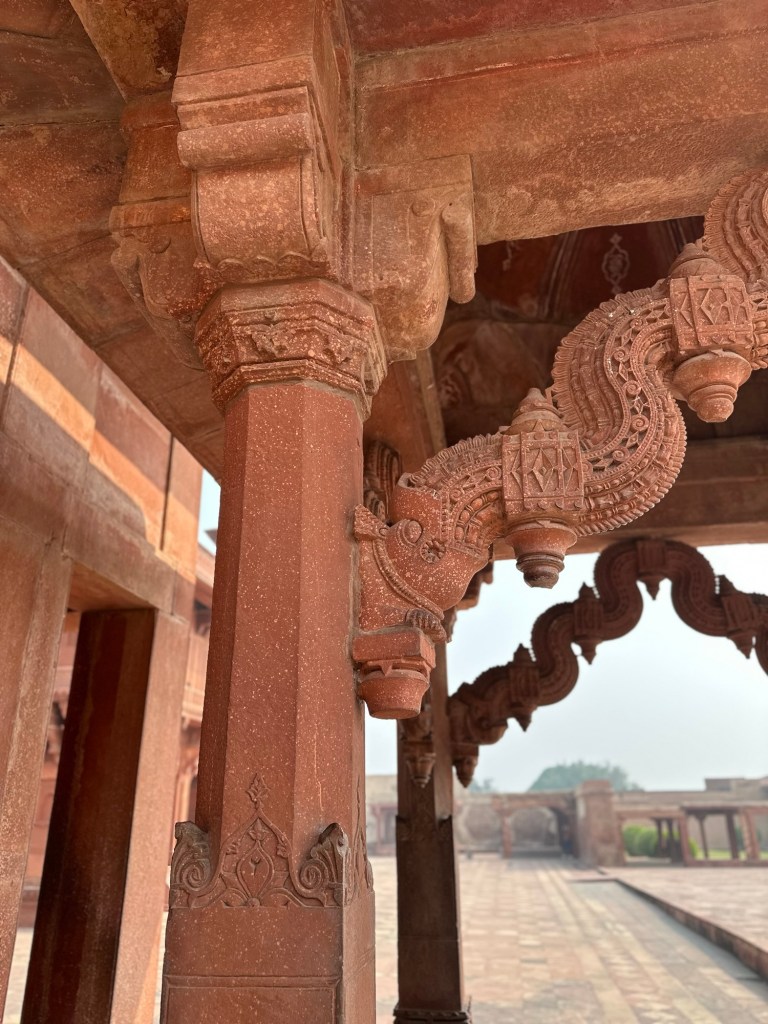
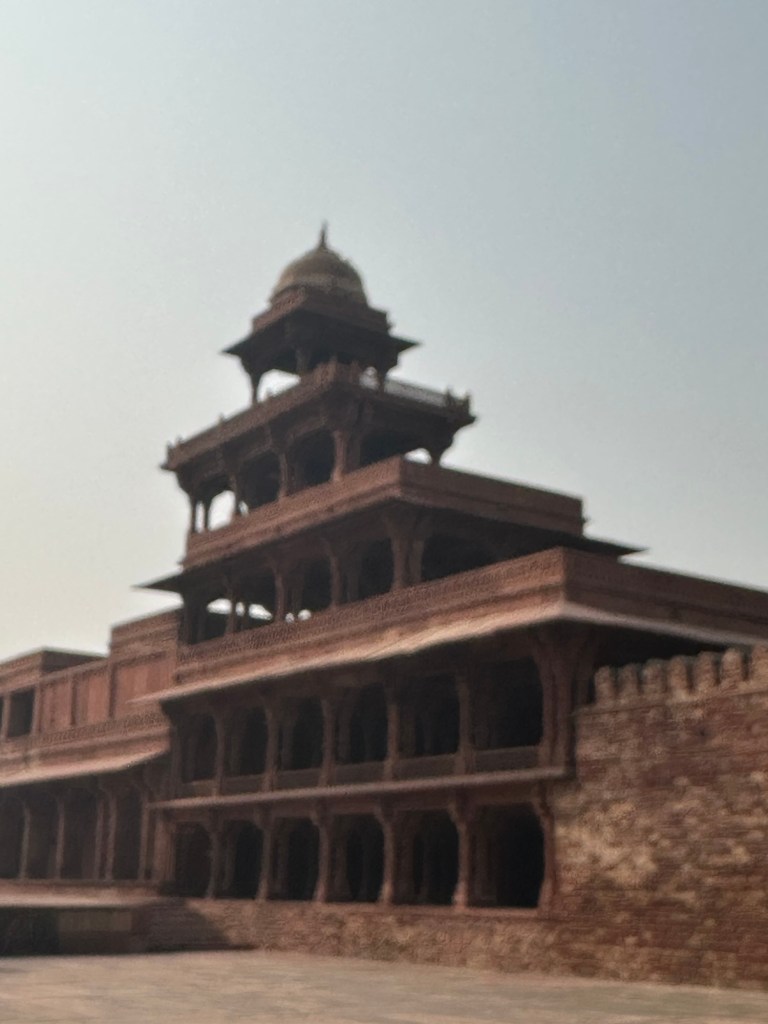
We left Agra to visit Fatehpur Sikri, another impressive Moghul palace complex. This one is also World Heritage and was built in the 16th century by Akbar the Great, grandfather of Shah Jehan. It is built entirely of the local red sandstone.
Akbar left Agra to set up his new capital, and built 12kms of wall with 9 gates, to enclose his palace. He had 3 wives (one Moslem, one Christian and one Hindu) and each had a palace reflecting her own heritage.
Inside the walls, you move through massive courtyards to view each palace and the numerous other buildings in the complex.
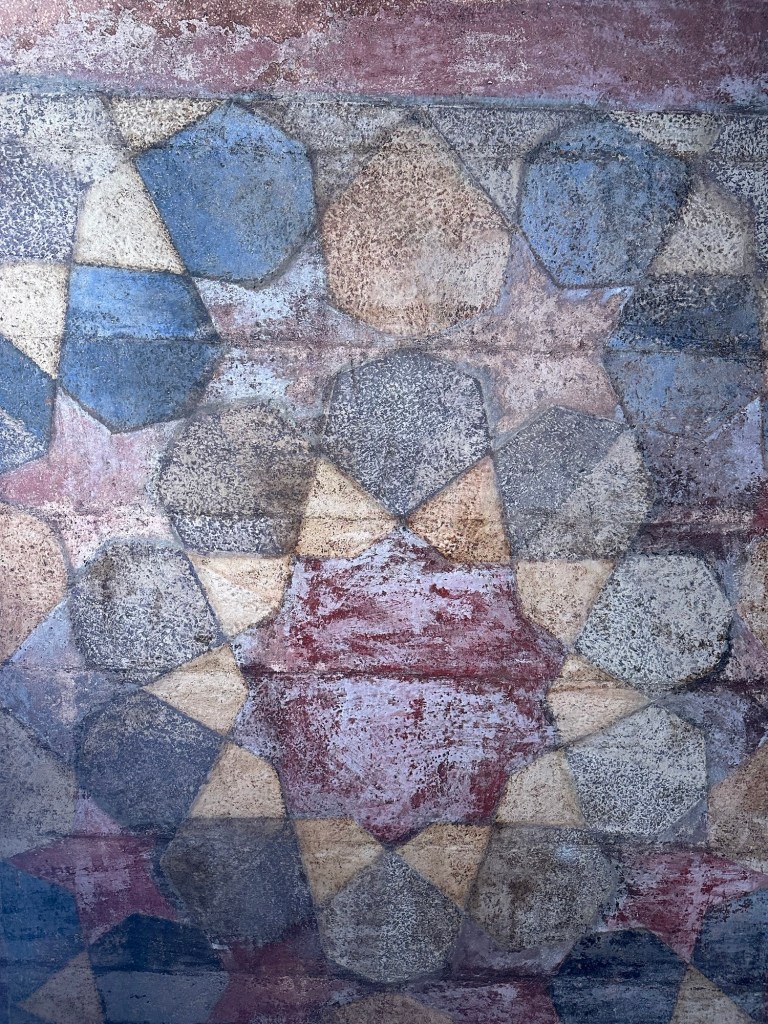
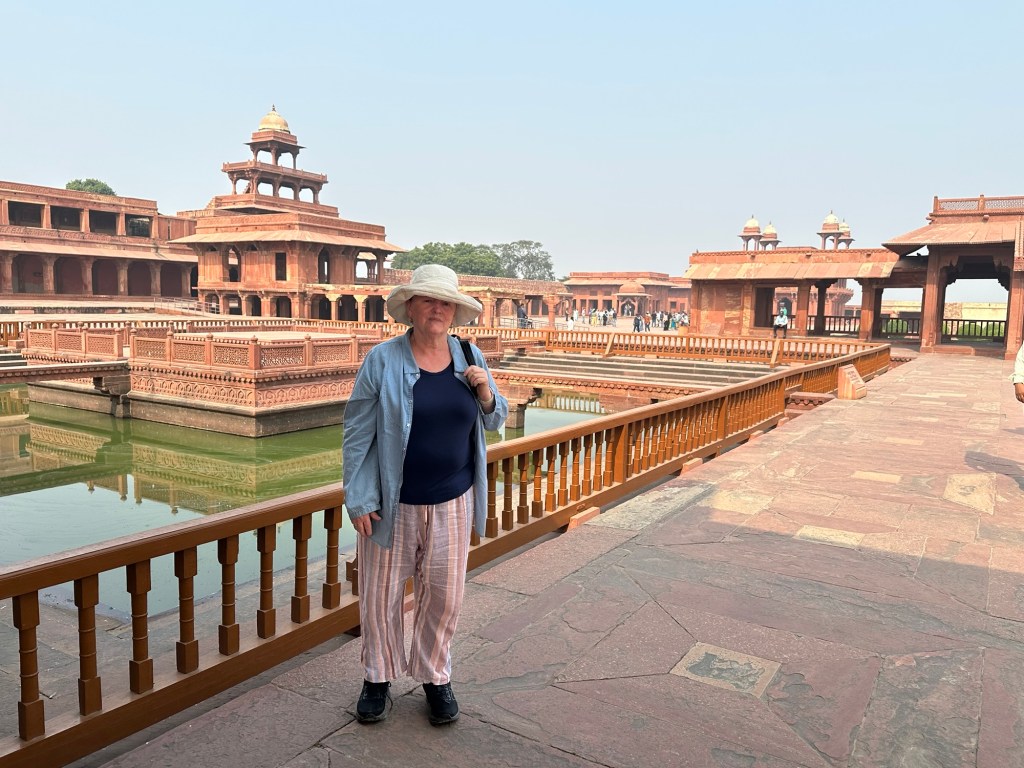
A selection of views……
Where the pet elephant was tied upBeautiful pools and fountains everywhere
The place was eventually abandoned due to water supply.
PS
Forgot to mention this when I wrote earlier:
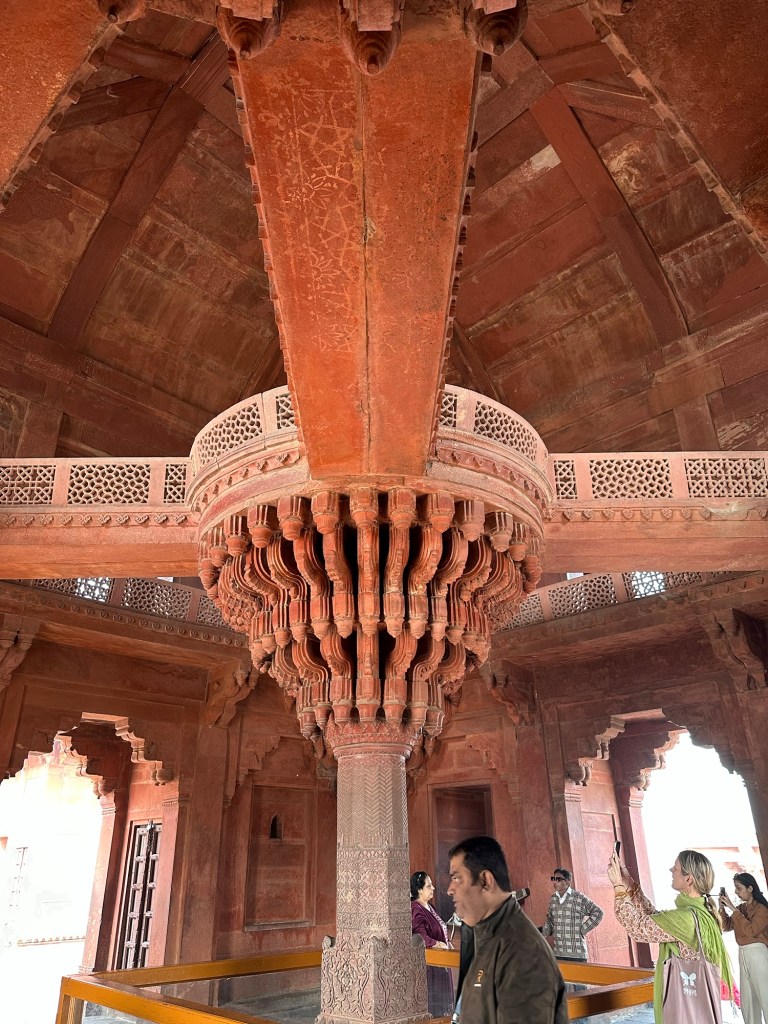
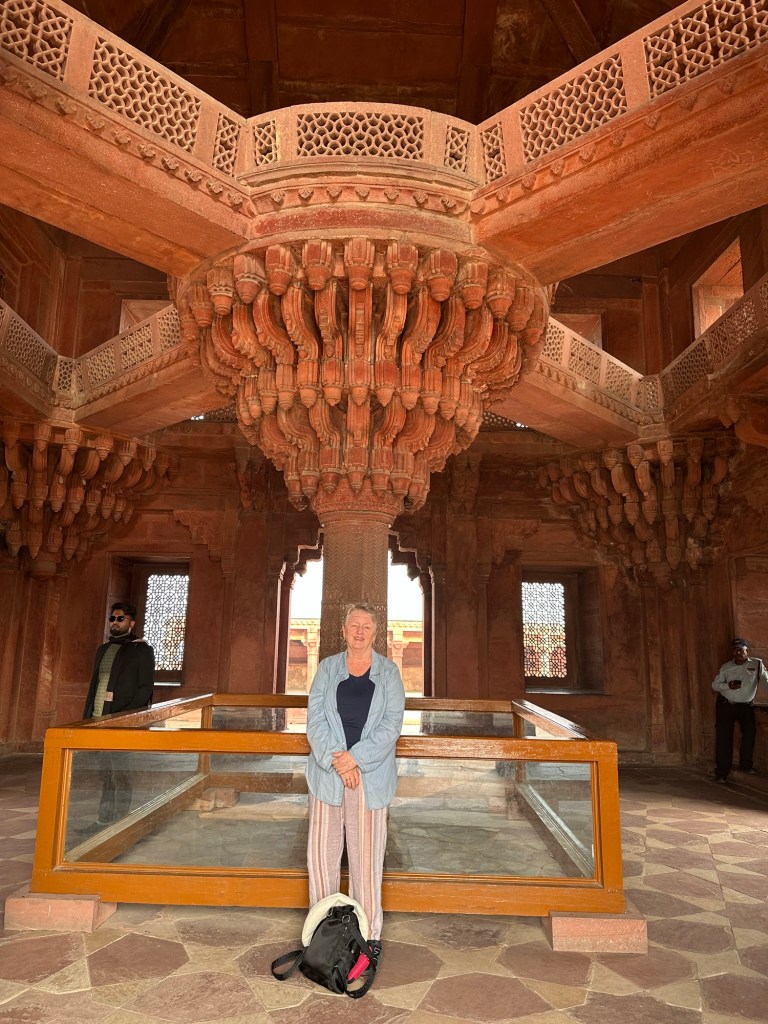
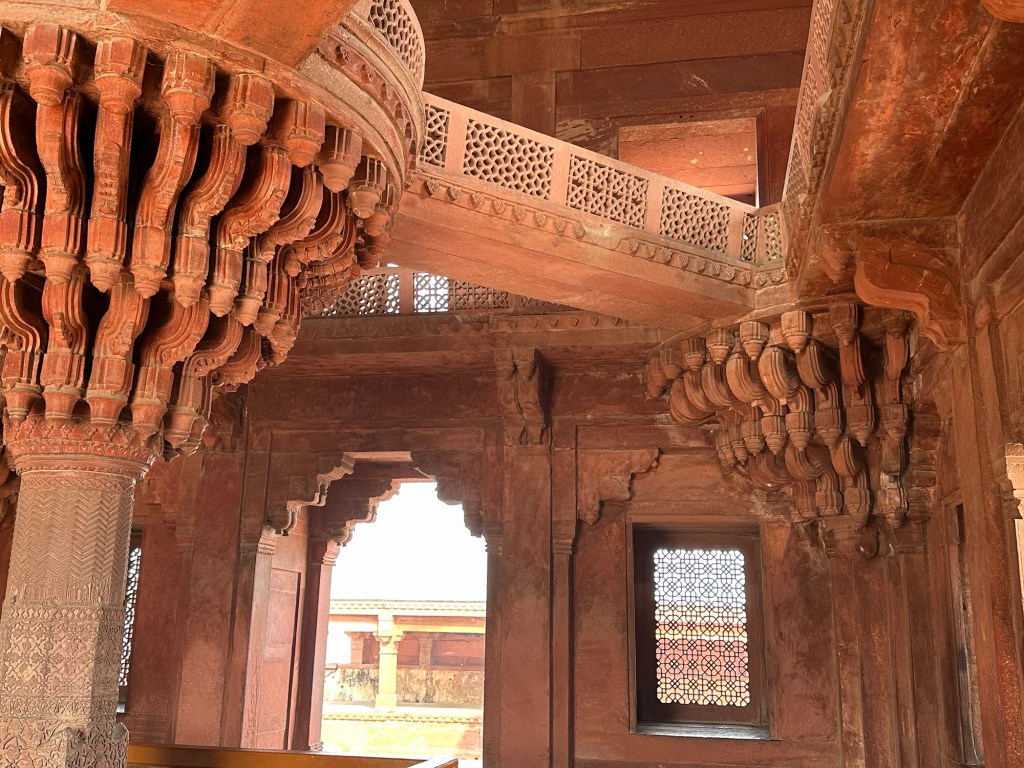
Akbar’s council chamber was one of the most stunning rooms I have ever been in. It has a column in the centre which he used to sit on, with his ministers around him. The room was designed so that they could see out but no-one could see in. Akbar was quite enlightened in some ways. He was 13 when he acceded to the throne, and always asked his elders (across a range of religions) for advice.
The chamber
Our tour group consisted of two:
This is where the emperor sat. The building behind is the wind palace, where cool breezes blew.
The remainder of the day was spent travelling back to Delhi. We had lunch at a very pleasant hotel on the way.
I am so grateful not to be driving here. Absolutely terrifying. Zooming along a quite good expressway, you will have to suddenly slow down for 6 cows, various dogs and a man driving a camel cart! The traffic in Delhi itself is chaotic in the extreme.
We arrived early evening, and my companion went off to find her friends.
Day 5
Today was another day of travel. I flew from Delhi to Mumbai. All very brisk and efficient.
Mumbai has a much more tropical feel. Air quality seems a bit better. Much hotter.
The hotel where I am meeting up with my next tour tomorrow is very nice. More of an international standard place. Ramada. It is right by the beach and I have a sea view. should be very pleasant for 2 nights.
I have ventured out a couple of times:
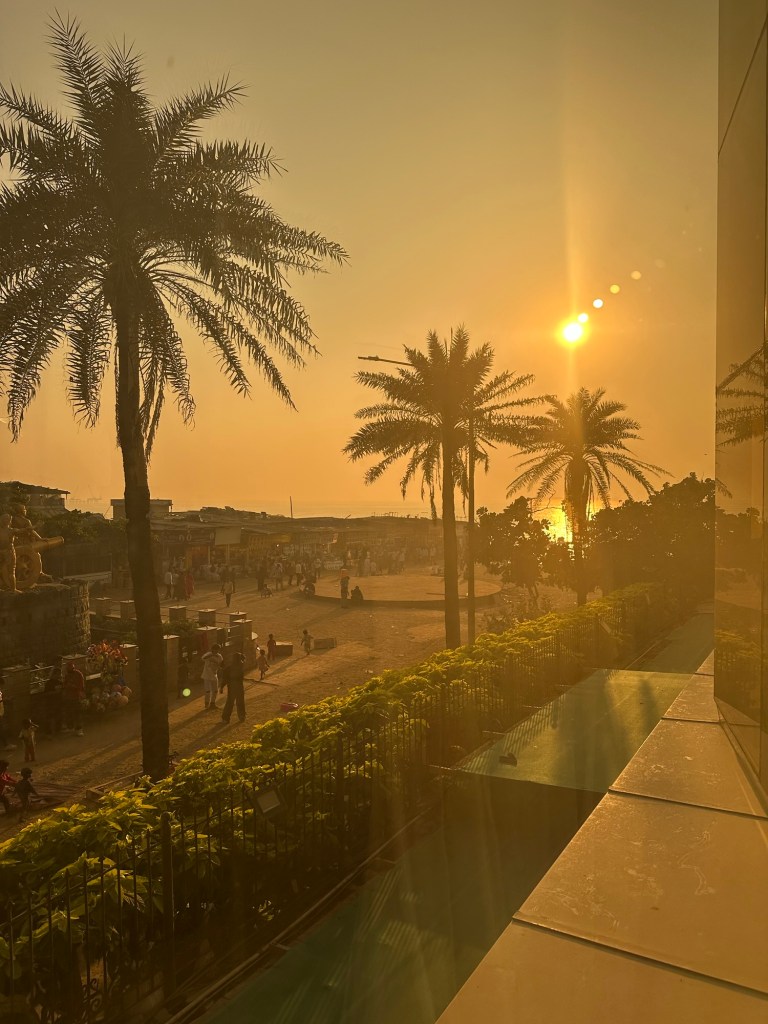
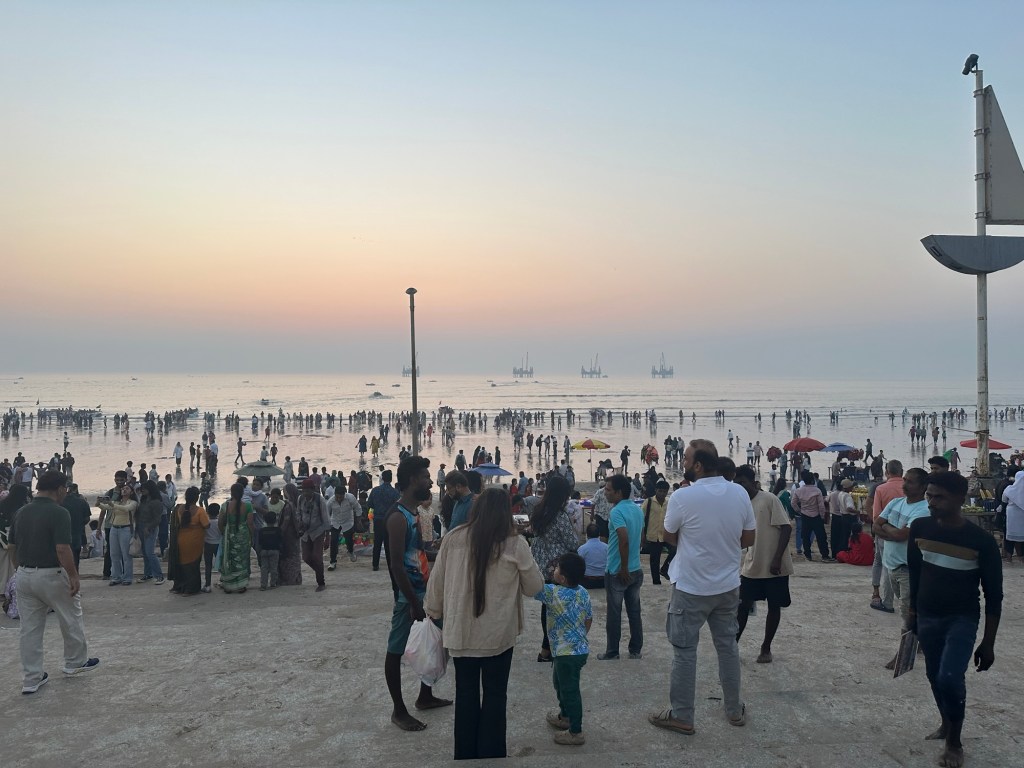
Juhu Beach
A little shopping trip in a tuk tuk
Will probably have dinner in the hotel. I am still being a bit cautious about food. Not wanting to tempt fate…
Day 6
Today I saw a man with no fingers begging.
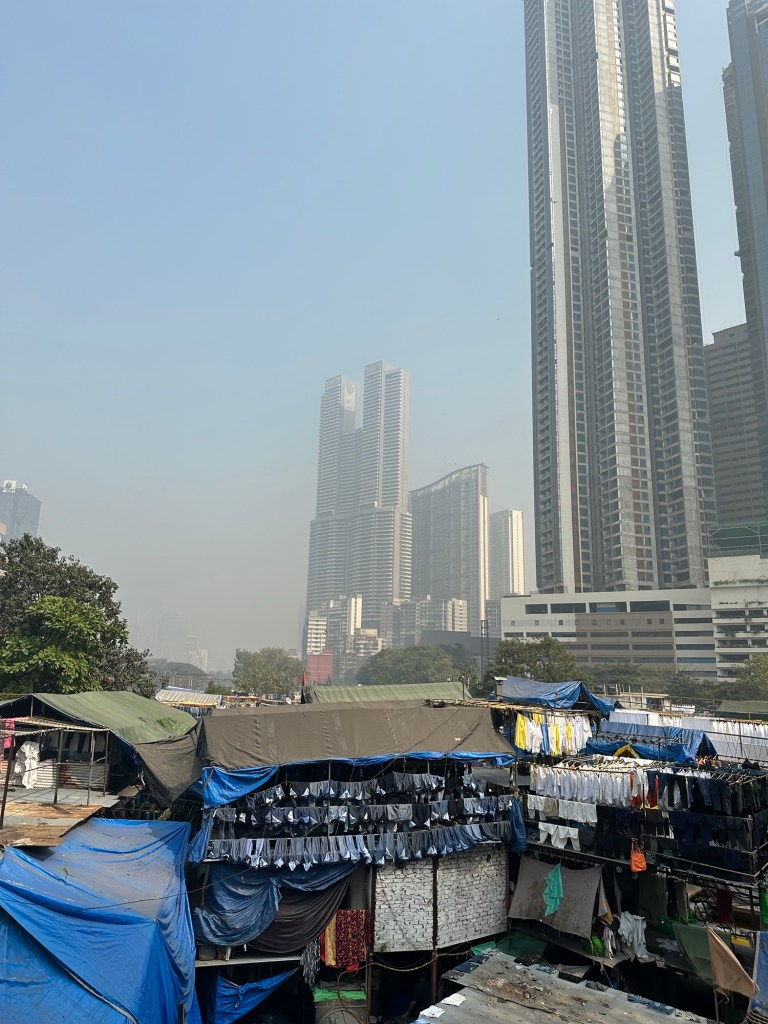
Today I saw a $2 billion, 27-storey building which is home to ONE family. And their 265 cars.
This is India.
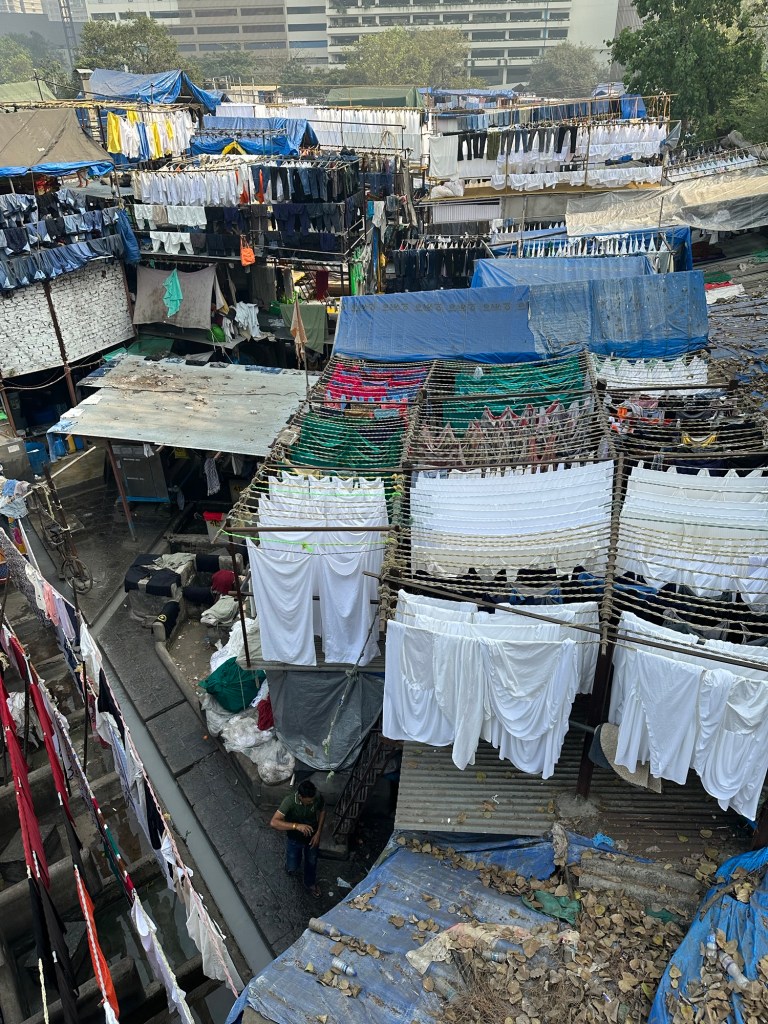
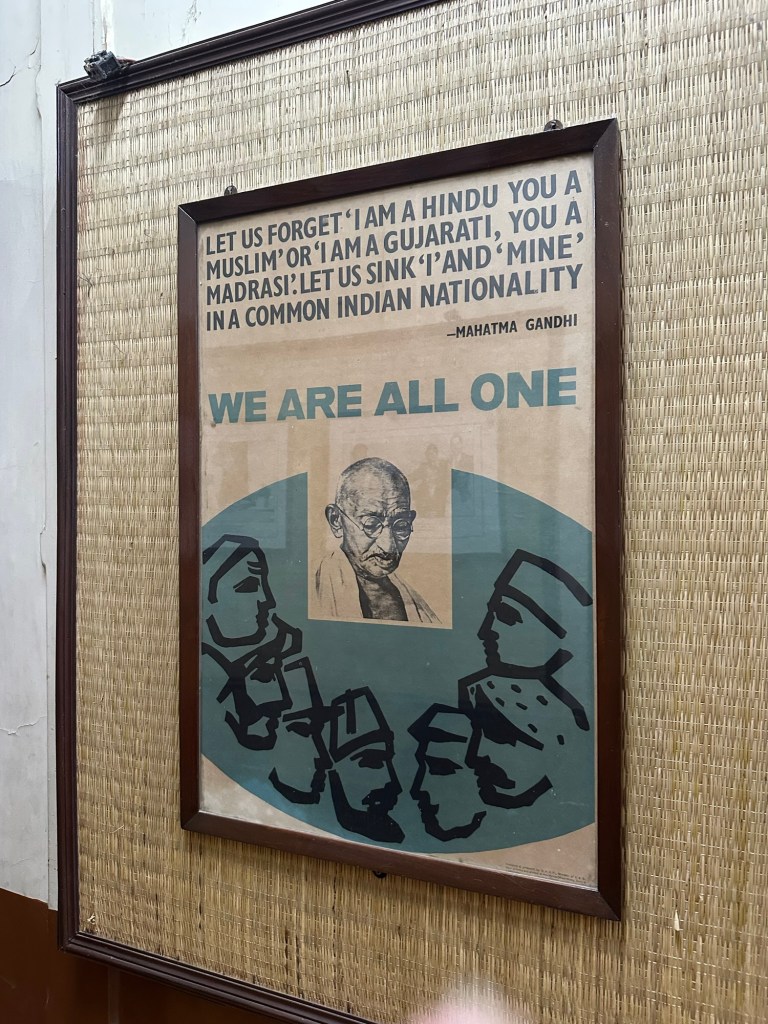
A selection of the sights from my tour of Mumbai today:
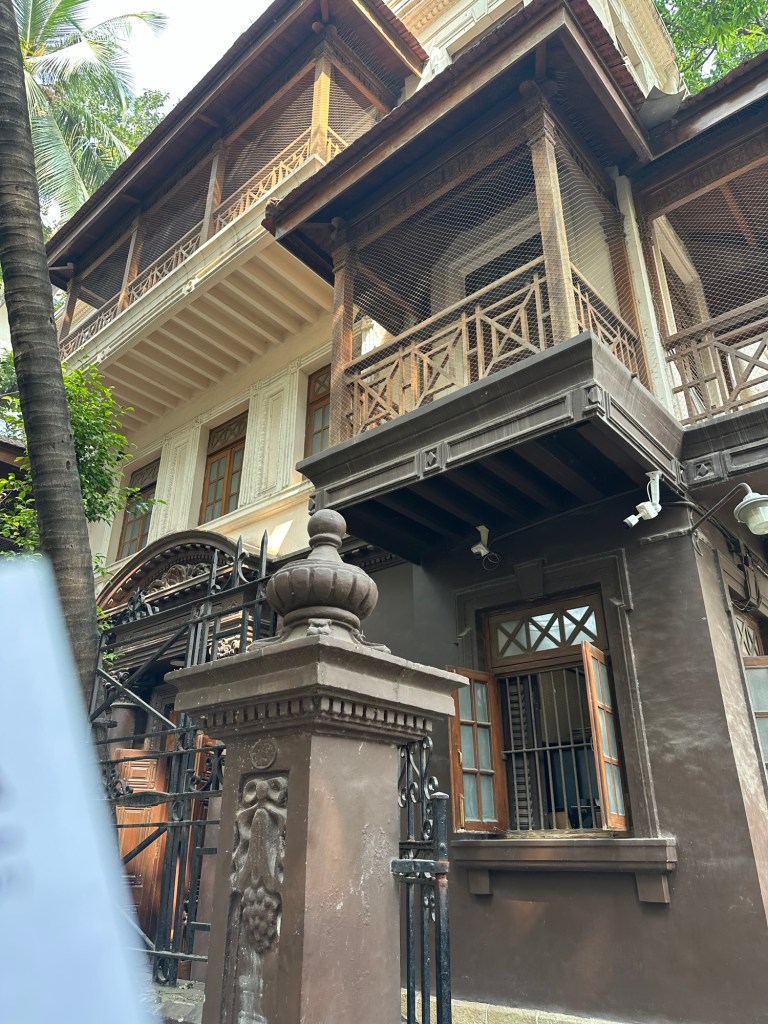
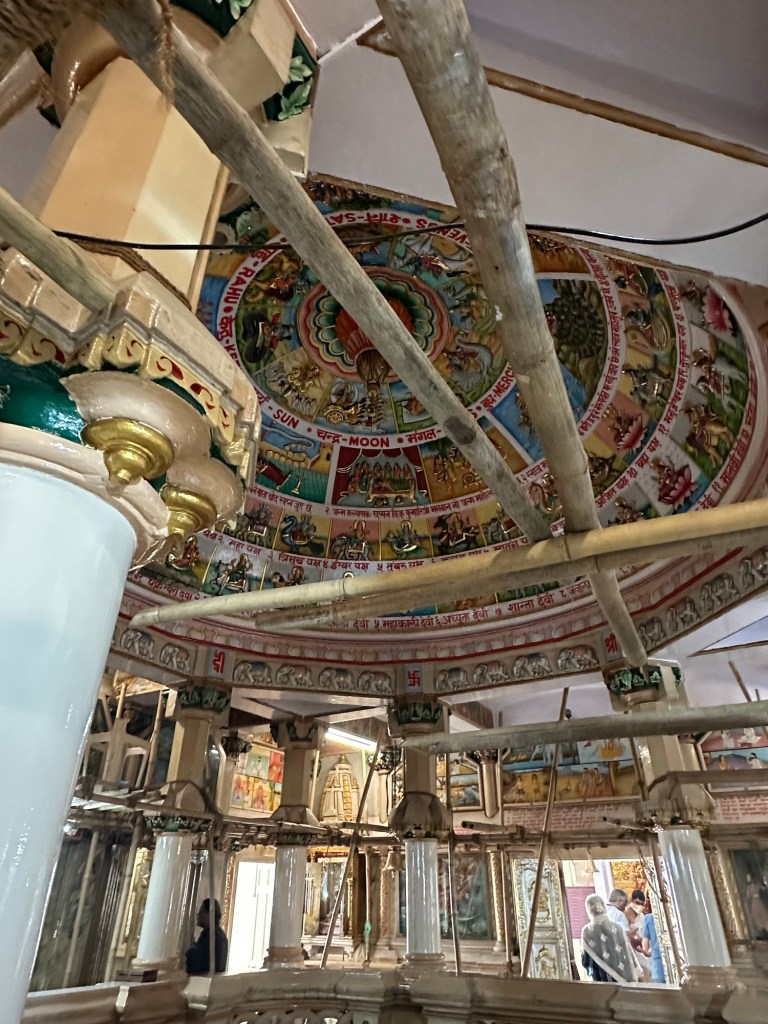
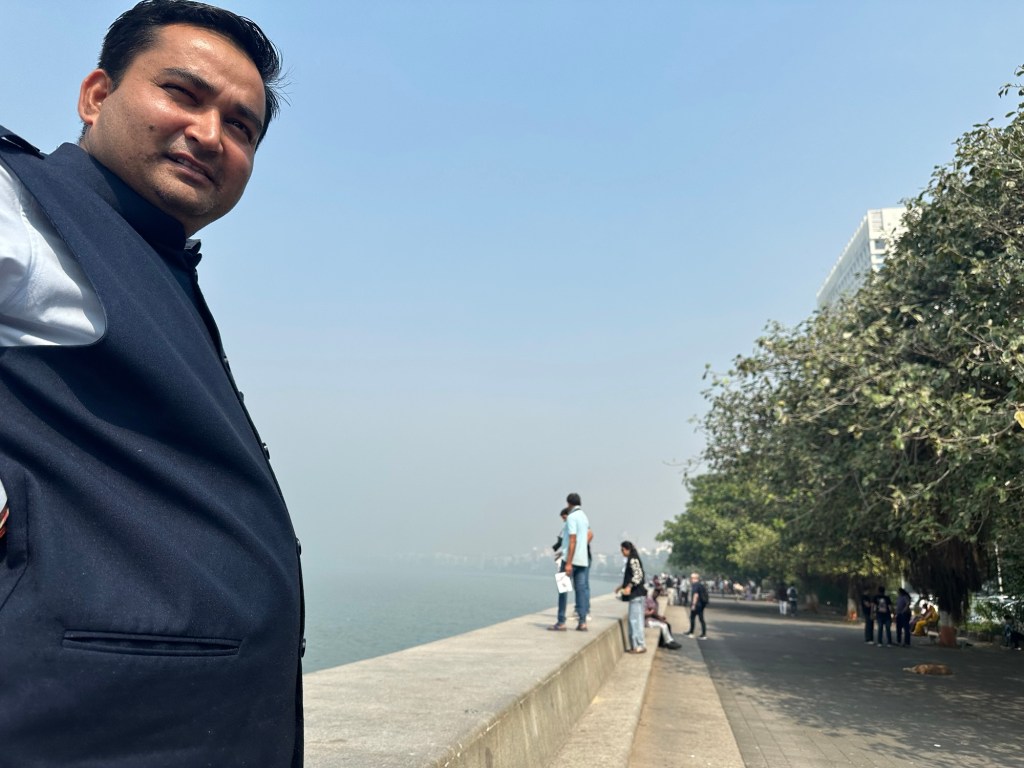
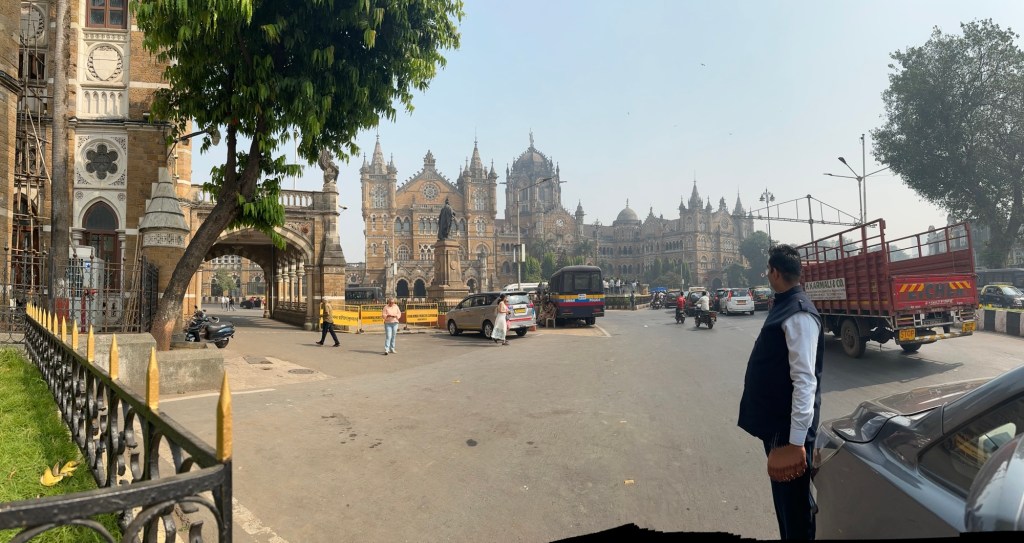
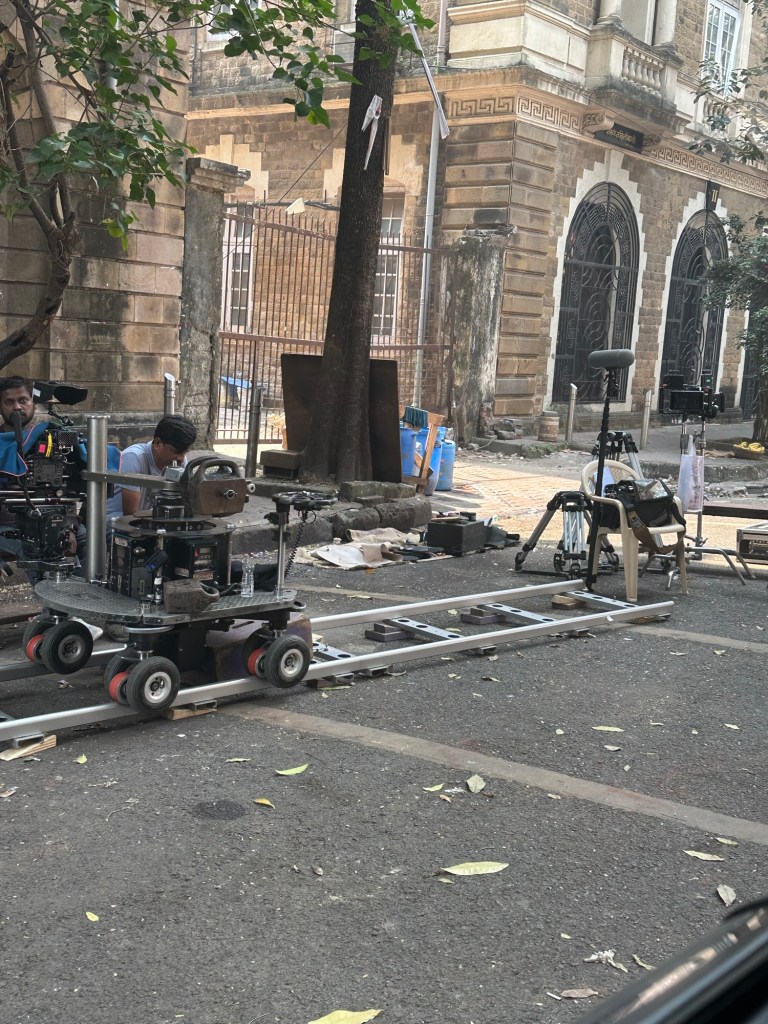
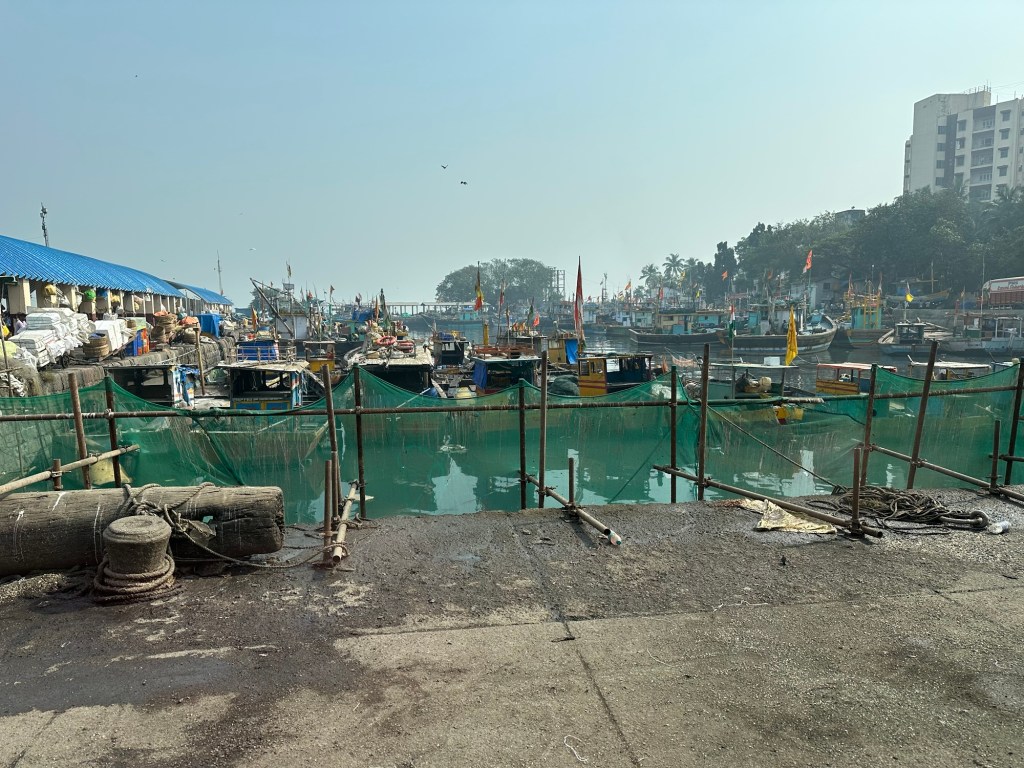
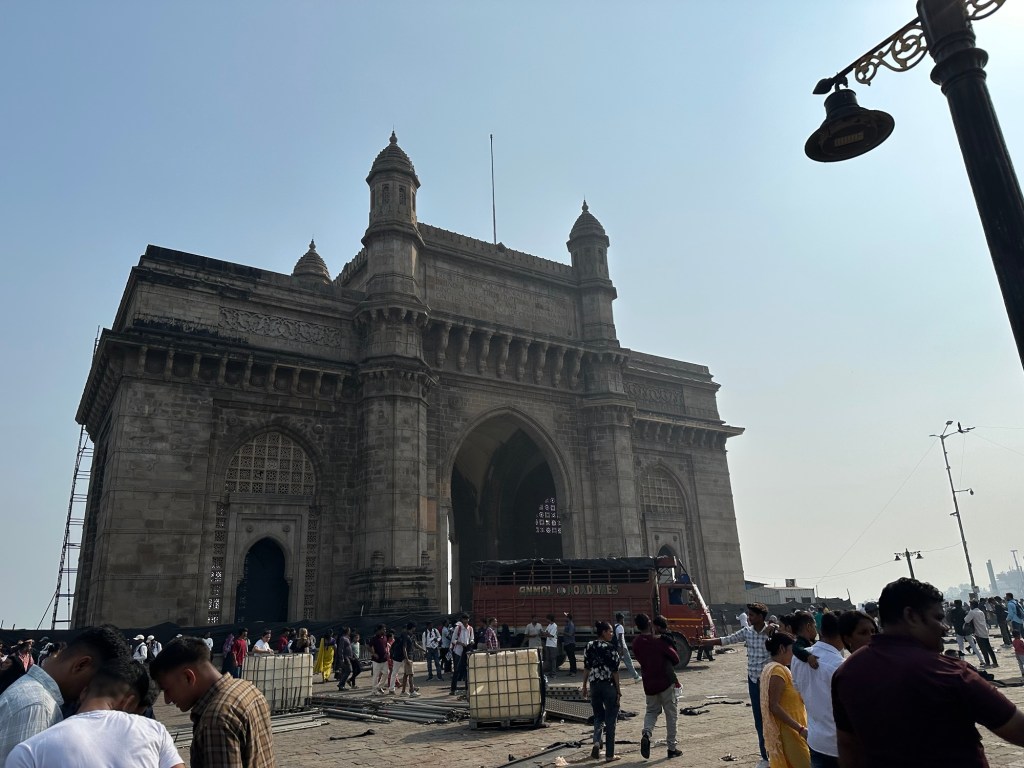
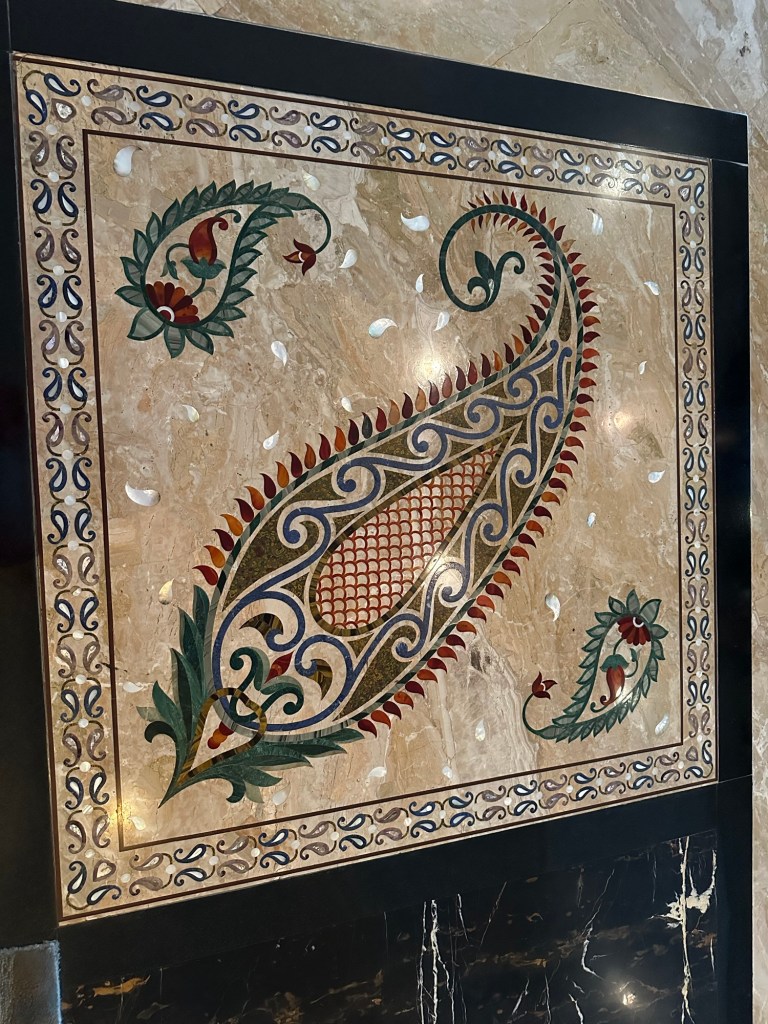
India’s tallest buildingThe world’s largest outdoor laundryMahatma Gandhi’s homeInside a Jain templeMy driver Santosh on Marine ParadeThe main railway station in MumbaiMaking a Bollywood movieFishing boatsIndia GateA beautiful floor
As you can see, Mumbai contains many reminders of British rule. There is a whole suburb of Victorian office buildings now containing government offices, as well as the extravaganza which the station.
The Gate was built to celebrate the visit of the King and Queen in 1911. The British forces left by it in 1947.
In the evening, I met up with the other members of the group. There are 8 of us in total. All older women. Sydney, Brisbane, Melbourne and Bendigo. Age range I would say 50s to 70s. All seem to have a passionate interest in textiles.
The tour leader is called Sunitha.
Day 7
Another day of travelling. We left the hotel 9.30ish, and then hung around at the airport for a while. The 11 o’clock flight eventually left at 12.45.
On the plane I had a nice chat to my seat neighbour, a nice Indian businessman.
We arrived in Kandla, a port city in Gujarat about 2pm. We will now travel in our little bus.
We had a huge thali lunch in a local restaurant and then proceeded along bumpy roads to the city of Bhuj, where we will be sleeping for 4 nights.
Lunch
In Bhuj, we settled in to our hotel. Let’s just say…we are expecting Basil Fawlty any minute….my room is vast and you could have a dance party in the bathroom….
In the evening we went out to the old part of the city, where there is an old palace and a bazaar. Narrow winding streets of little shops selling jewellery and all sorts of stuff. We shared the street with motorcycles, scooters, people and dogs. Very relaxed and non-touristy.
Dinner was at the hotel. Delicious paneer tikka. We are pretty much vegetarian now!
Day 8
We spent the day in and around Ajrakhpur, learning about all the different types of textiles that are made here in the Kutch region.
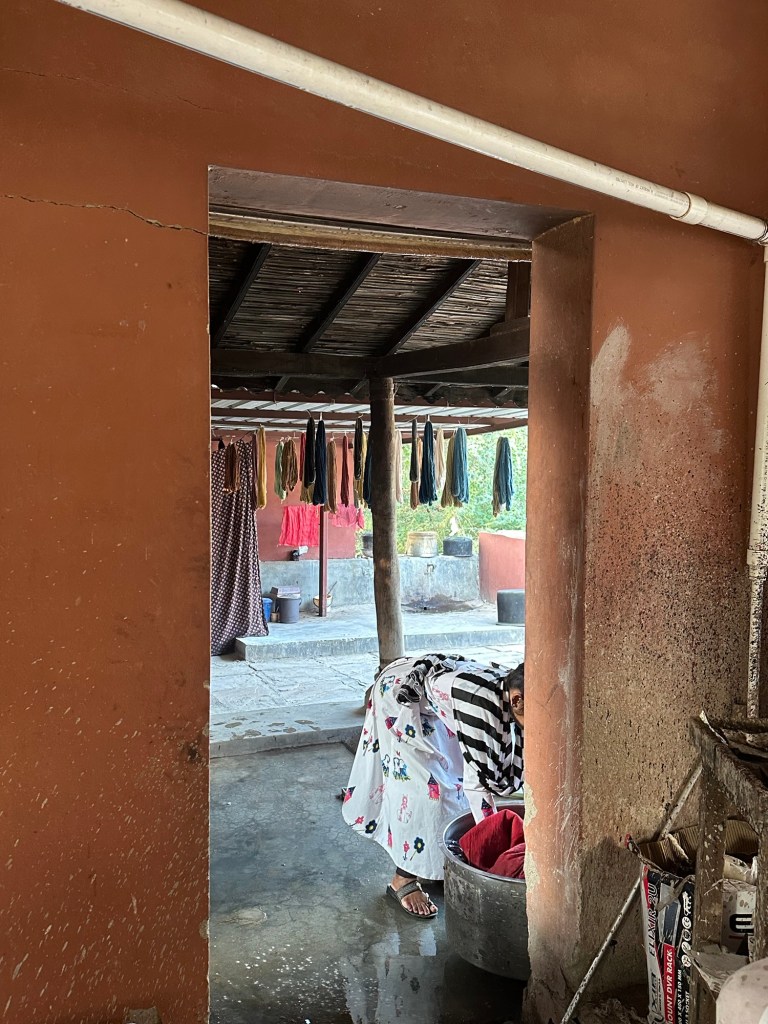
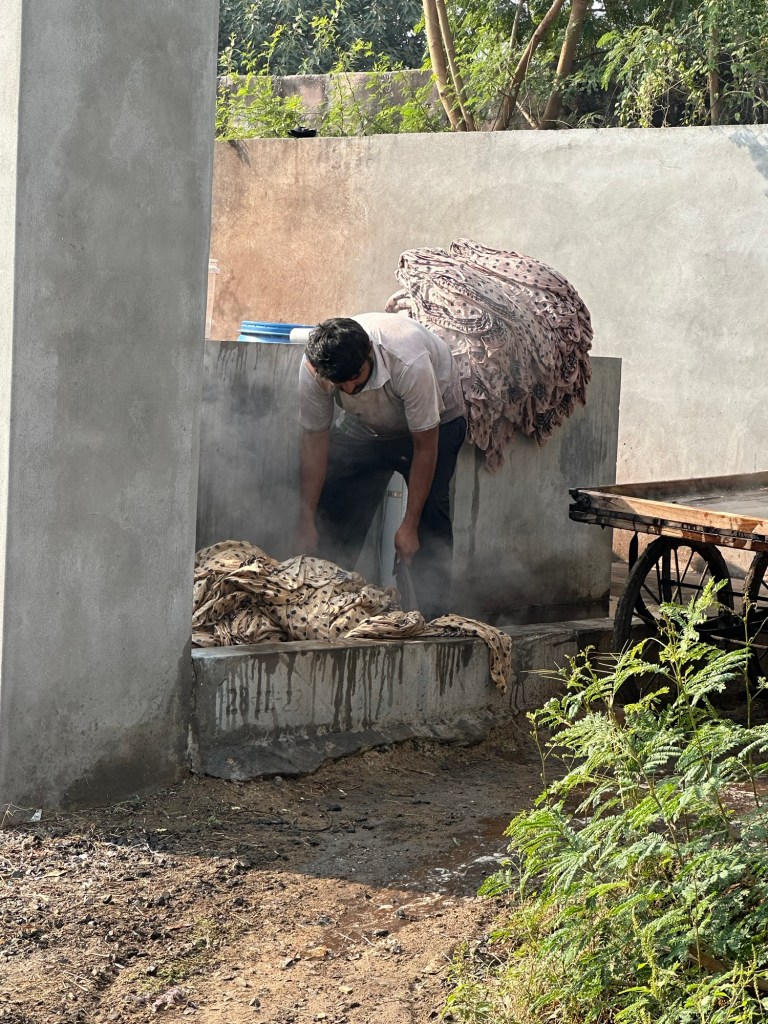
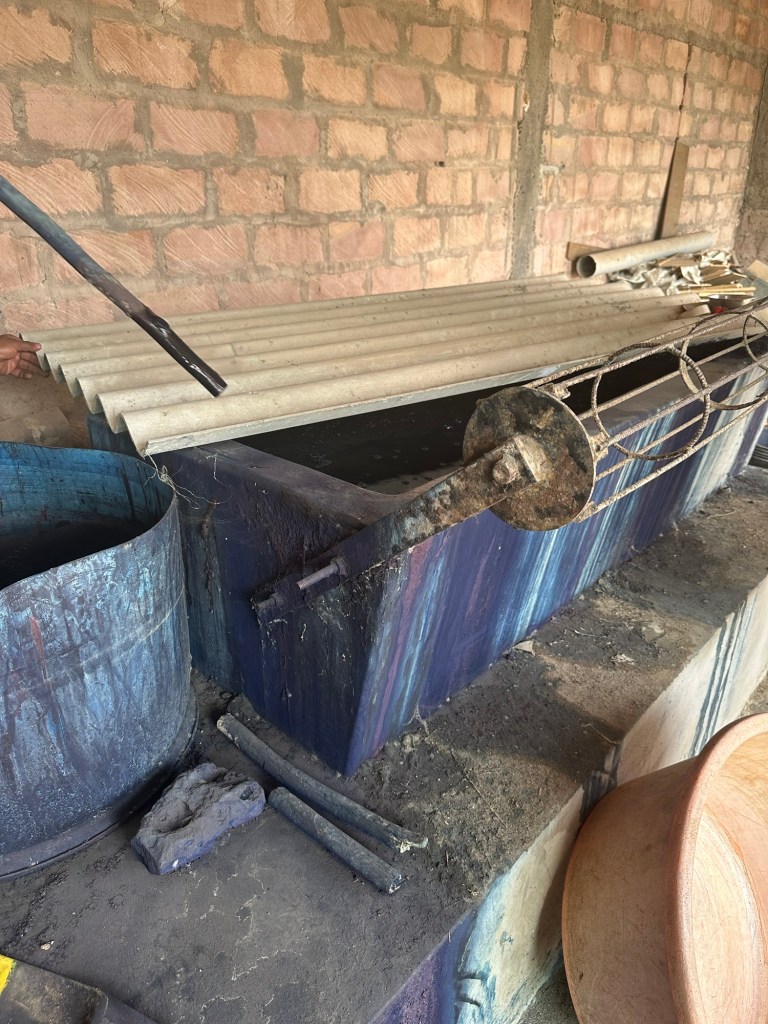
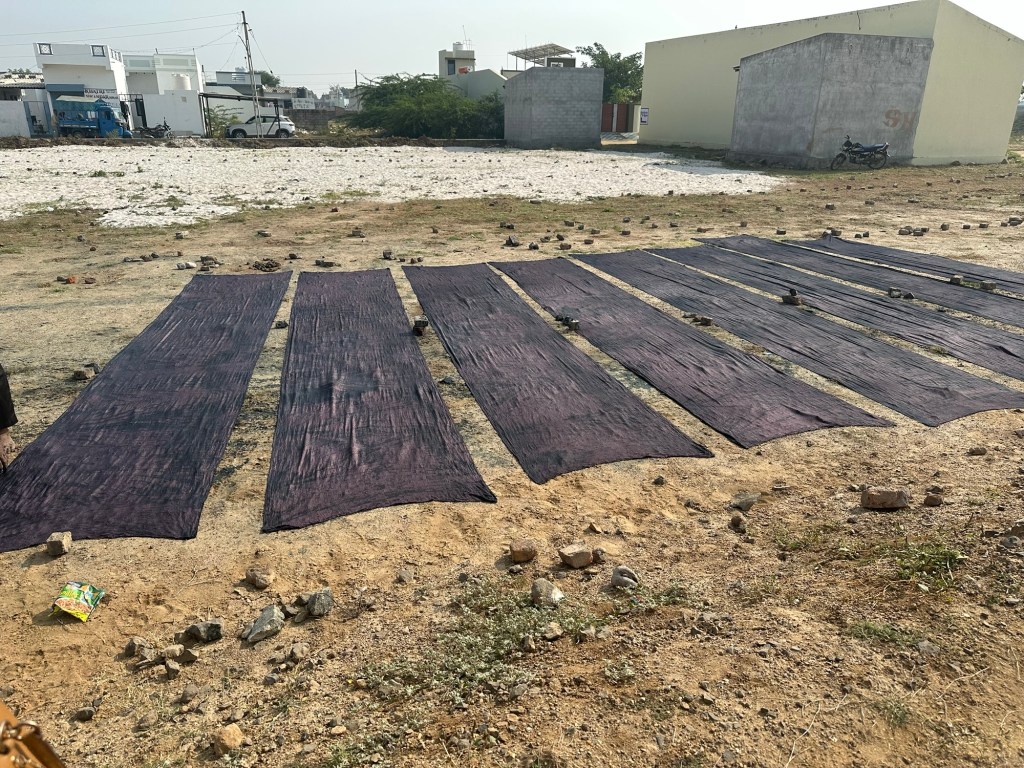
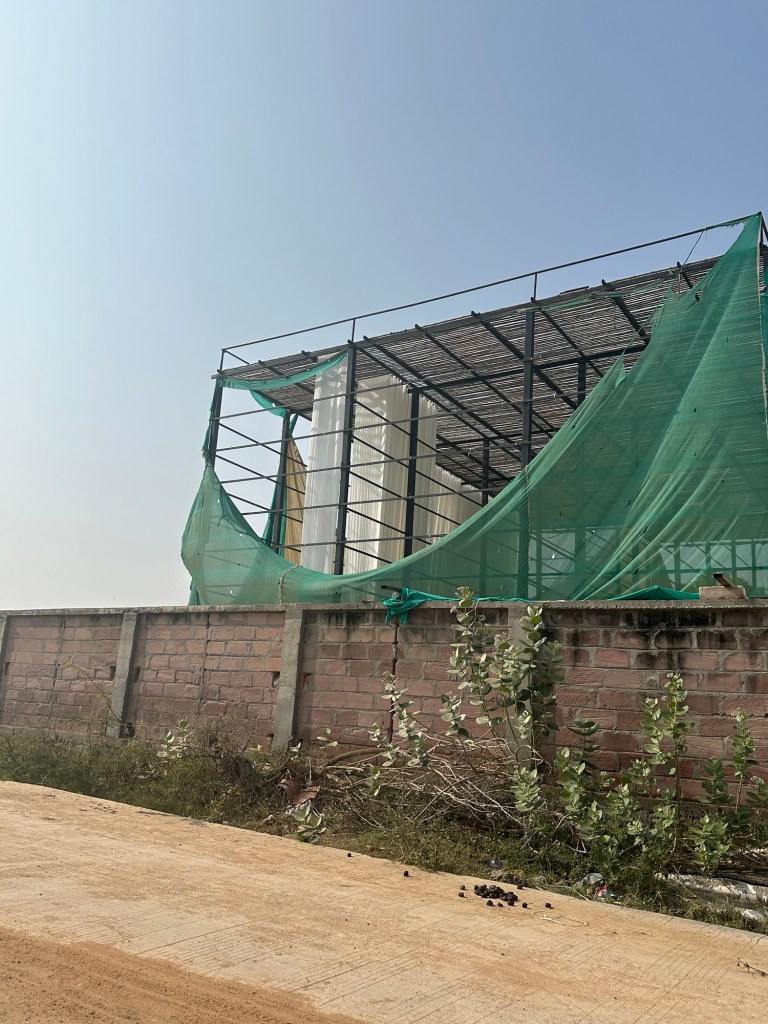
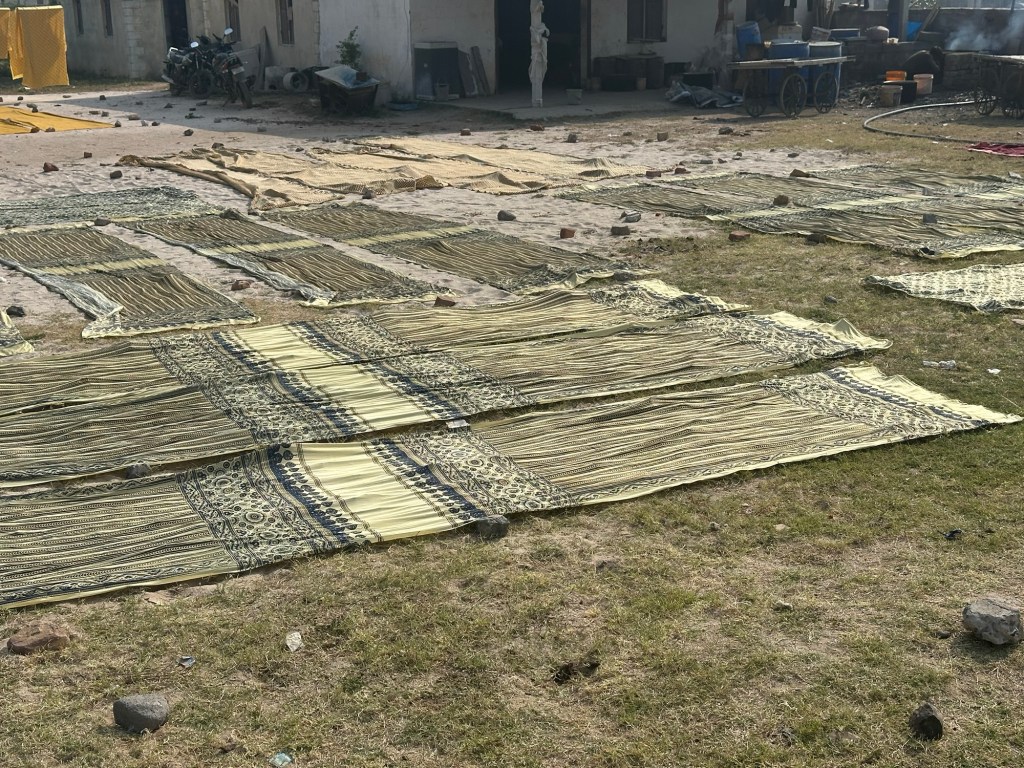
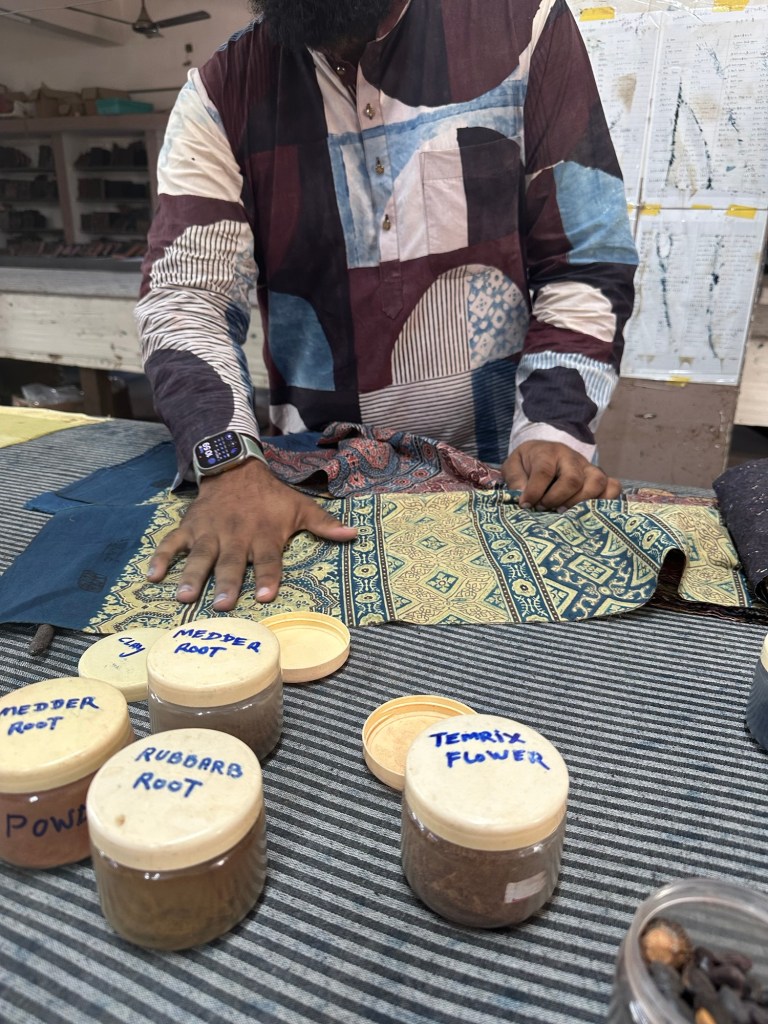
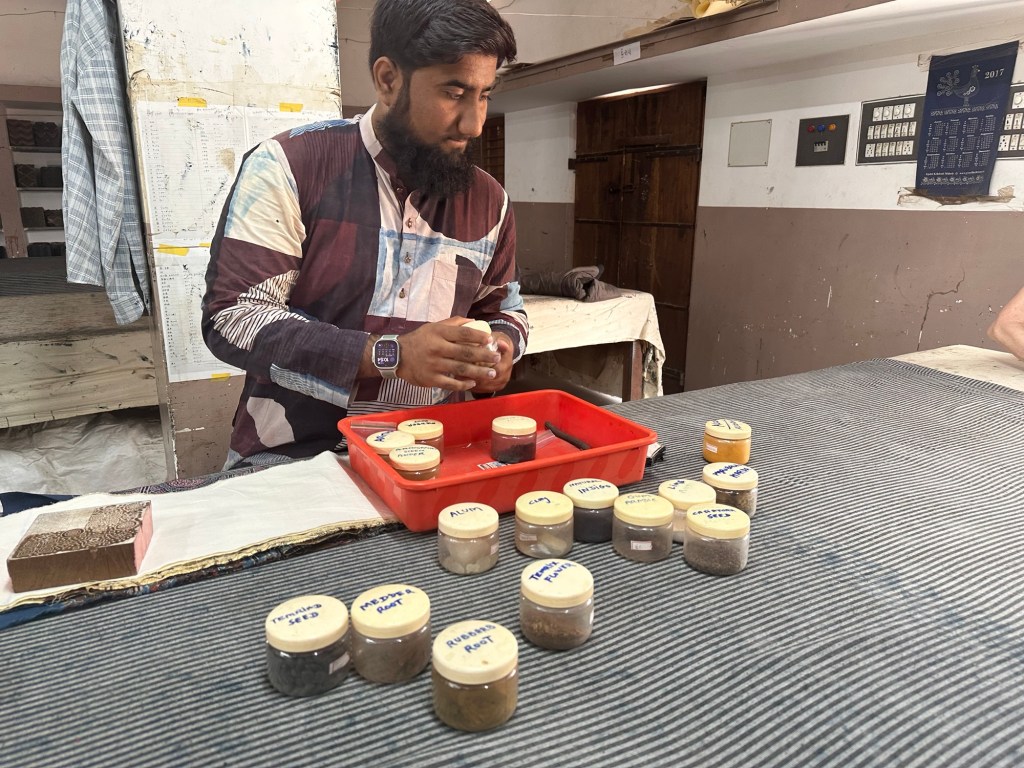
First, we went to a dye works. Absolutely fascinating. We watched processes that have remained unchanged for centuries, using madder and indigo and other dyes.
Moving steaming fabric from the dye bath to the washing station The rinse stageThe big stinky vat of fermenting indigoDrying in the sun
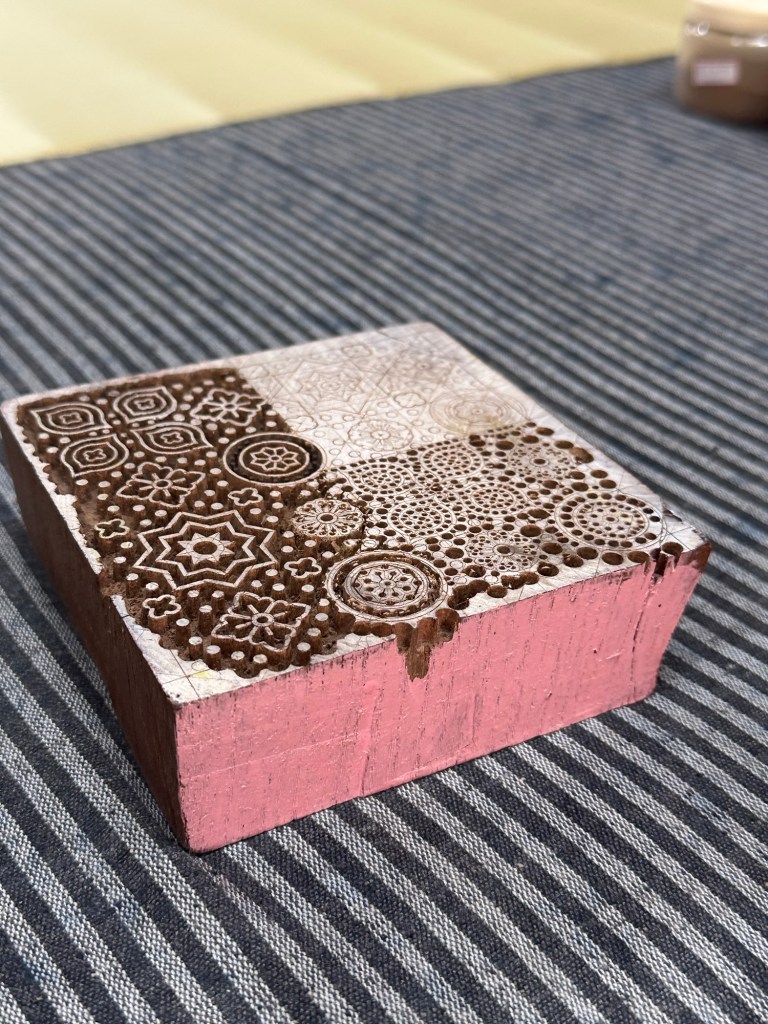
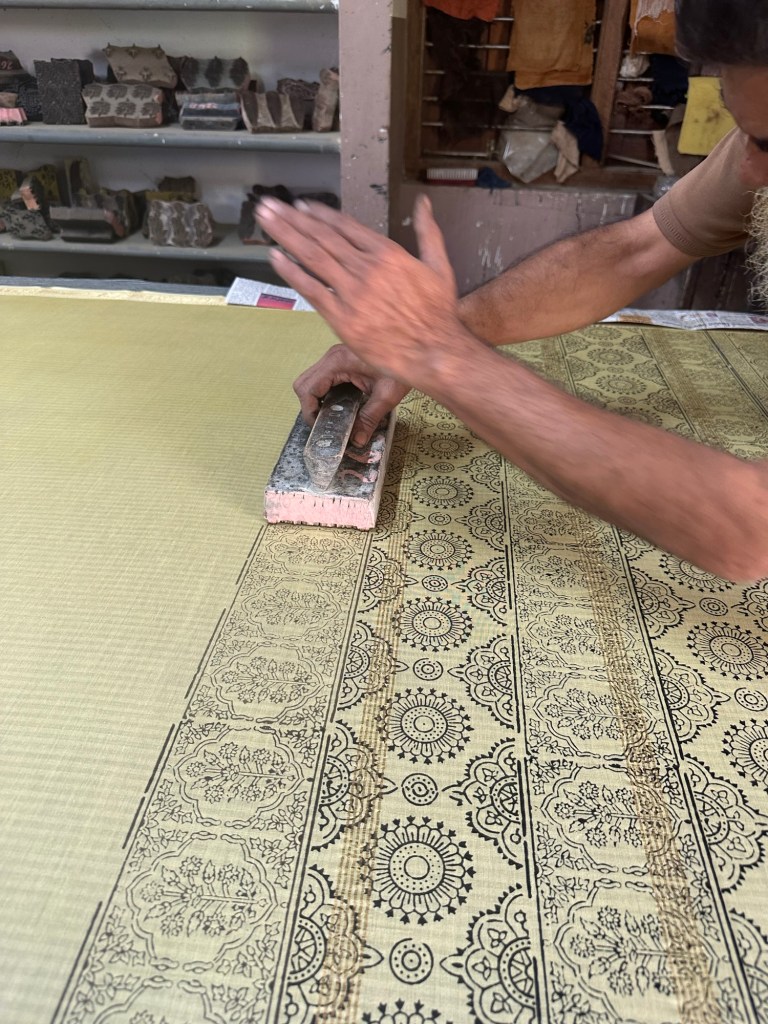
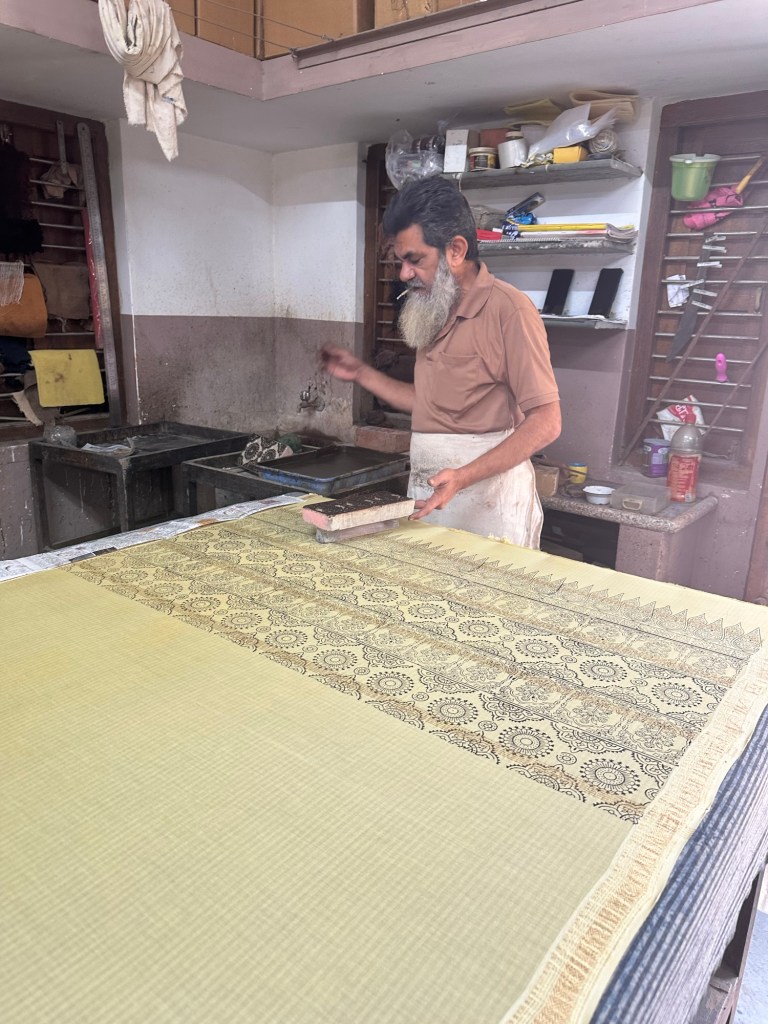
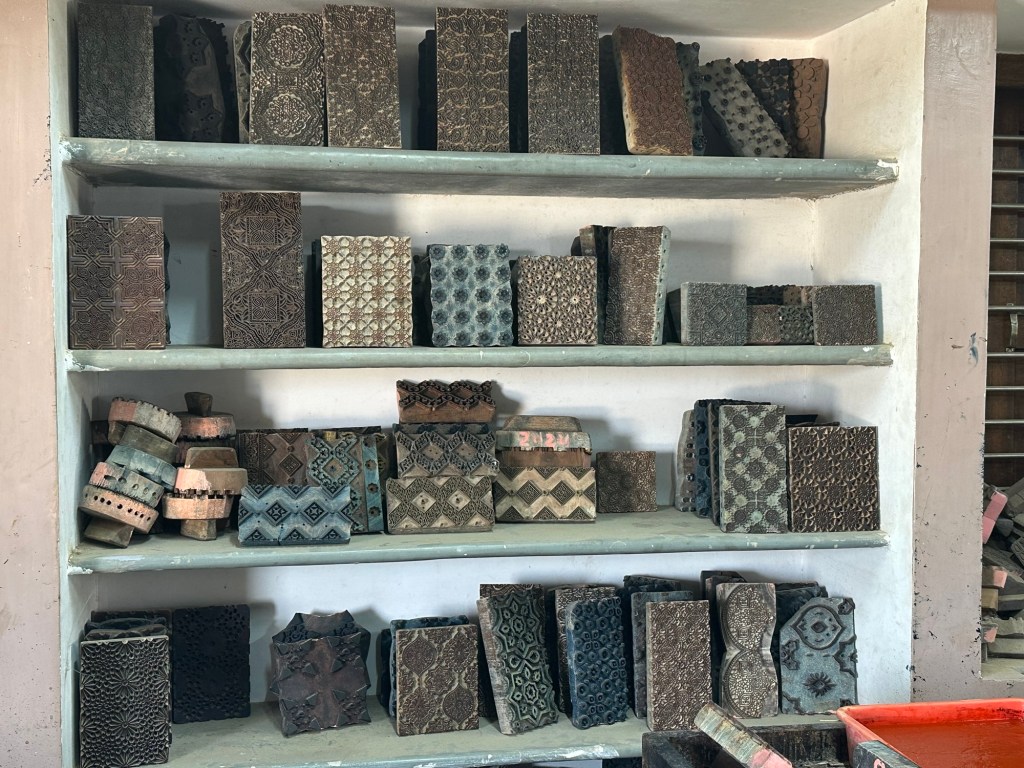
Next we visited a block printing workshop, where we watched saris being printed by hand in a 16-part process.
The block printing place had an amazing shop, and we all went a little bit crazy.
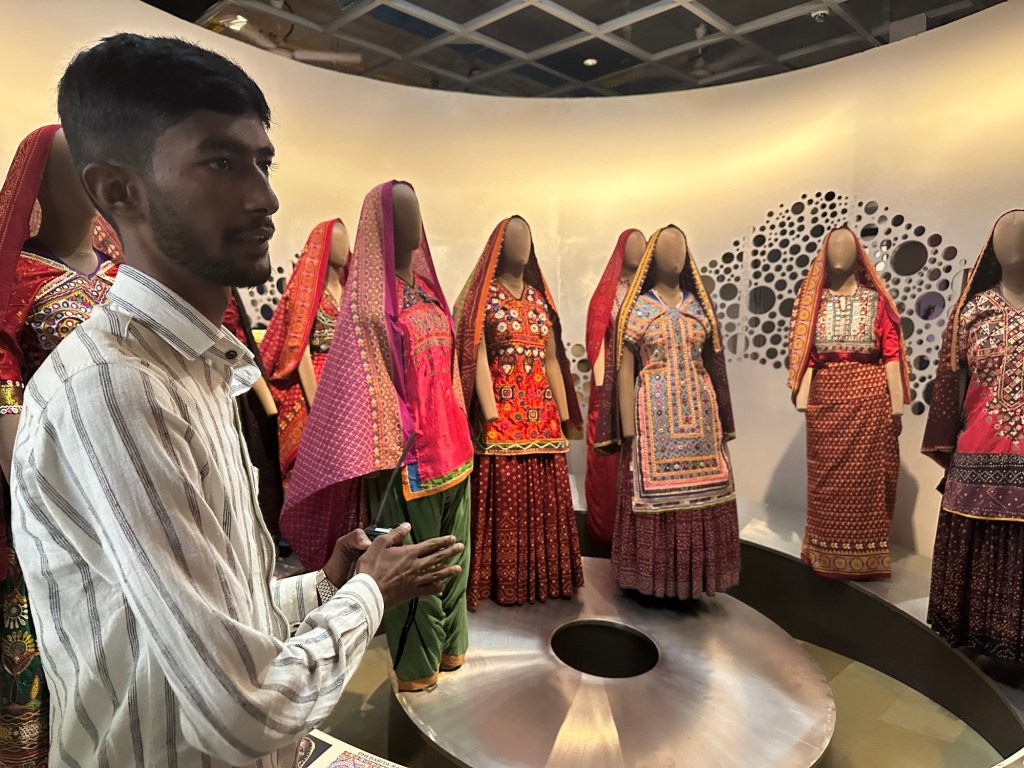
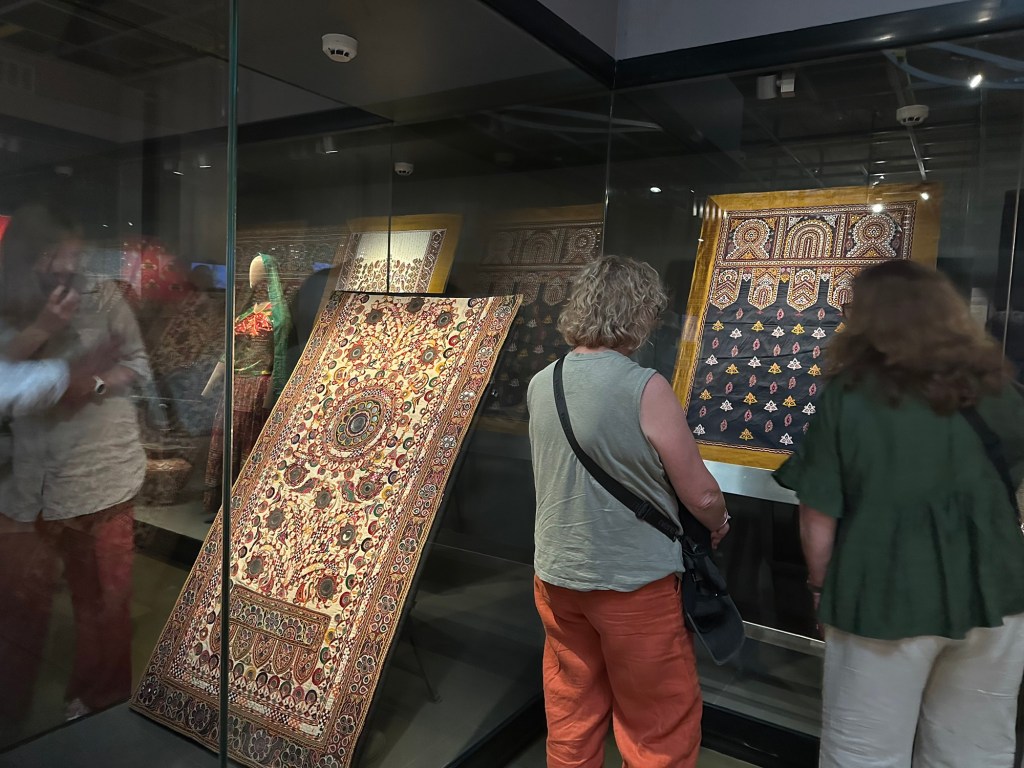
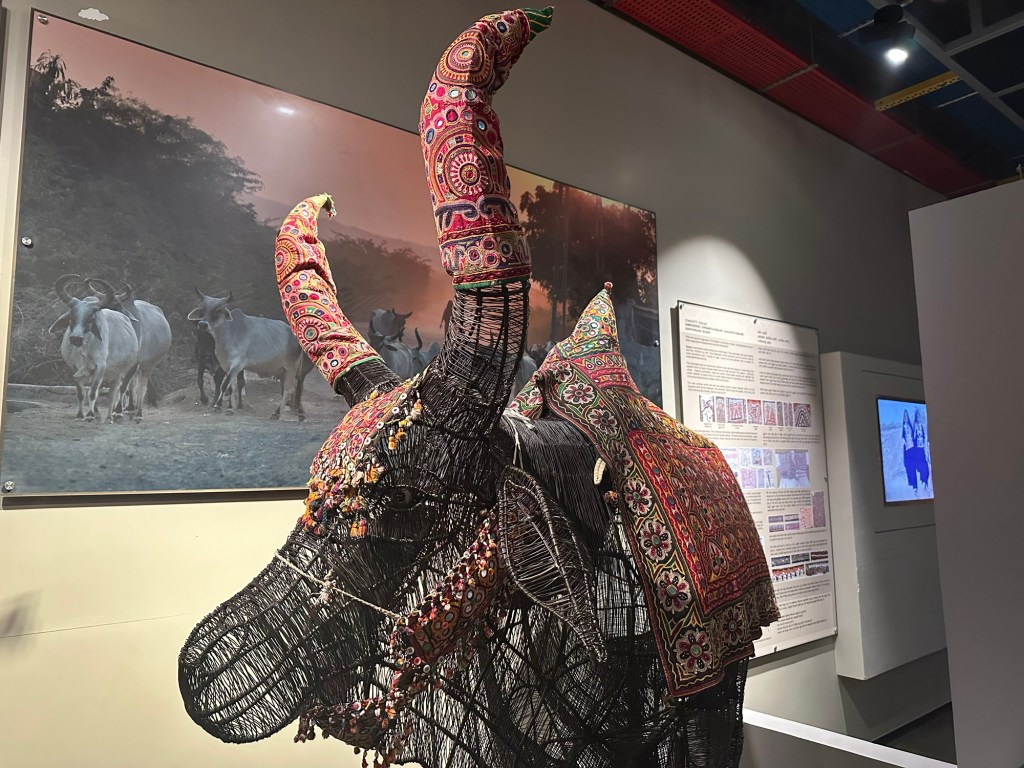
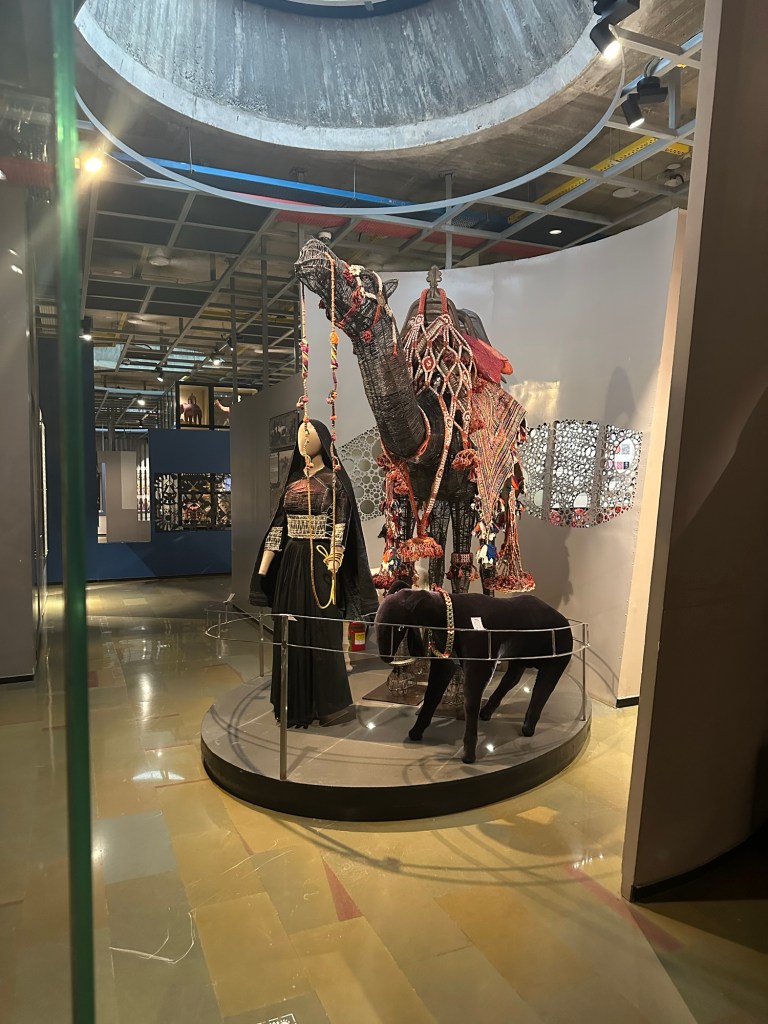
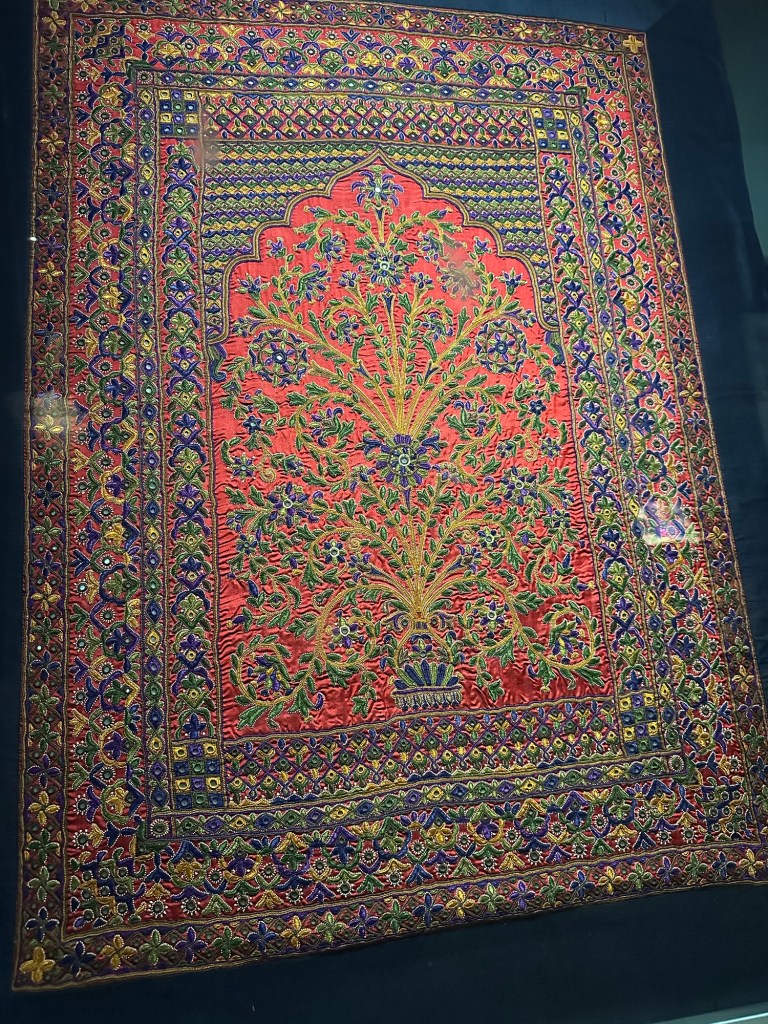
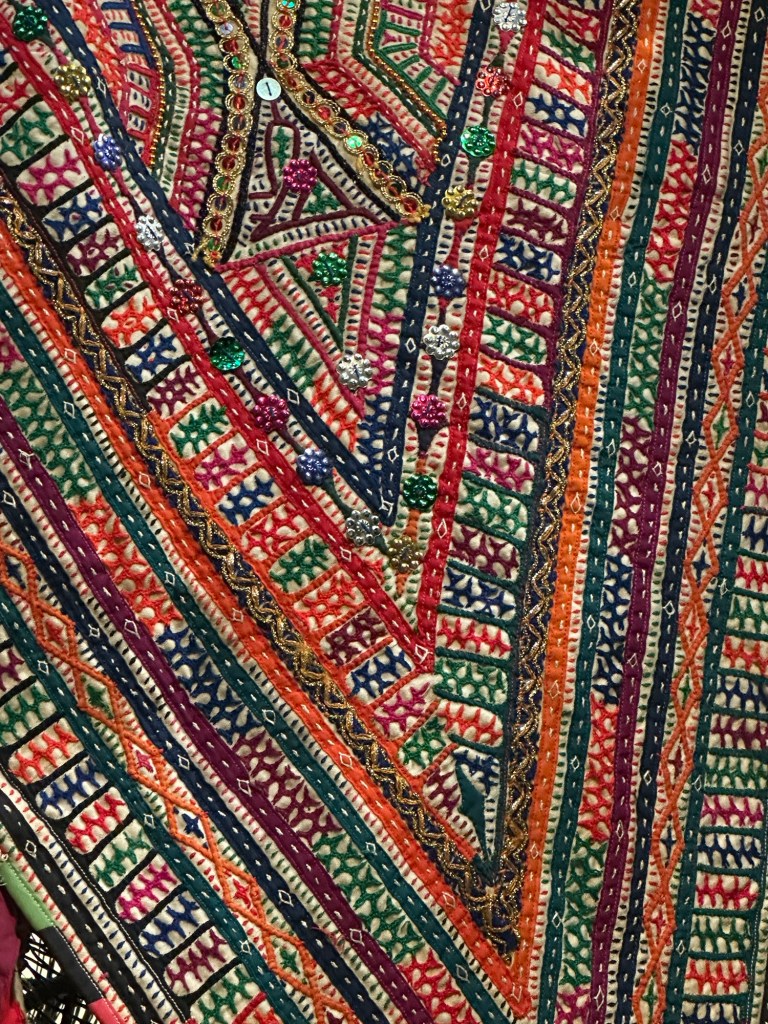
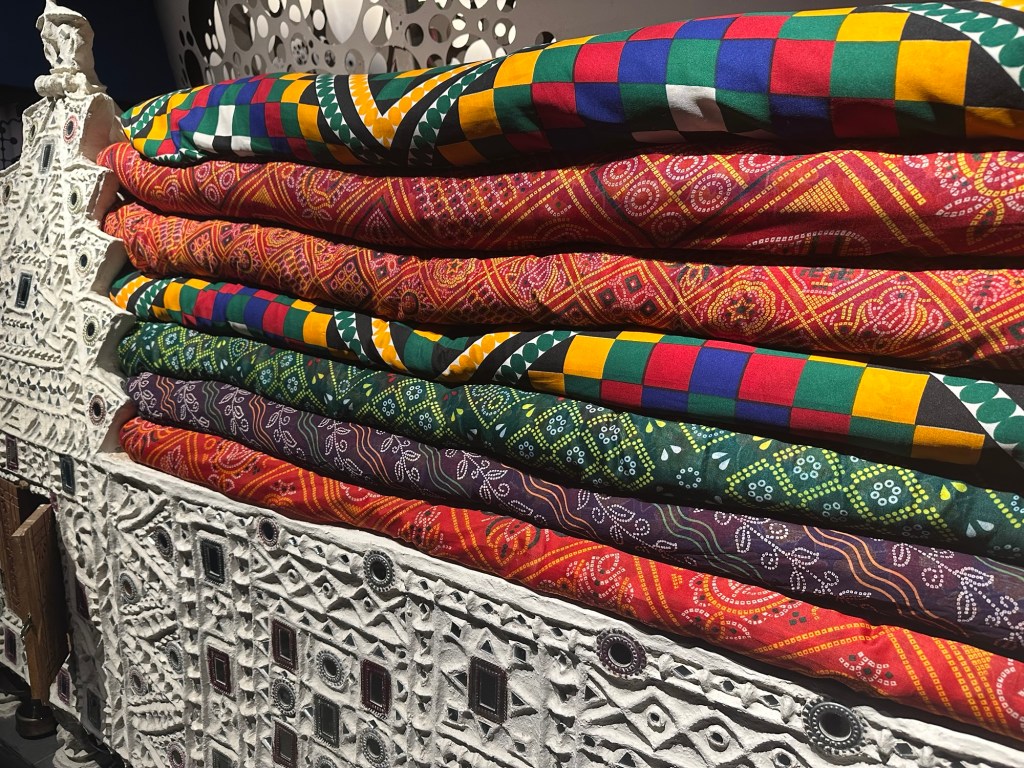
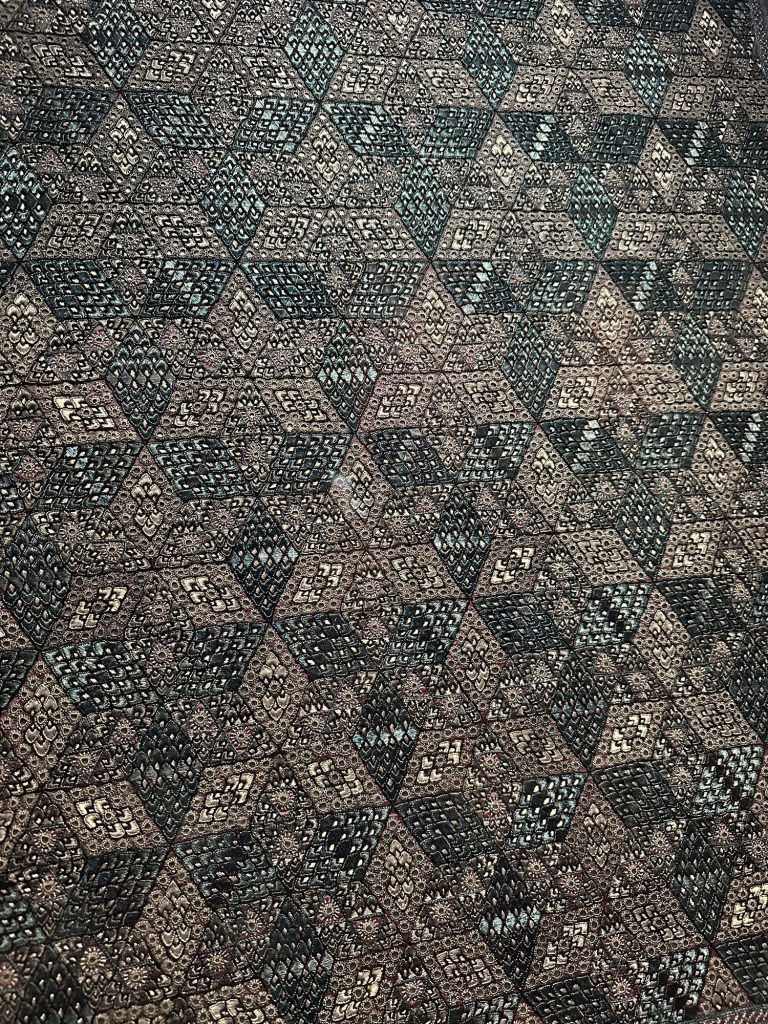
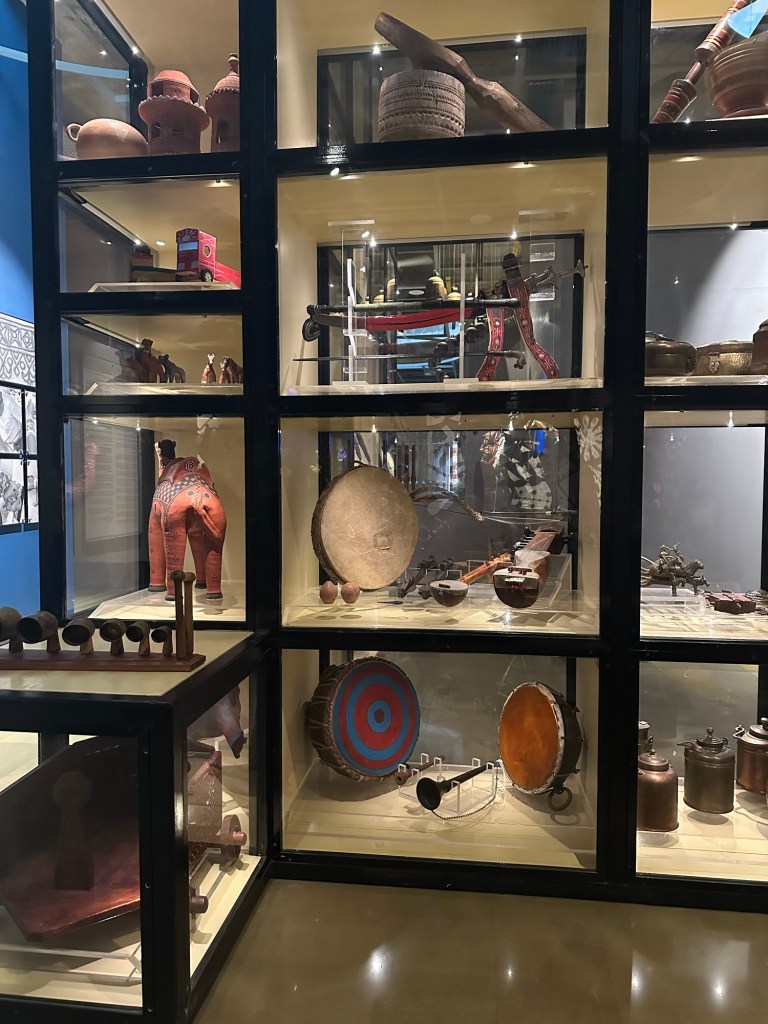
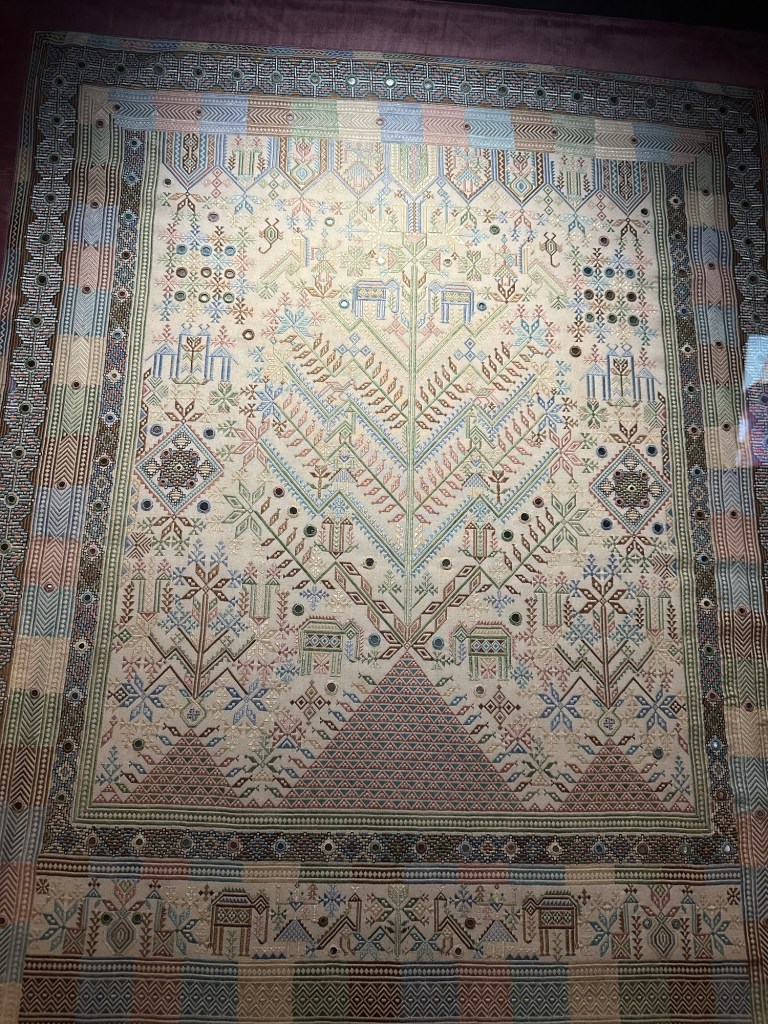
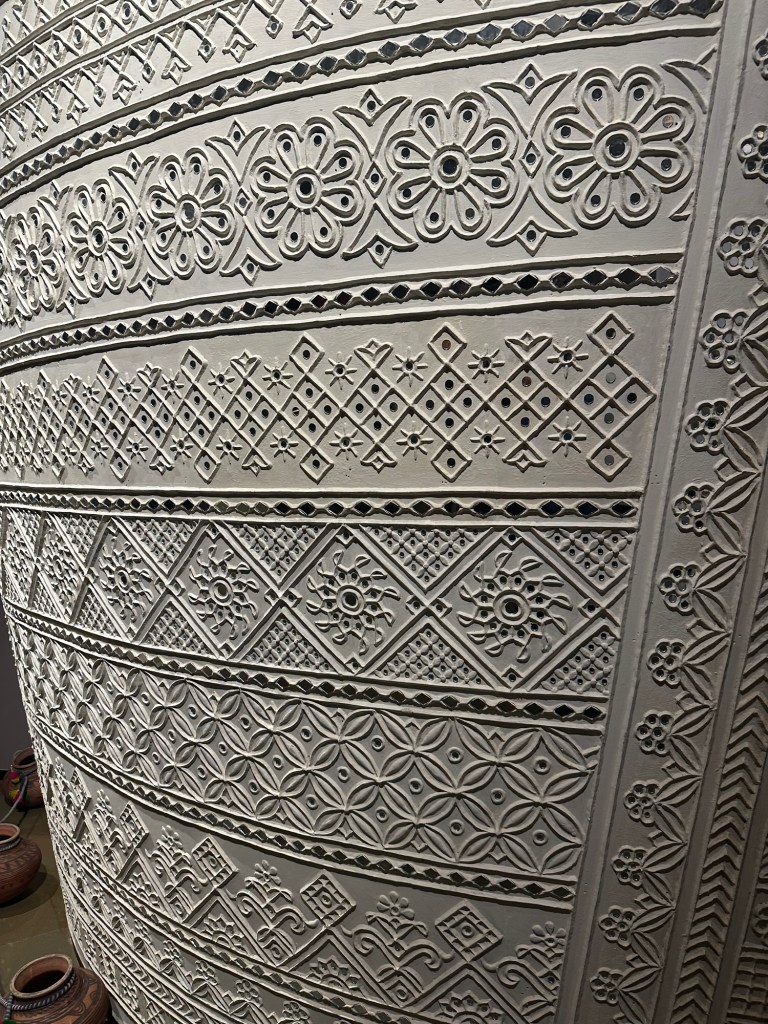
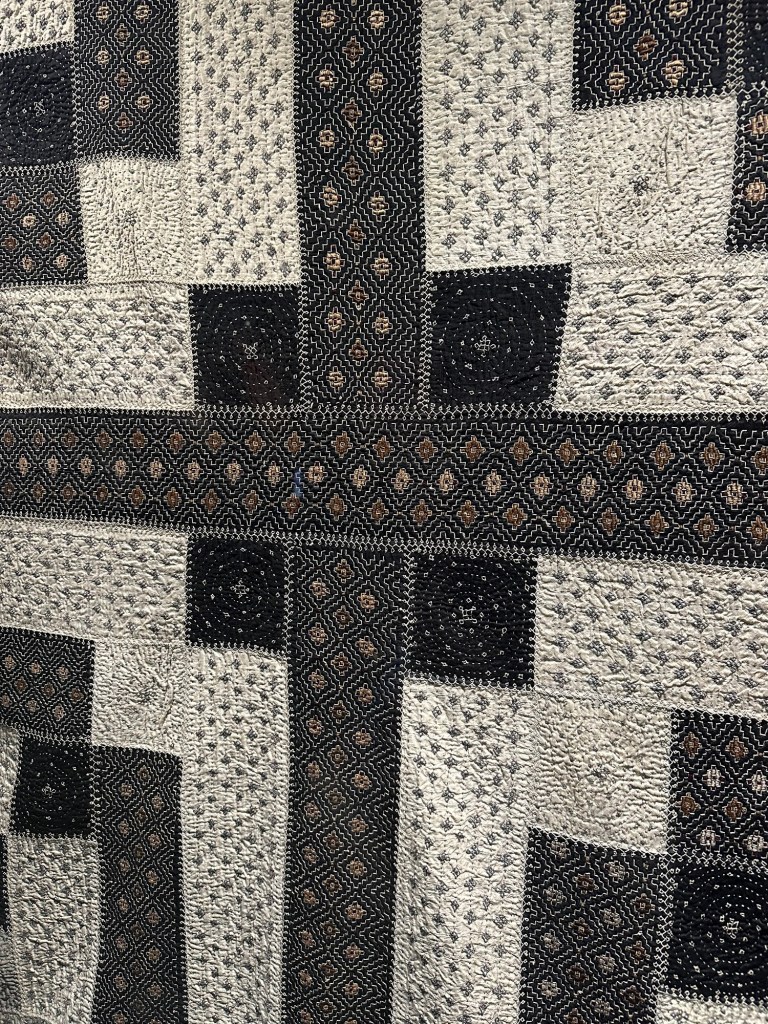
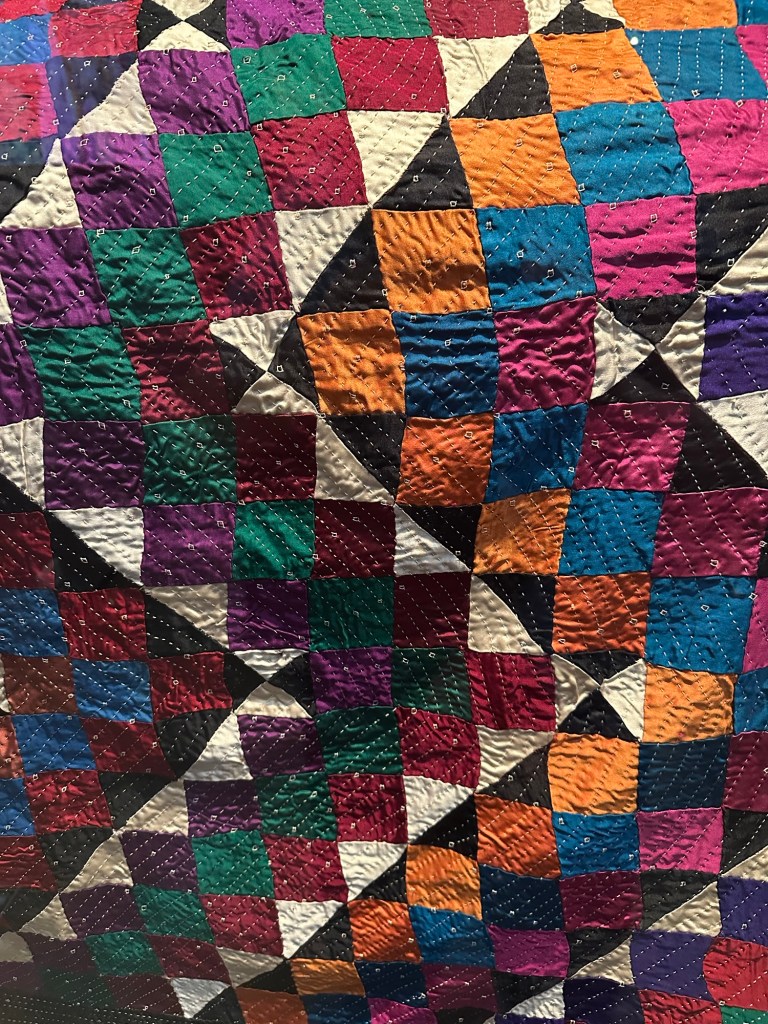
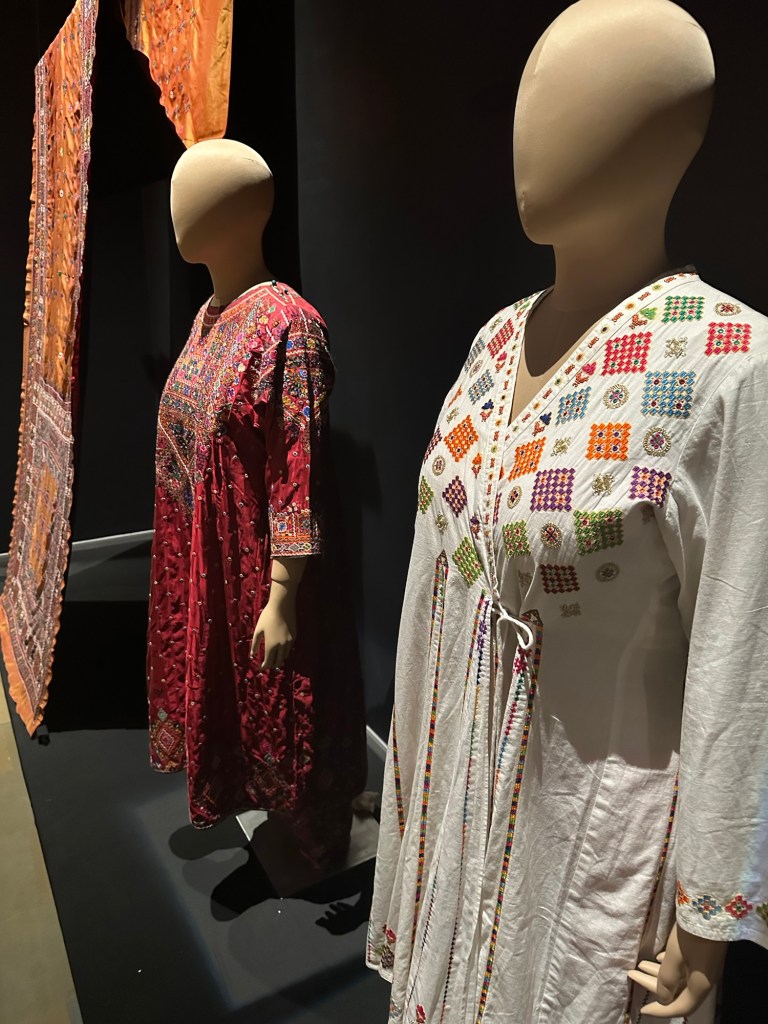
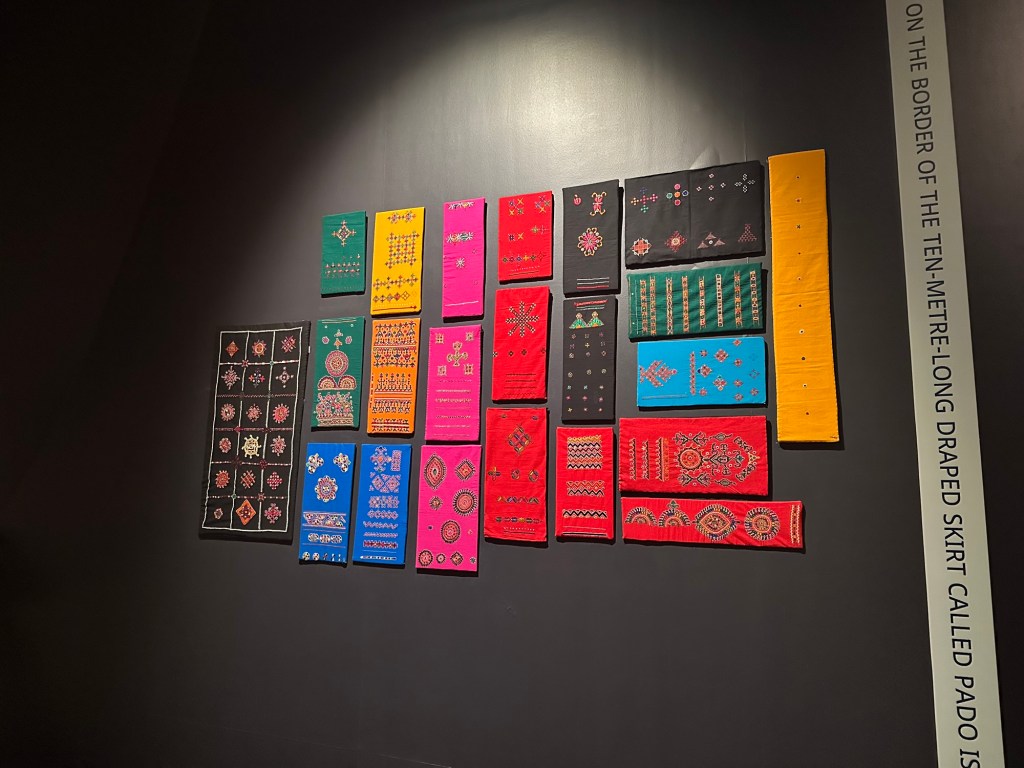
Later we went to a museum complex called the Living and Learning Design Centre, where the textile arts of Kutch are being preserved. Focussing on the almost-lost embroidery skills of the 12 tribes in the region, this place aims to showcase, preserve and teach skills. They also work with designers to find modern ways of using the old skills. A sample of the things we saw….
Even camels get fancy embroidery How they decorate walls in Kutch: a lime plaster with mirrors
Quite stunning. Again, exit through the gift shop…..beautiful original hand-made items at tiny prices.
They also let us do some block printing of our own, which was fun.
Even those of us who have sewing skills were in total awe of the beauty and intricacy of the local work. We were also really impressed with how beautifully designed and run the museum is. A really great experience.














 MissTtravels