This morning we left the hotel early, to fly to Da Nang. Blessedly, the domestic part of Saigon Airport is a lot more sane than the international bit. Effortless.
Arriving in Da Nang we boarded yet another small bus and travelled to Hoi An. An absolute delight.
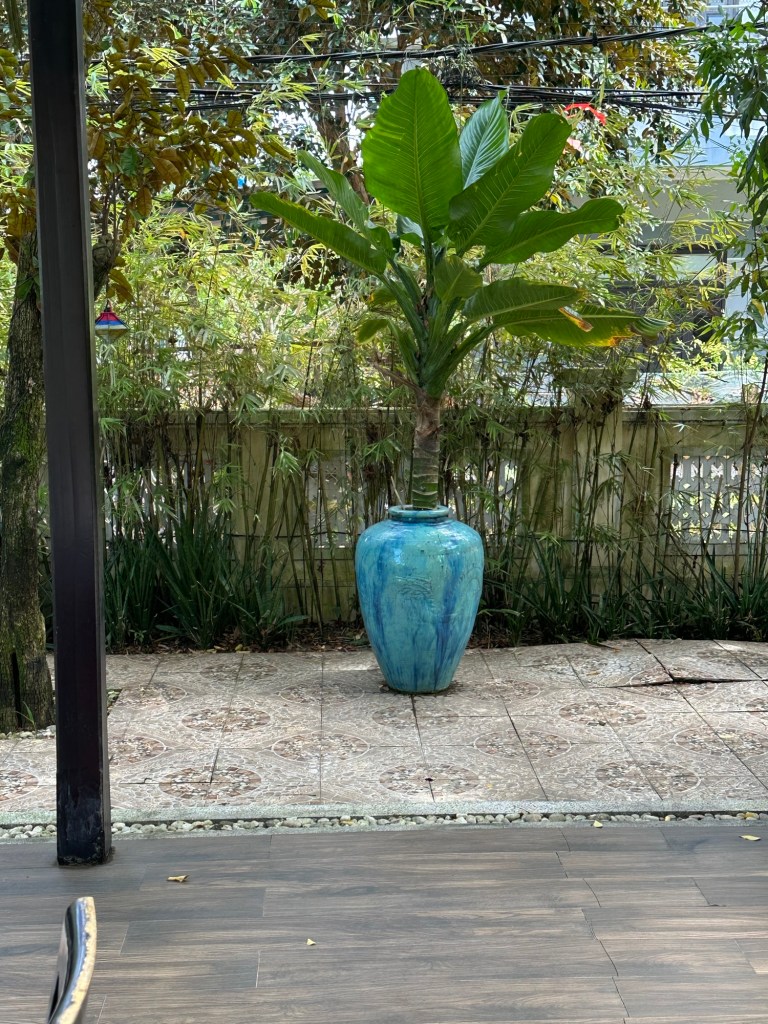
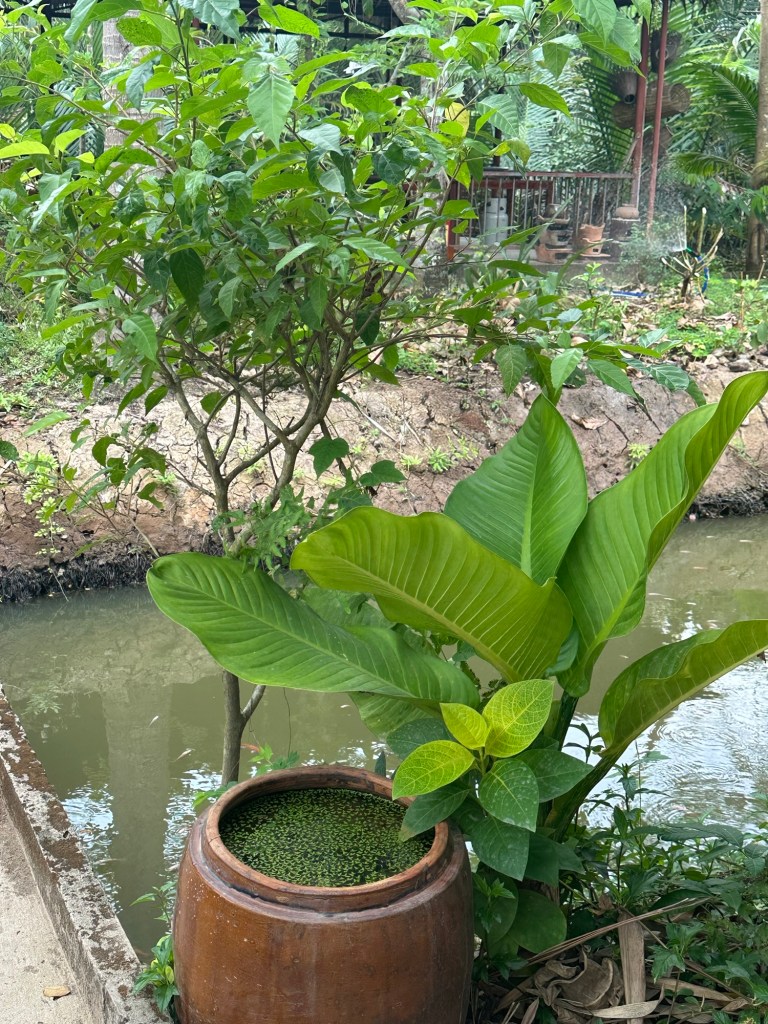
Our hotel is a small one, out of town in the padi fields. So pretty and with a beautiful garden and pool.
We had a sumptuous lunch, and a bit of a break in the early afternoon. Tried to have swim, but it rained.
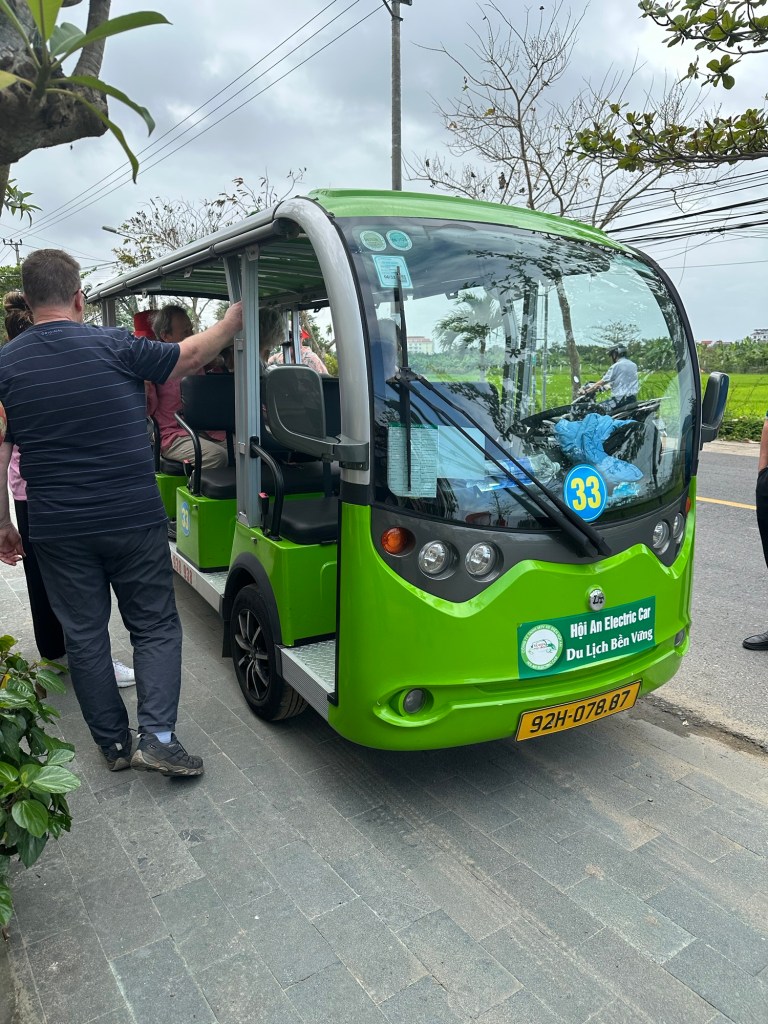
Later in the afternoon, we went into the main part of Hoi An. In an electric bus!
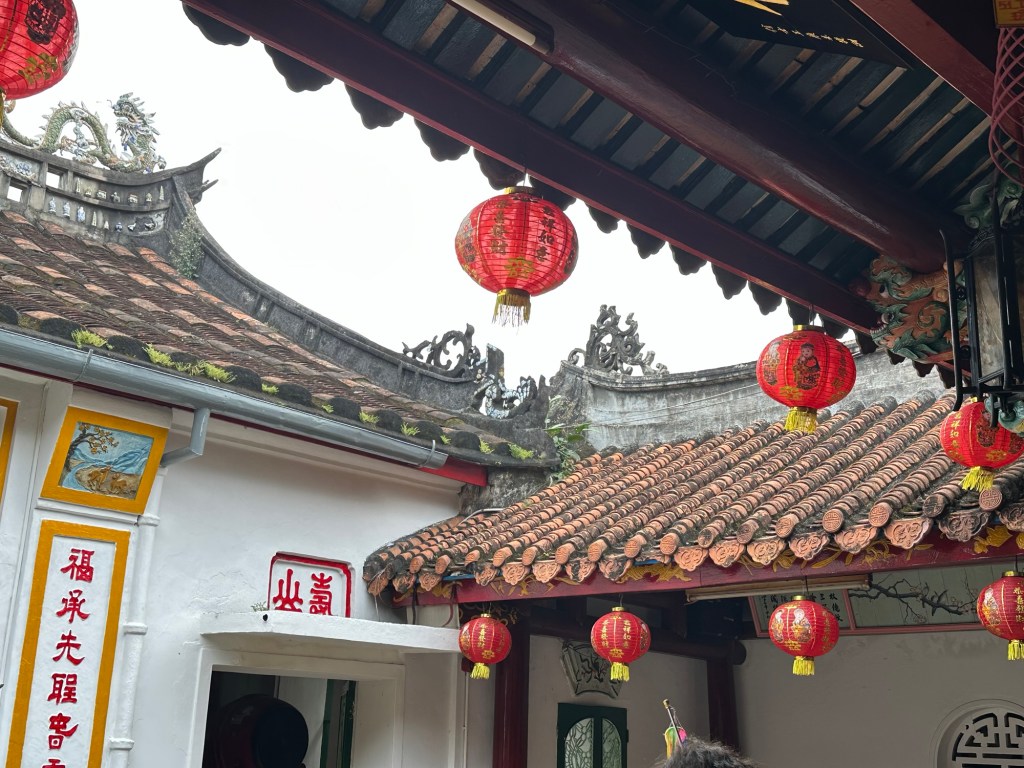
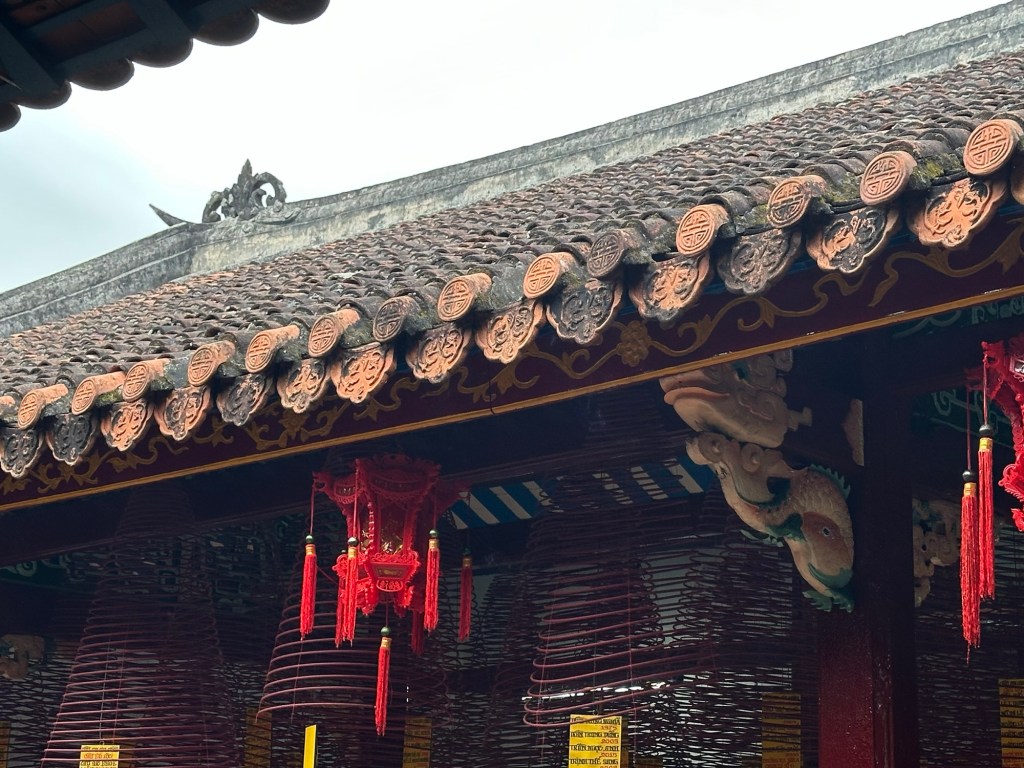
Hoi An is so beautiful. A very old Chinese town, protected by World Heritage, but vibrant and interesting.
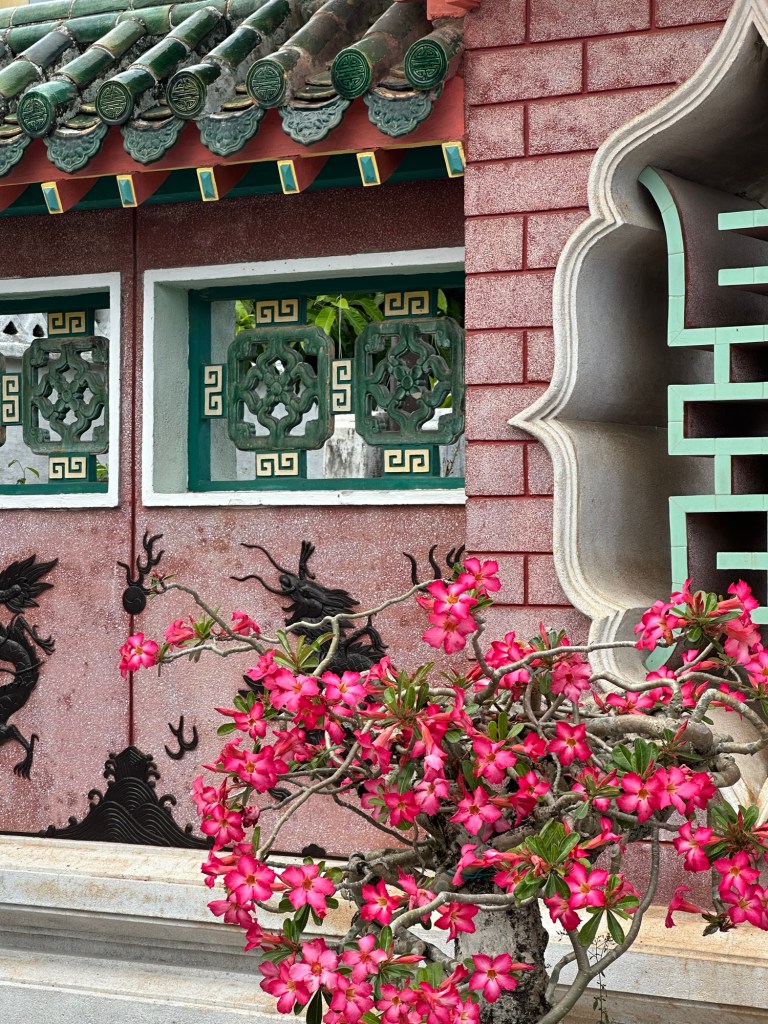
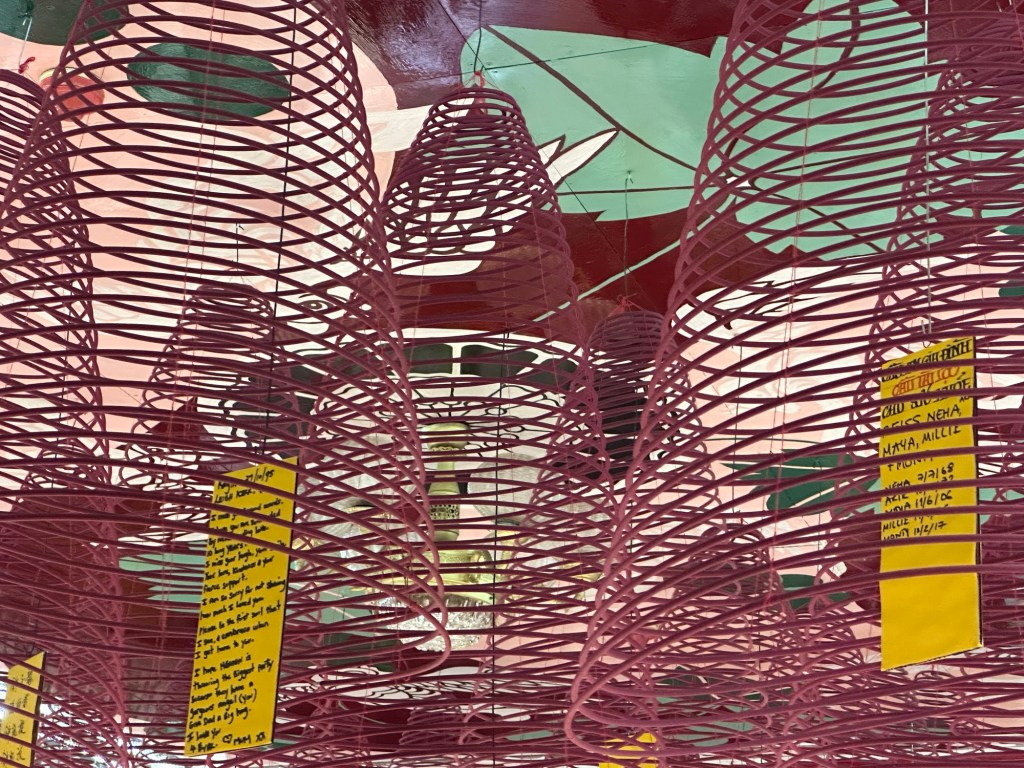
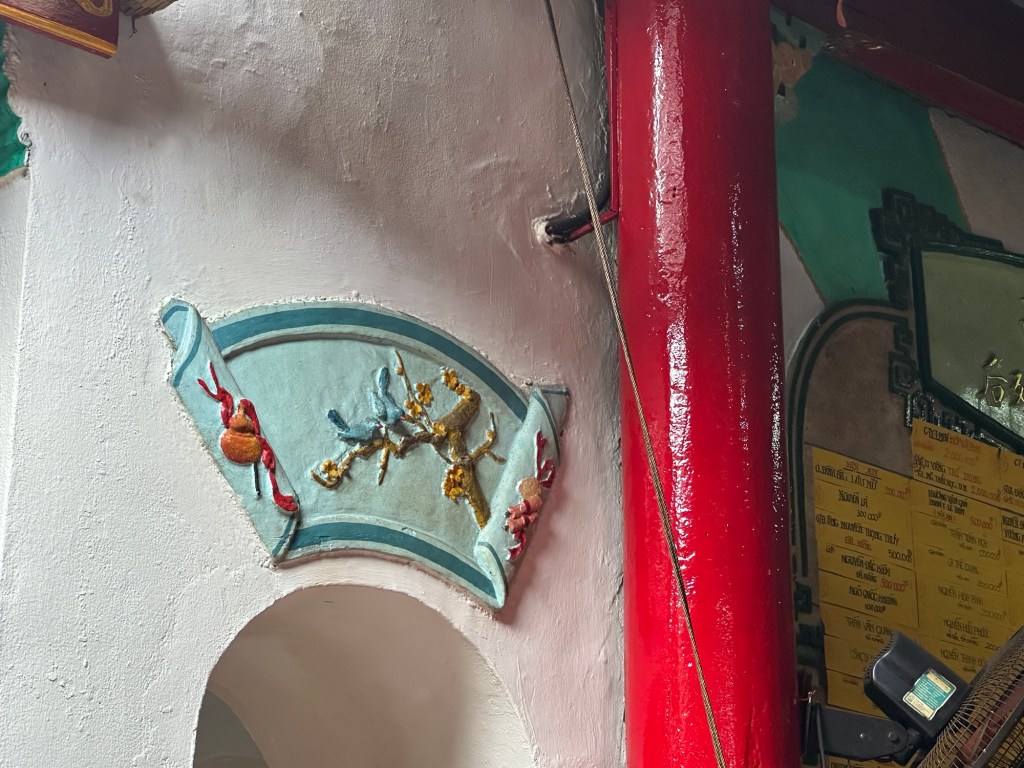
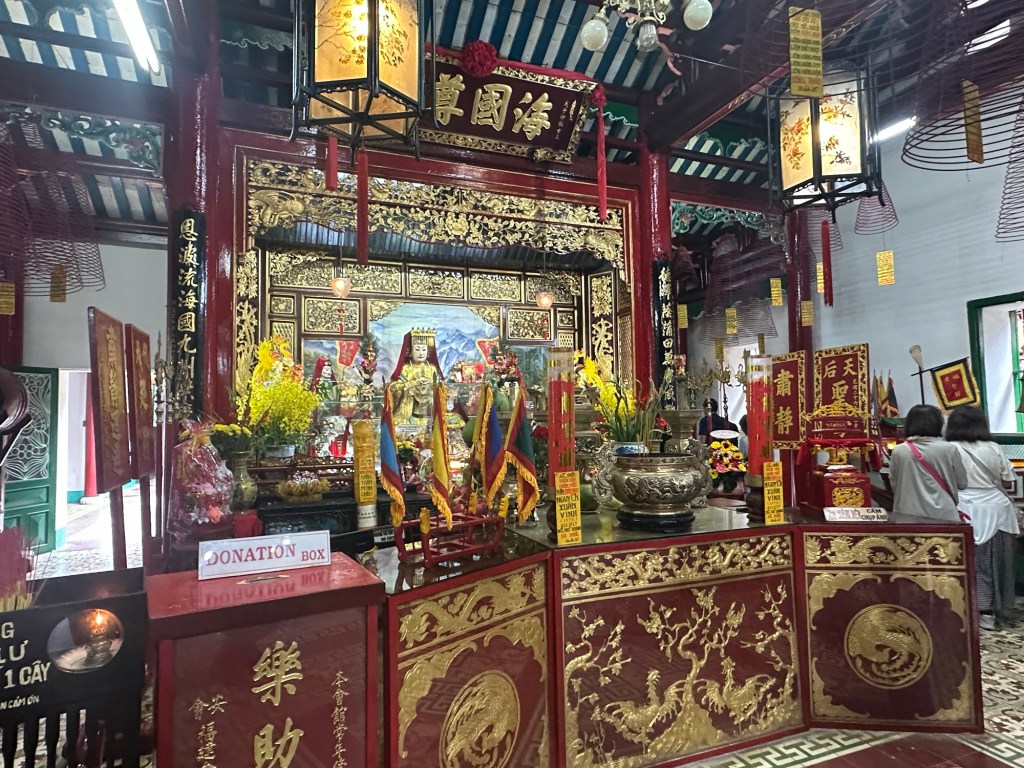
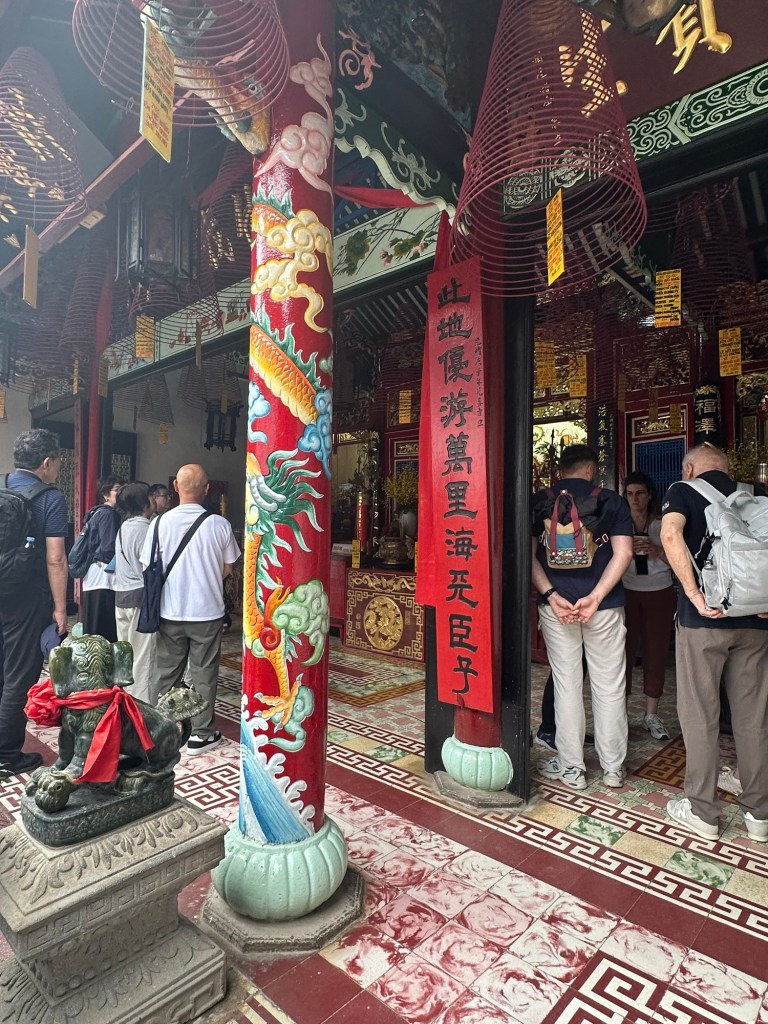
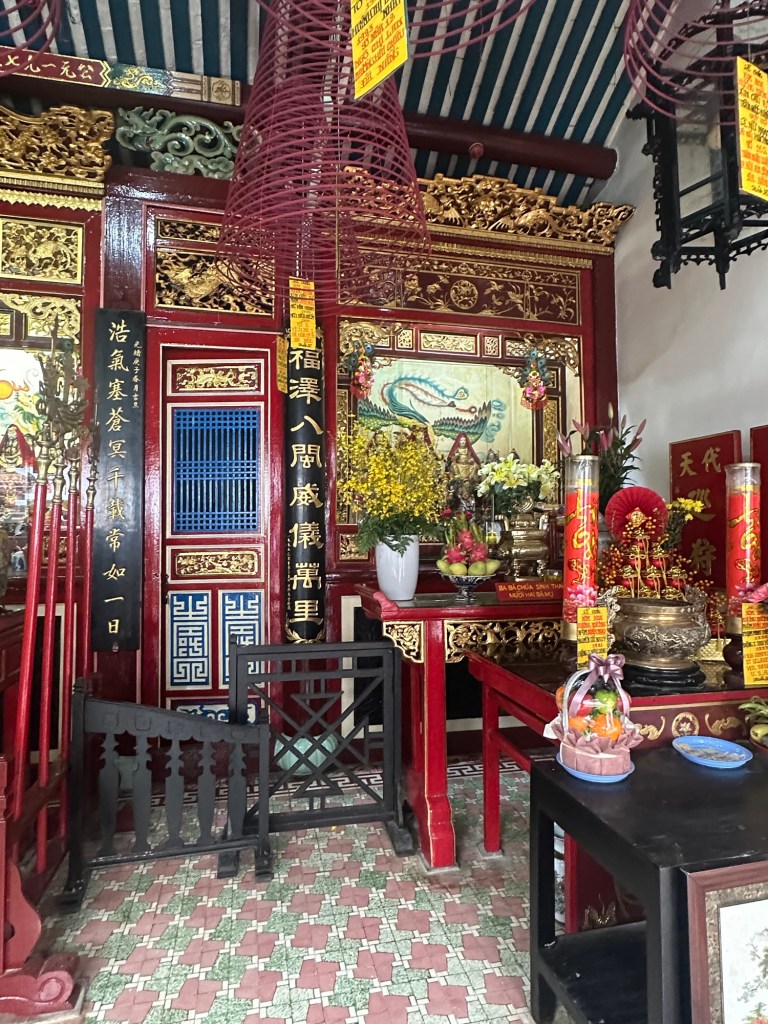
We looked at an amazing temple.
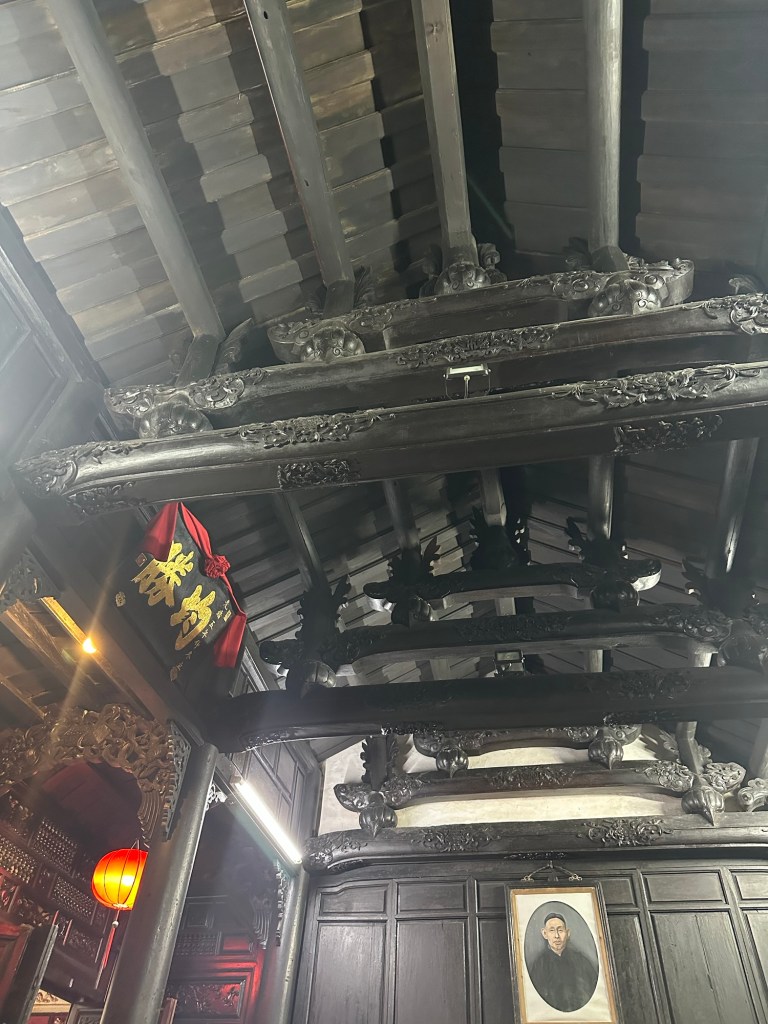
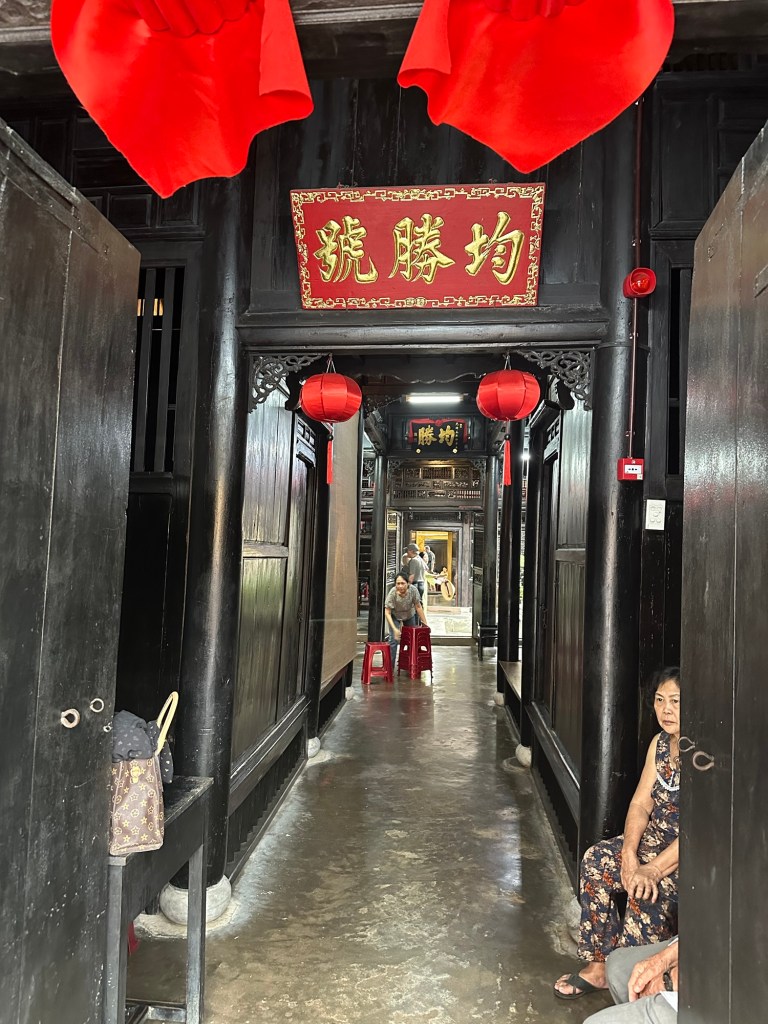
Later we visited an 17th century merchant’s house, still in perfect condition and occupied by the 7th and 8th generations of the same family.
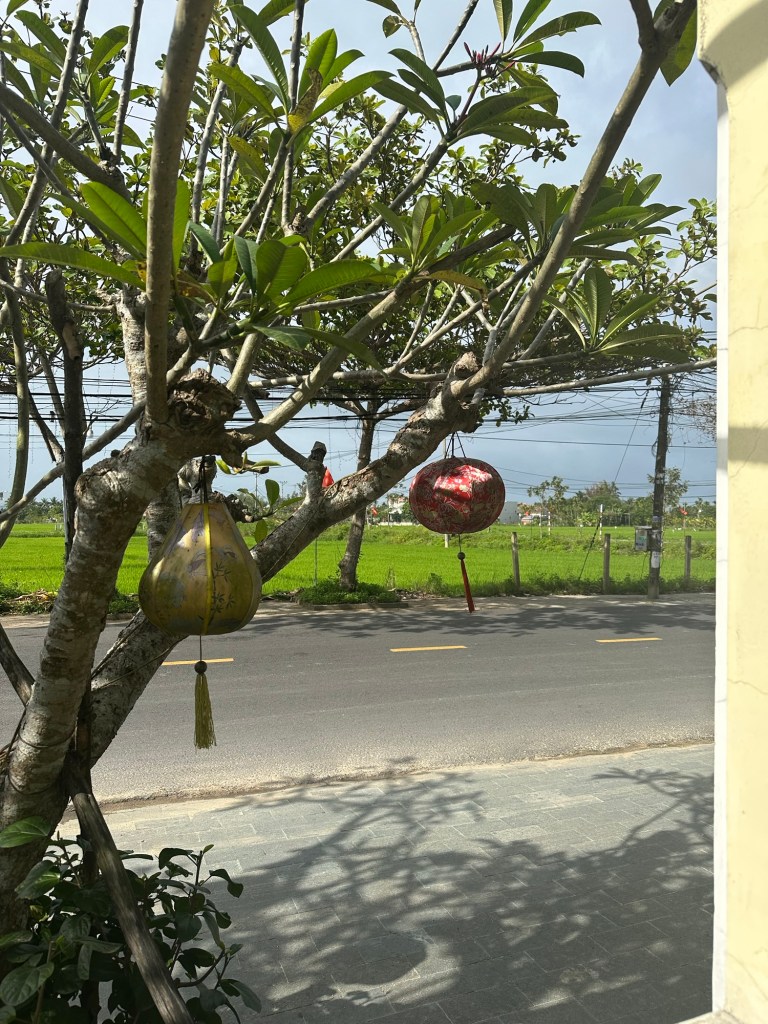
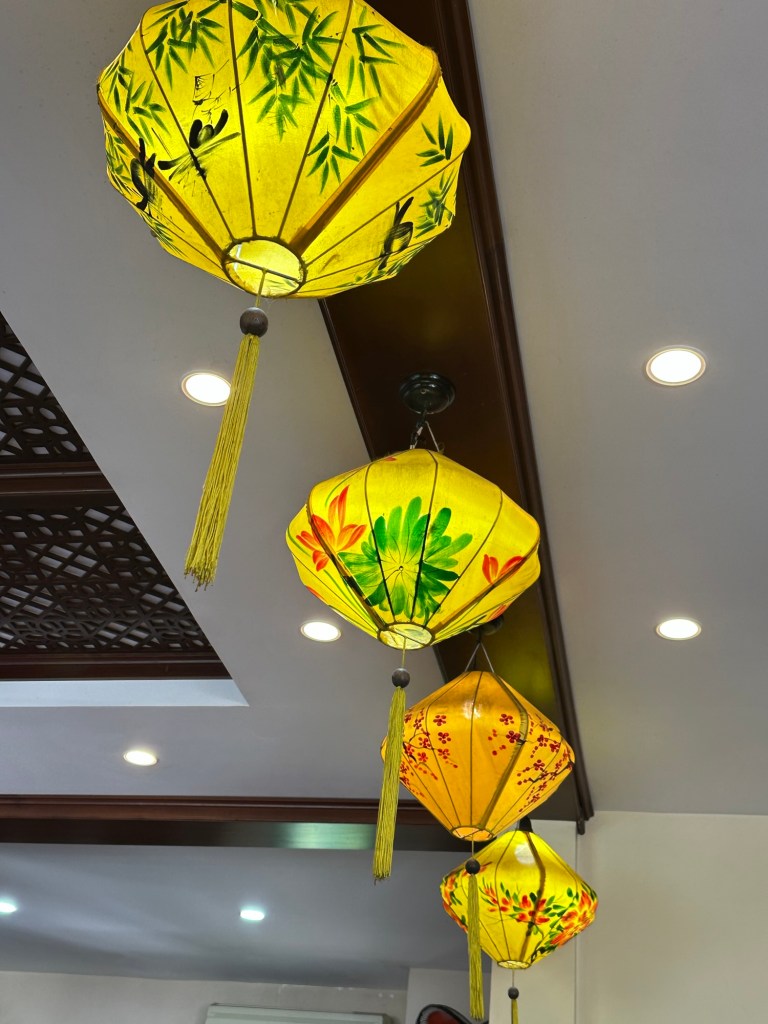
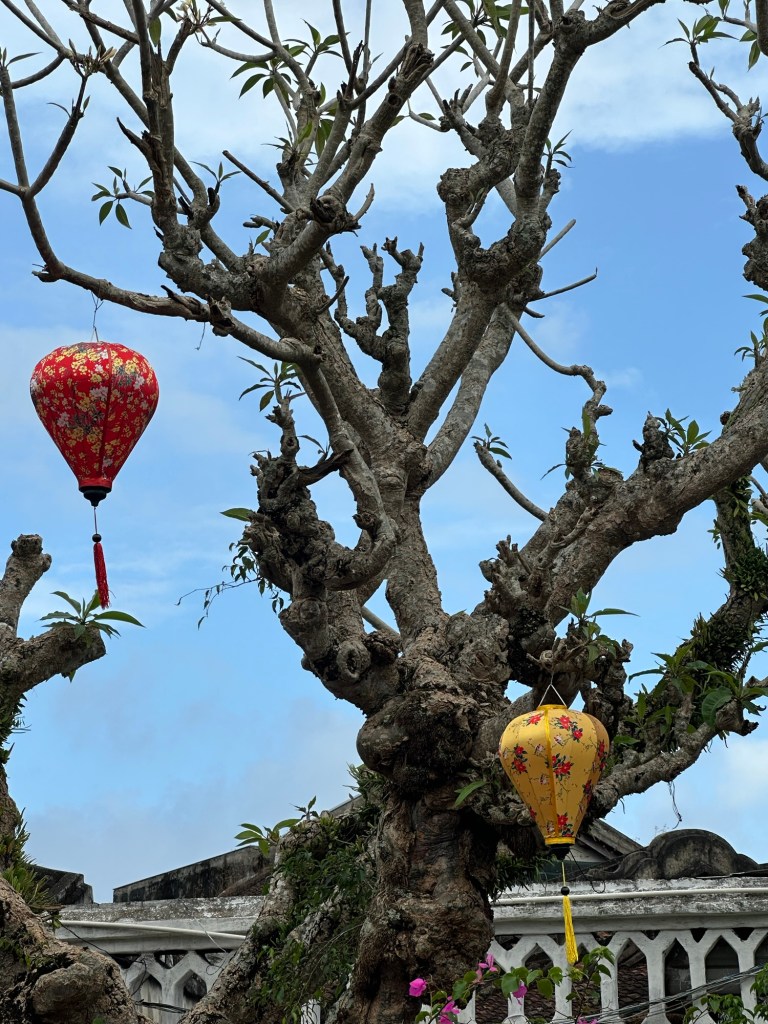
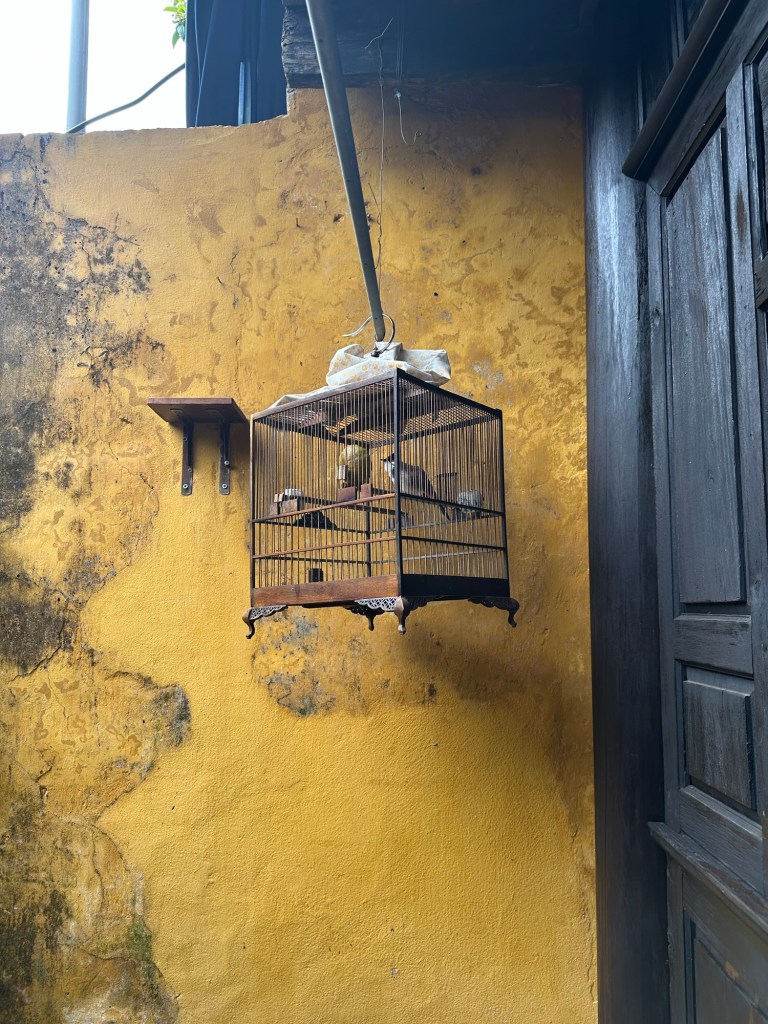
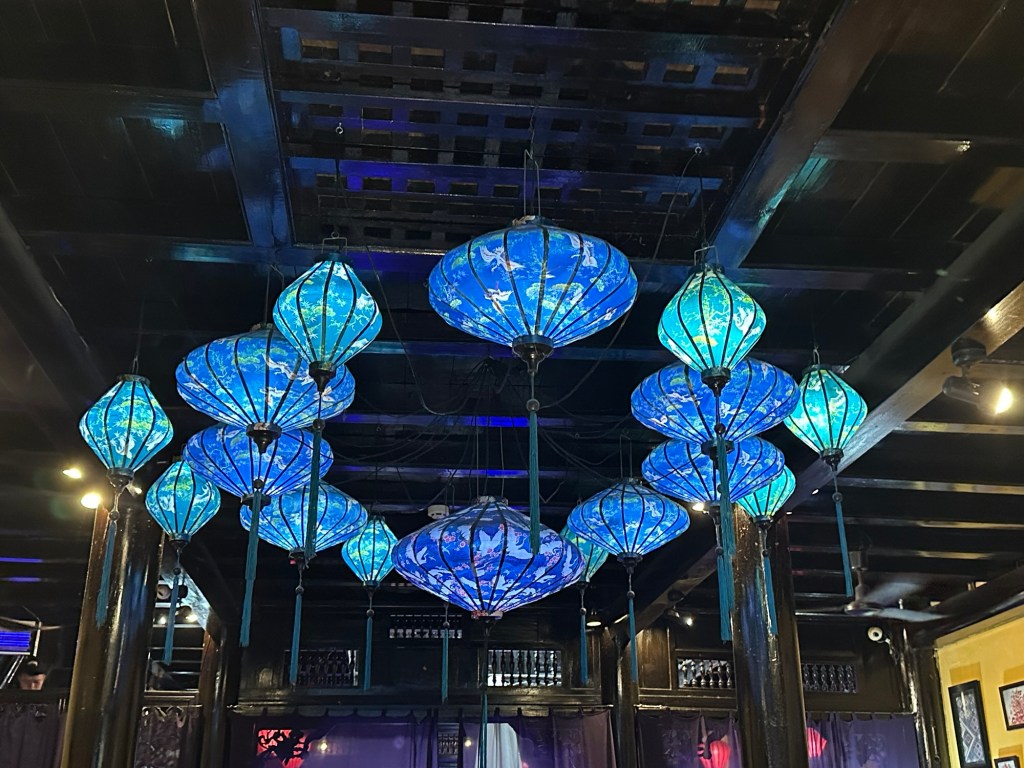
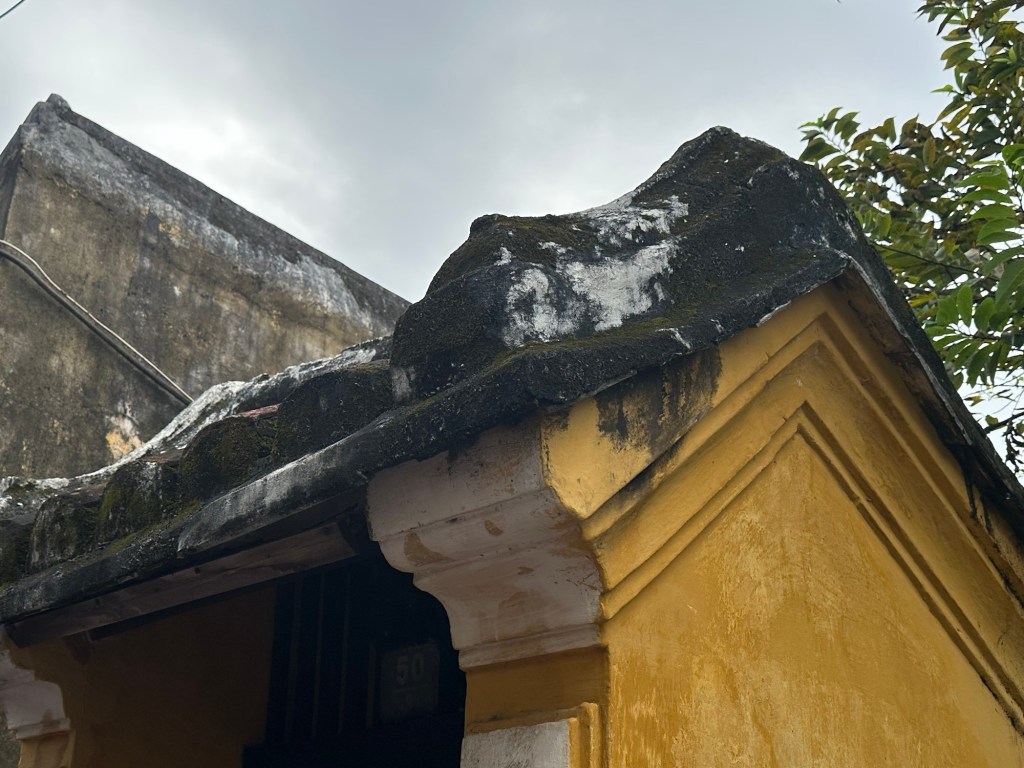
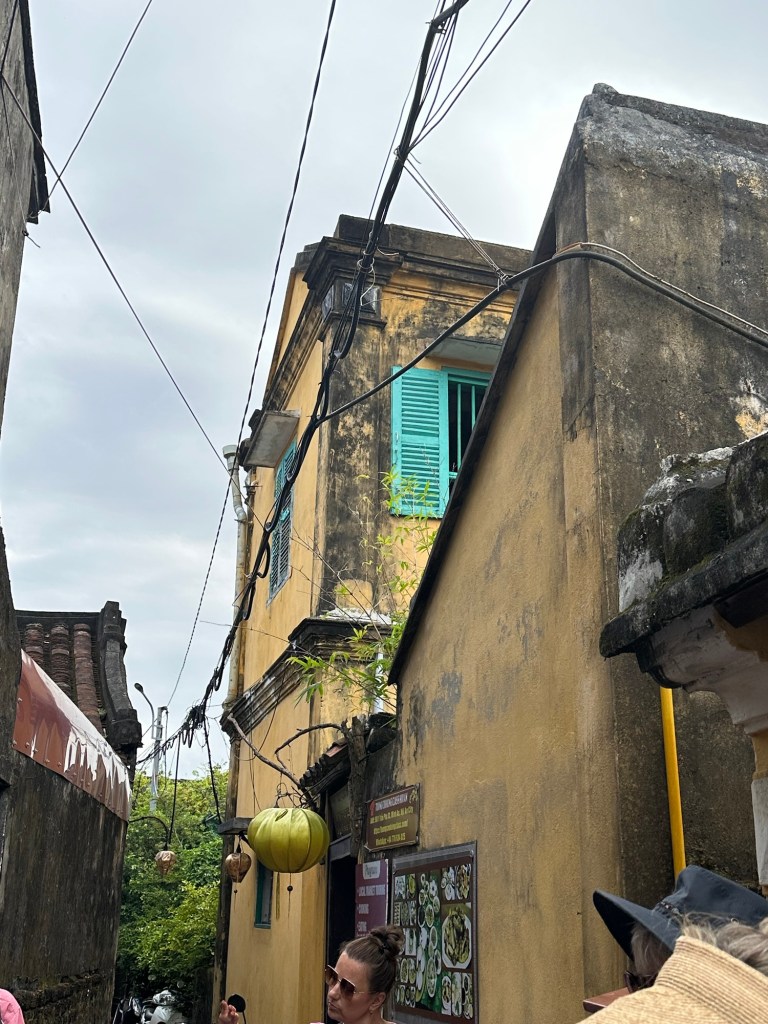
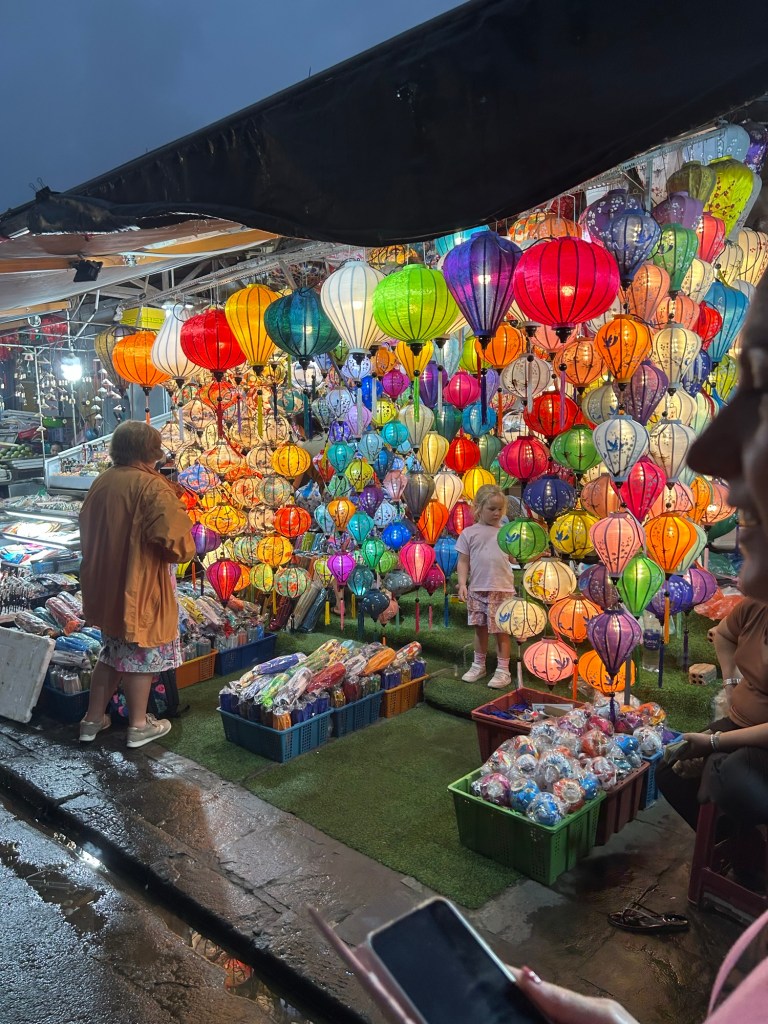
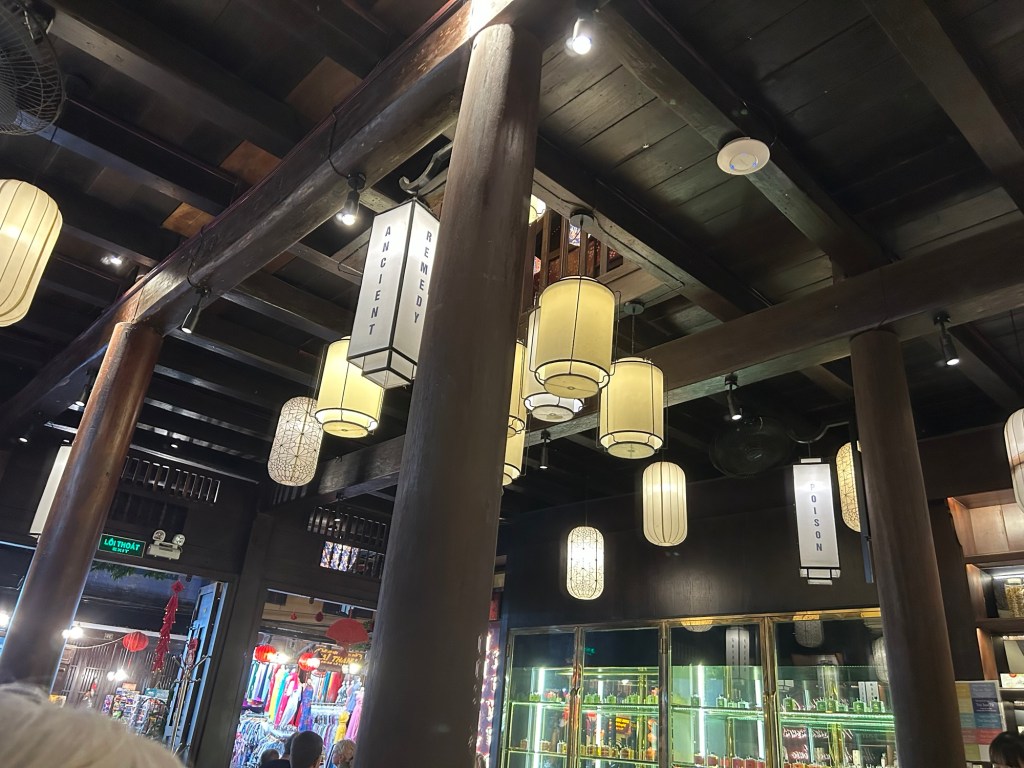
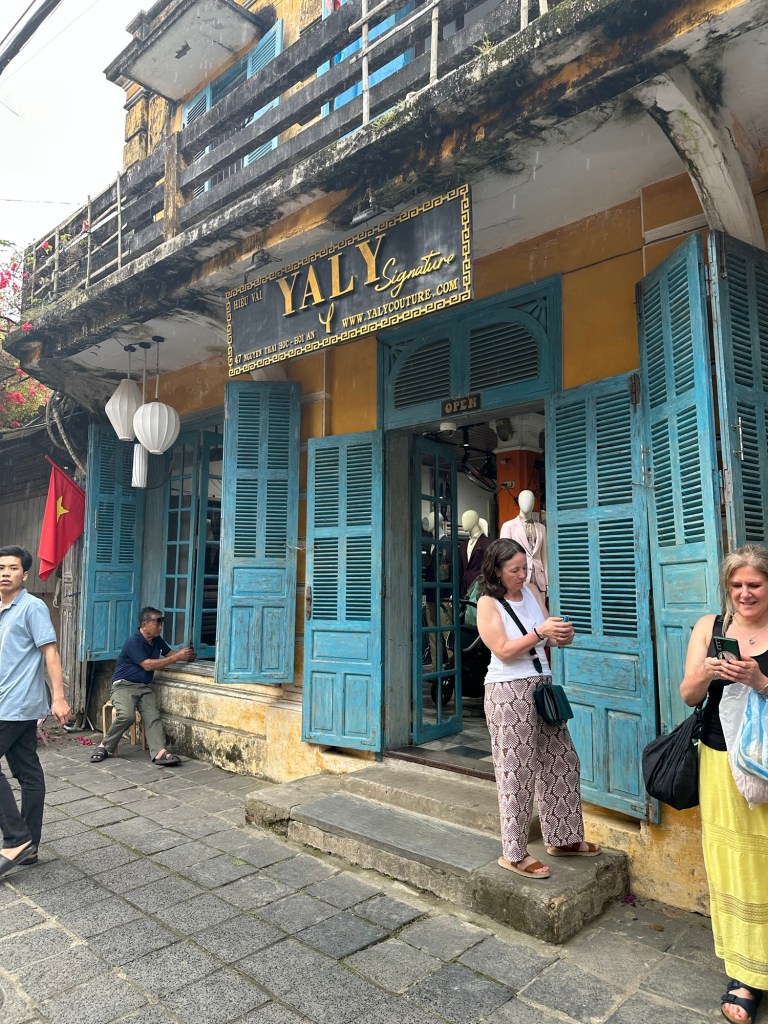
We spent the rest of the afternoon and evening looking around the shops. Here are some views of Hou An. Loving the lanterns.
Excellent dinner also, with great live music (very mellow sax), and a walk in the rain to find another electric bus.
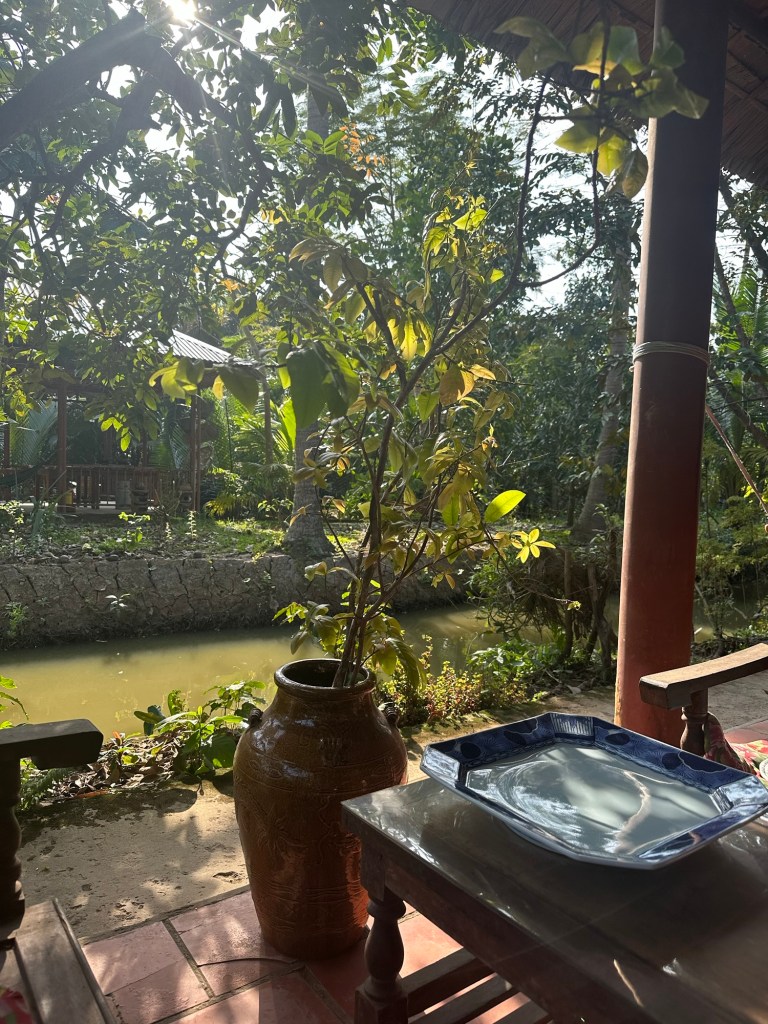
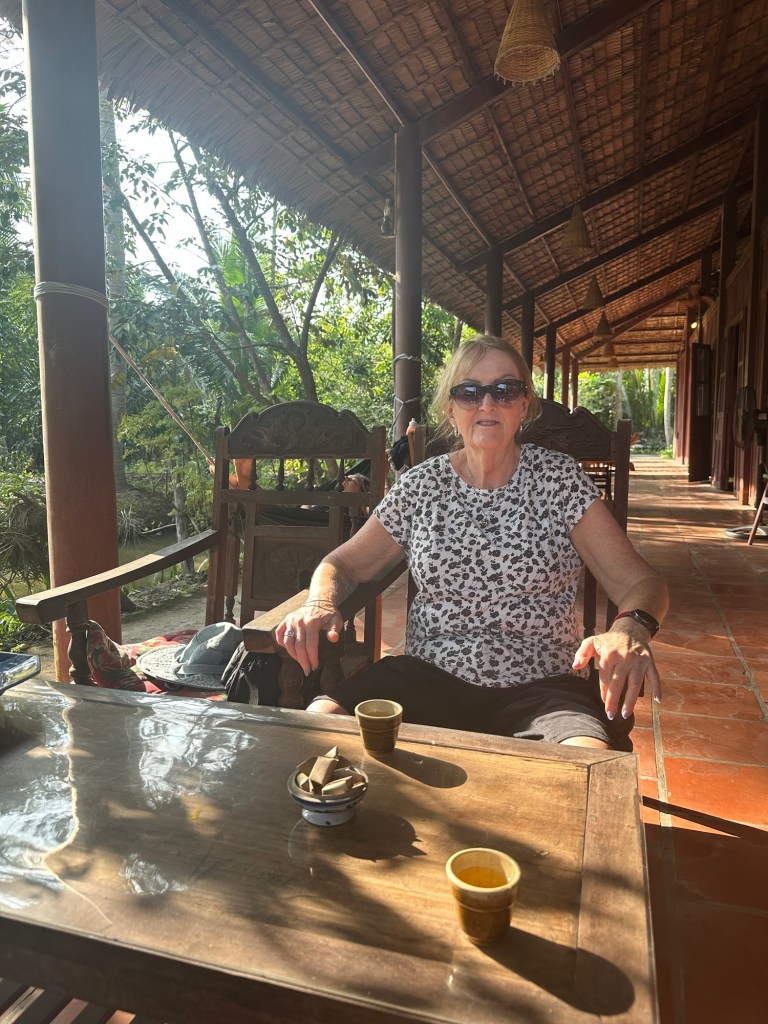
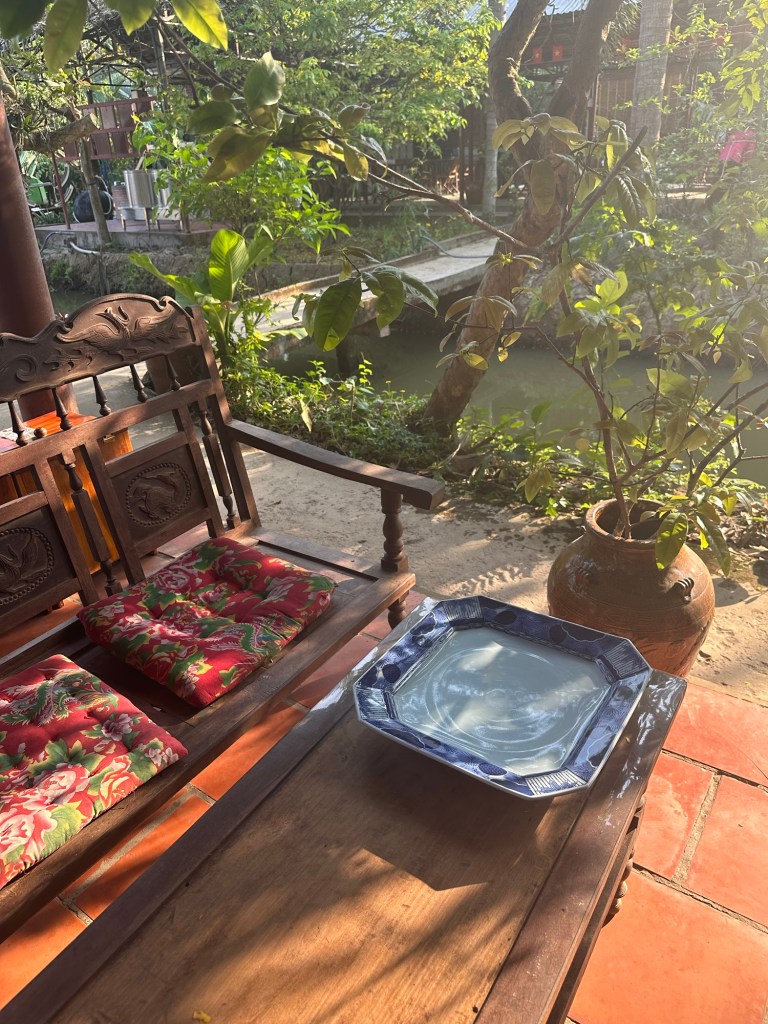
Woke up listening to roosters crow in our home stay house. Just an advanced form of tent, really. No air-con. Mosquito nets over the beds. A pretty place in the jungle.
We had a substantial breakfast before walking out to meet our transport, and started our 3-hour ride back into Saigon.
The Mekong Delta seems to the garden of Vietnam. Rice and coconuts grow everywhere, and there are flowers everywhere.
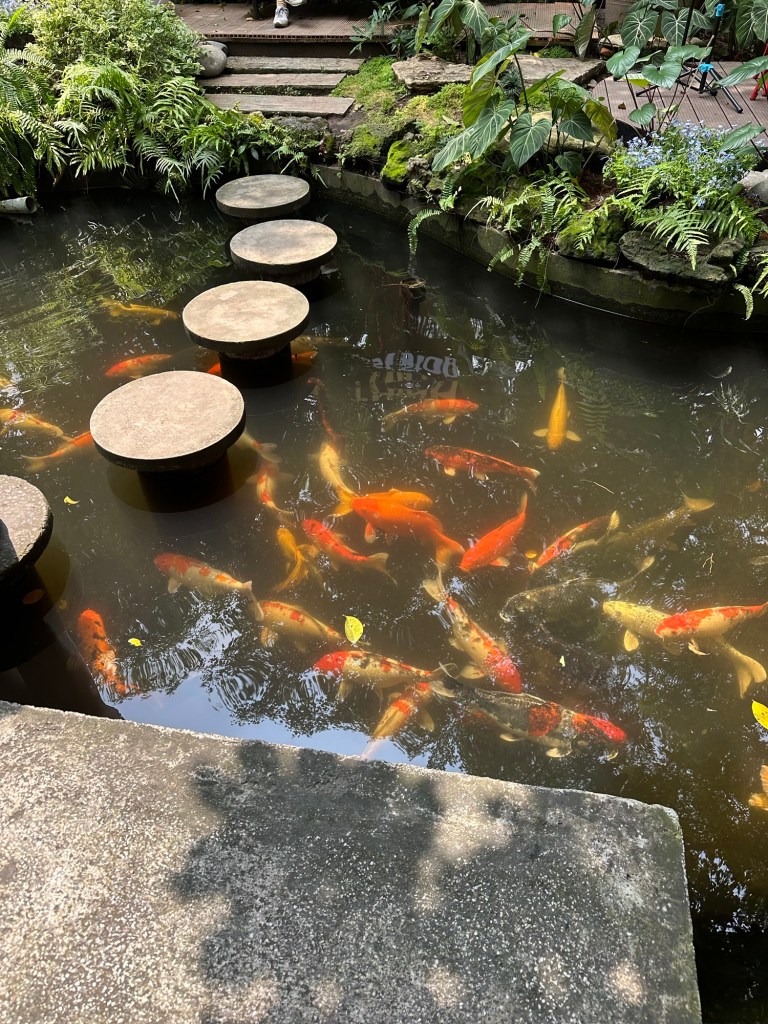
On the way we stopped at a restaurant stop, with a great fishpond.
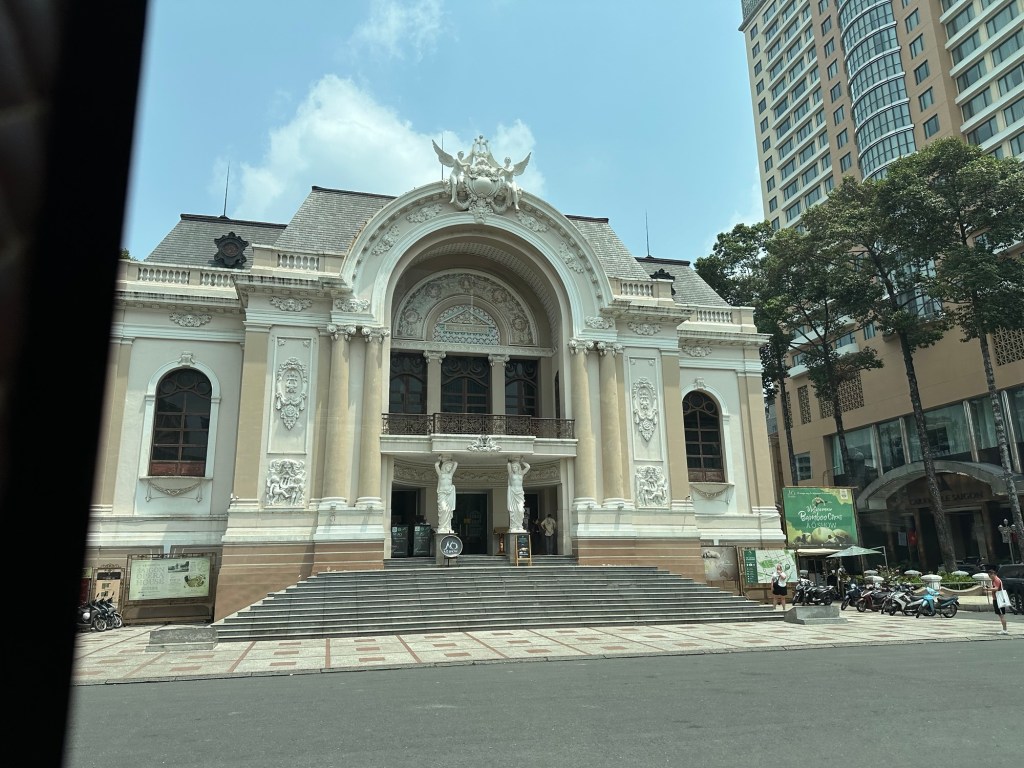
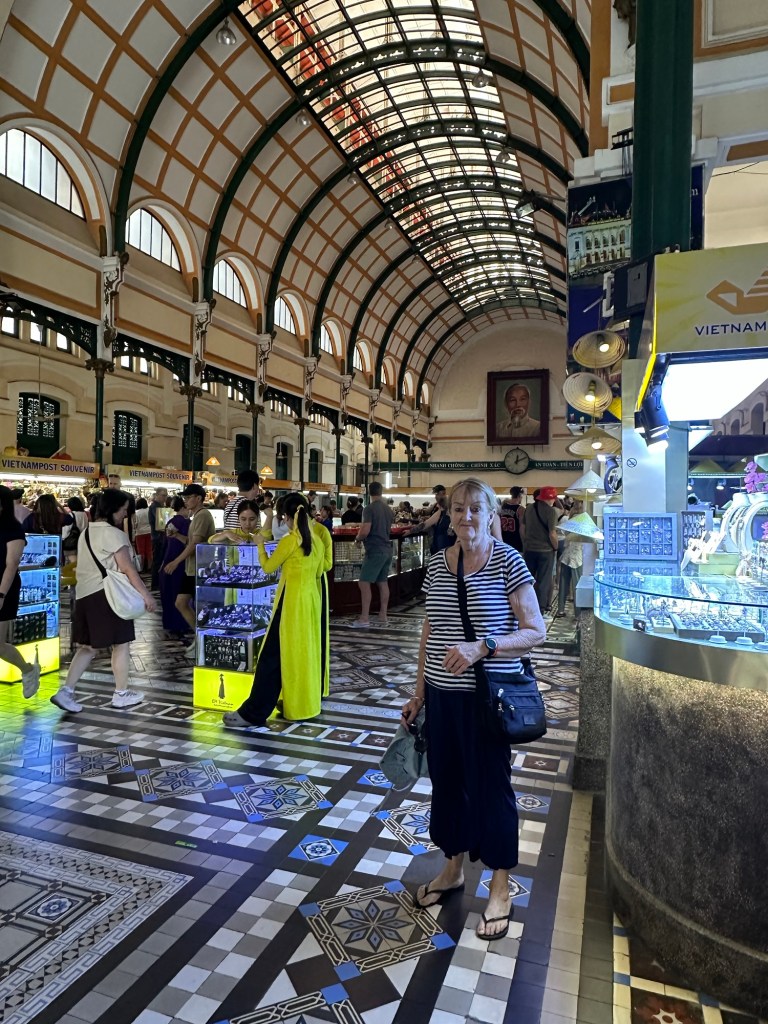
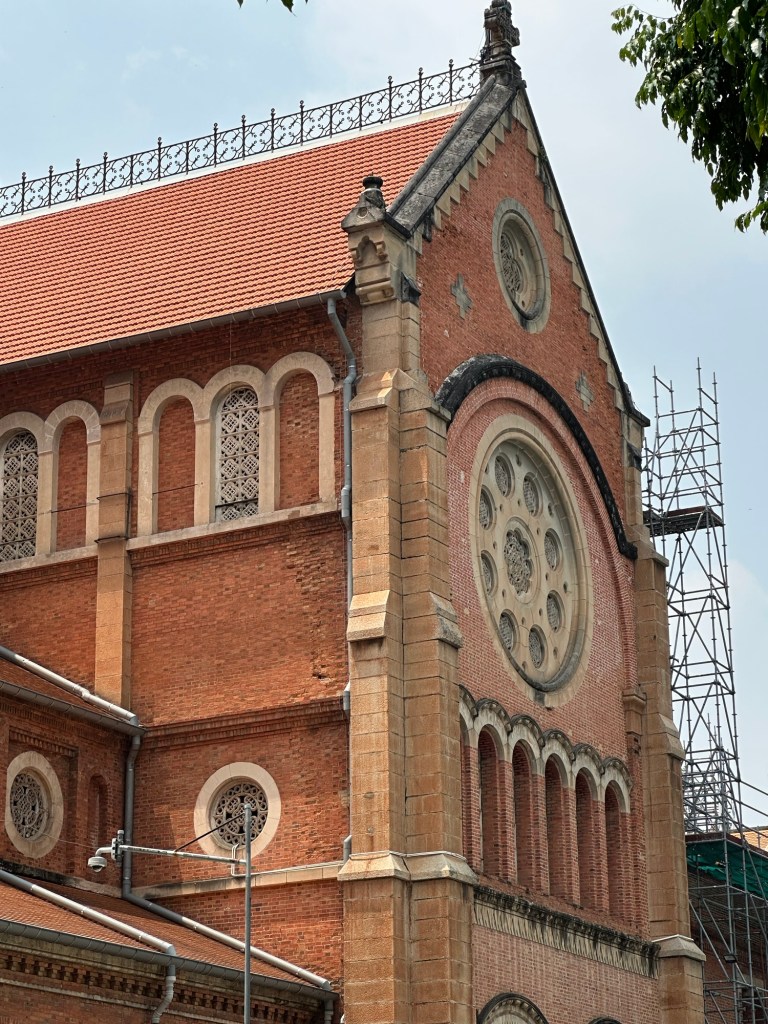
Upon reaching Saigon, we briefly visited the old French Quarter. We saw the Post Office, the Opera House and the cathedral. Unexceptional 19th century buildings that could be anywhere.
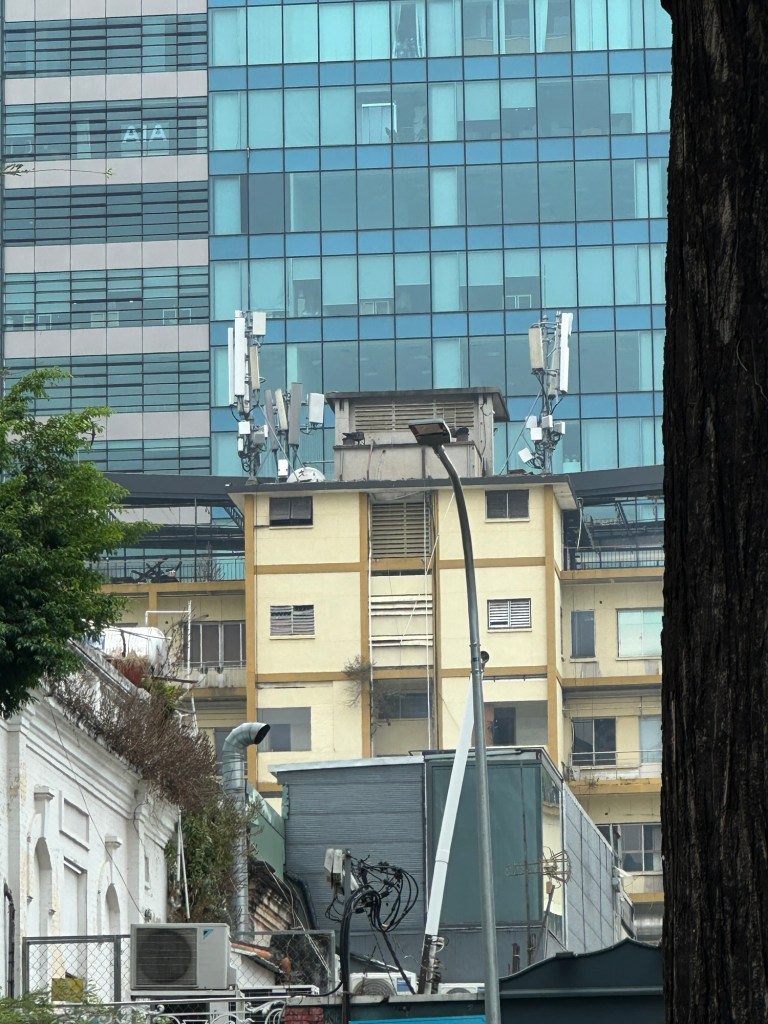
Of some interest in that area is the building the helicopter landed on to evacuate Americans in 1975. It is the yellow building in the picture below.
In the afternoon we went back to the Bin Trang market (more fabric purchases) and then did our washing.
In the evening went out with an English couple from our tour. Really beautiful vegetarian place called the Chay Garden.
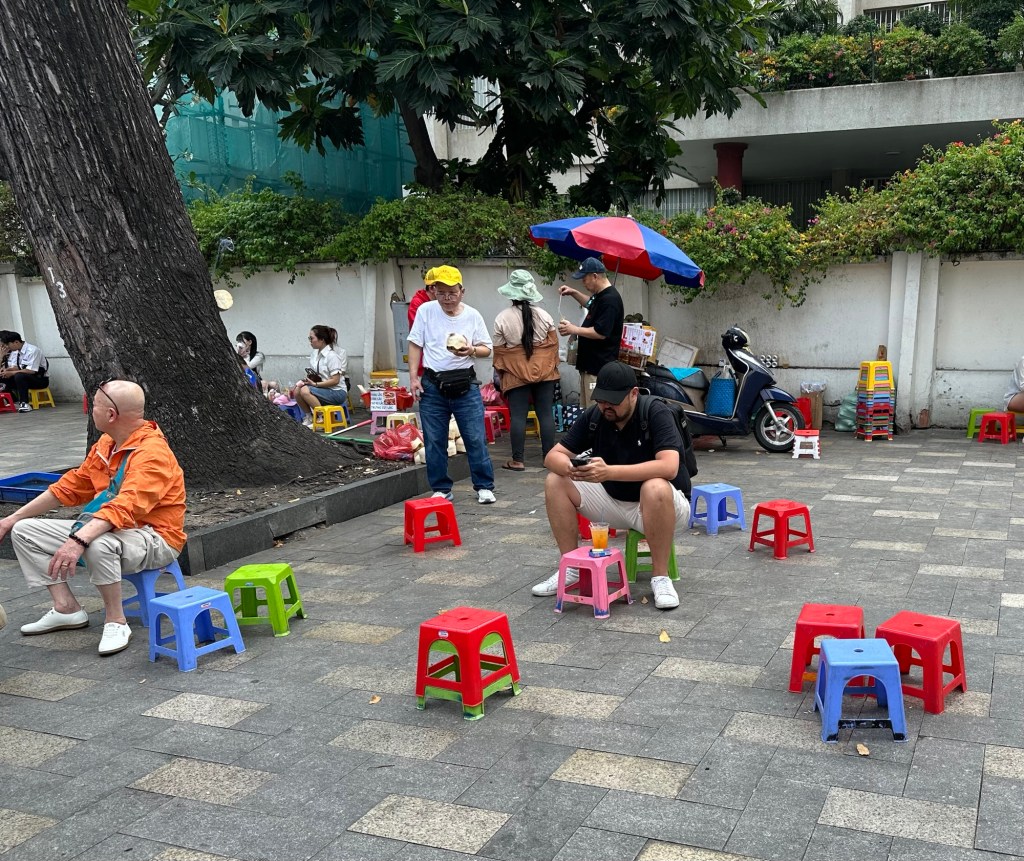
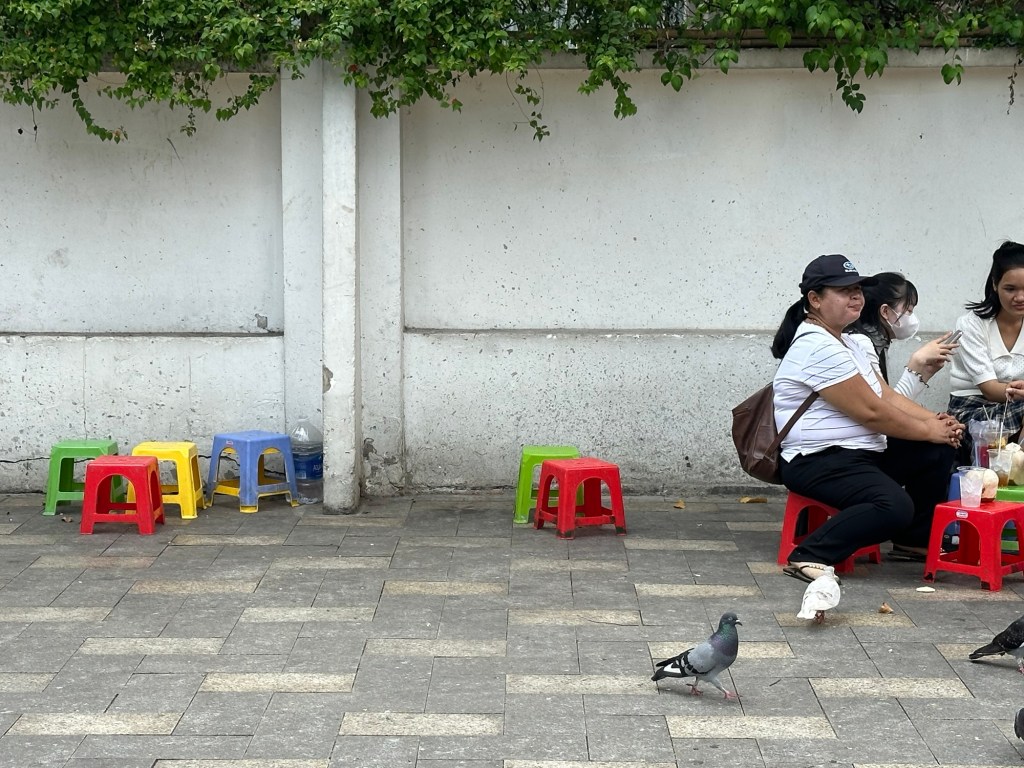
I was amused by some little plastic stools I saw in the city today.
We left Saigon by bus, and headed south for about 3 hours.
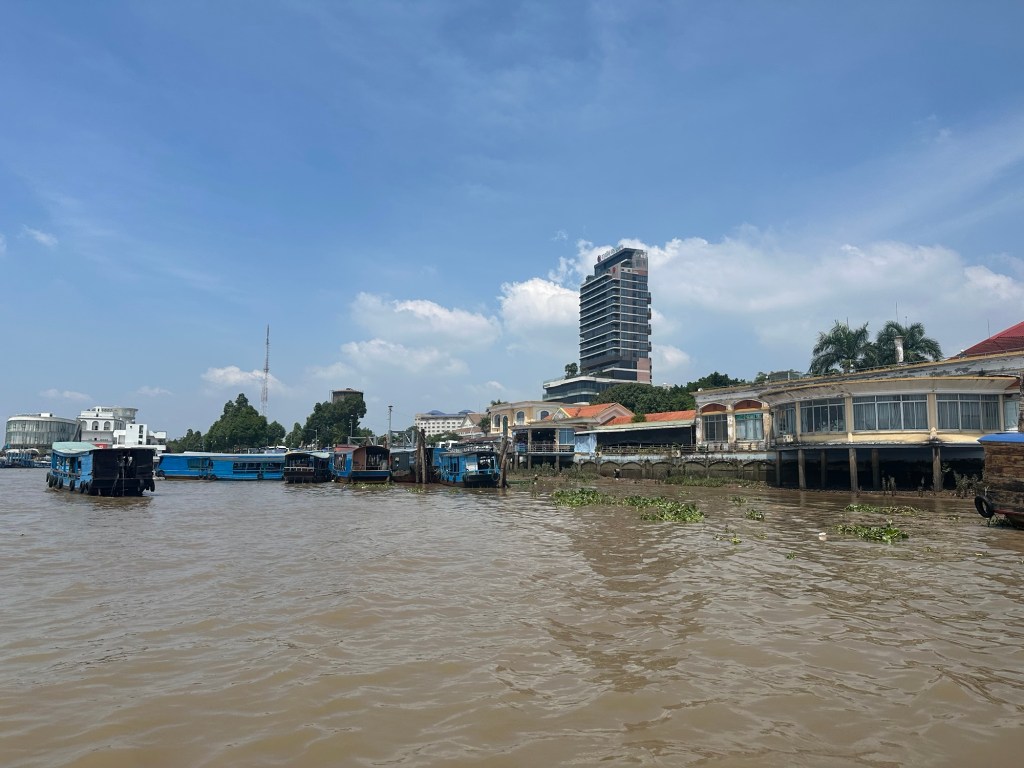
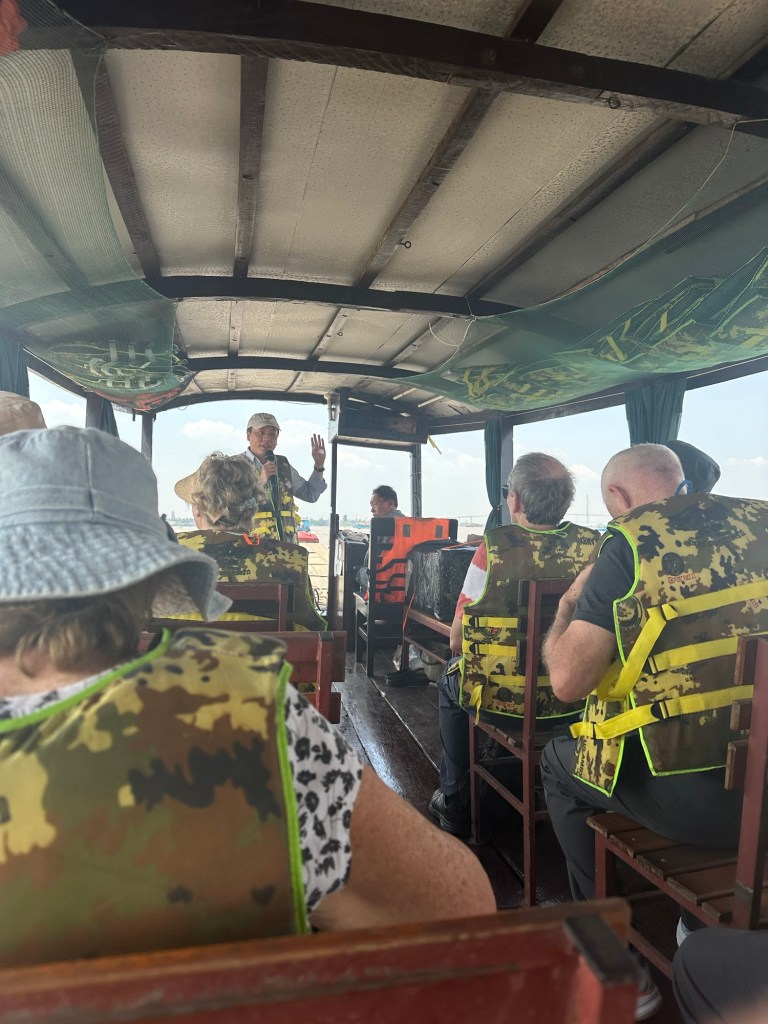
We boarded a boat at Ben Tre, and spent pleasant hours cruising the islands in the Mekong.
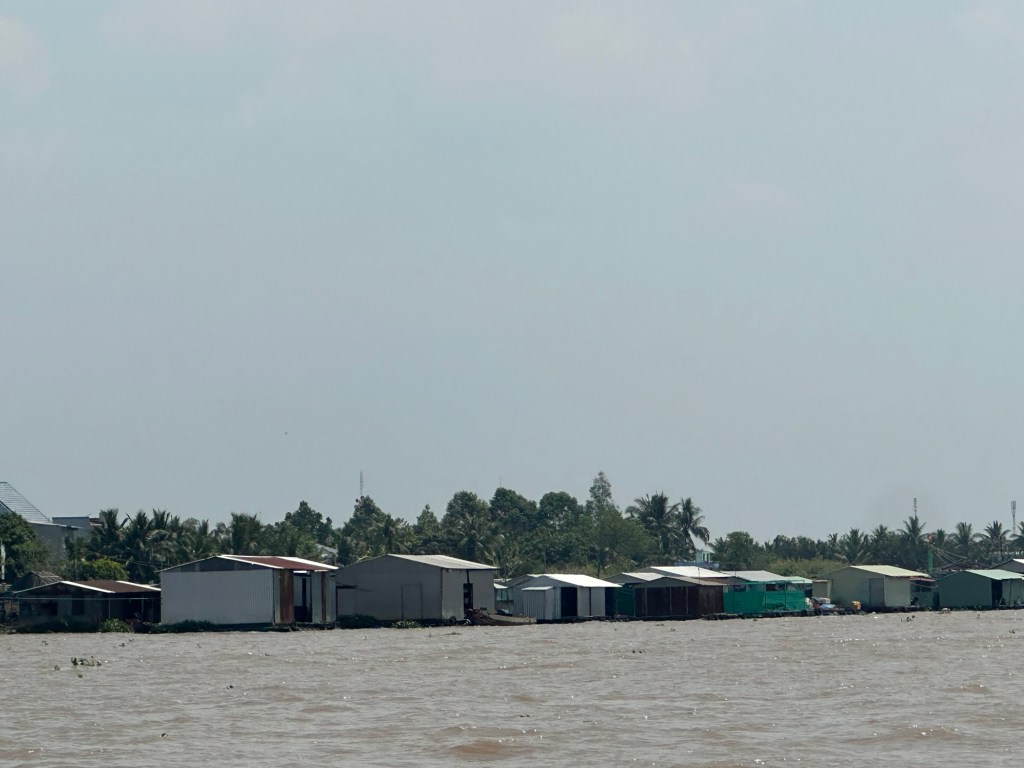
Floating fish farms
Vietnam is very dependent on the Mekong as a source of food, and transport.
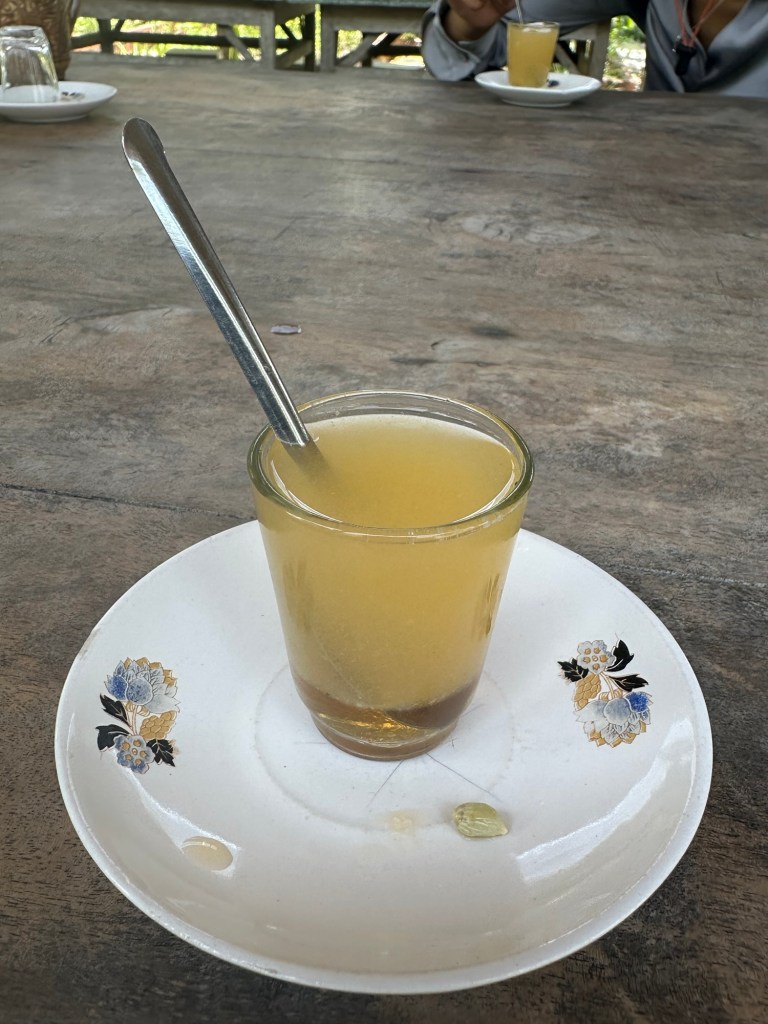
The first island we visited produces honey and cacao, and the associated products. We sipped honey tea and tasted local chocolate.
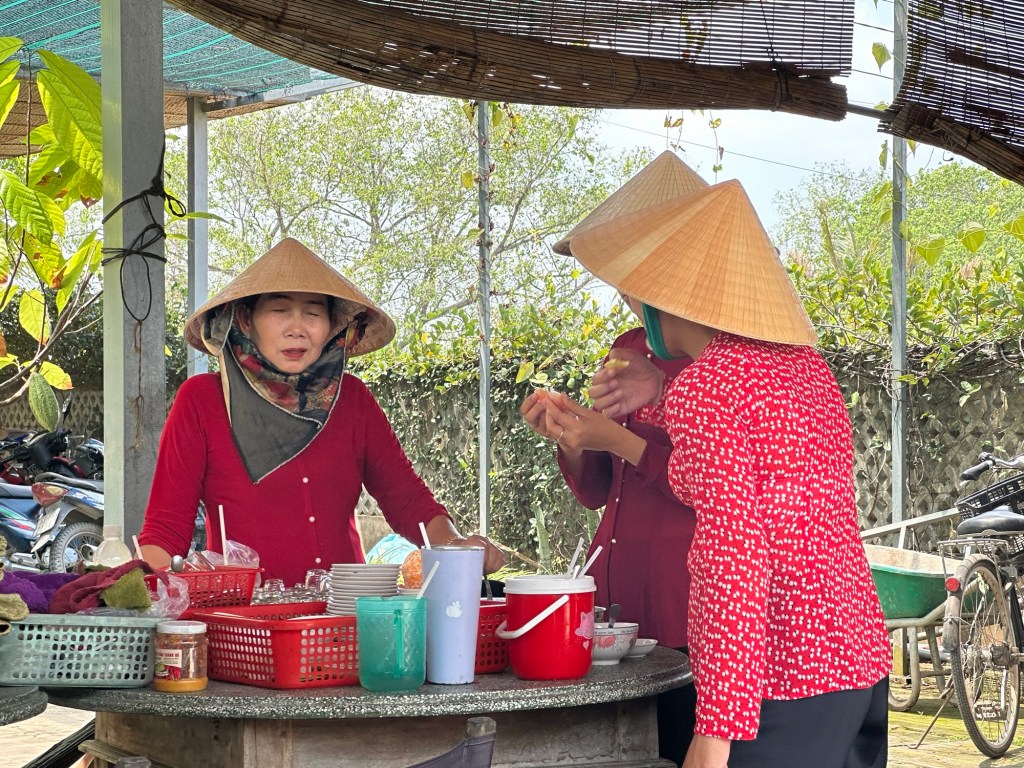
At the next island we sampled coconut candy, and ate all different types of fruit. Coconut is really important crop, providing food and fibre.
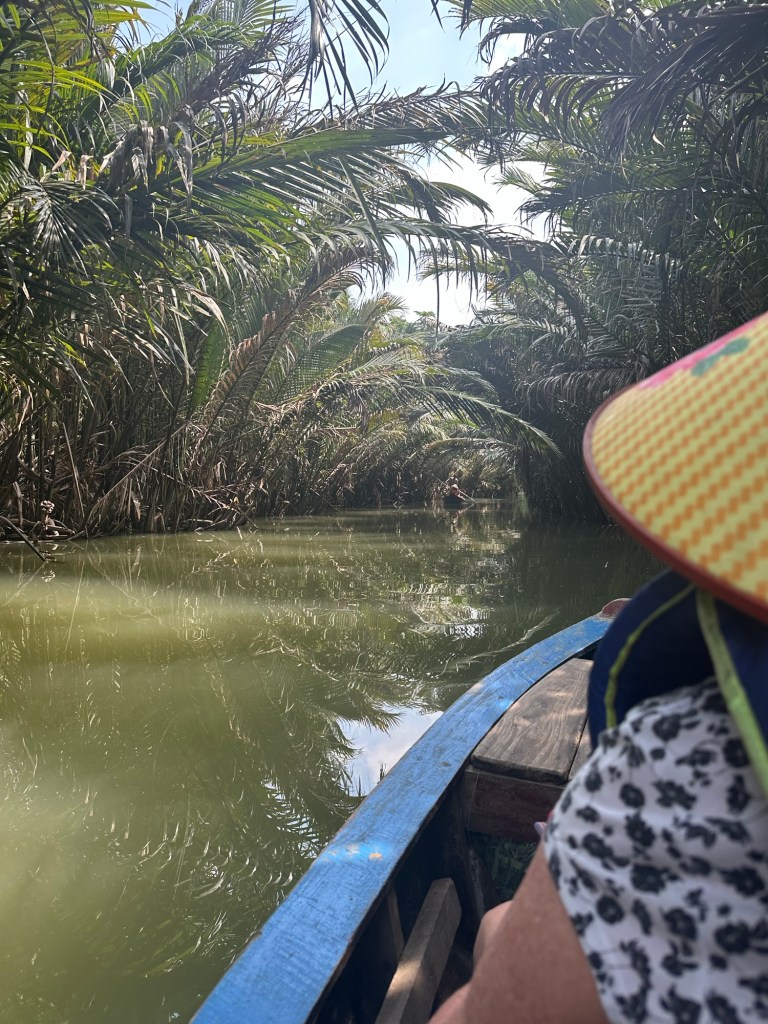
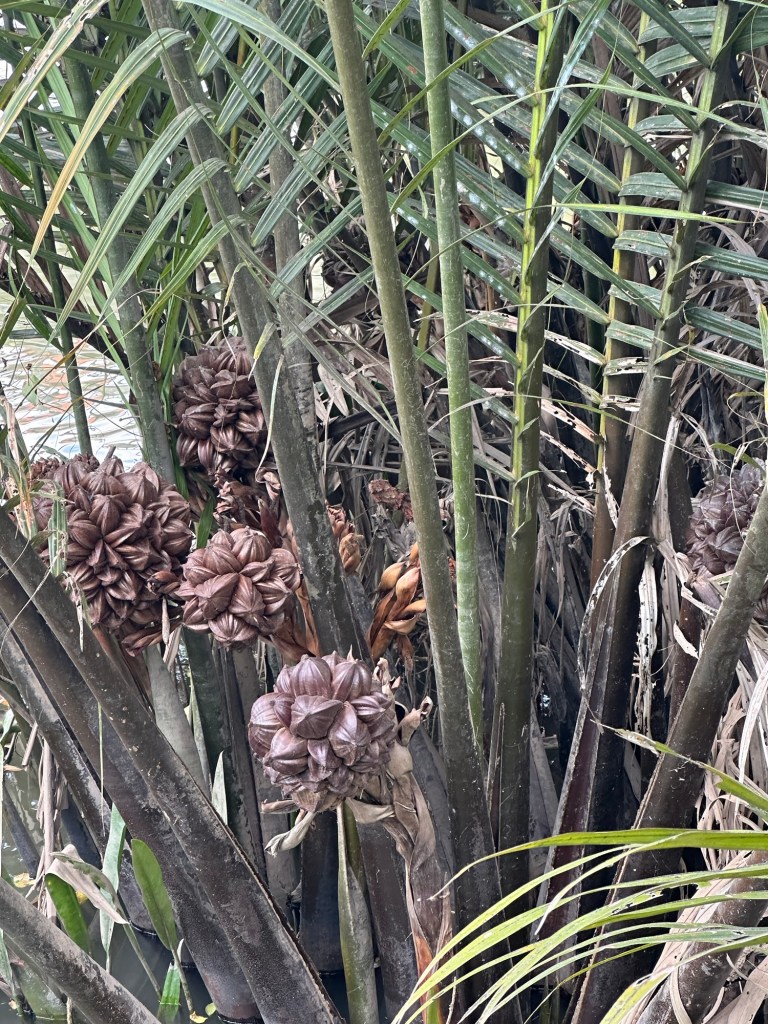
We then changed boats, and were rowed in a little sampan to our lunch place. It was really delightful, moving slowly through the jungle canals under the shade of water coconut trees.
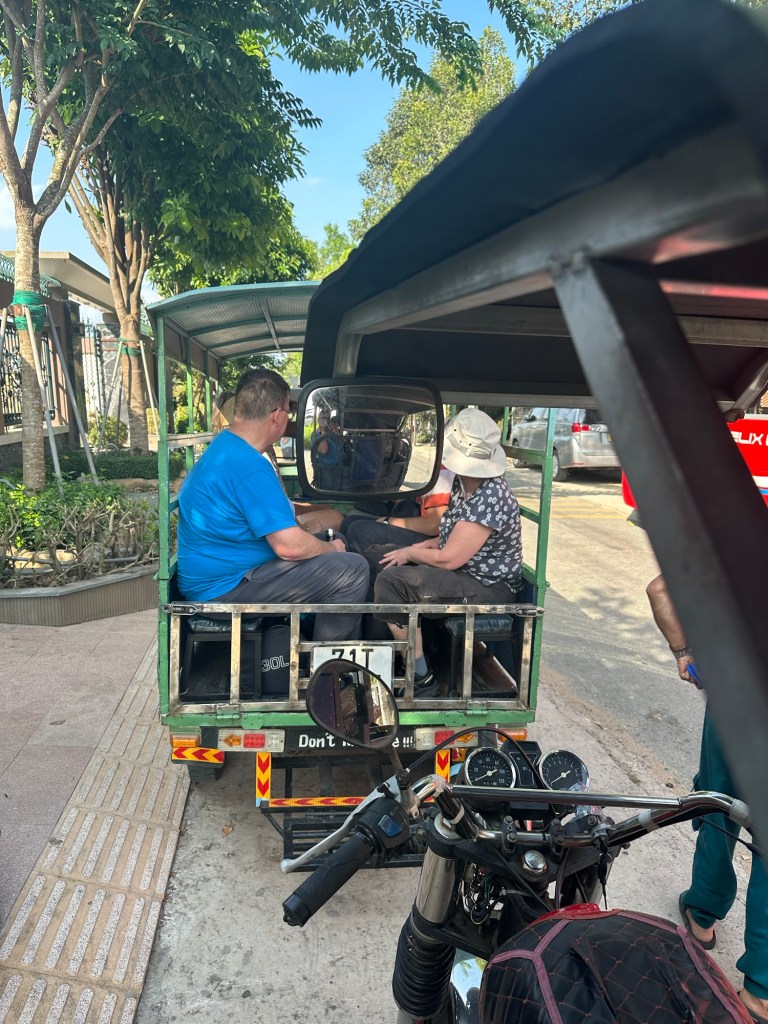
Another change of transportation. We were loaded into giant tuk tuks for the last part of the journey to our home stay in the jungle.
It is quite delightful here. Wooden huts in the jungle, with comfy rooms but shared facilities. No air-con, but perfectly pleasant.
We helped cook our dinner, learning how to do rice pancakes in a wok. It was a pity,but none of us felt like eating much as we had been eating all day.
We were up early for breakfast. The bus left at 7.15 to take us to Cu Chi to see the Vietcong tunnels. About an hour from the city, through the horrendous but endlessly amusing traffic.
Our tour leader Tuyet gave us some history about the lead-up to the “American” War, as they call it here. Really interesting. Quite a different spin on how we see it in the West, and she clearly supports the Party line.
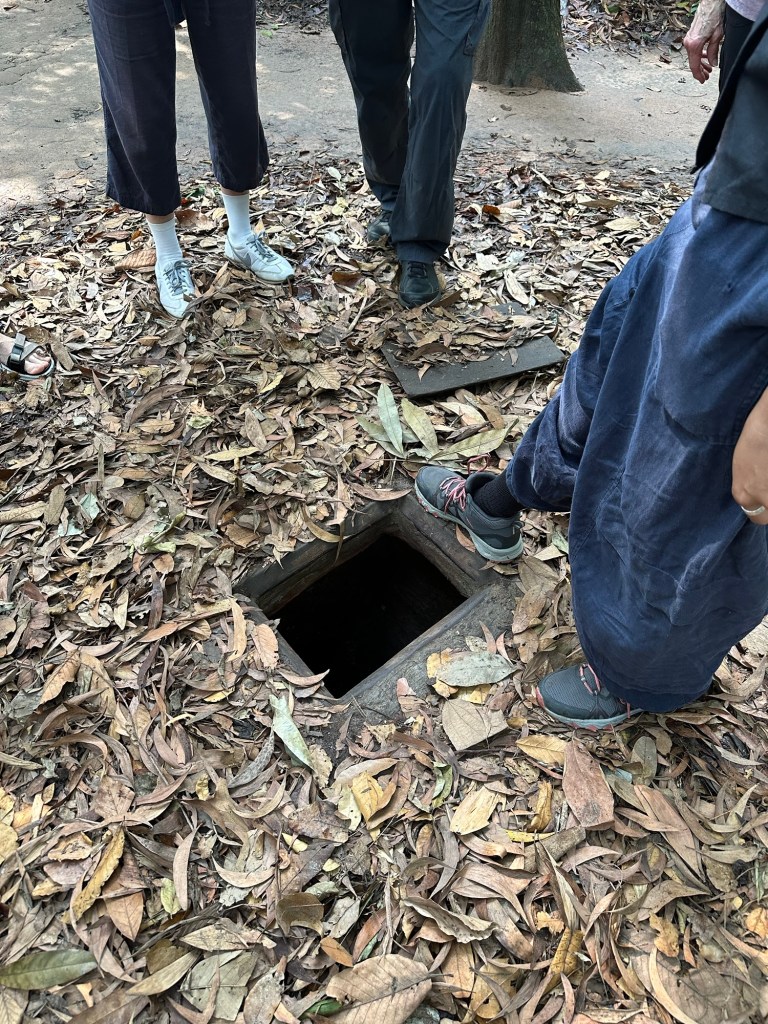
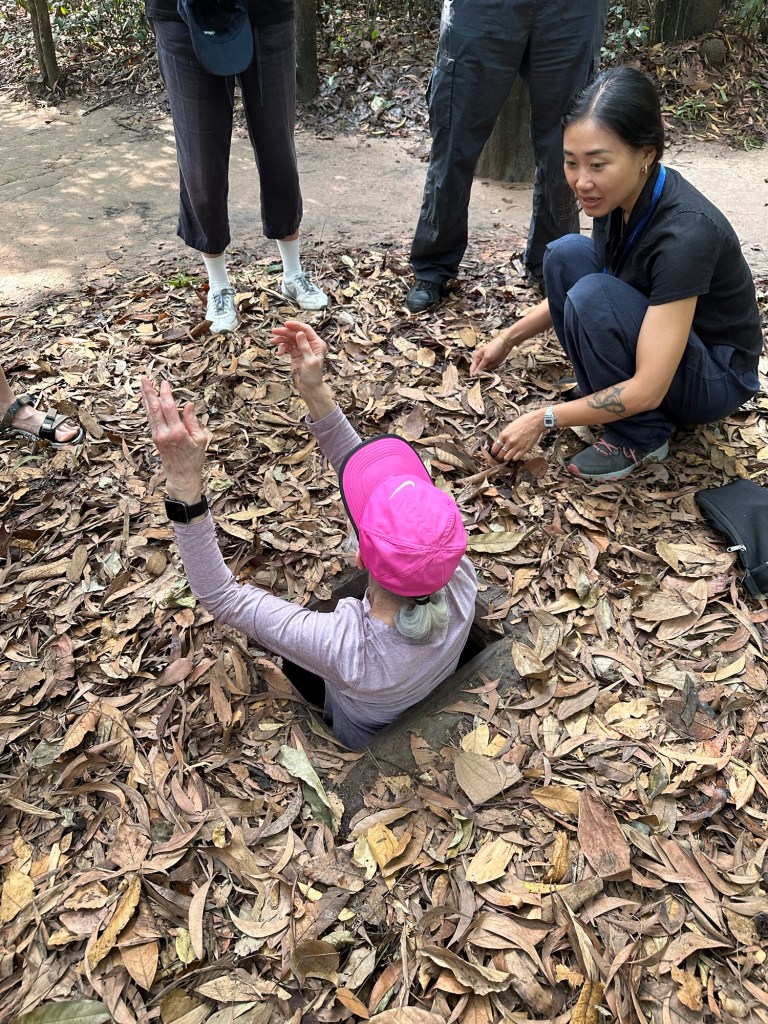
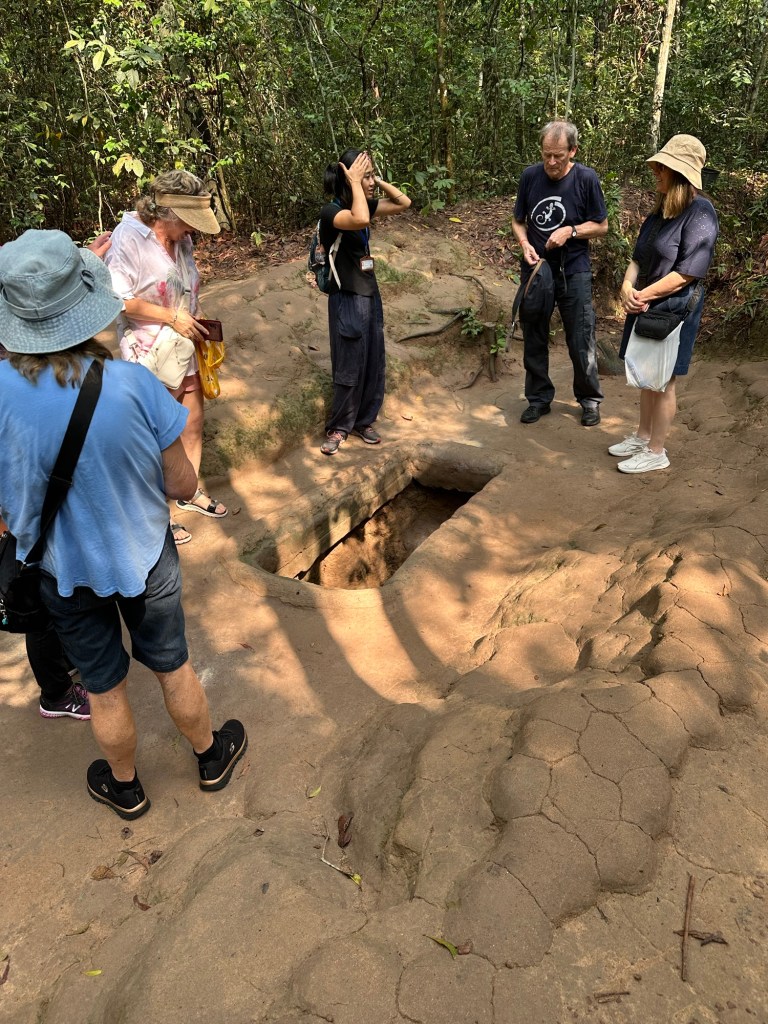
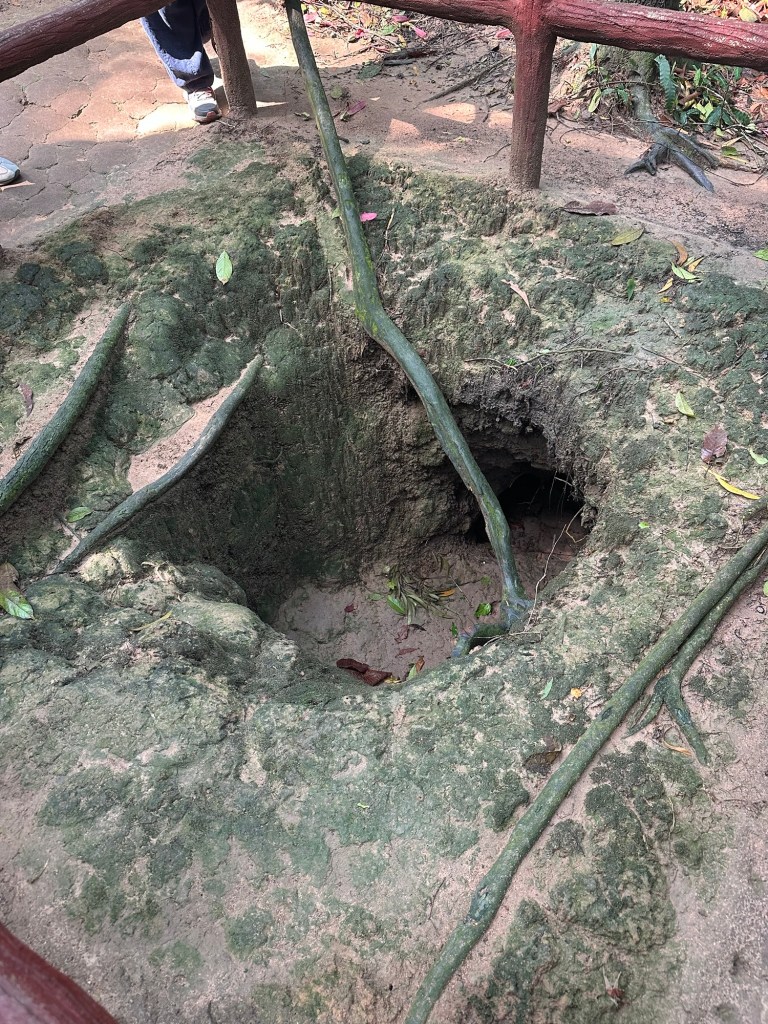
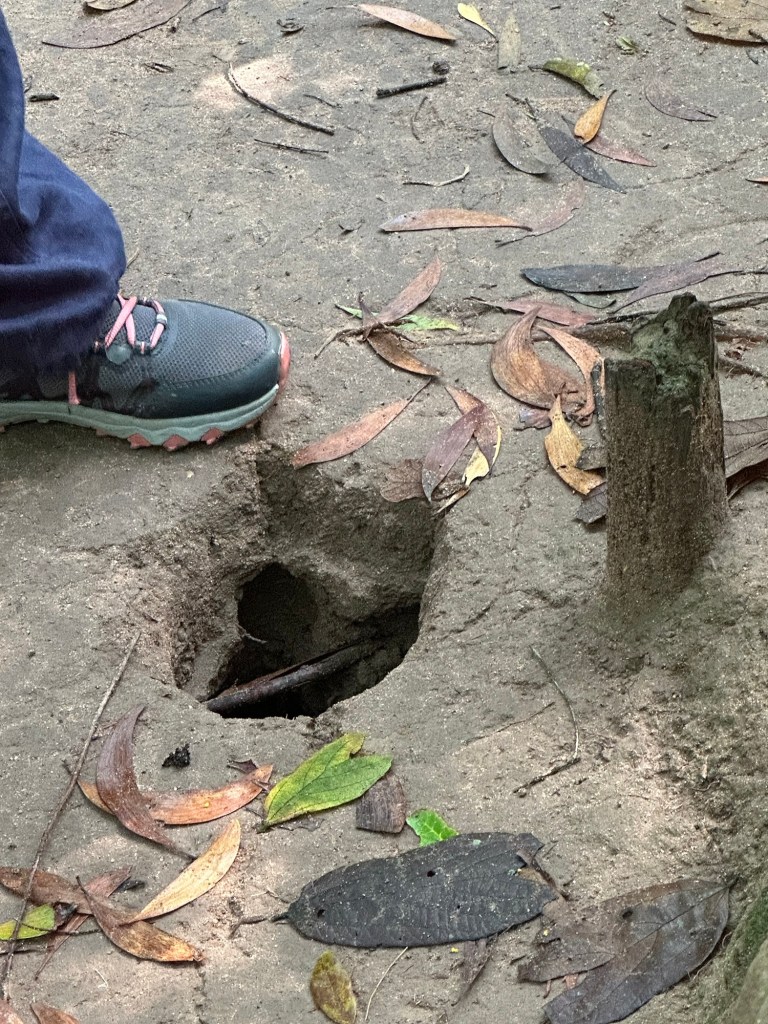
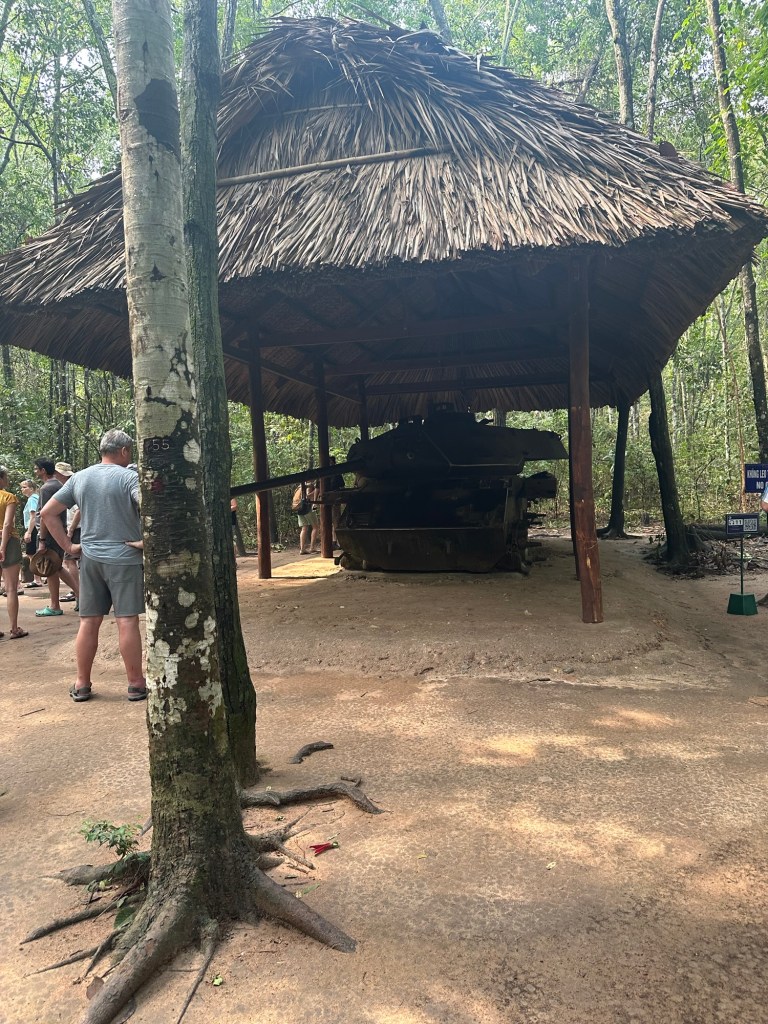
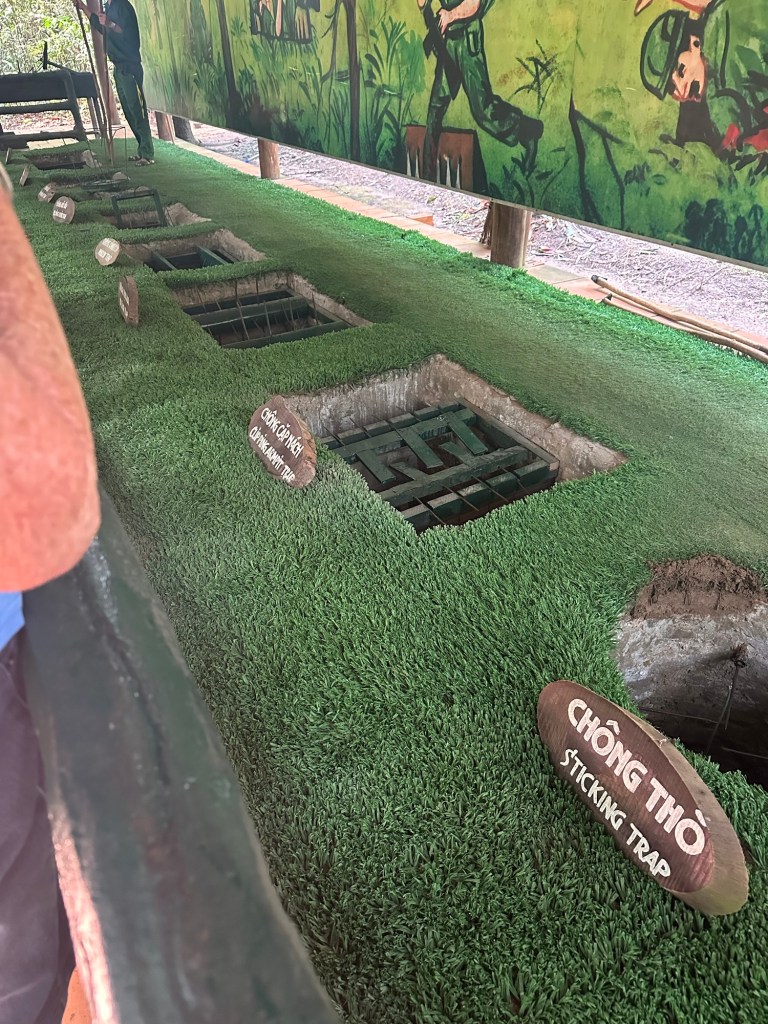
Arriving at the tunnels we were taken to see the various entrances and exits to the tunnel complex, and shown all the techniques the fighters had to use to avoid detection and capture. We walked around among bomb craters in the jungle, and because there is a shooting range there for tourists, you also have the appropriate sound effects.
I did not go into the tunnels or bunkers, because I do not do confined spaces, but some people did.
It must have been a horrible life, and I think the Vietnamese people can truly pride themselves on their resilience and commitment.
Tunnel entranceOne of our group tries it for sizeAn air shaftSome of the types of booby traps
A very interesting morning.
Back on the bus, we stopped to try banh mi. Really good pork rolls.
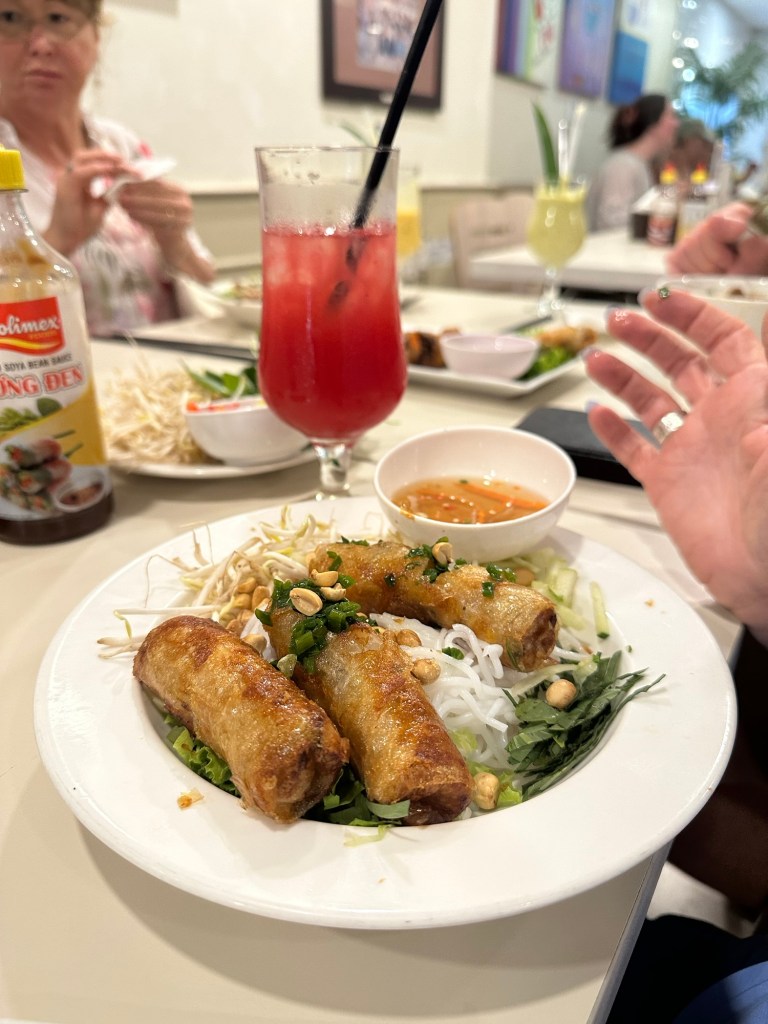
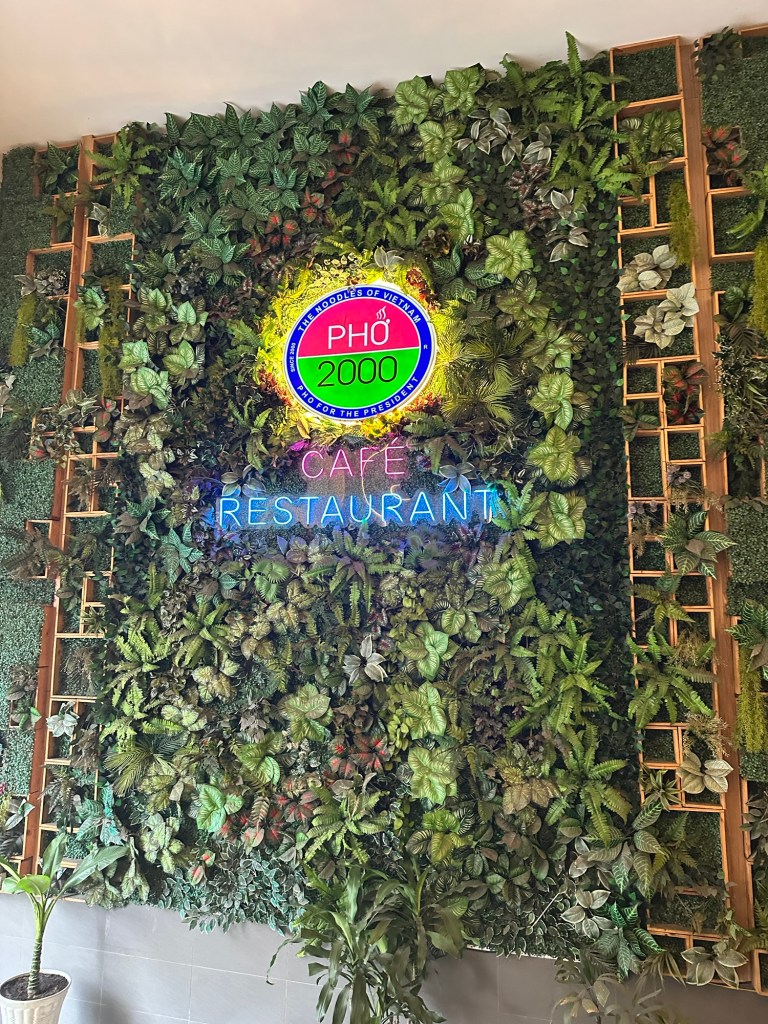
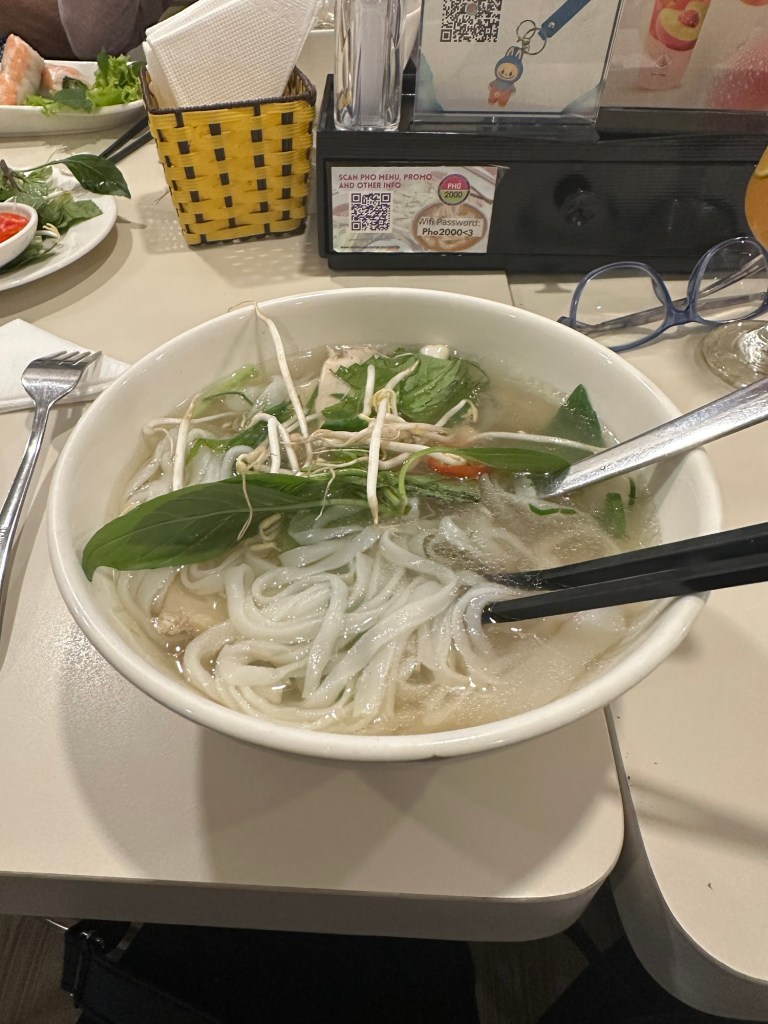
Back in the city, we went to Pho 2000 and enjoyed great food.
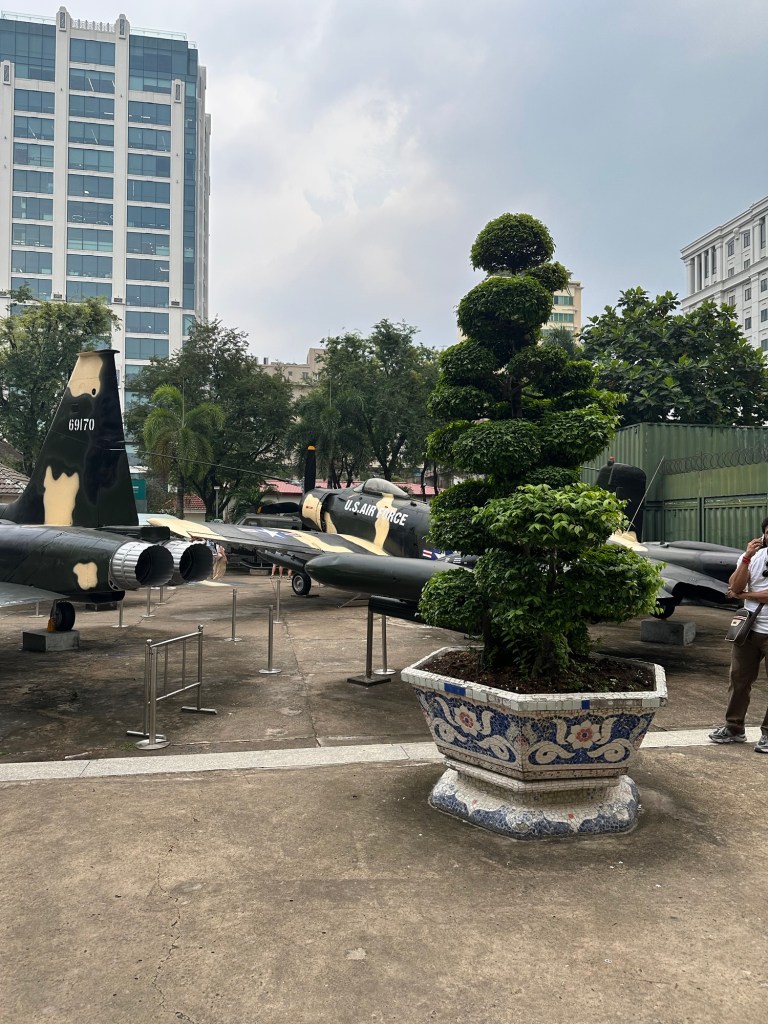
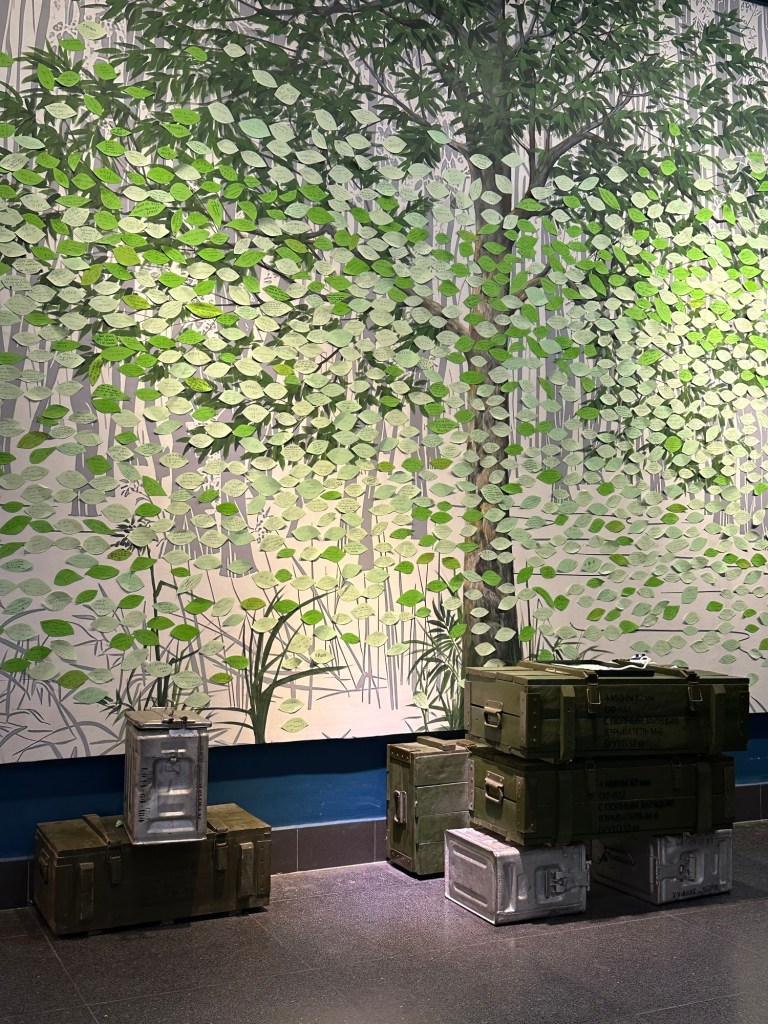
The afternoon saw us at the oddly-named War Remnants Museum. It is an indoor and outdoor collection of armaments, weaponry, photographs and memorabilia from the 1954 to 1975 period. Quite, quite disturbing. Very anti-American, but you can definitely see why.
It makes the whole US involvement seen pointless, self-serving and excessive.
Captured aircraftThe peace wall
We walked back to our hotel, the M Village.
The usual nana nap.
In the evening we walked to some of the local sports stores, which we had seen yesterday. Picked some branded sports socks and shirts at very good prices.
Dinner was at a local beer-hall type place. The food was good and cheap.
Walked home again. Our street-crossing technique is improving.
A note on footpaths…
Saigon footpaths are not really designed for walking. They are treacherously uneven, and also used as motorcycle parking, storage facilities, sleeping areas, smoking rooms, kitchens and dining rooms. Sometimes it is safer to just walk on the road.
We left Siem Reap to fly to Ho Chi Minh. Must be one of the world’s worst airports for organisation. Also full of extremely rude Russians.
We have parted from most of our Cambodia group, as they are now on a different tour. Only one other couple is doing the long Vietnam tour with us.
We are arrived at our hotel which is very modern and groovy. Great location.
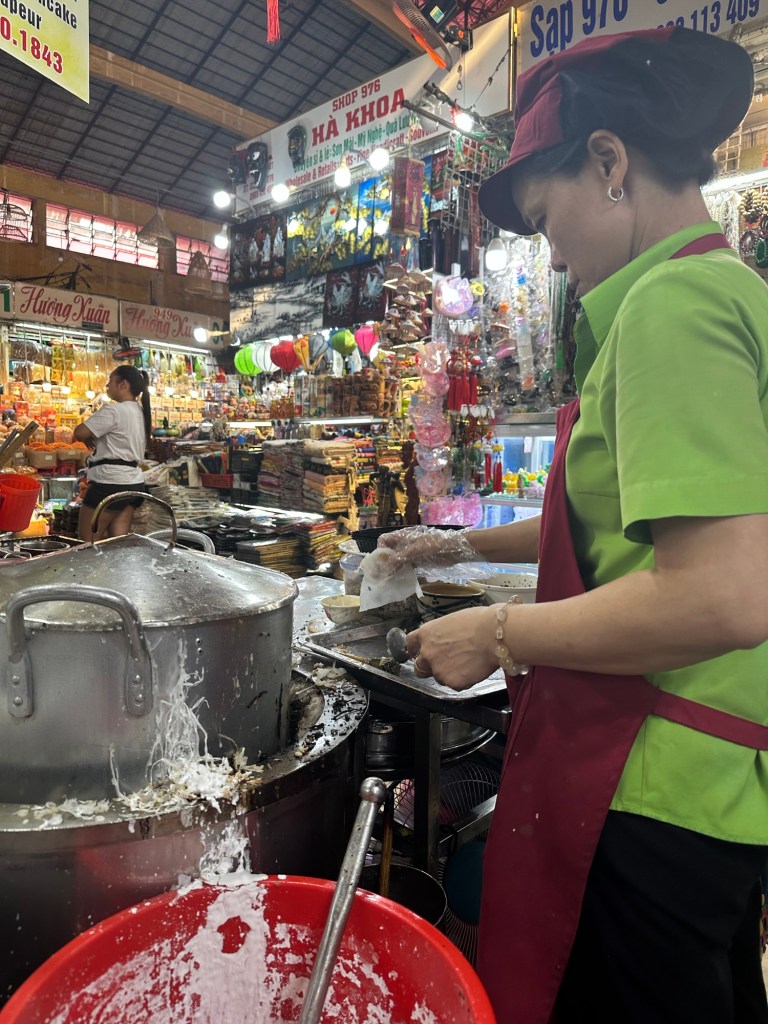
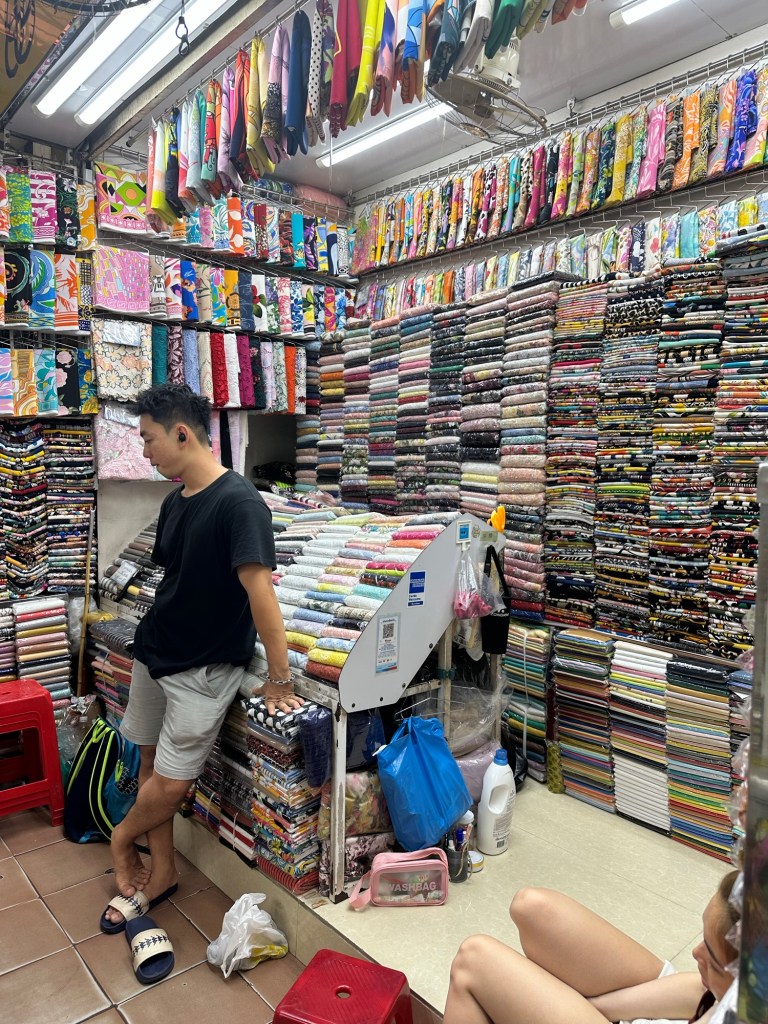
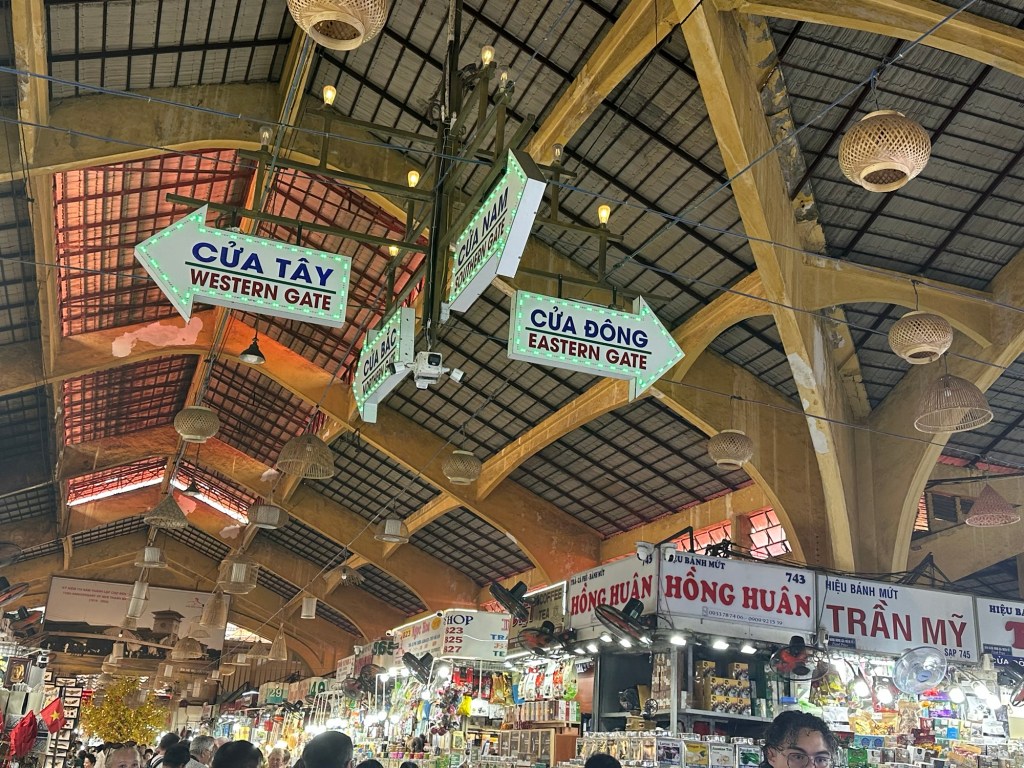
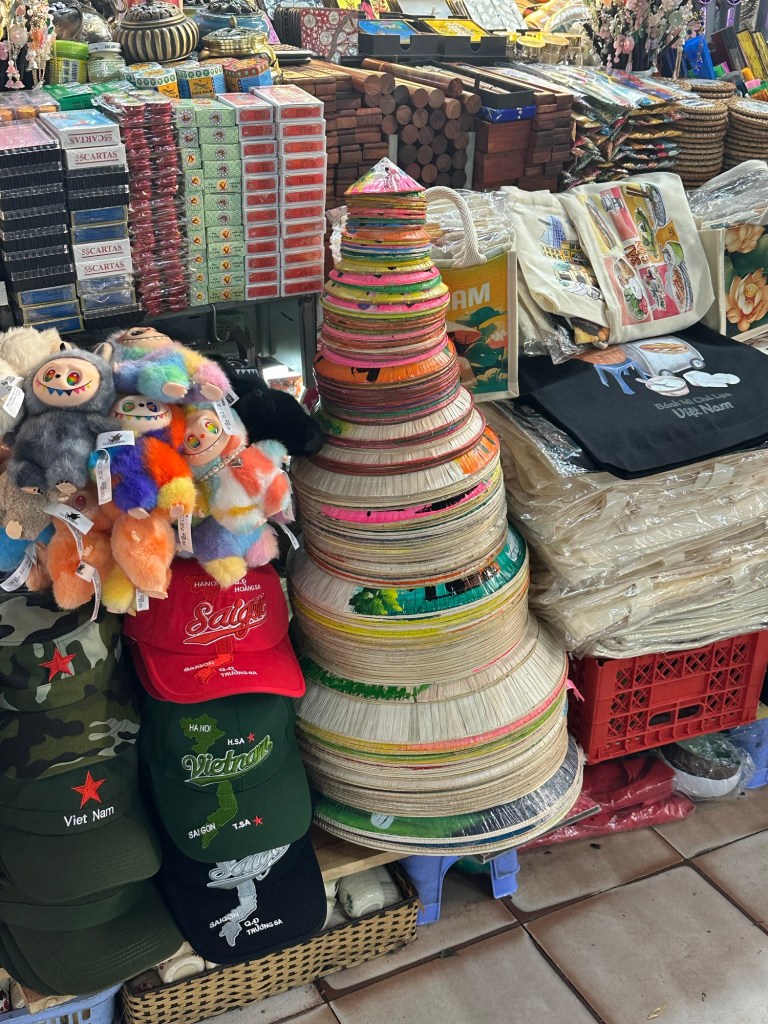
We spent the afternoon shopping at the central market. Really fun. All the junk in the universe. Great dress fabrics. Succumbed early. Also bought a new hat, and some small gifts.
Making rice paperFabric heavenThe centre of the marketVarious sizes in hats
In the evening we met up with the rest of our group for this tour. Aussies, Canadians and the English couple from our last group. Our tour leader is called Tuyet and she seems very sweet.
After breakfast we set off for a fishing village on the lake.
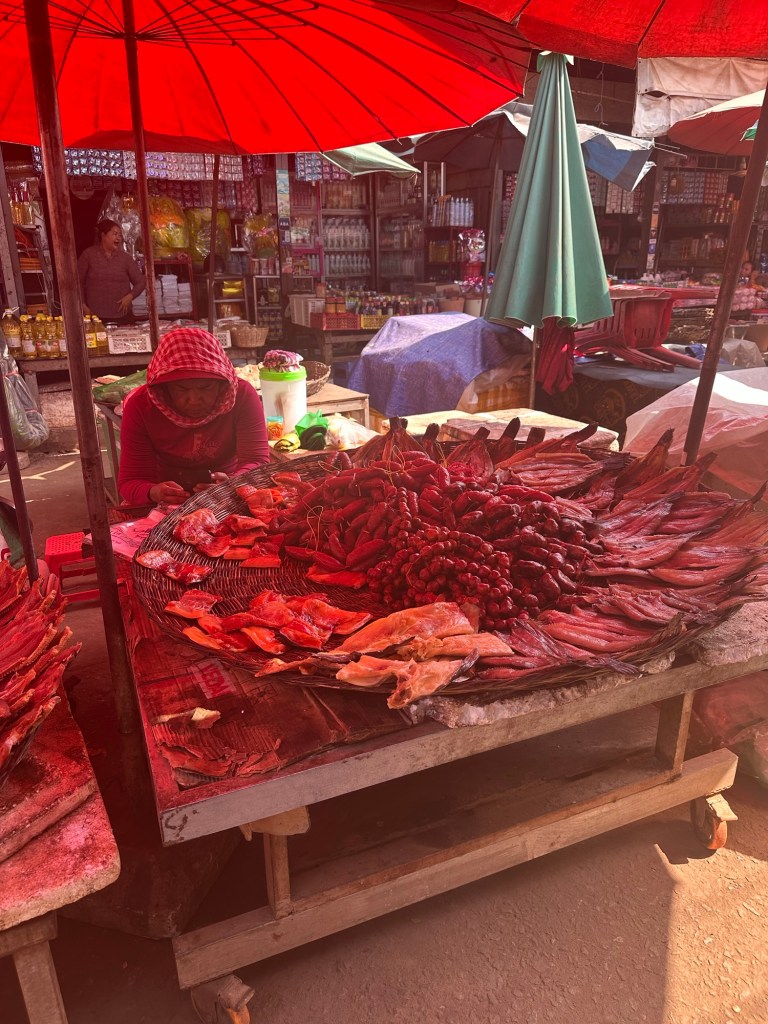
We passed through a number of villages on the way. We stopped at a local market and had a look around. Sureth our tour leader is very good at explaining things and answering questions.
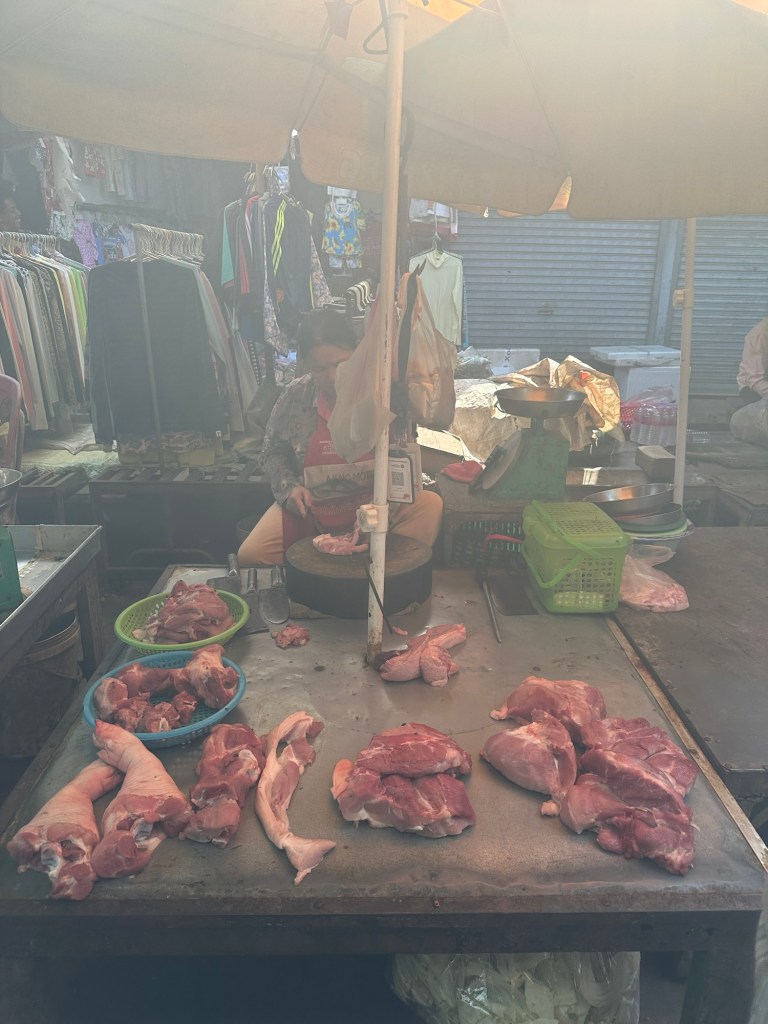
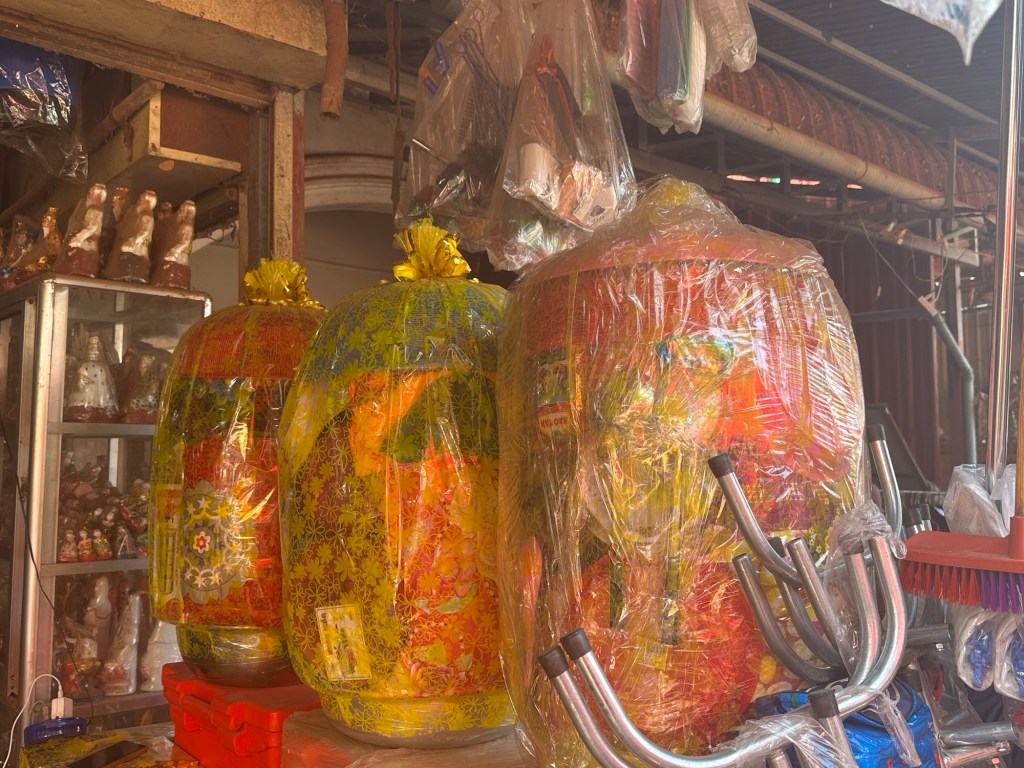
The butcherLocal charcuterie Gifts people take to the temple monks
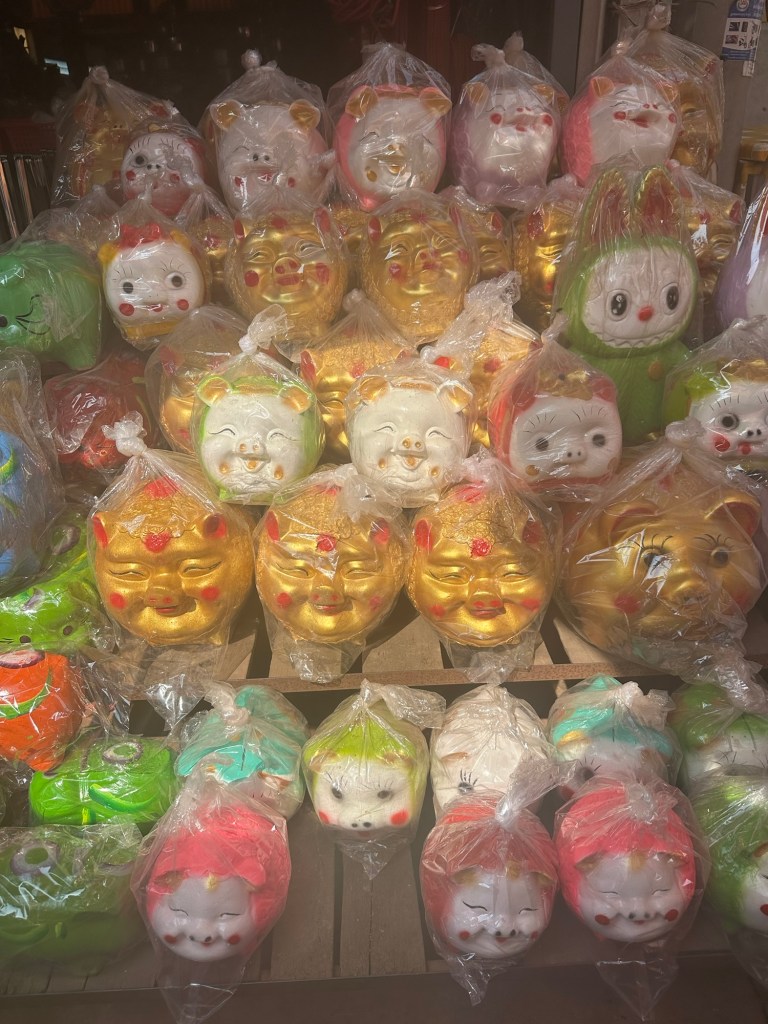
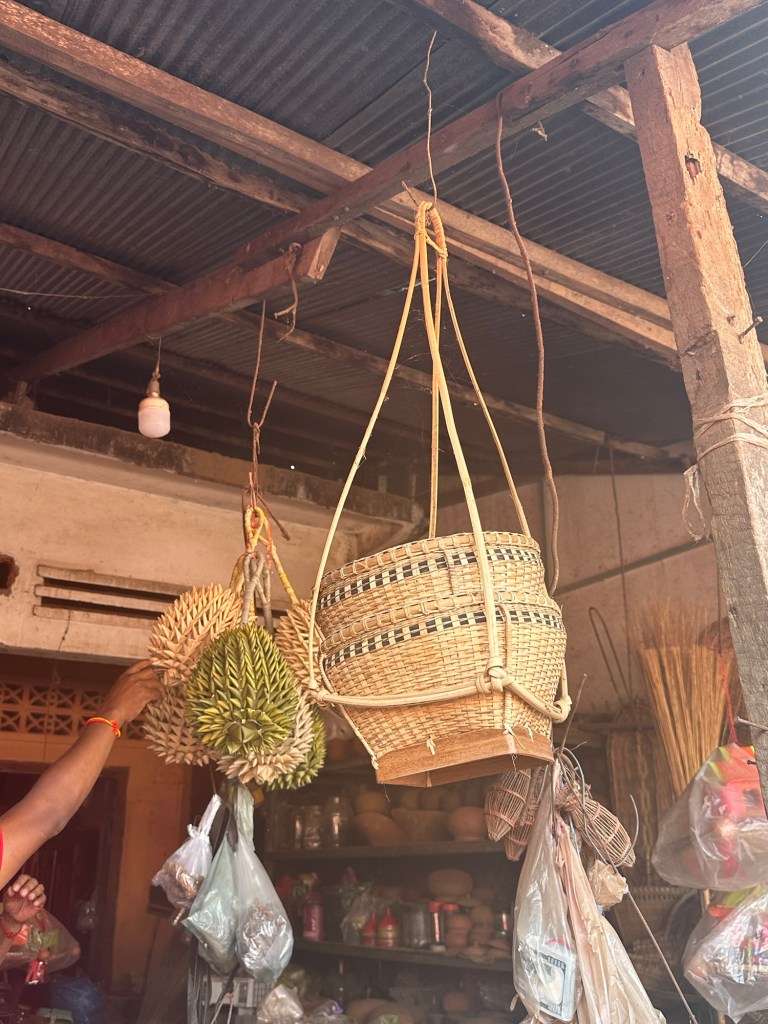
All kinds of weird and wonderful things….
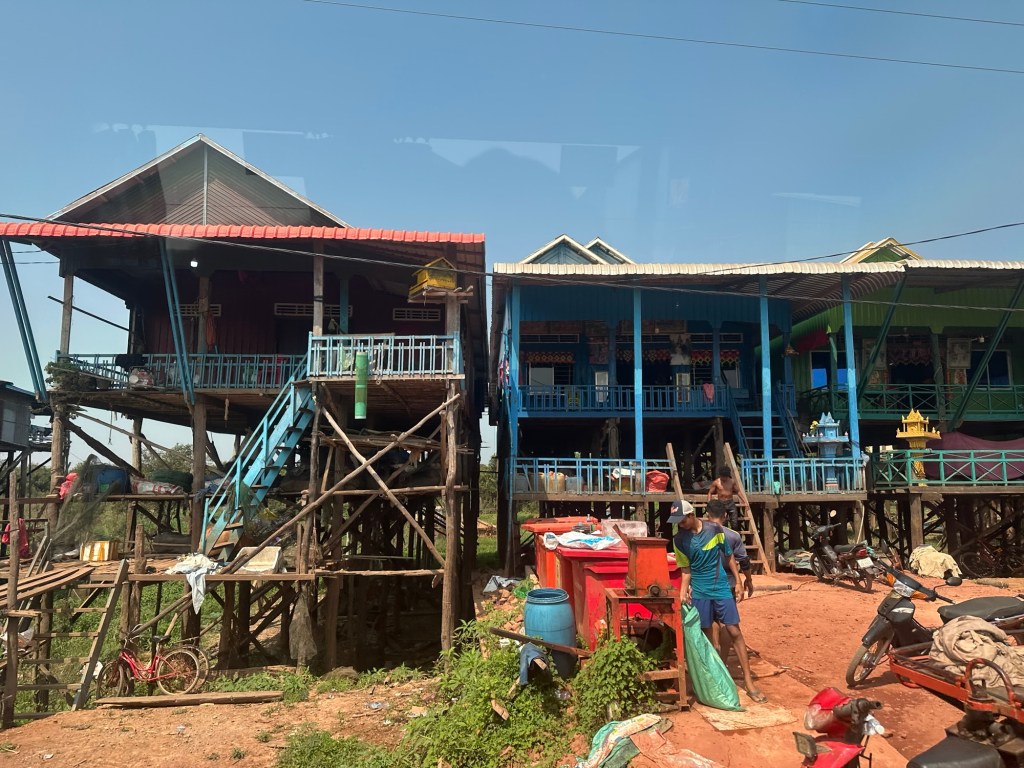
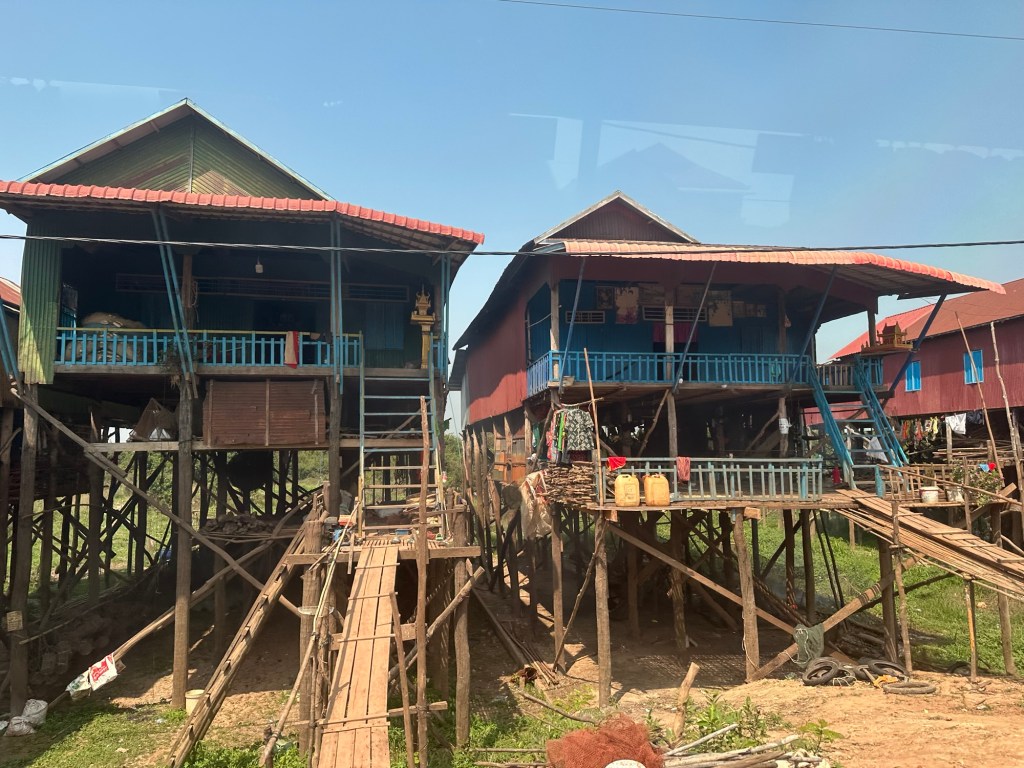
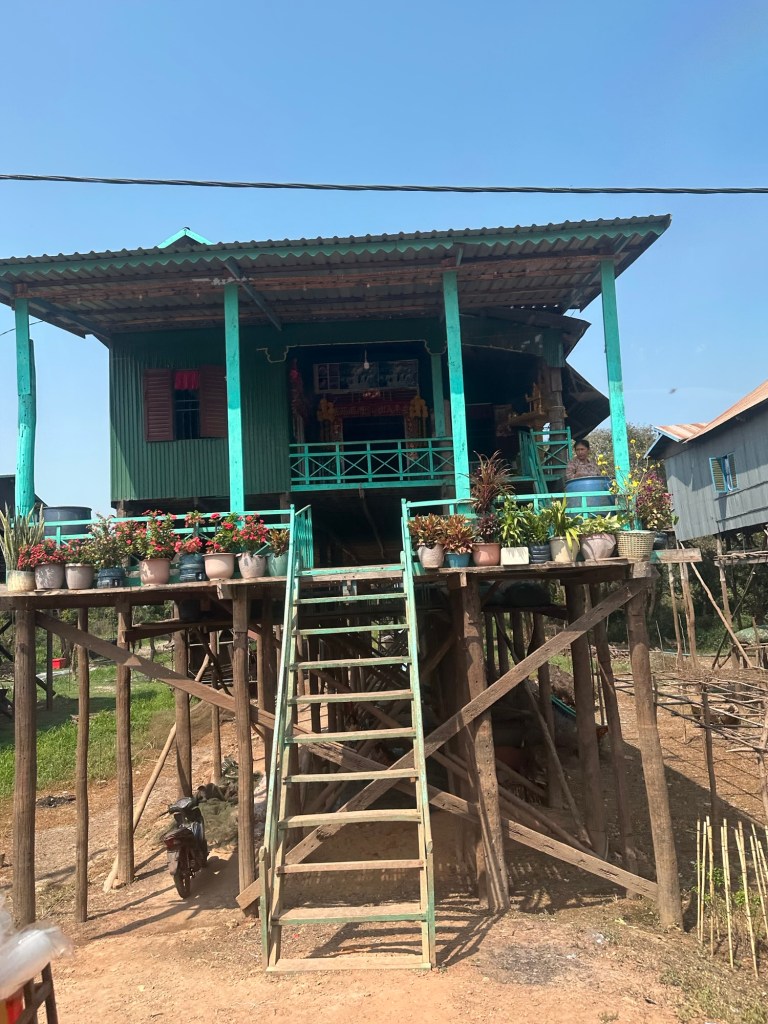
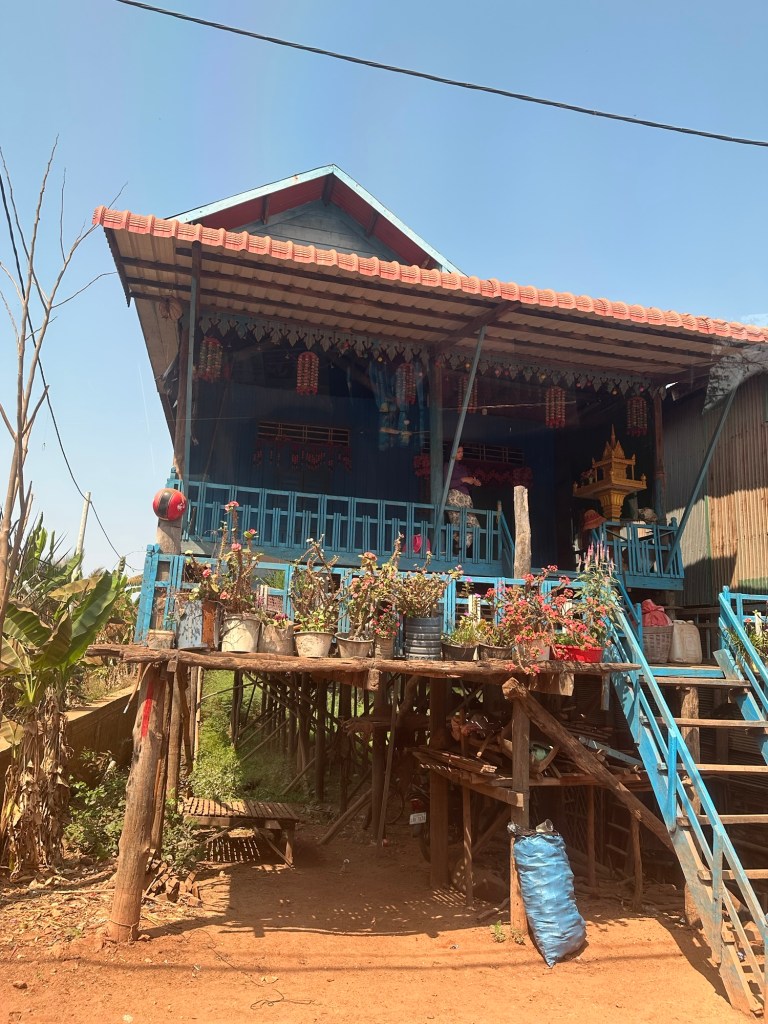
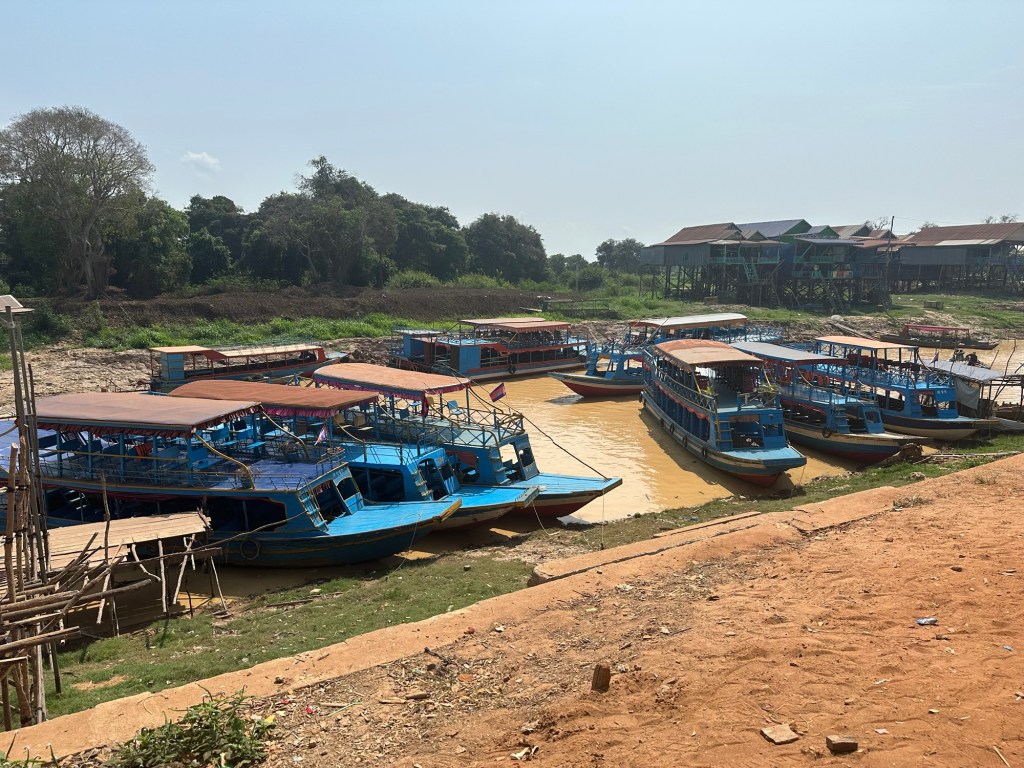
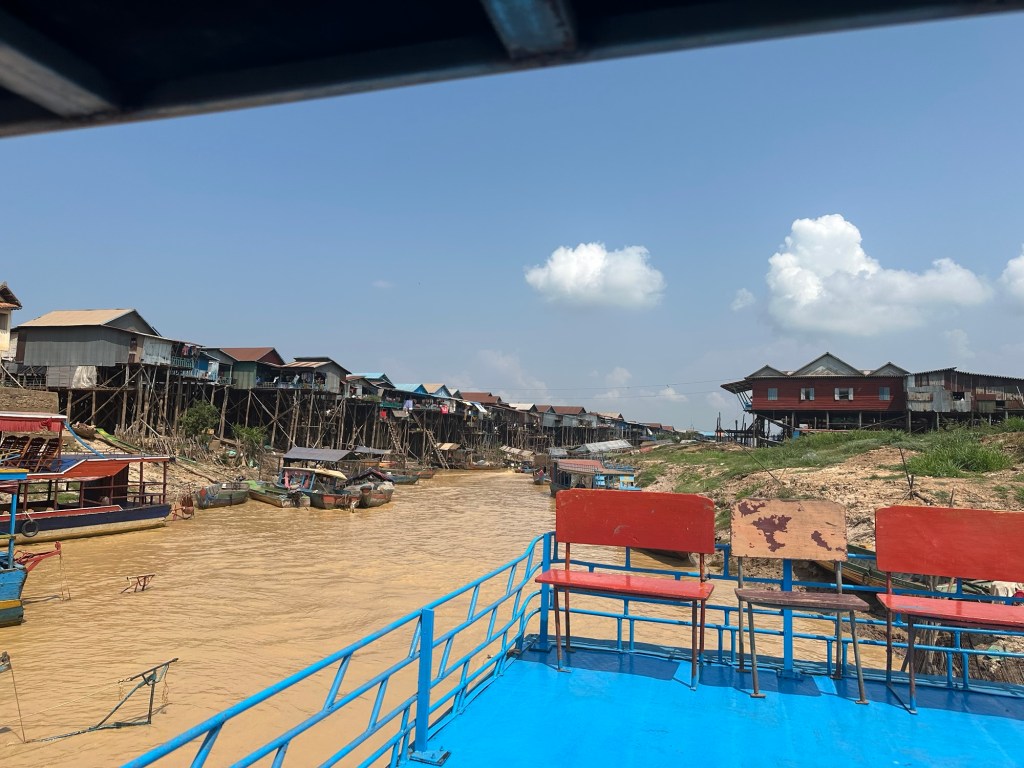
We travelled to the village of Kompong Pluck which is built on stilts because of the flooding in the wet season.
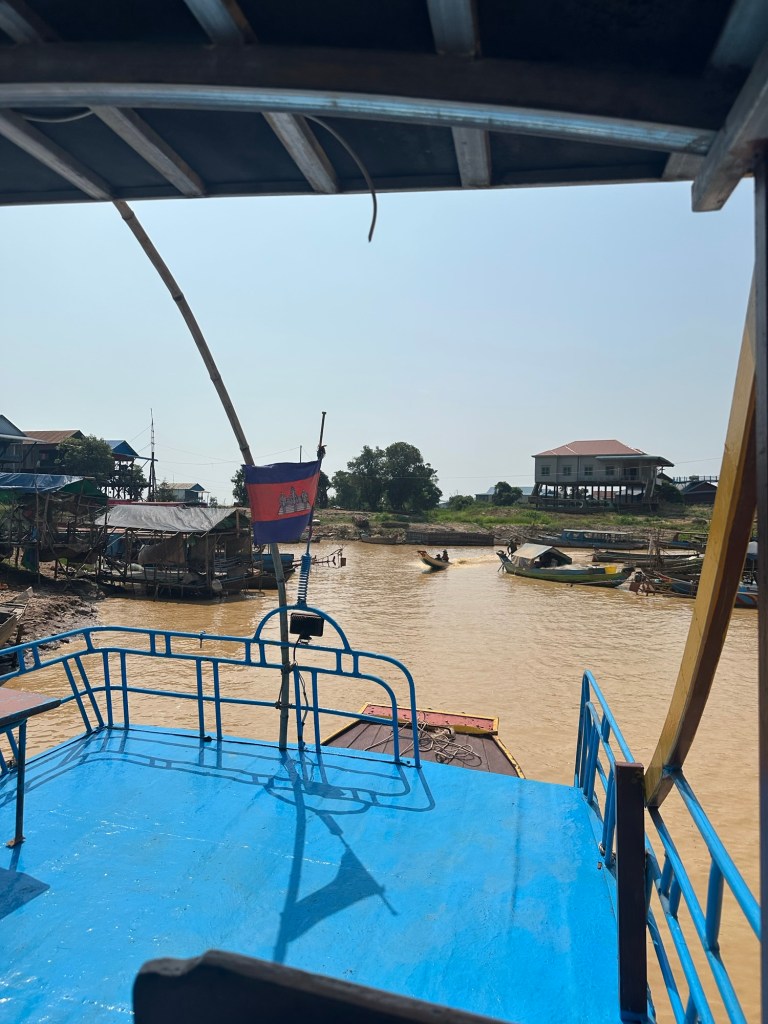
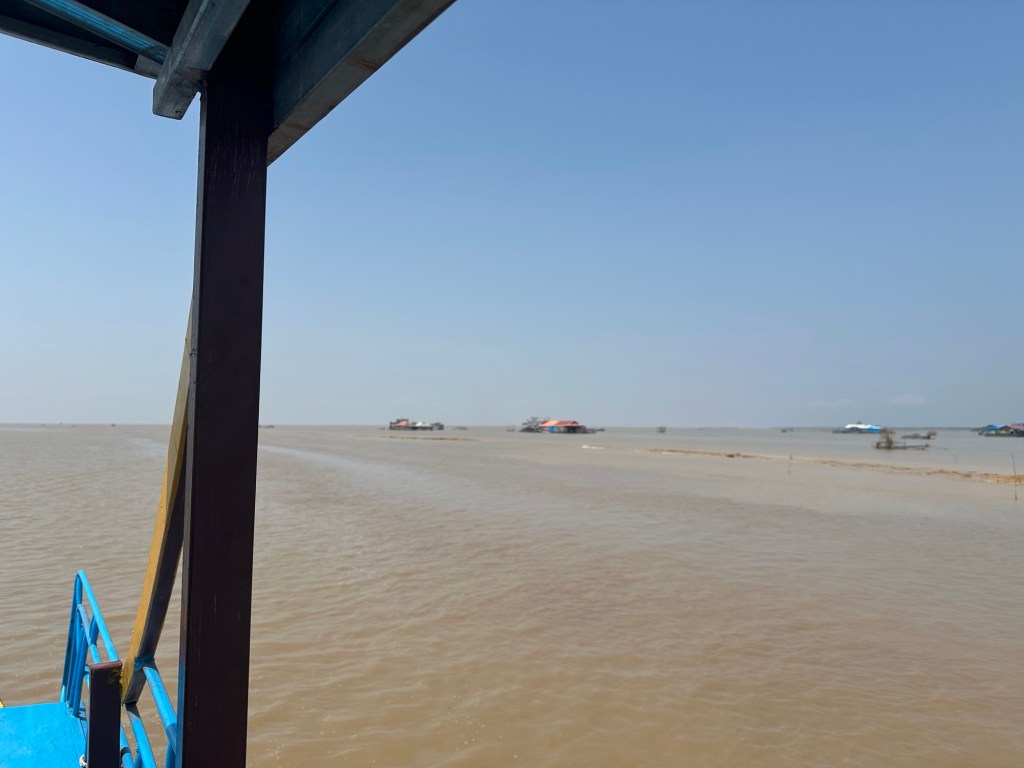
We boarded a boat and headed off into the lake, which is 150km long and 32km wide at this time of year. All sorts of fishing, shrimping and crabbing go on here.
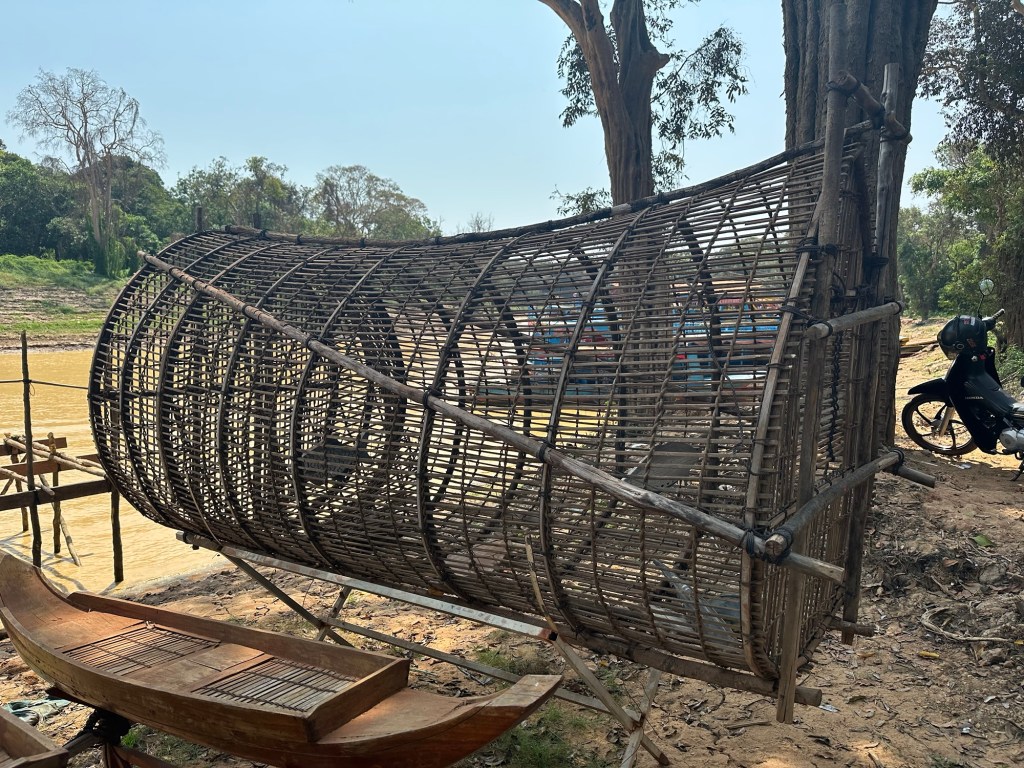
A giant fish trap
Cambodia is still a very agrarian society, and fish is an important source of protein.
We went back to the city in the early afternoon and amused ourselves by shopping in the Made in Cambodia Market. I am trying to buy locally handmade things wherever I go, as usual. So far I have bought 2 watercolours and 2 screenprints. Really loving the art here.
Much damage done.
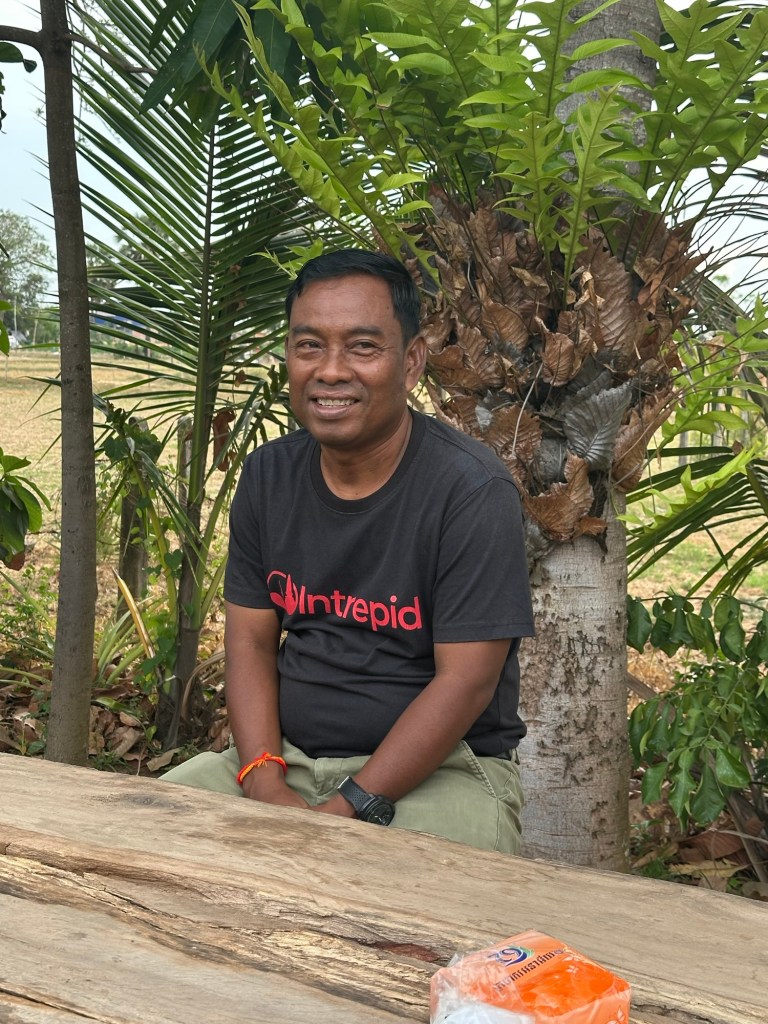
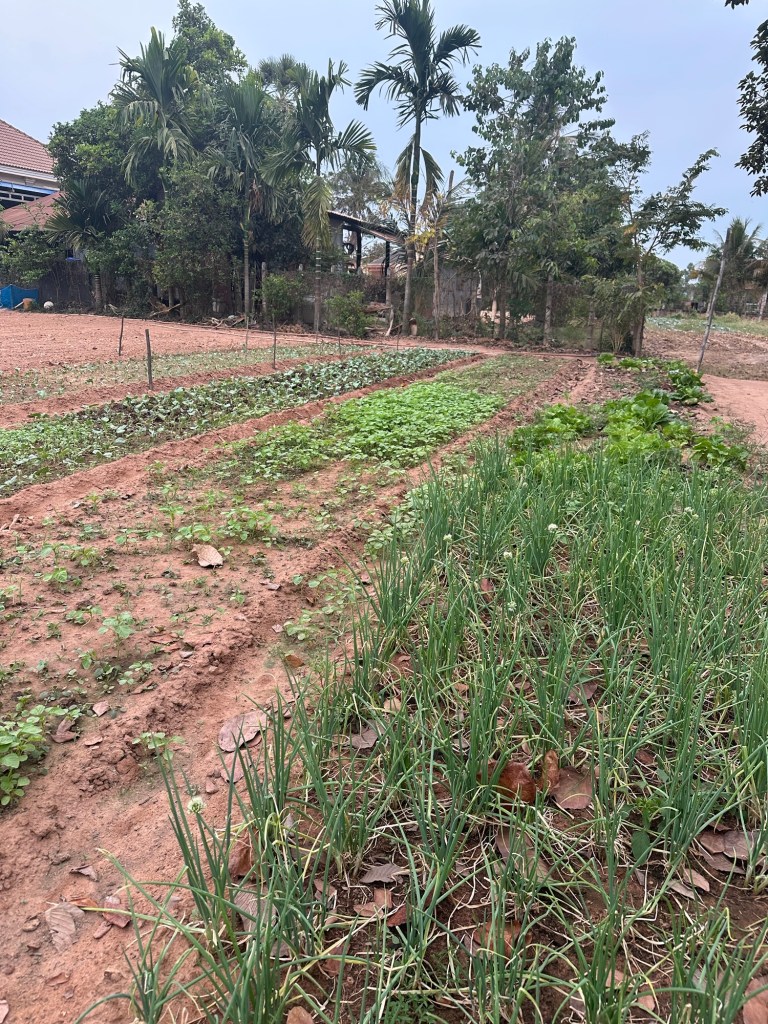
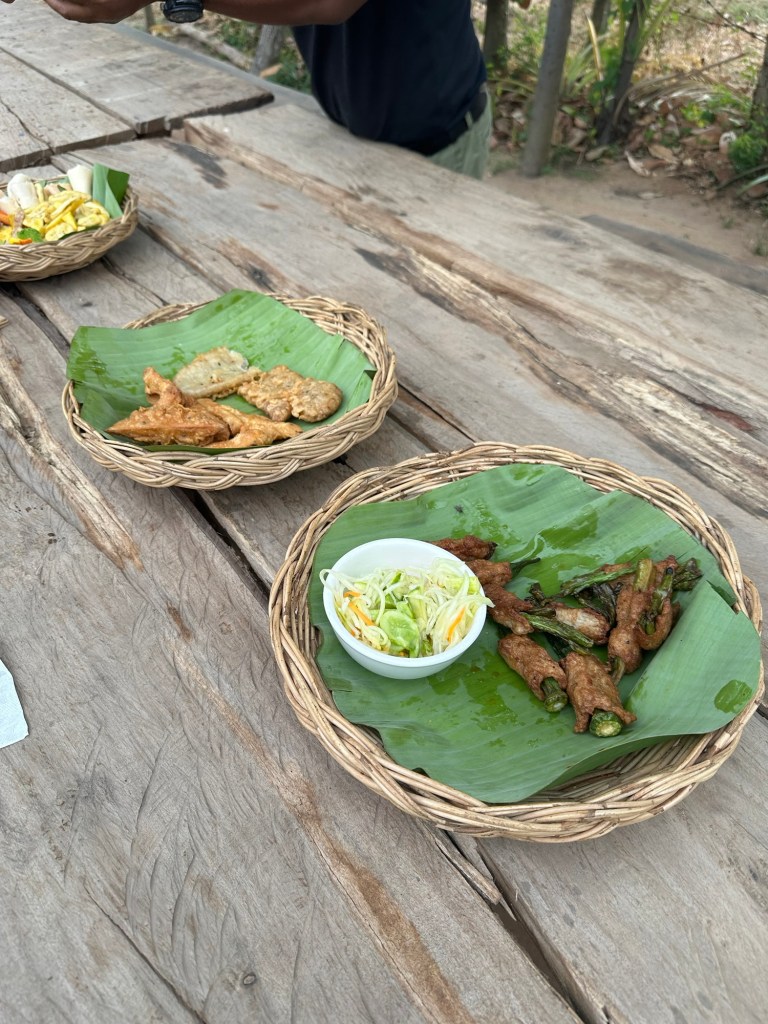
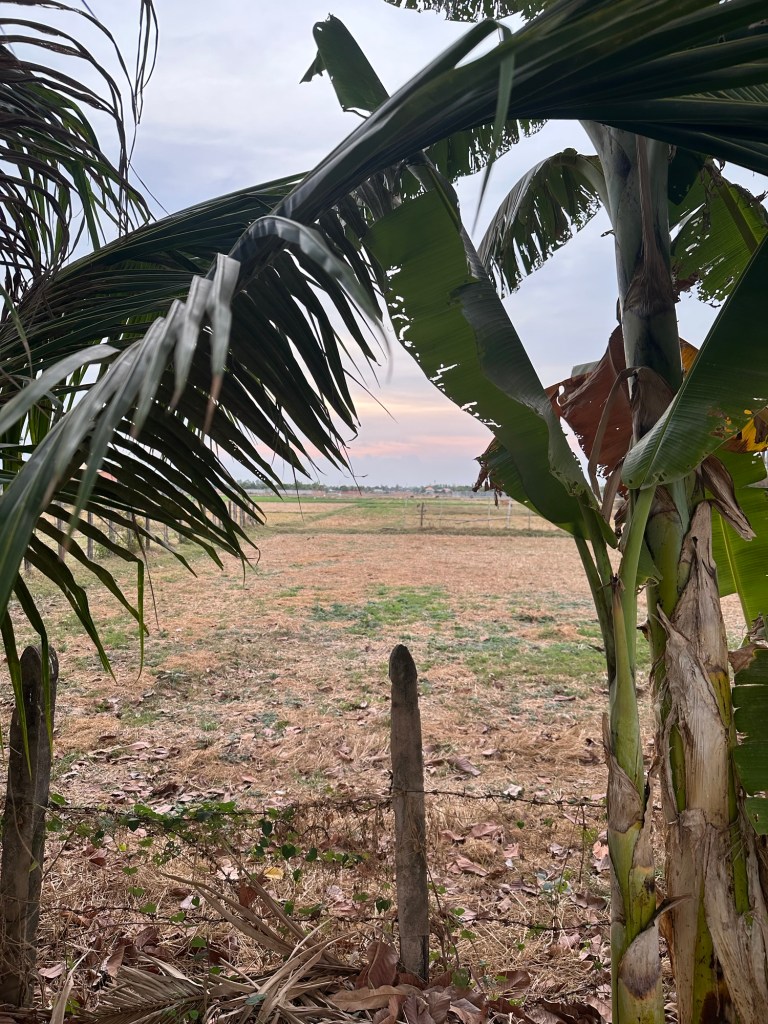
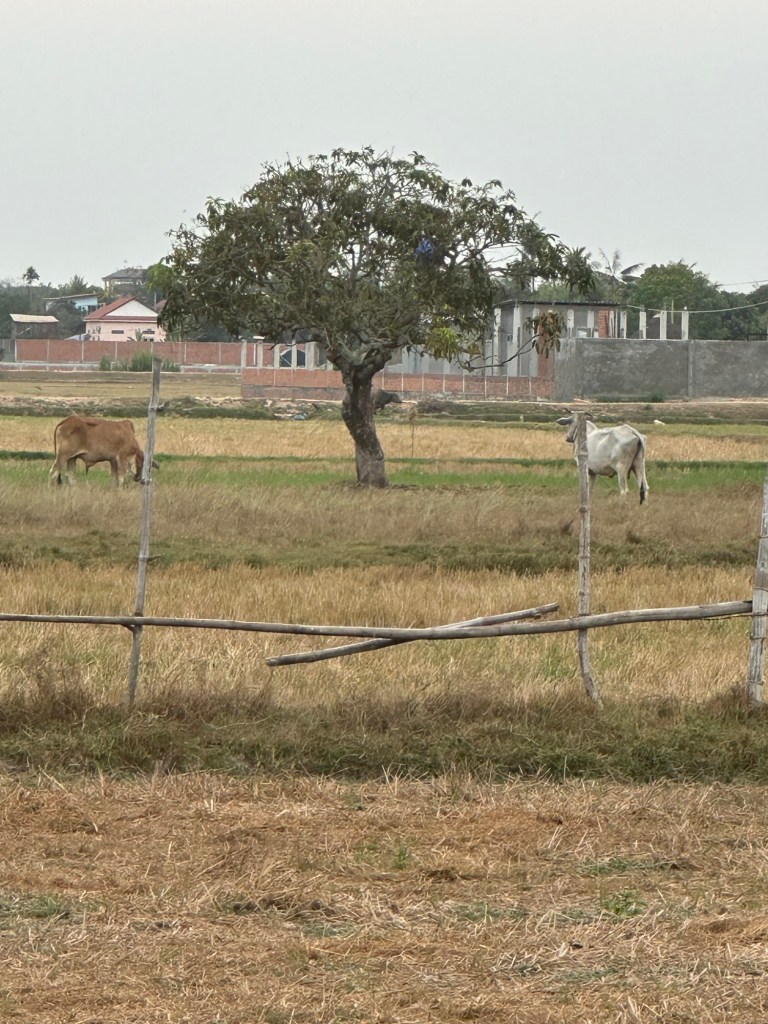
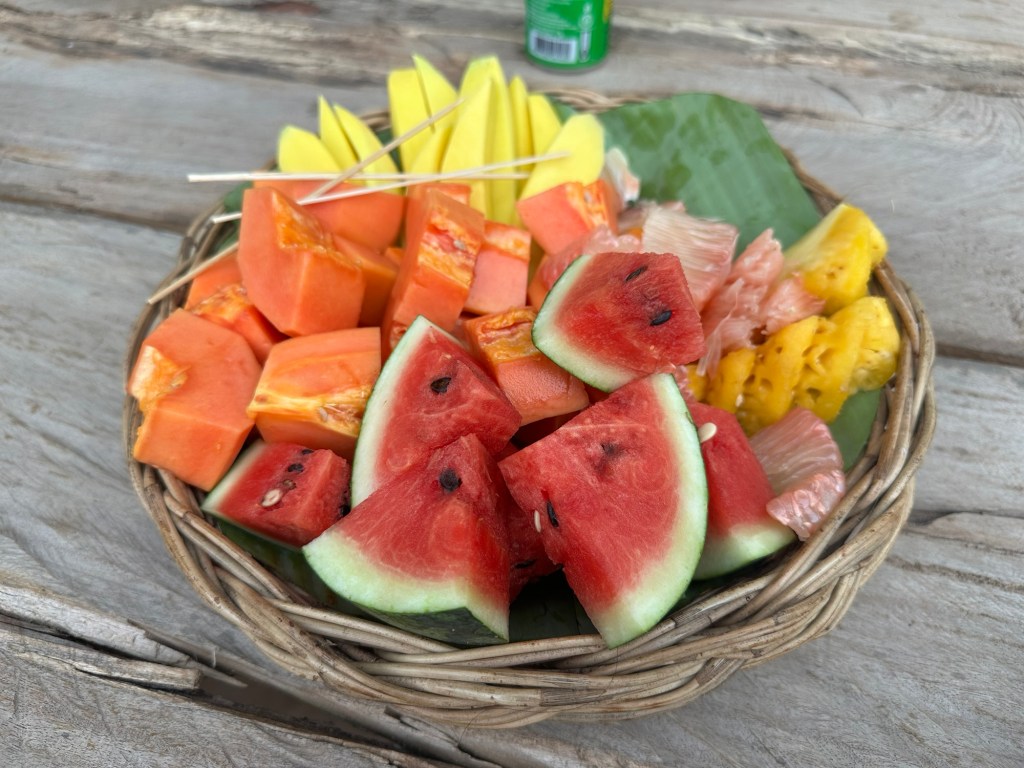
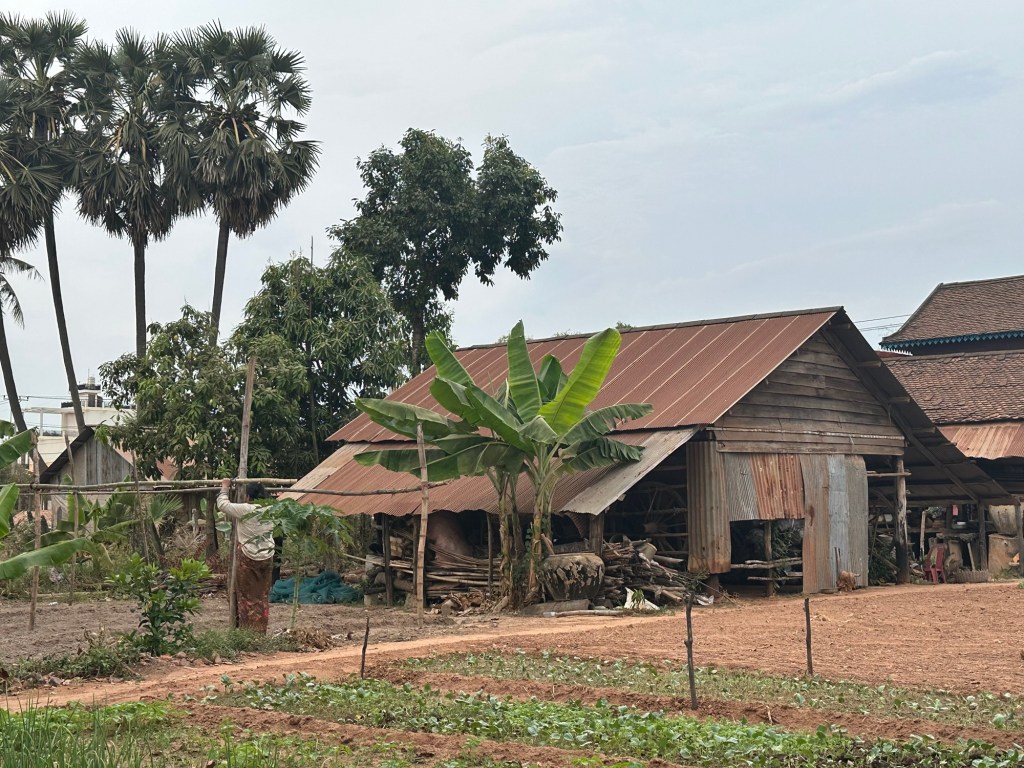
Later in the afternoon, we went out to a farming village nearby. We sat in a field in a veggie garden, and tried all different kinds of Cambodian snack foods made by the lady on the farm. Sureth talked to us about how rice is grown and about how they catch and eat the frogs, crabs, snakes and rats that live in the rice fields! Fortunately they were not on the menu today.
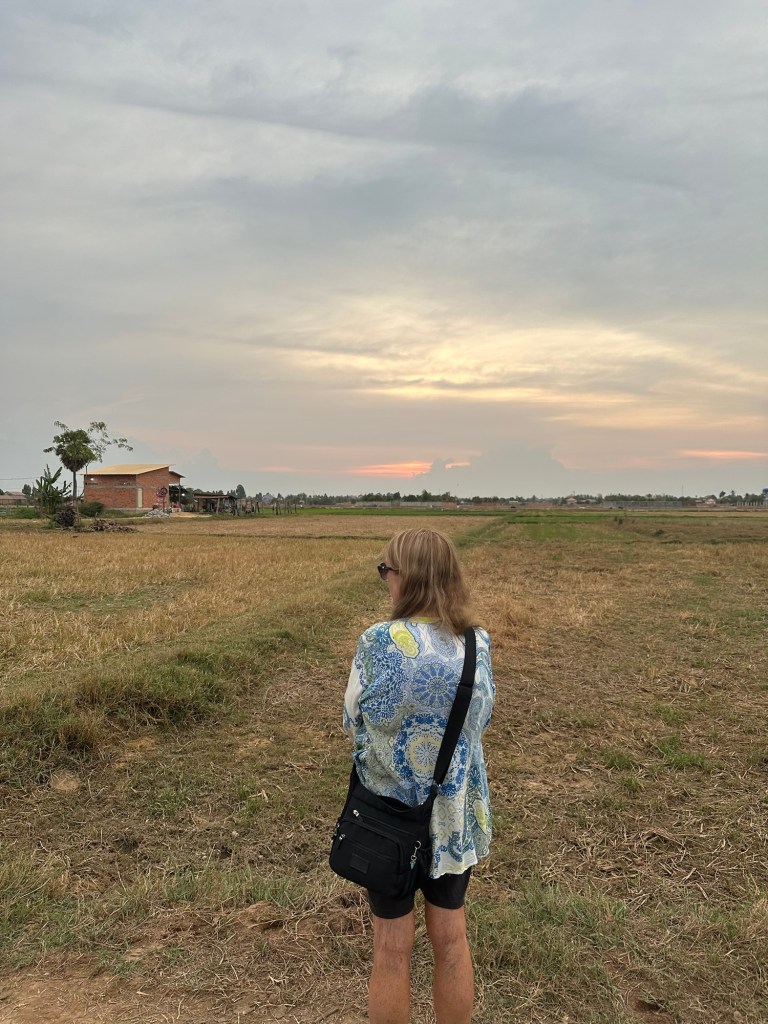
We were meant to be watching the sunset but did not really see it until we were driving back into Siem Reap.
Ruth took this.
We had a lovely last dinner together as a group. We are off to Vietnam tomorrow, and will be on different tours.
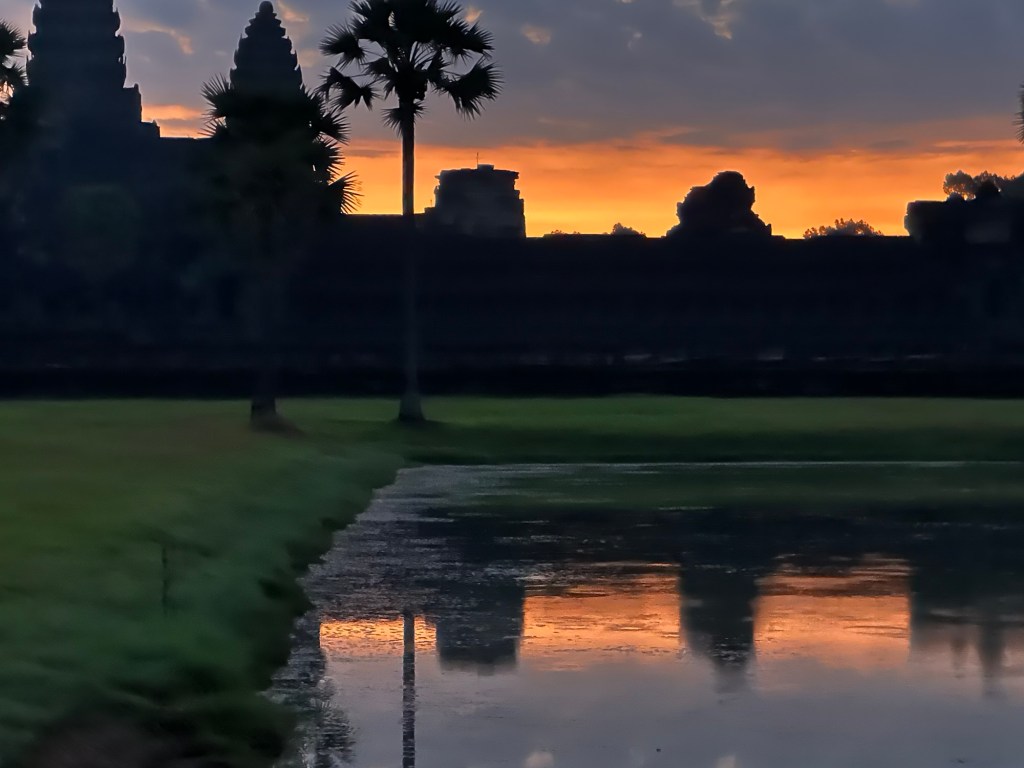
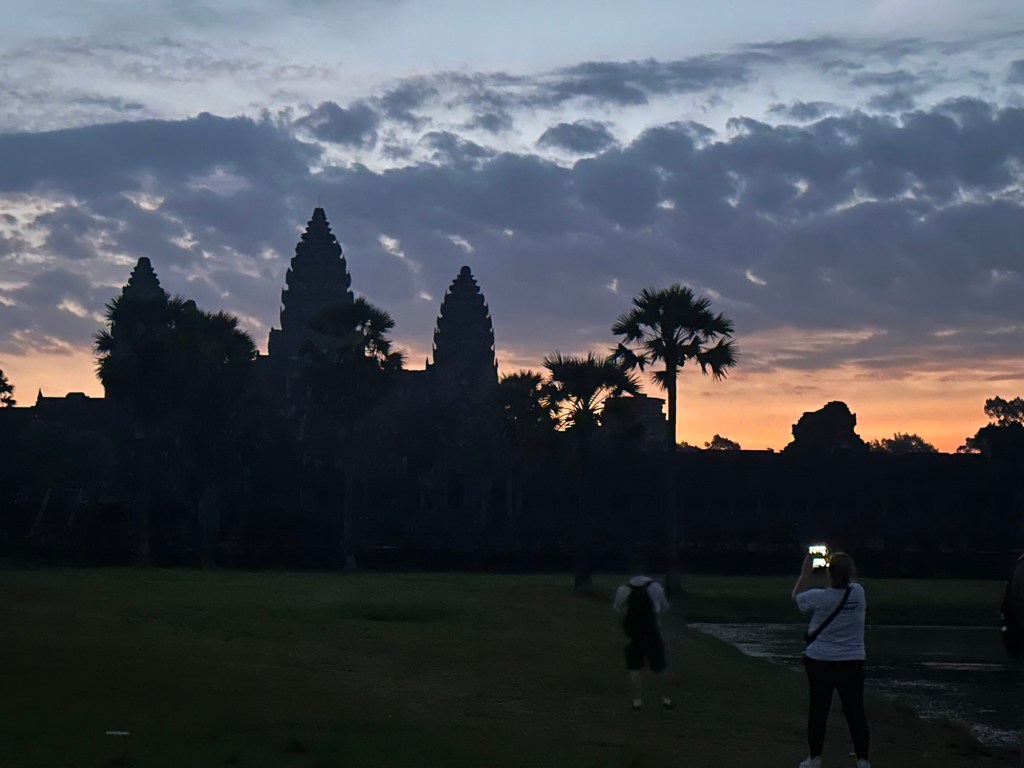
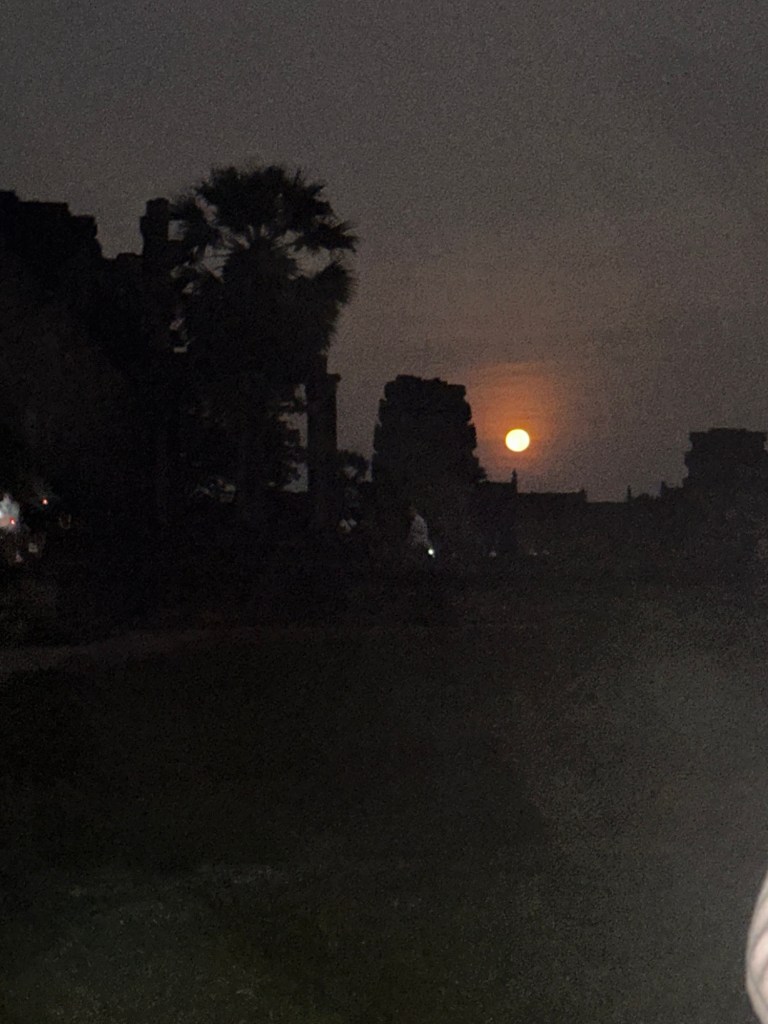
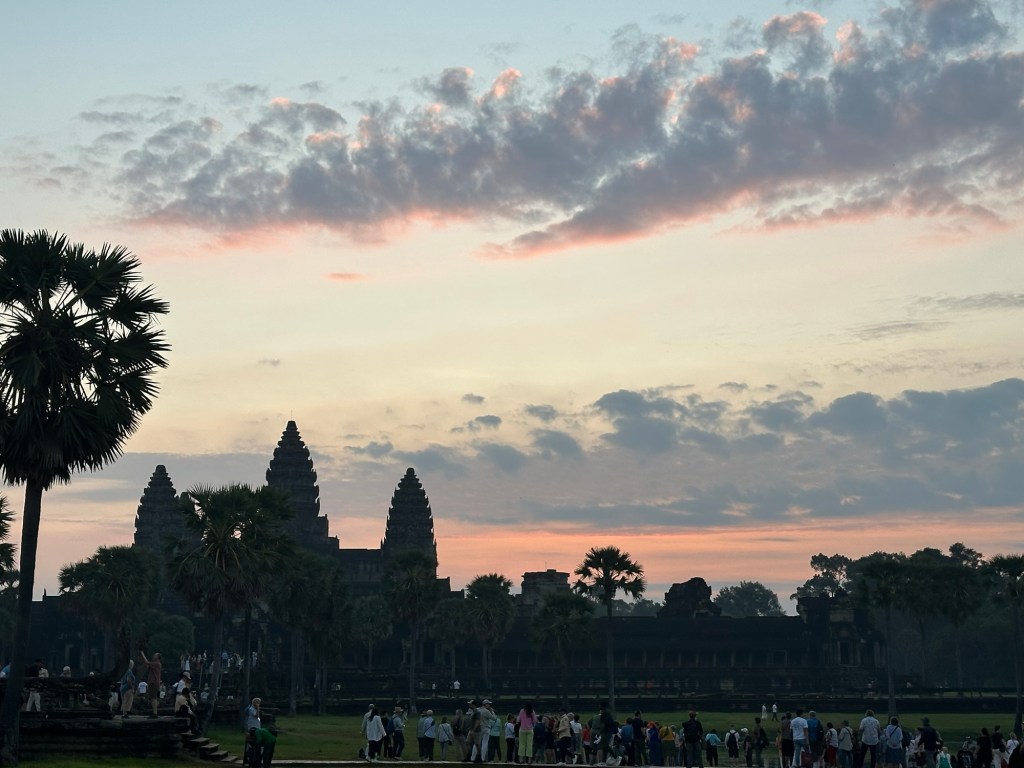
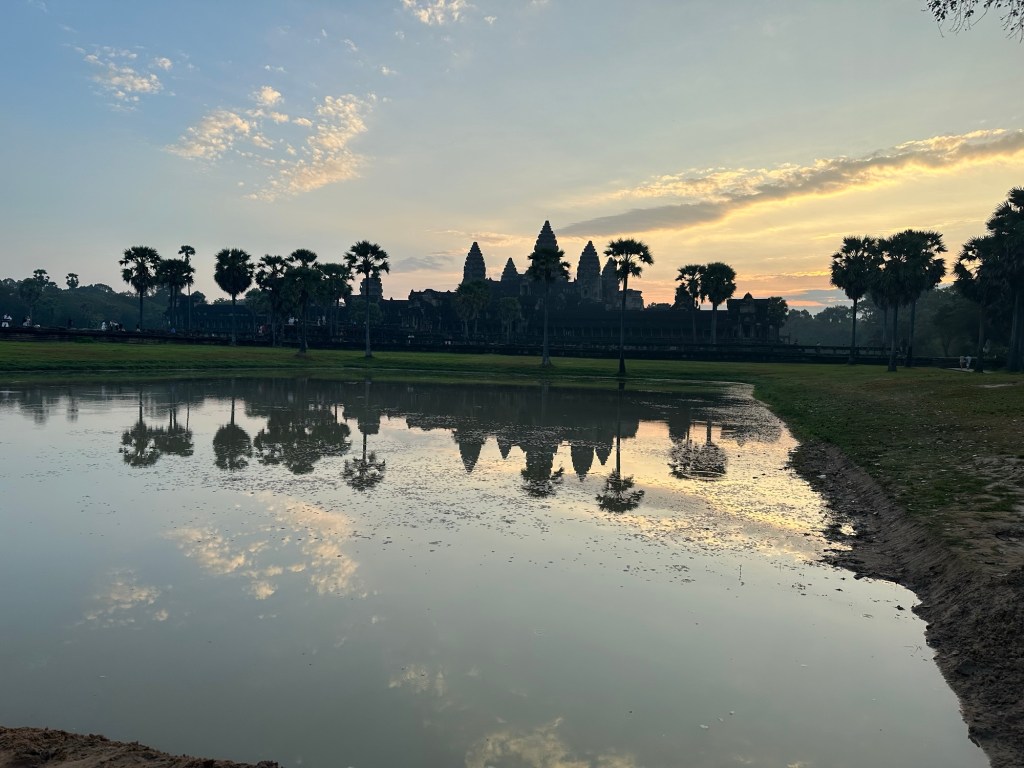
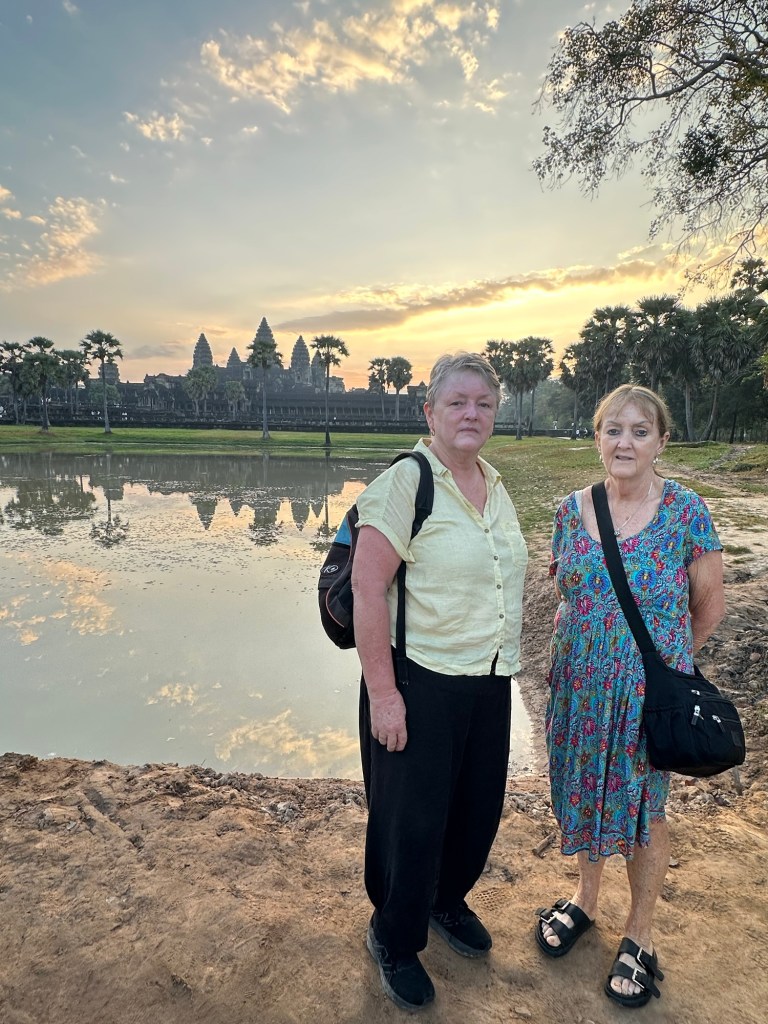
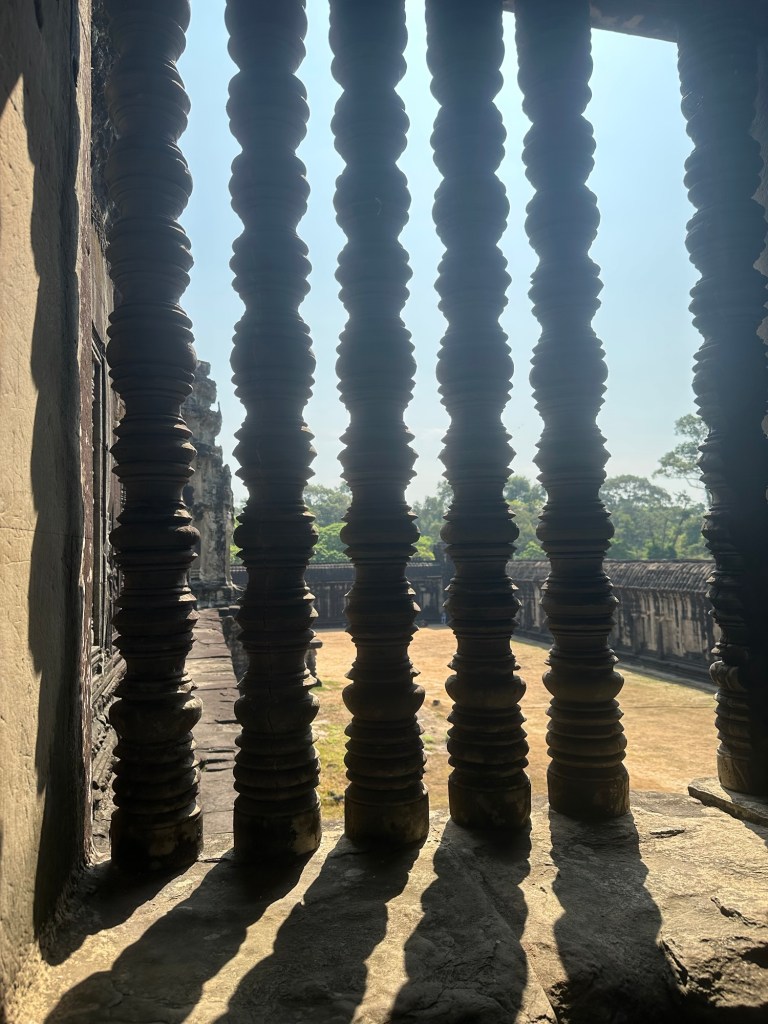
A day of beautiful temples. We got up early and left the hotel at 5. We drove to Angkor Wat and settled in to watch the sun rise over the temple. Absolutely spectacular, particularly as an almost full moon was setting at the same time.
Setting moon
So many spectacular pictures it is hard to choose.
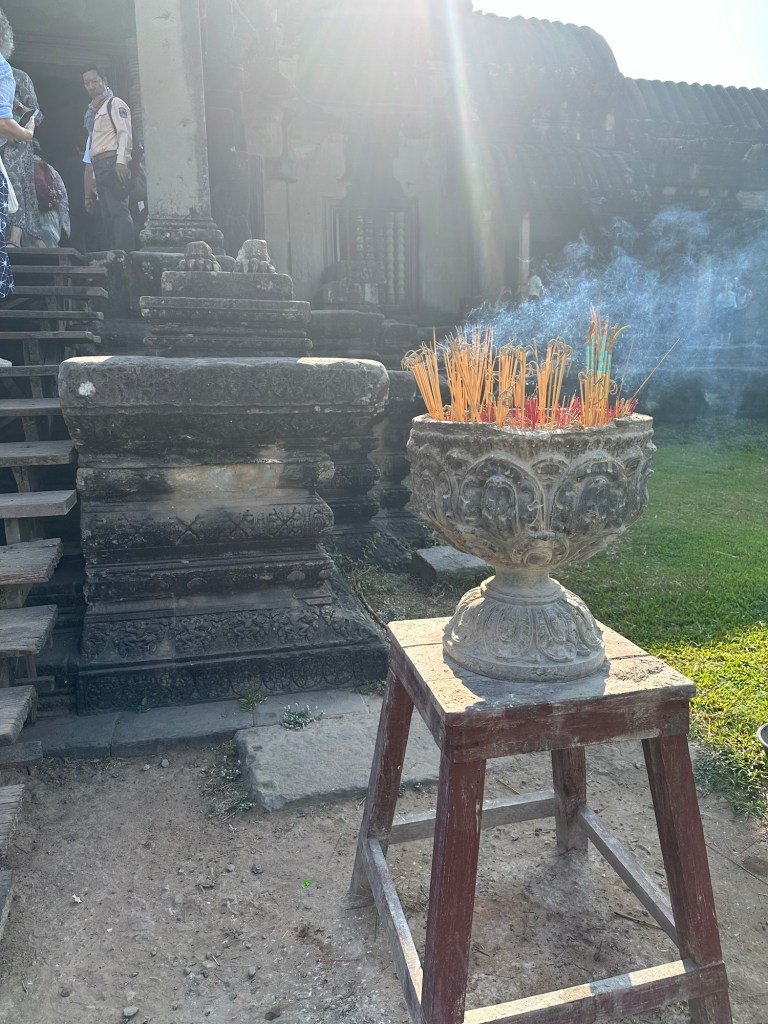
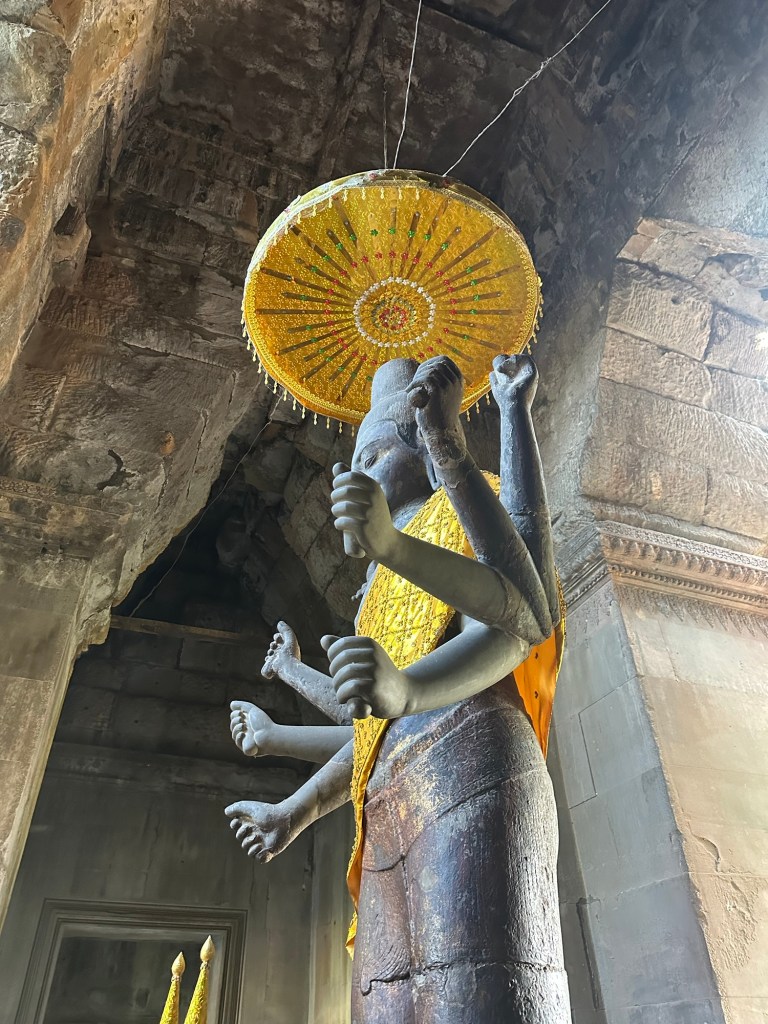
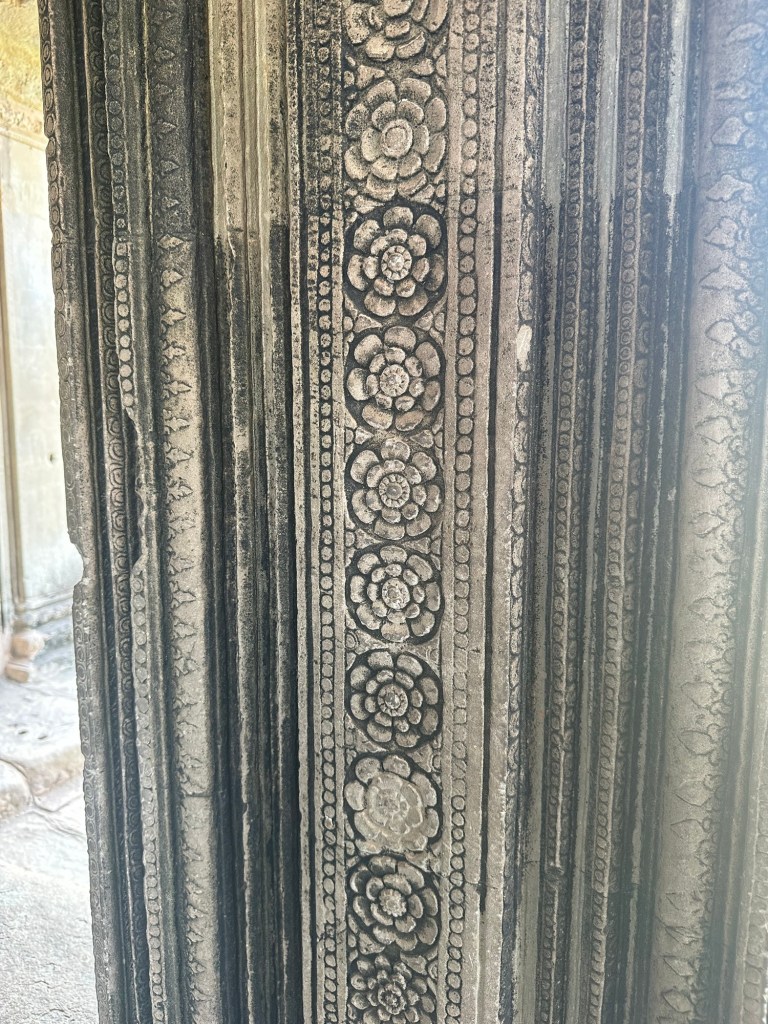
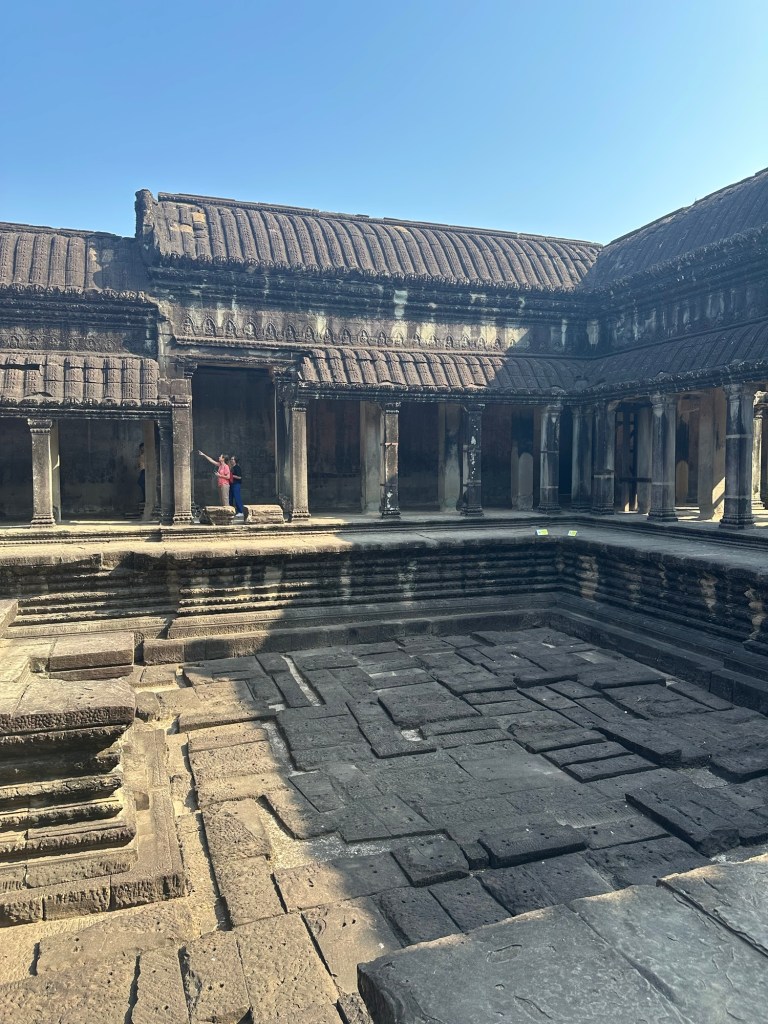
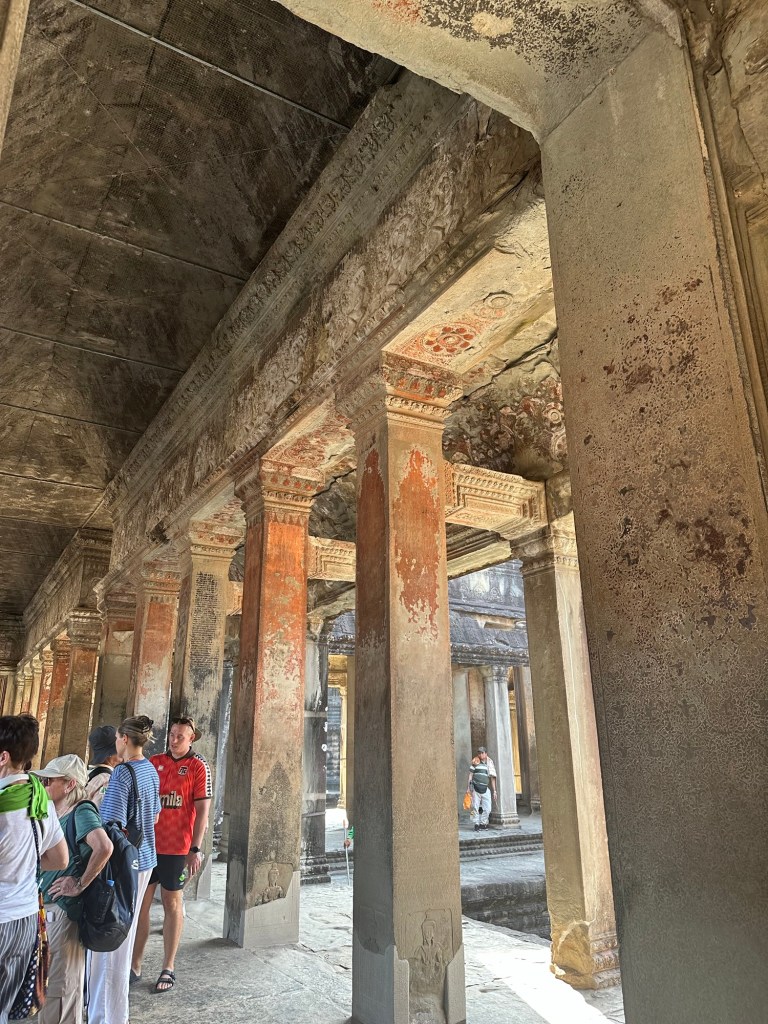
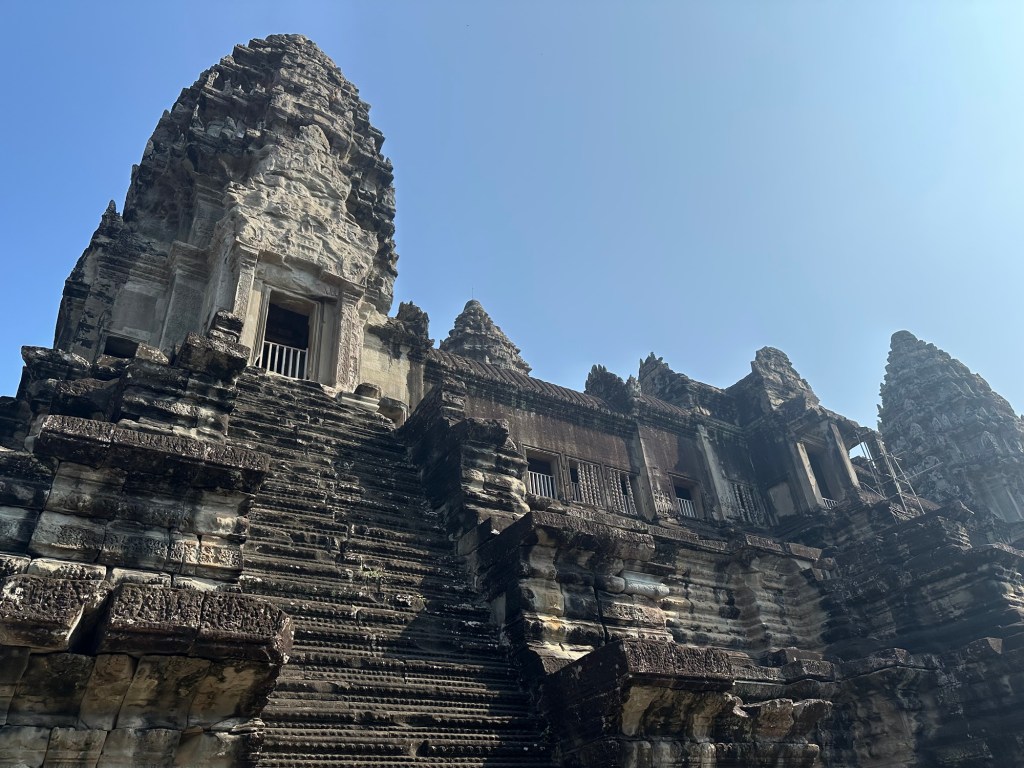
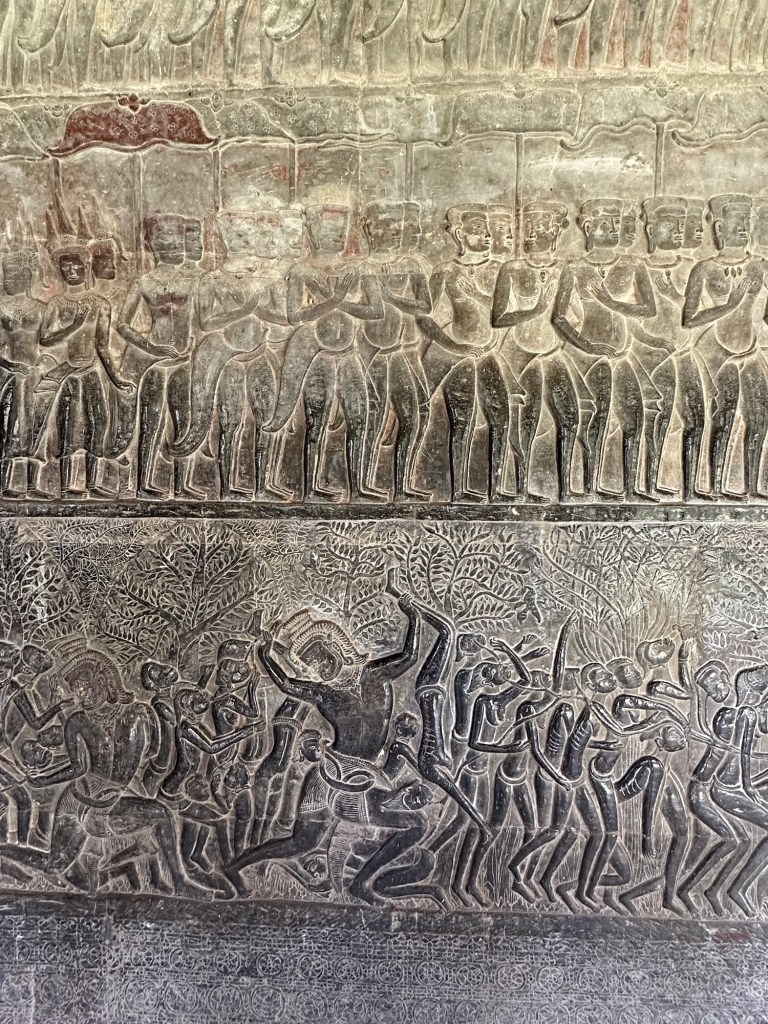
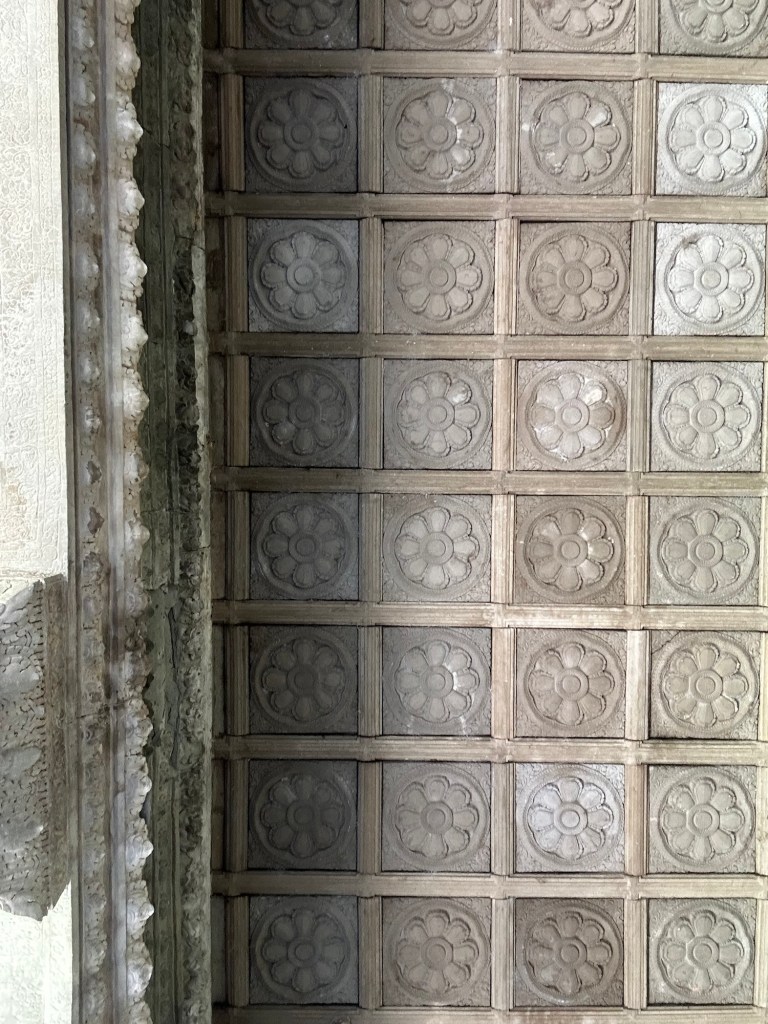
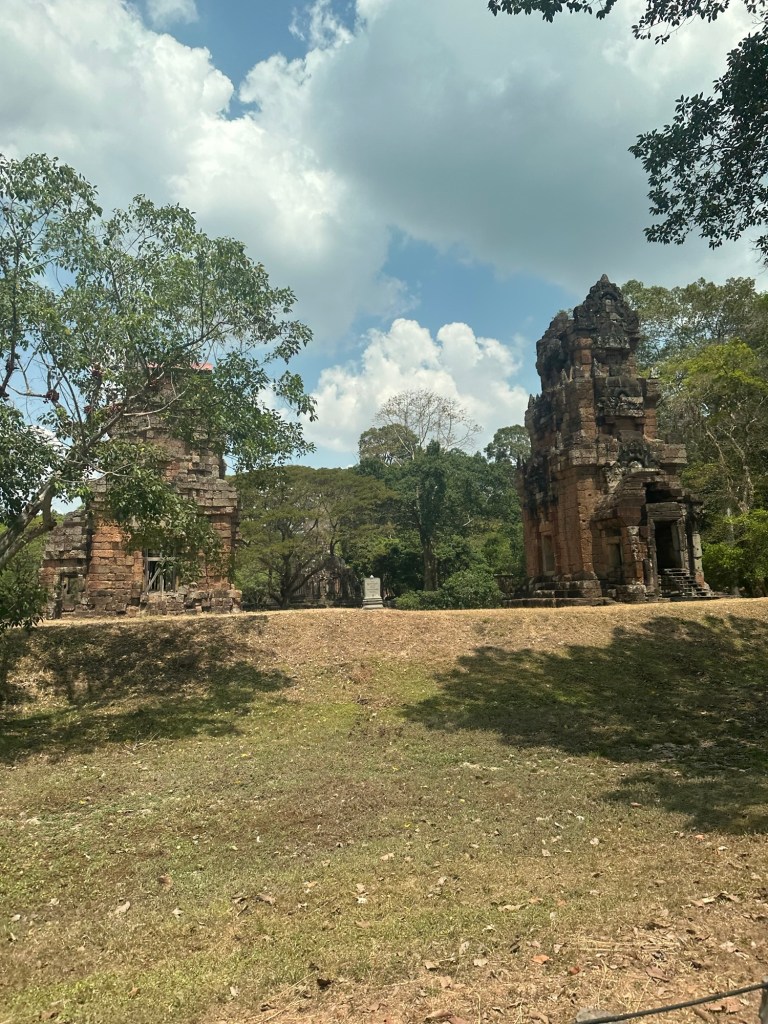
We went back to the hotel for breakfast and then returned to Angkor Wat for a more thorough look. We spent hours in the very hot sun, looking around the enormous complex of temples and gates and moats. Amazing carvings.
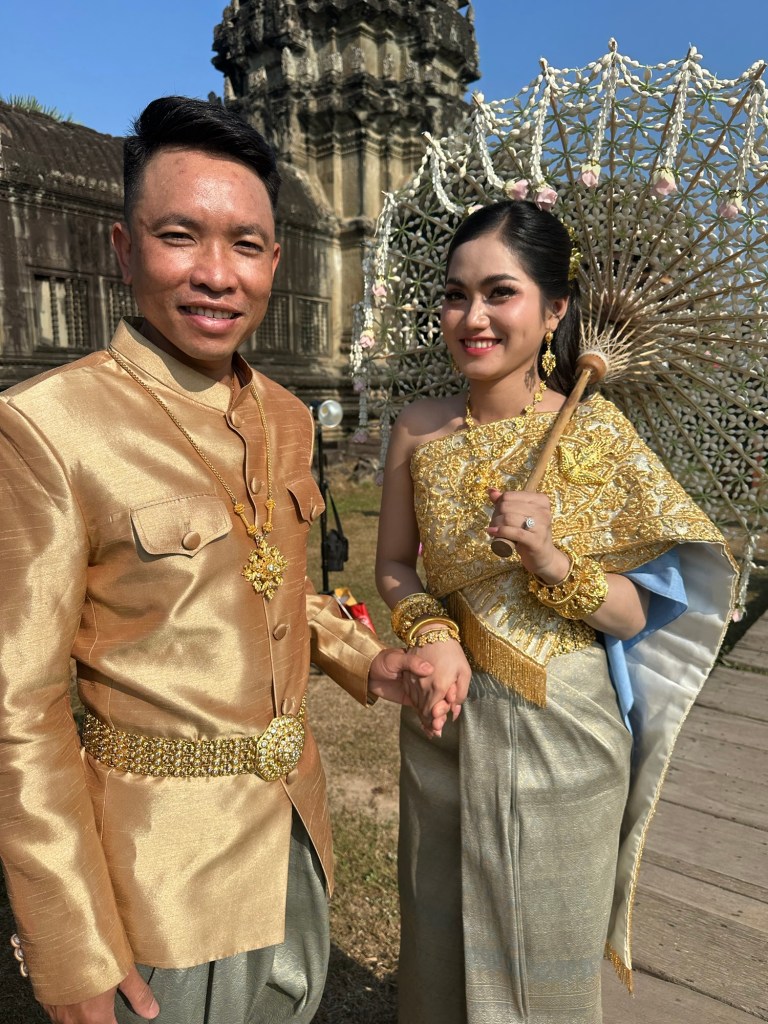
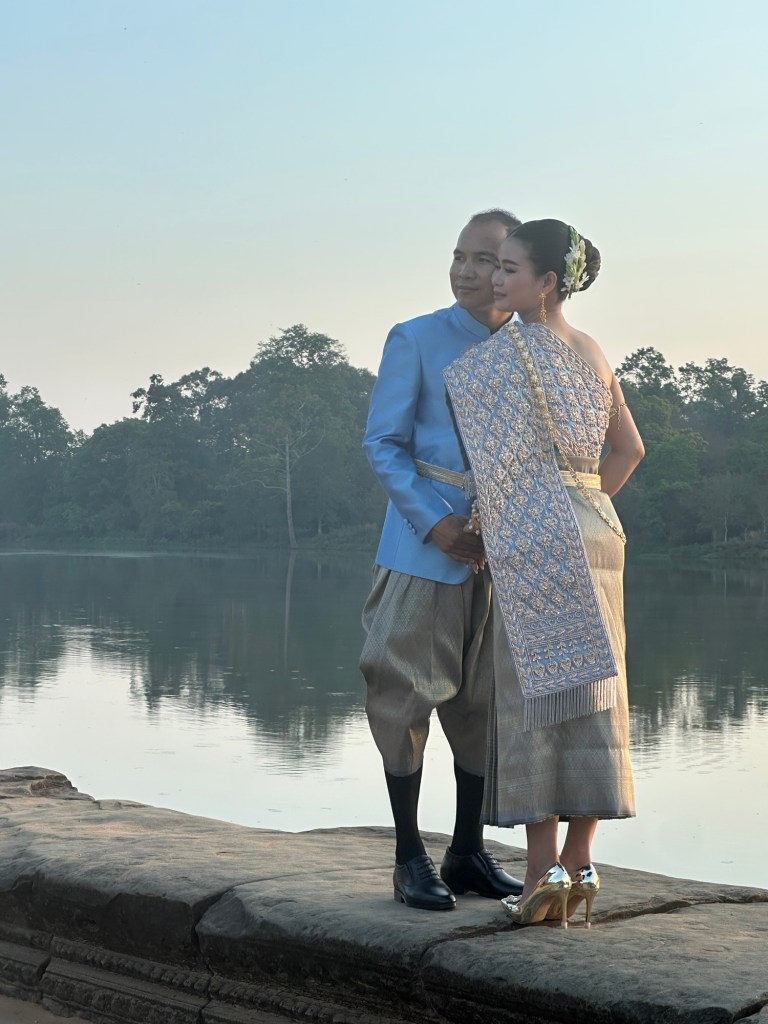
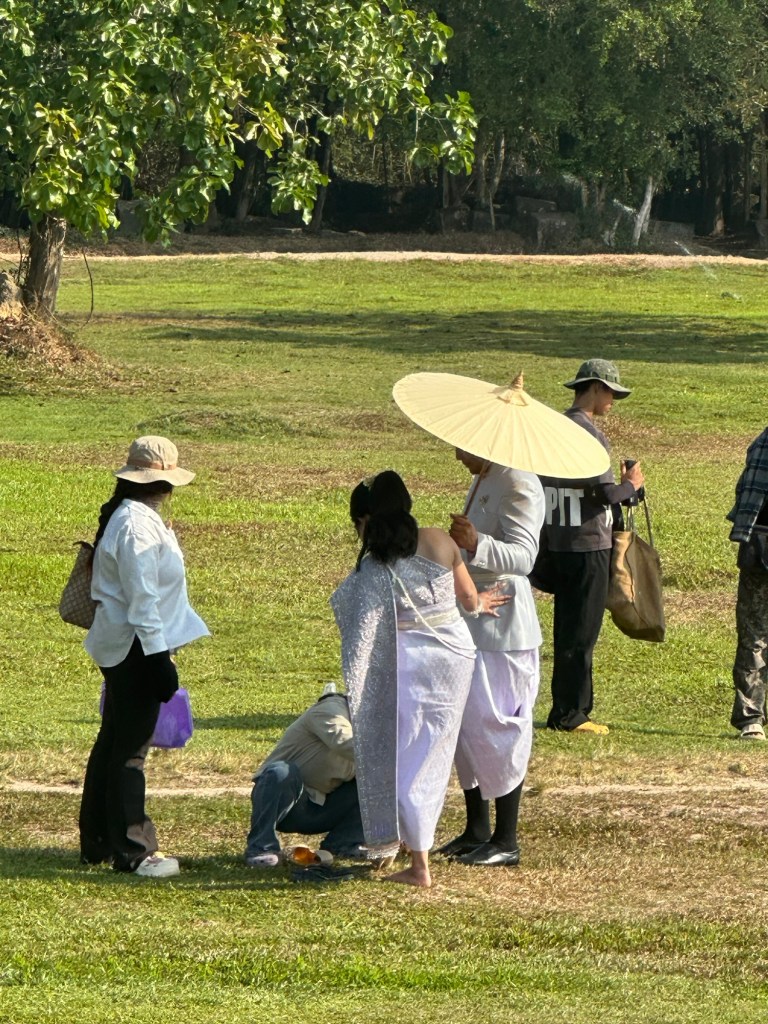
It is also a popular spot for taking wedding pictures.
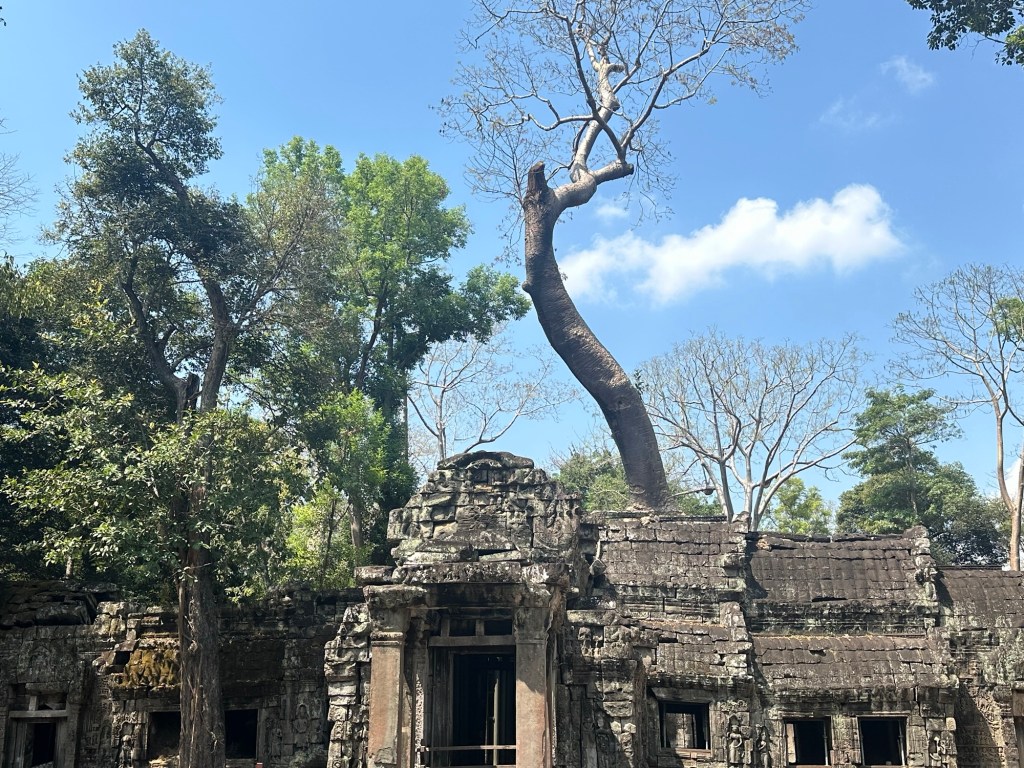
We then went to the jungle temple of Ta Prohm.
A tree grows right out of the top
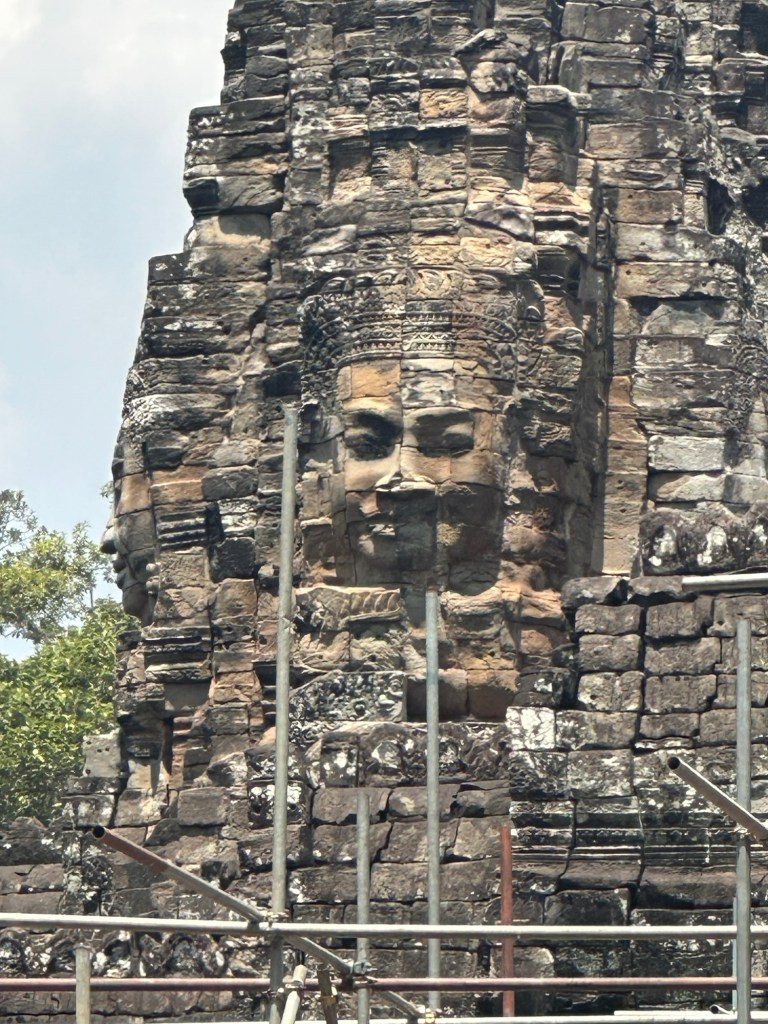
Our last stop was at Bayon temple, where there are 54 towers with 4 faces each. Pretty much in ruins, but the faces are spectacular.
It was 37 degrees today. Brutal weather for sightseeing, but so glad we made the effort. Fascinating history everywhere.
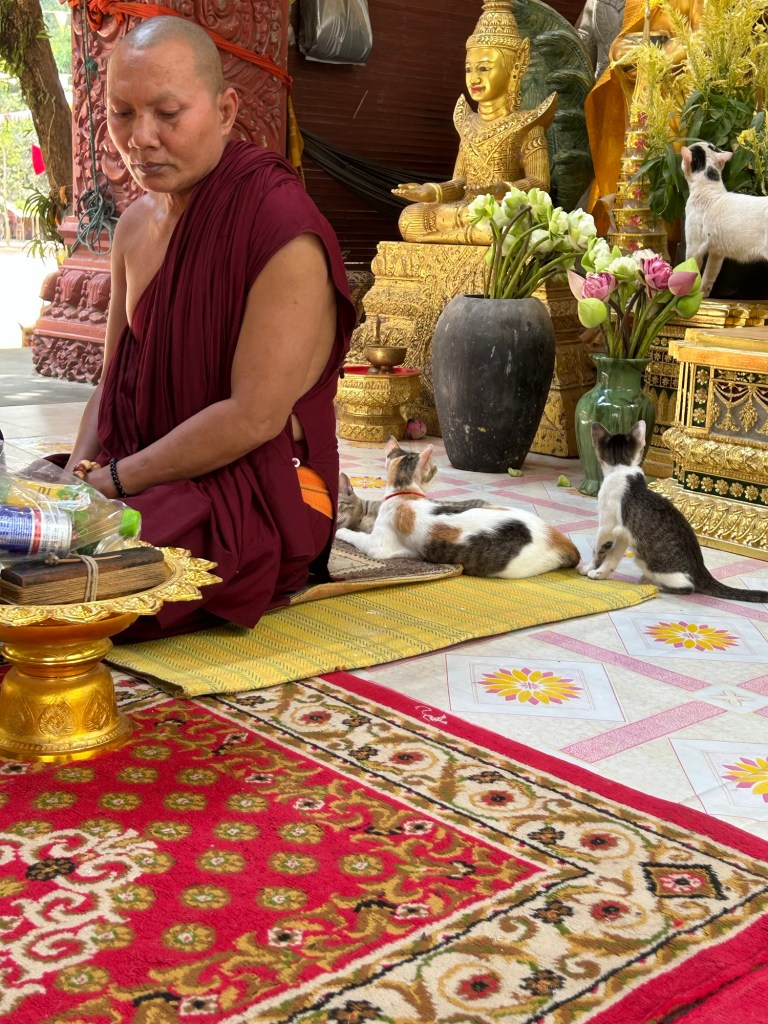
We finished our temple visit by getting a blessing from a Buddhist monk.
Loved the temple kittens
Back in town we had lunch at a social enterprise cafe called Spoon. Great service and a really pleasant experience. One of the sauces was made out of ants!
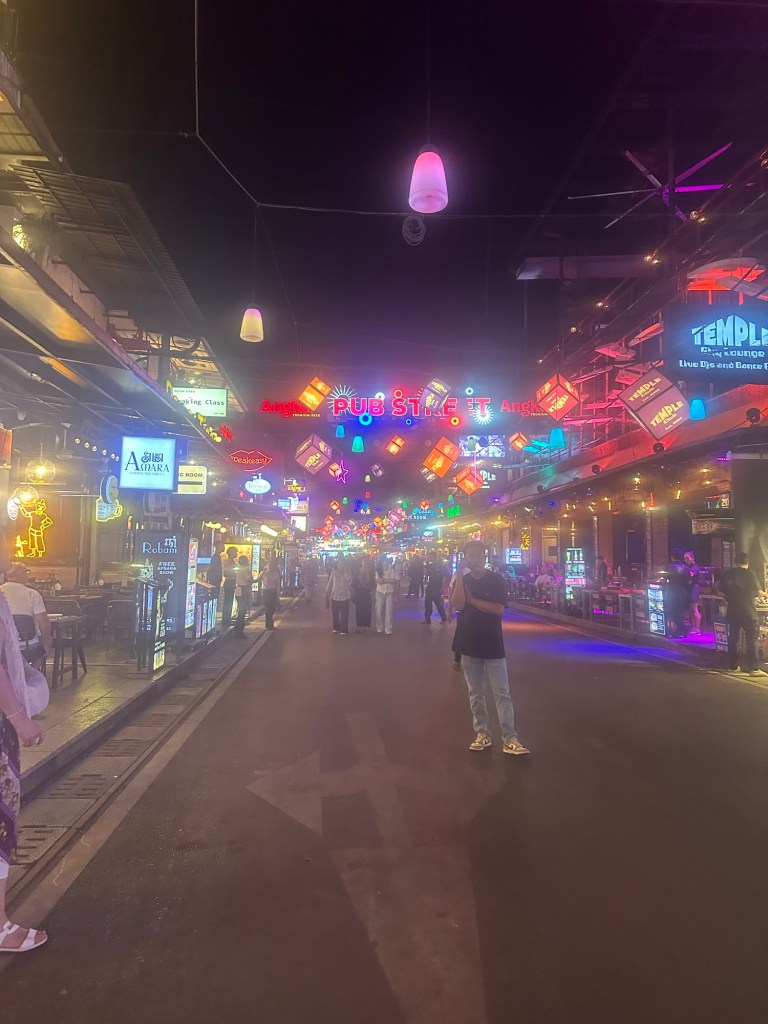
The afternoon was spent nana-napping and swimming. We went down to Pub Street for drinks and dinner.
Mostly travelling today, but saw some interesting things on the way.
We left PP after breakfast and travelled up to Siem Reap in our little bus.
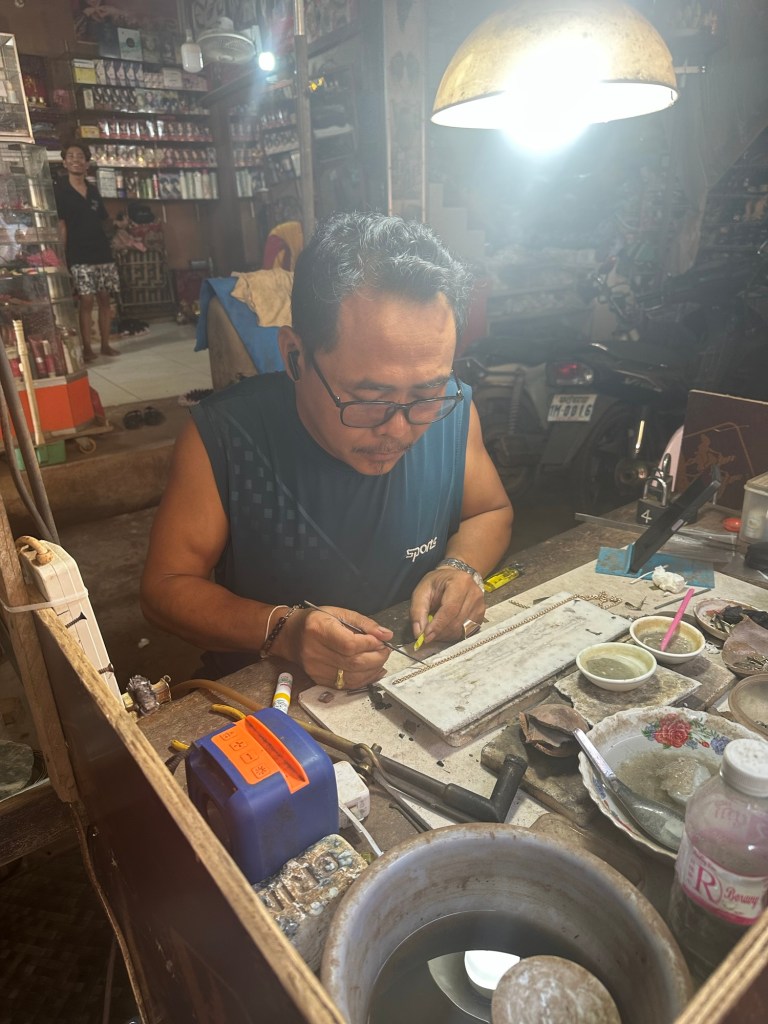
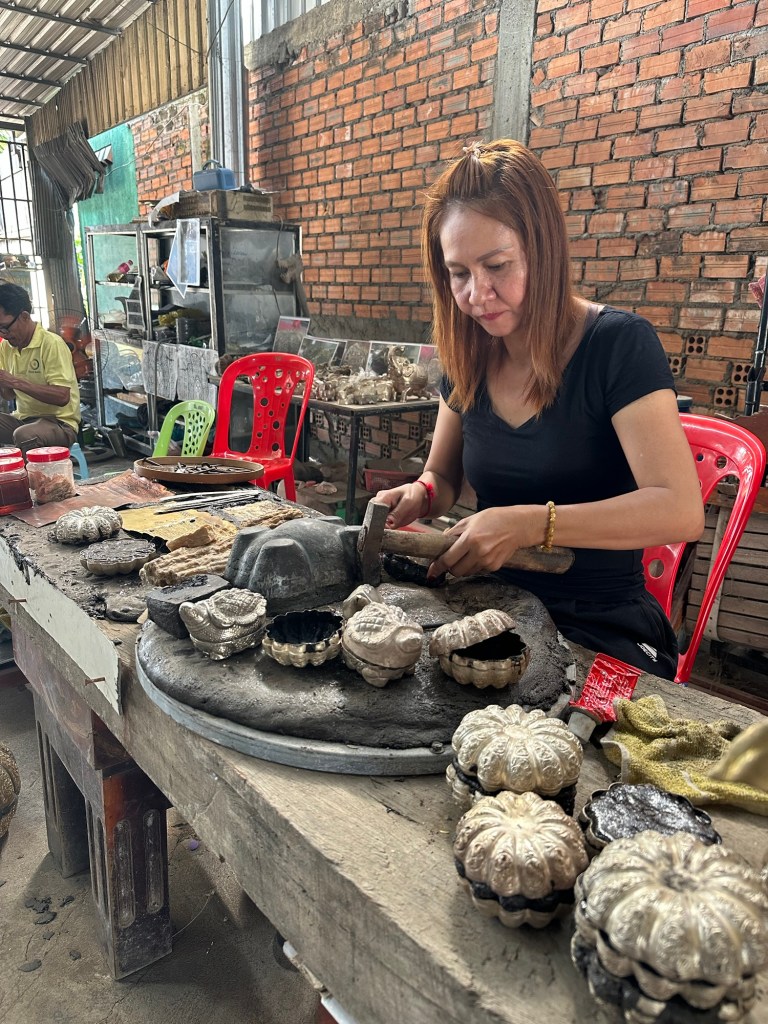
Our first break was for coffee, but we also watched some artisans working on silver.
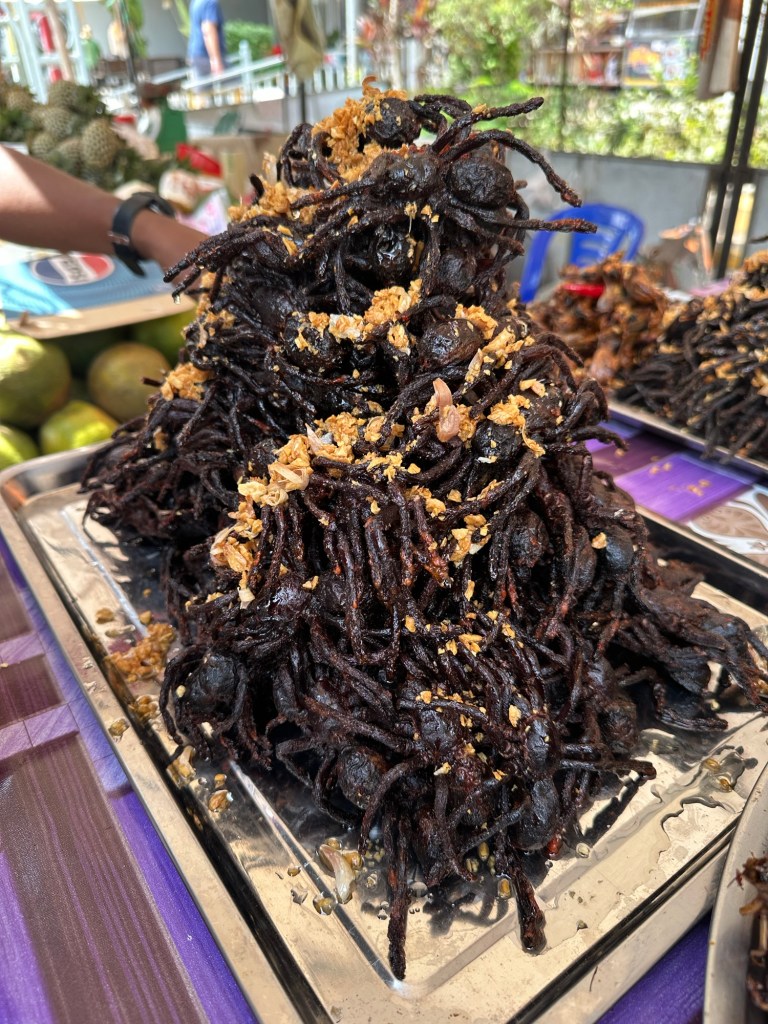
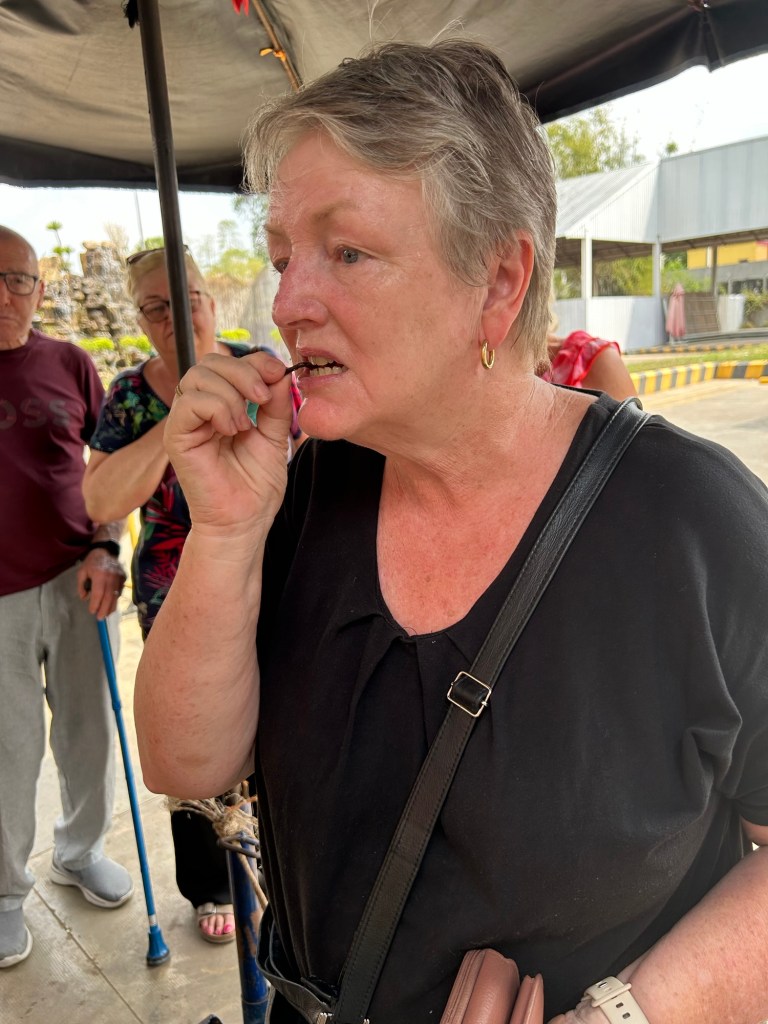
A bit further along we stopped to eat spiders, a traditional delicacy. I only had a tiny taste of a leg. Really oily and garlicky, a bit like the crispy bits on chicken.
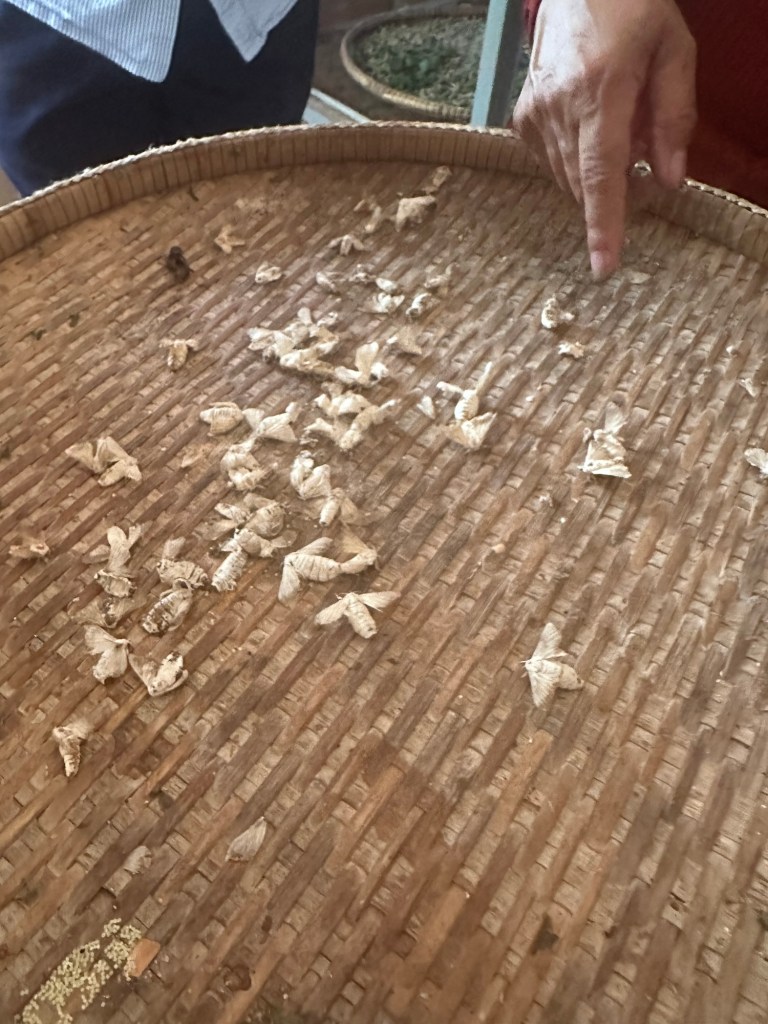
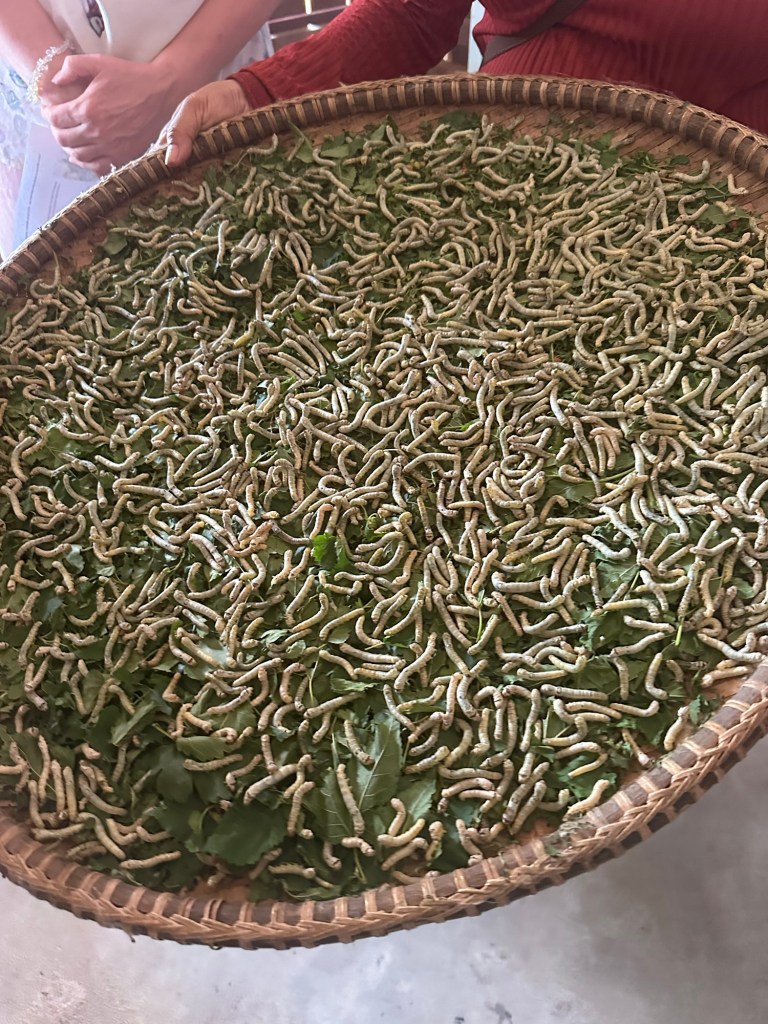
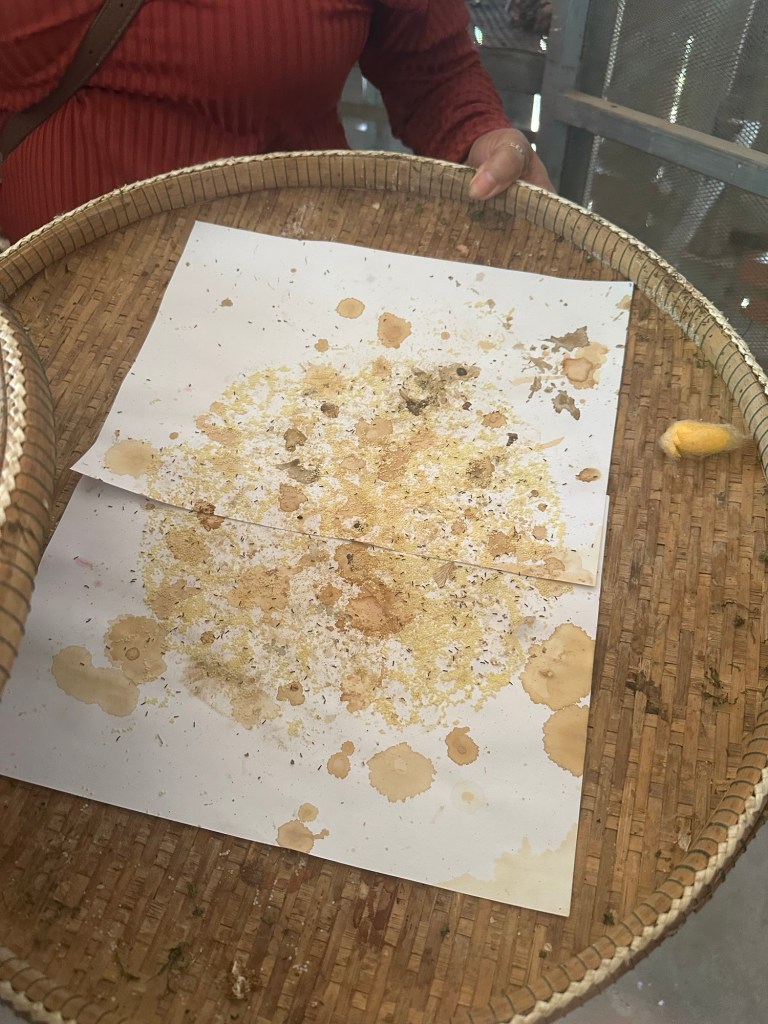
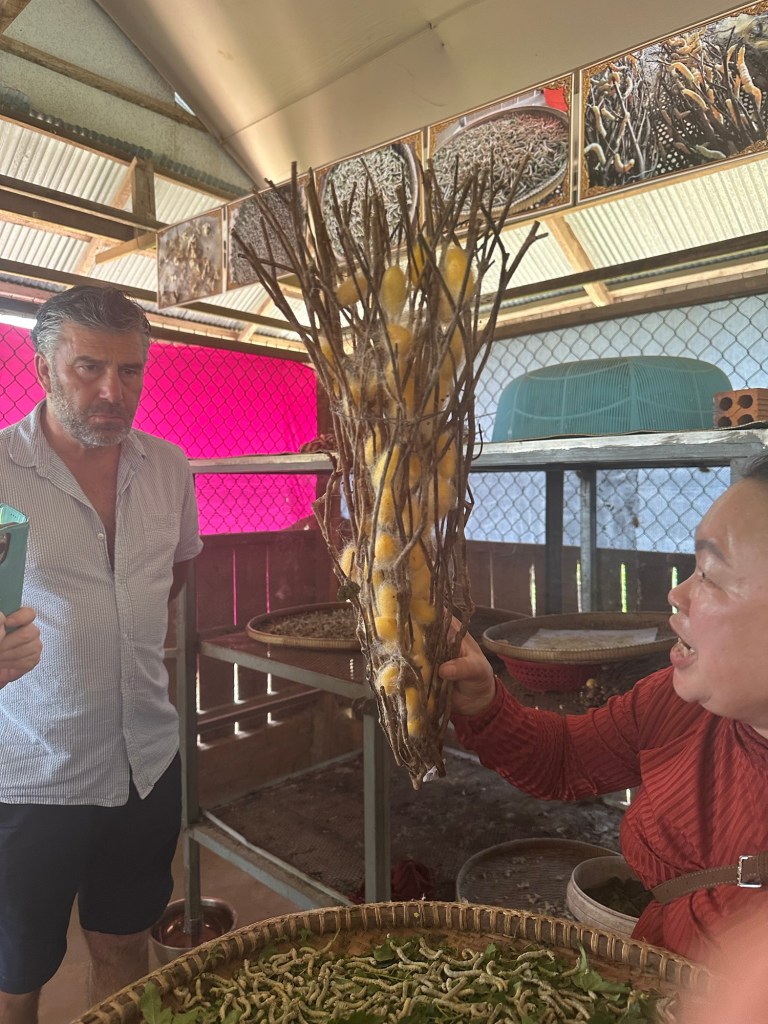
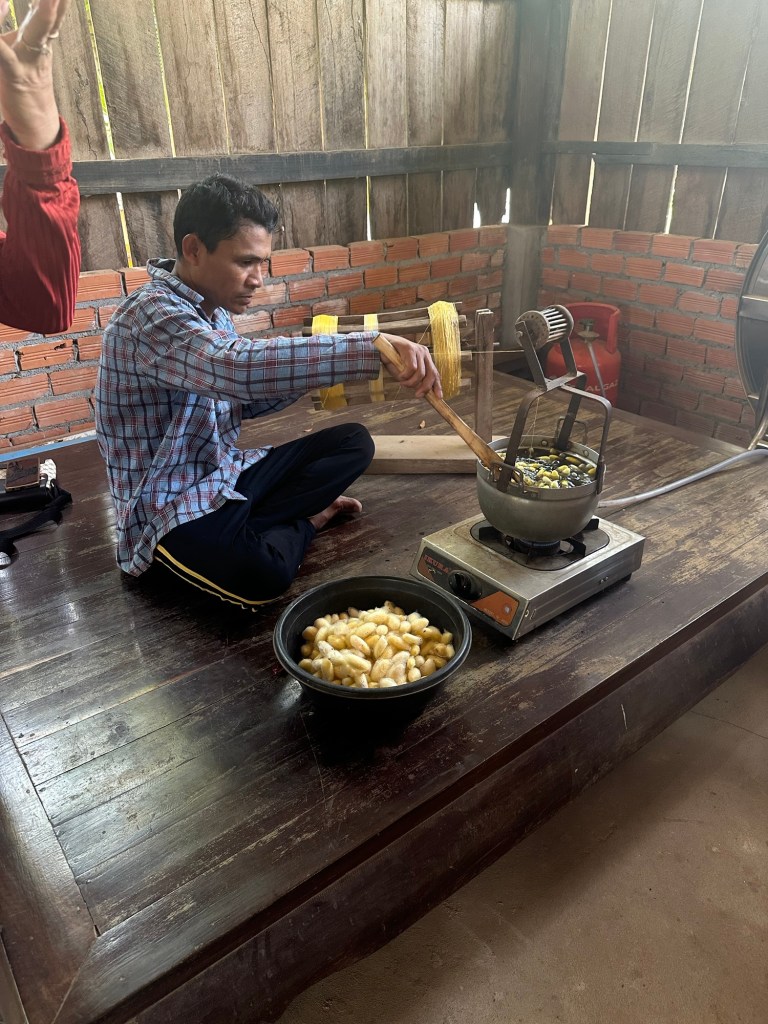
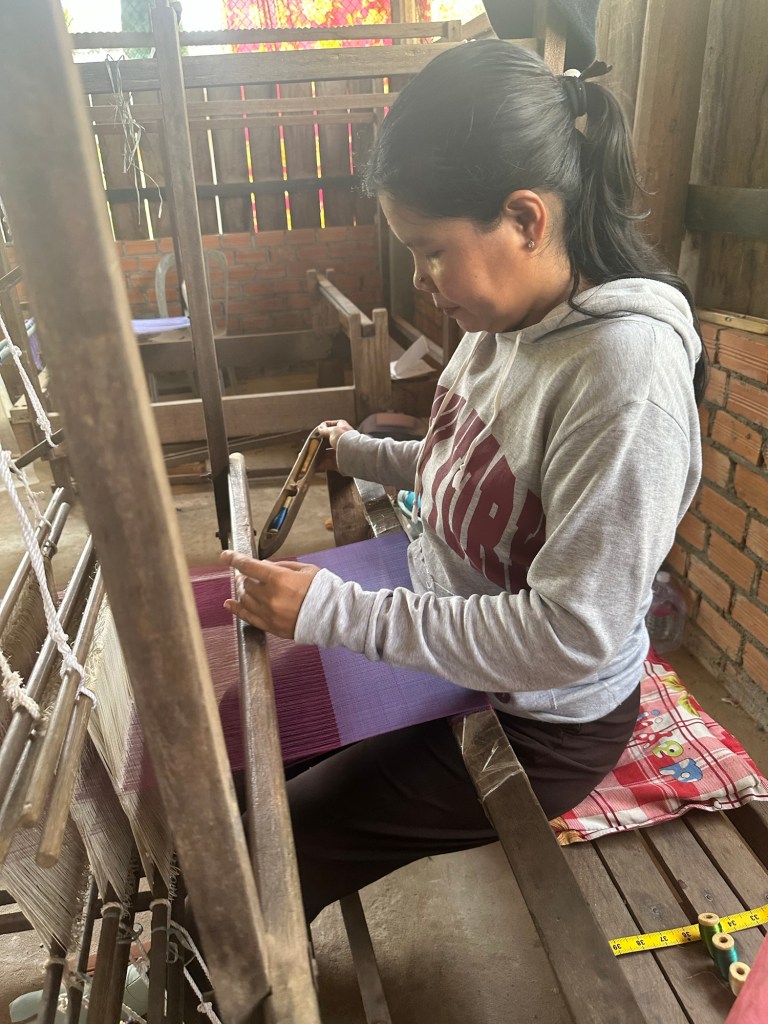
Later we stopped at a silk farm, and were shown all the different stages of the process from tiny egg to finished fabric. Really amazing.
Bought a beautiful scarf woven by one of the girls. Amazing colour and sheen.
They also made us a great lunch.
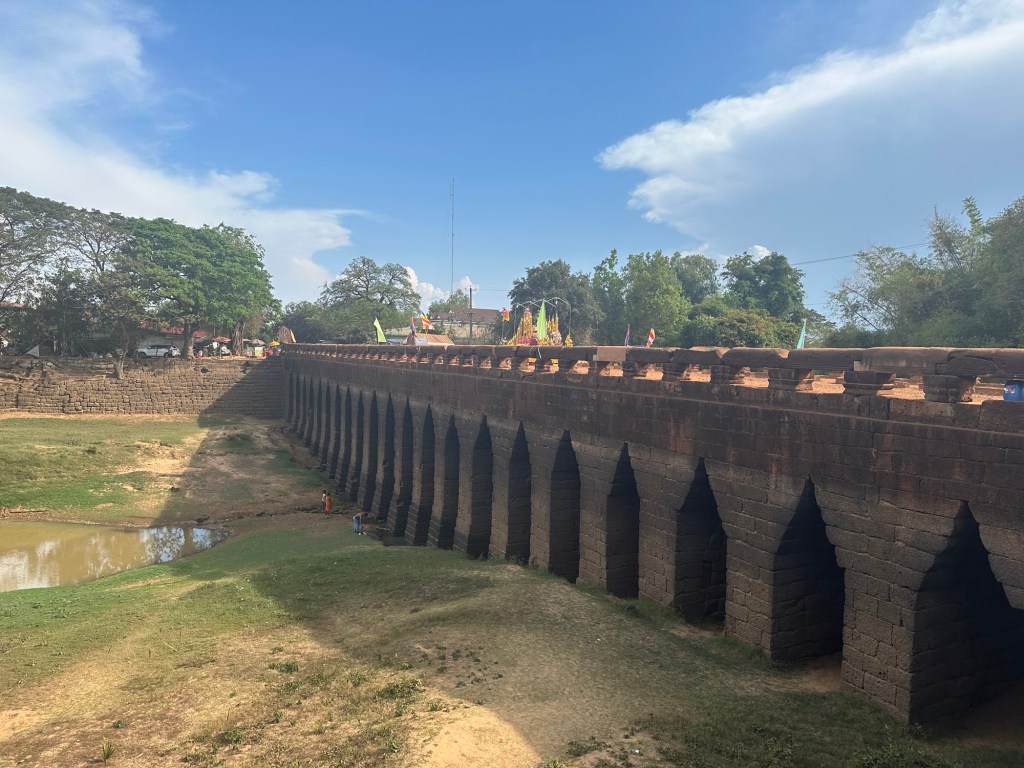
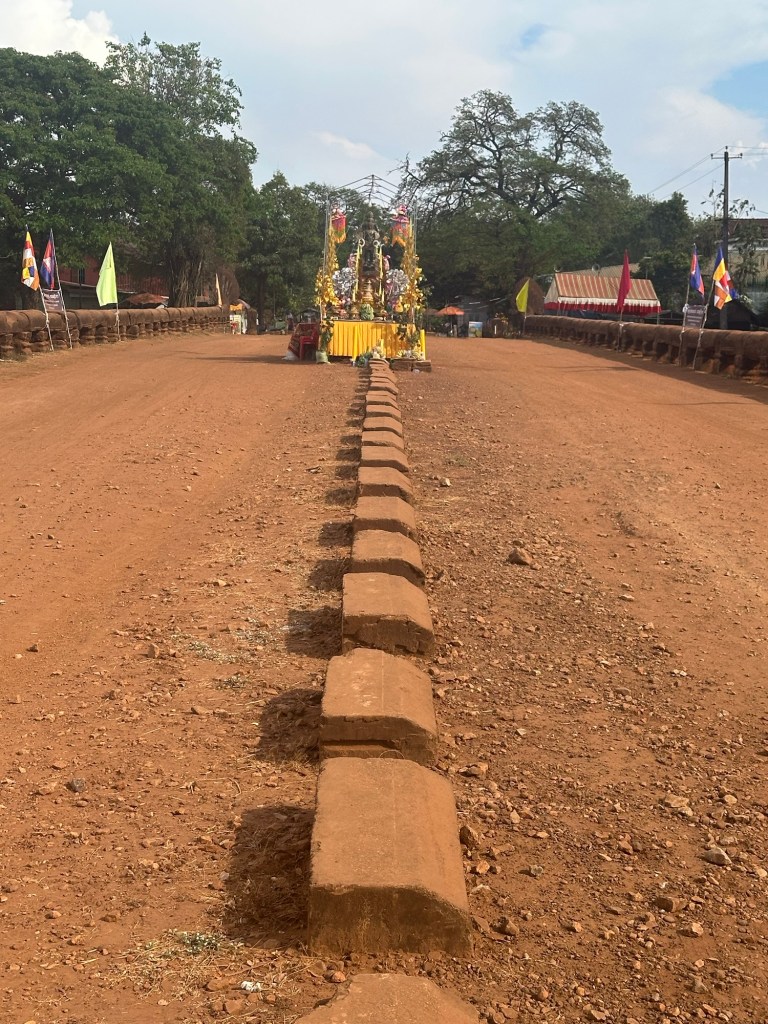
During the afternoon we stopped to see a 1000 year old bridge which is still in limited use. Built from a deep red volcanic stone,
We finally made it to Siem Reap late in the afternoon and checked into our hotel. After a tedious day of sitting, it was lovely to hop into the pool surrounded by beautiful tropical gardens.
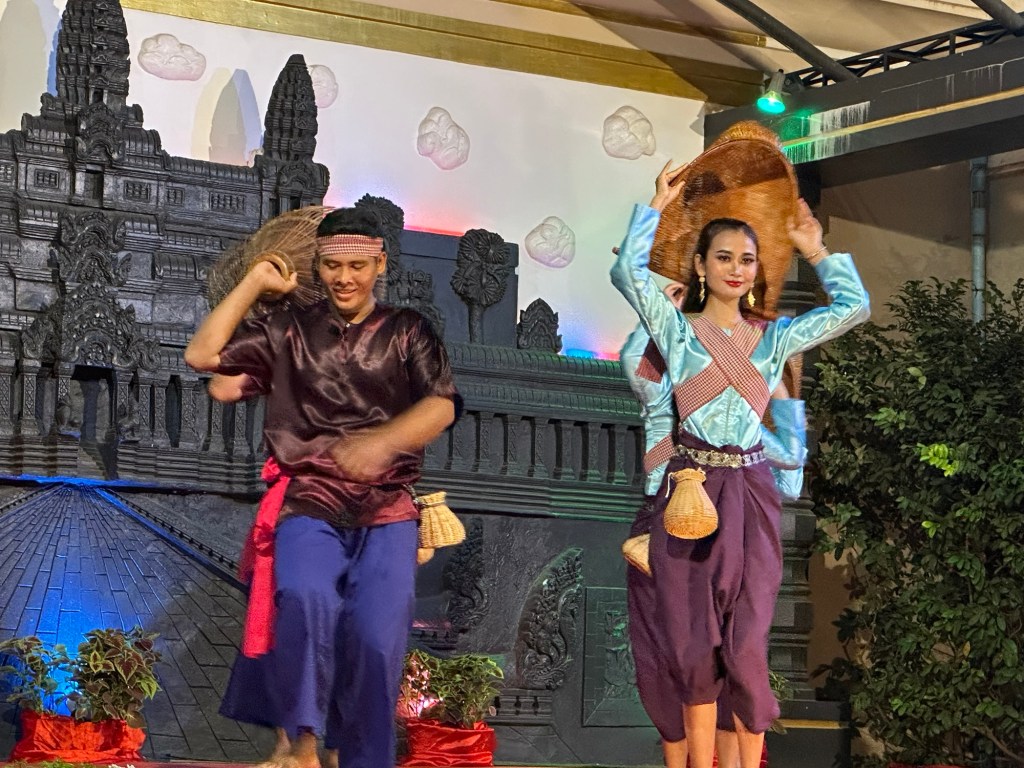
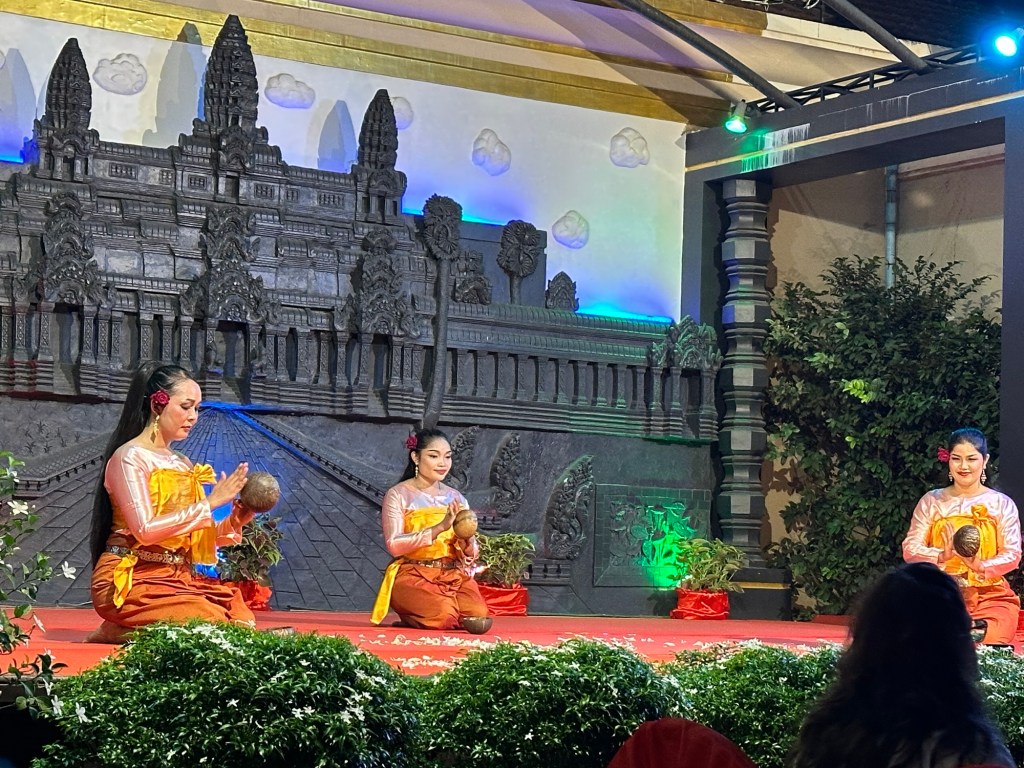
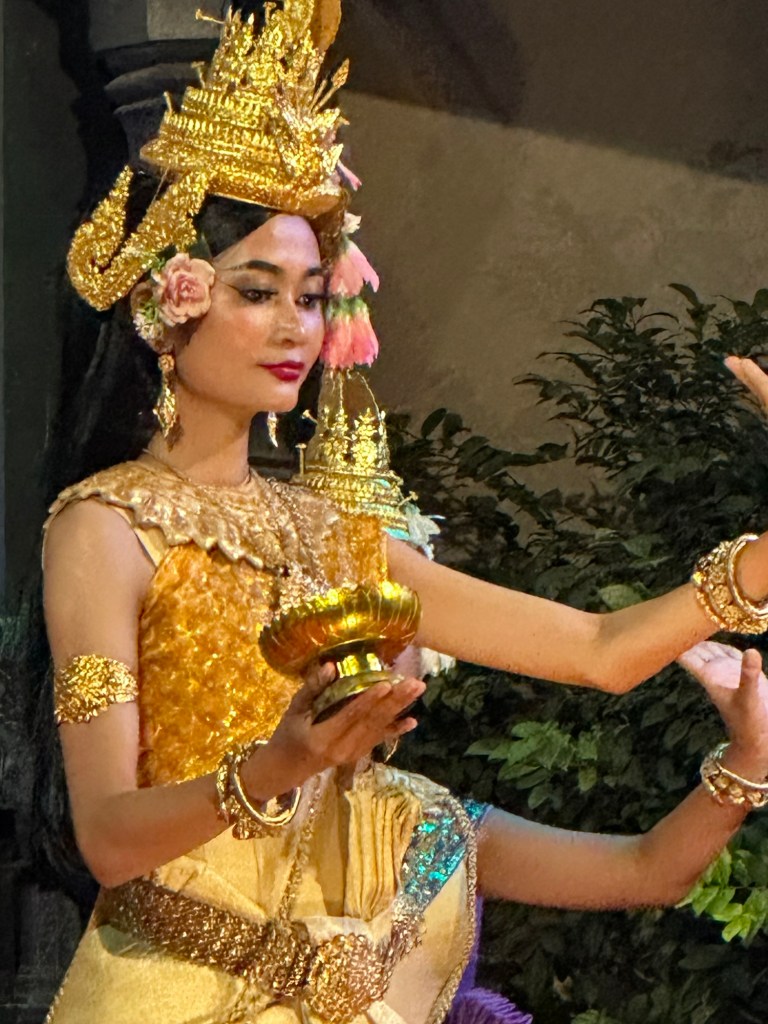
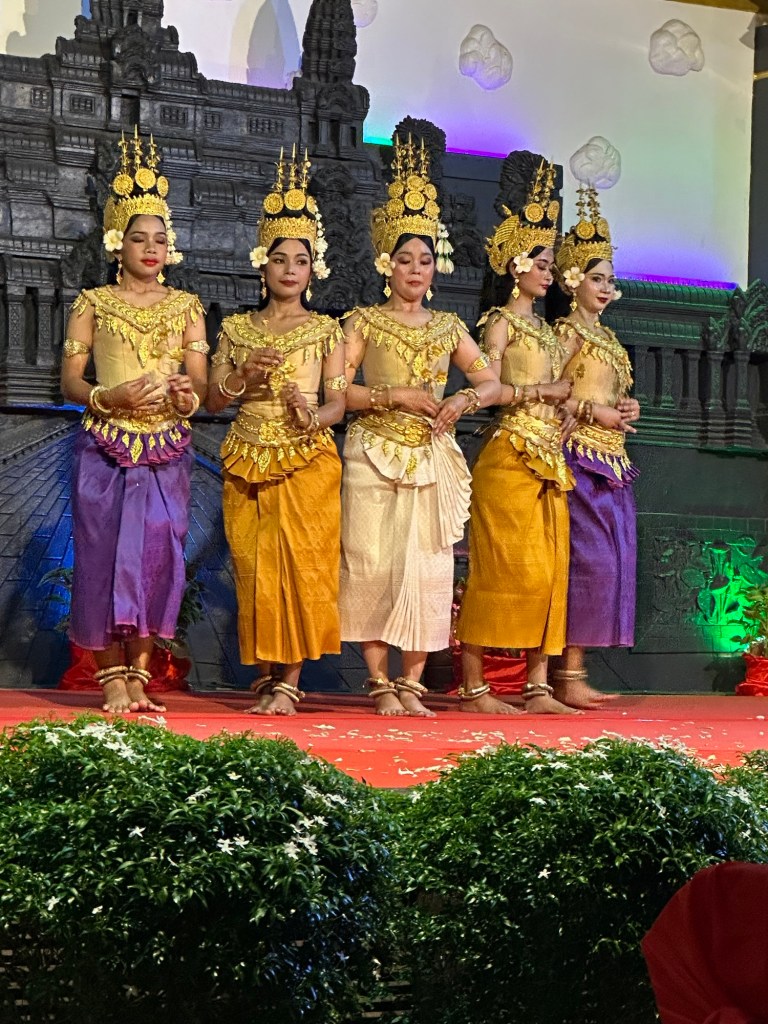
Dinner was in a courtyard and we watched a performance of traditional Cambodian dance.
Early to bed, as we are getting up at 4.30 to go to Angkor Wat.
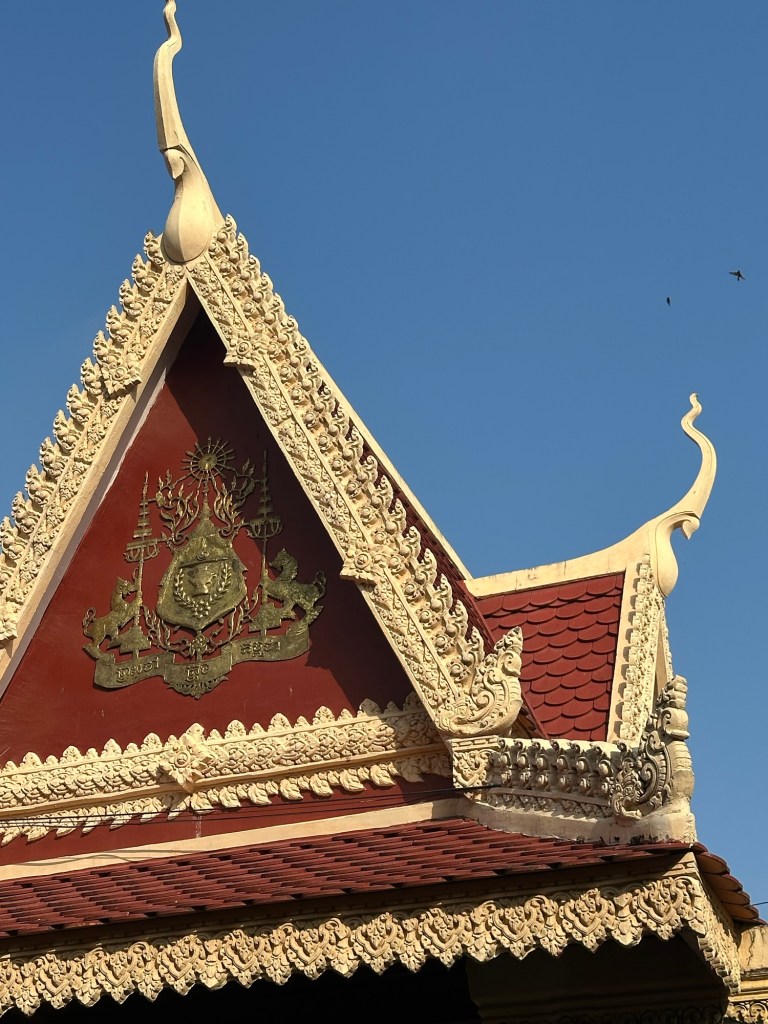
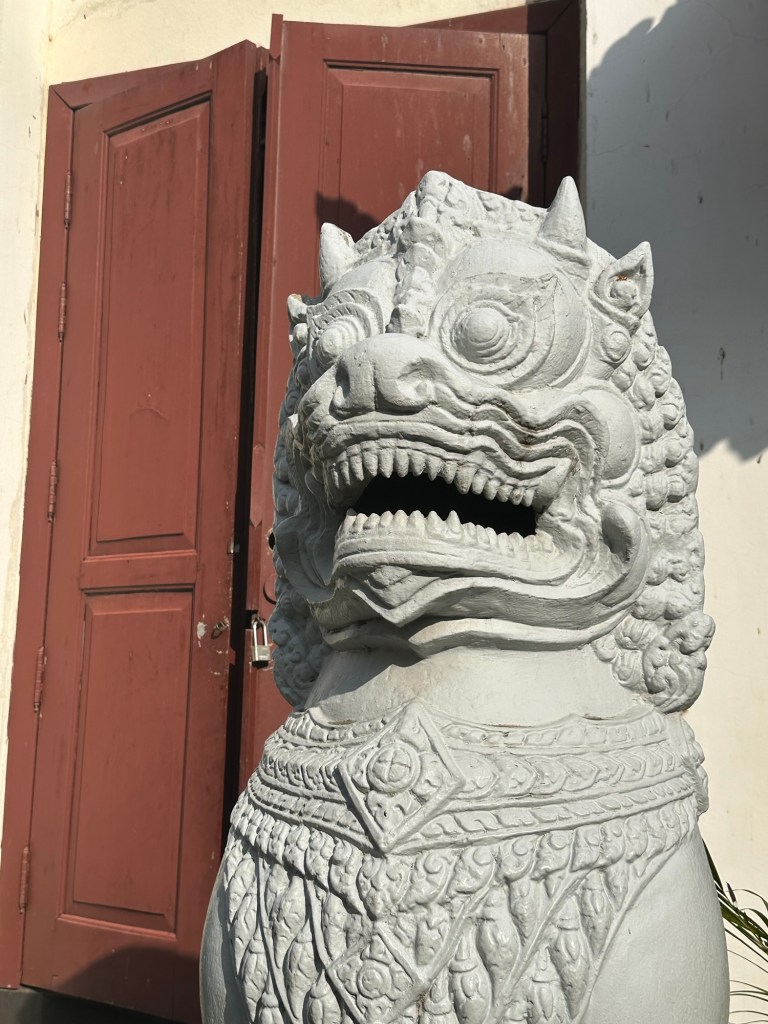
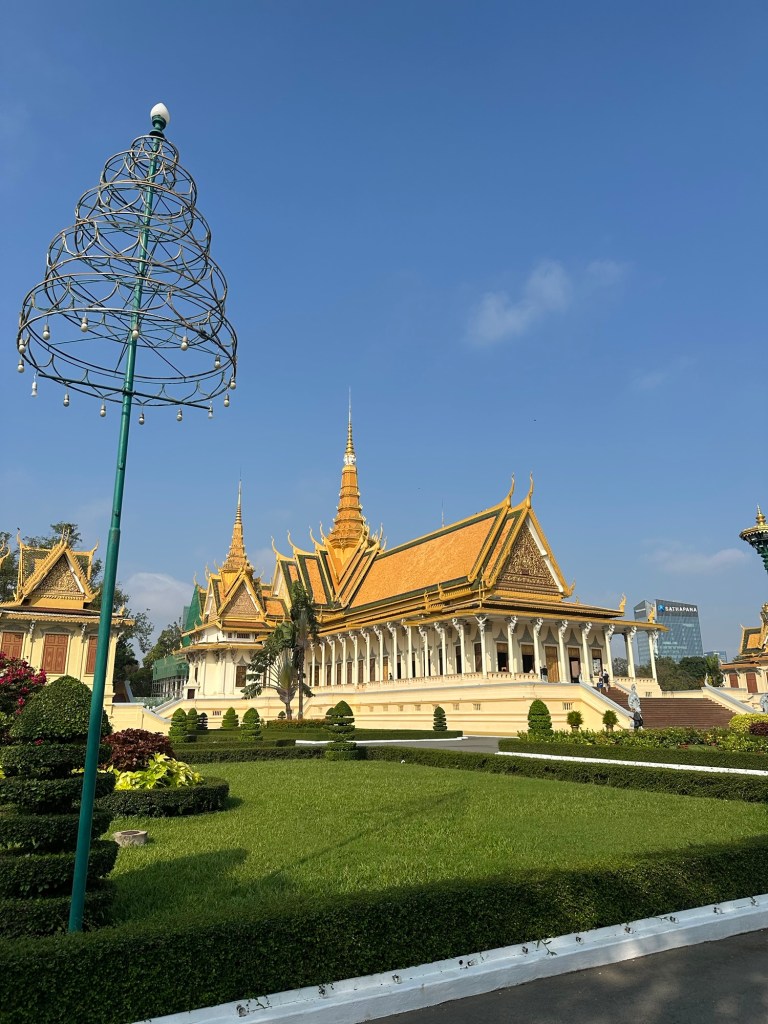
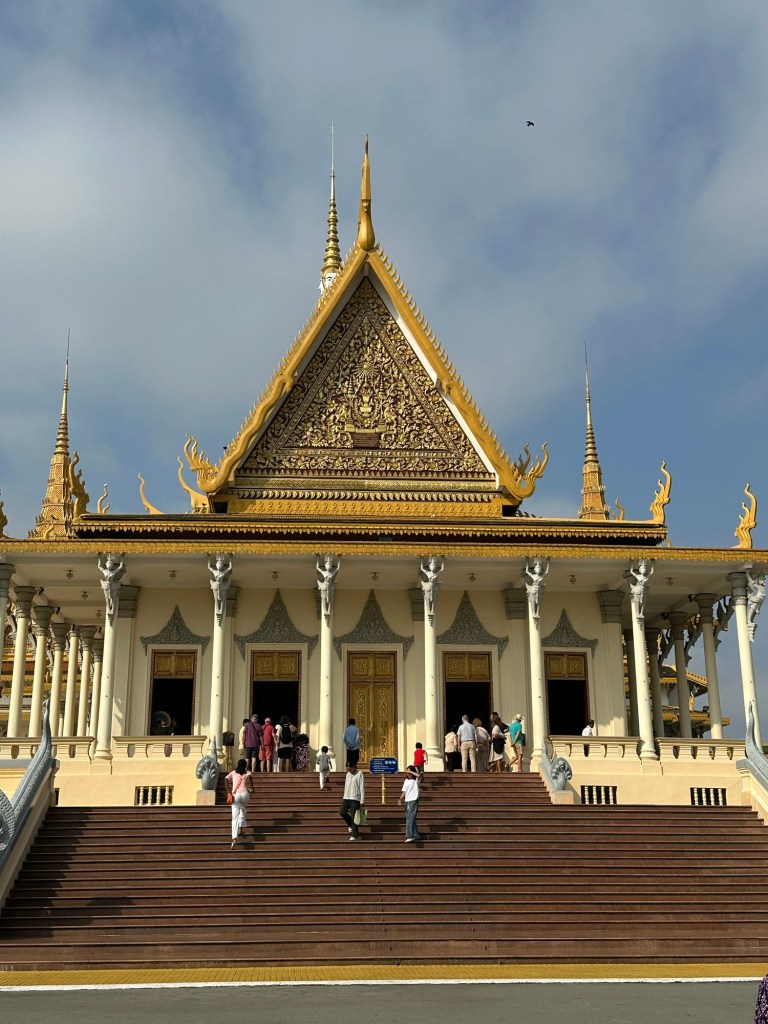
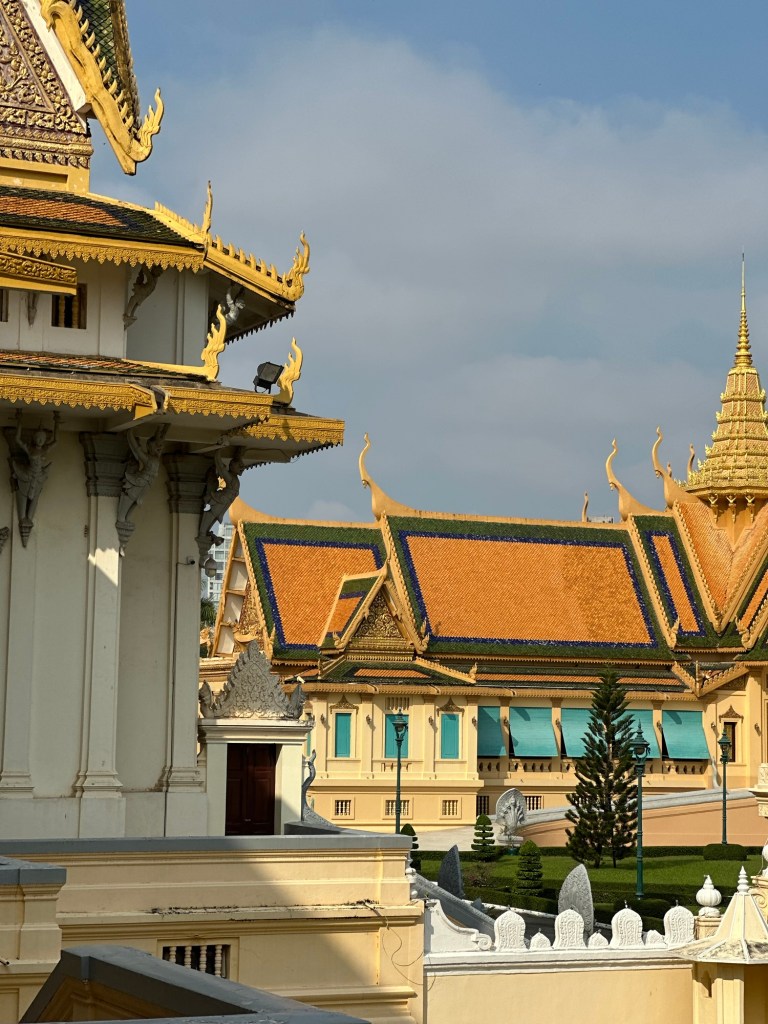
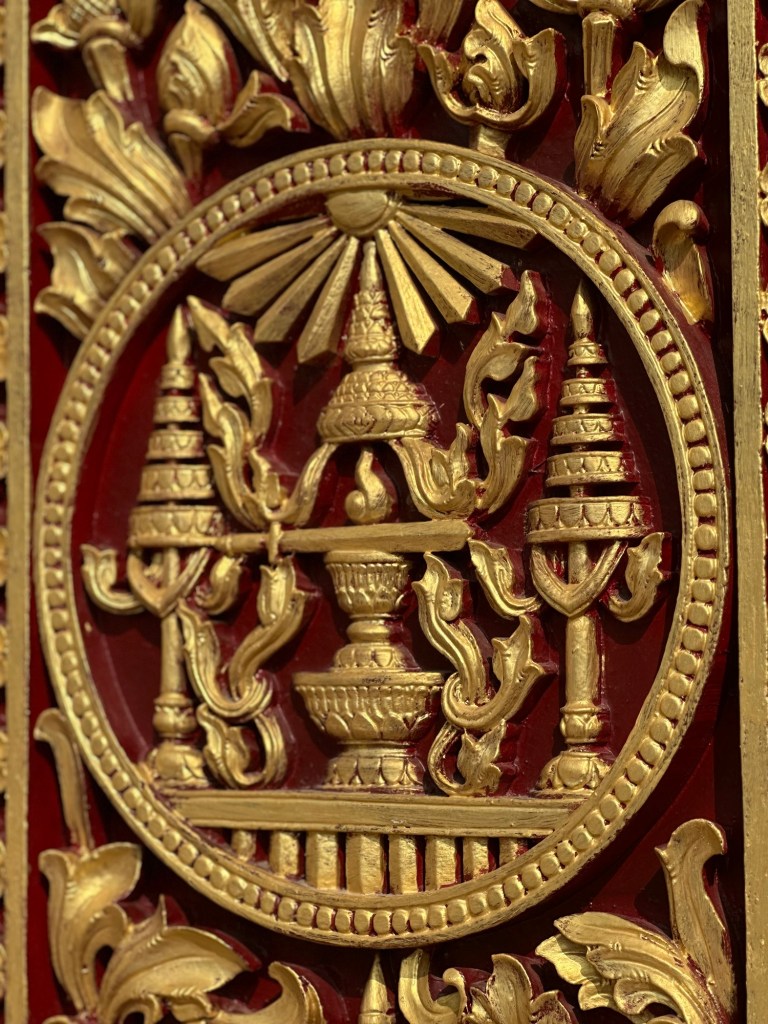
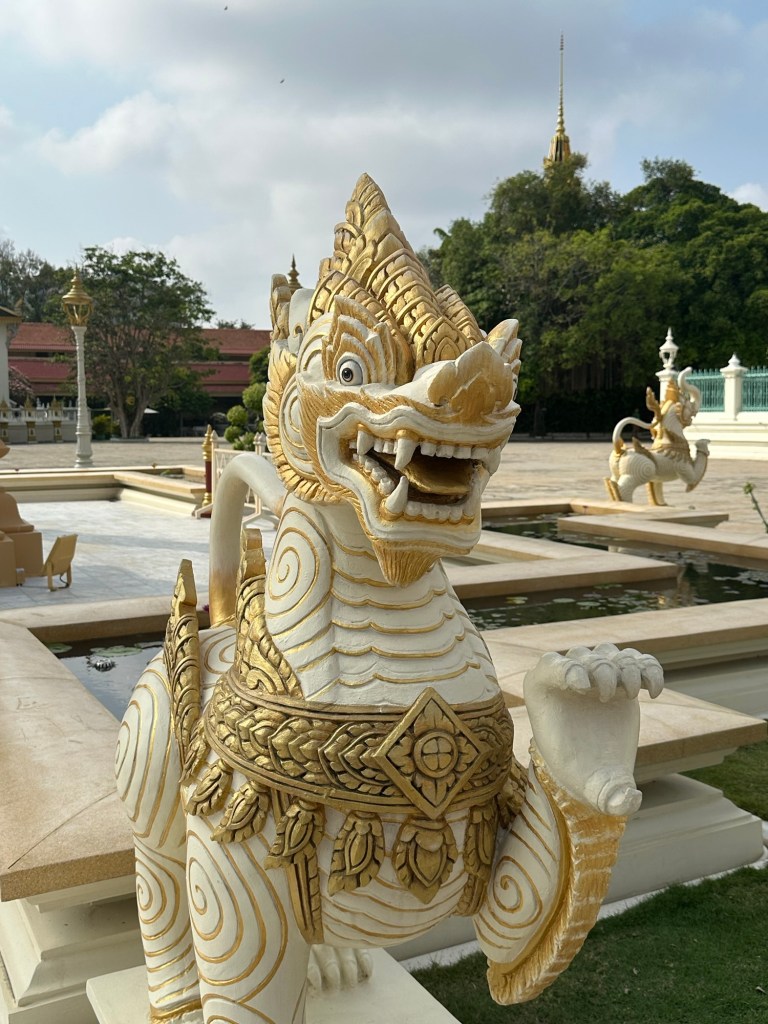
After breakfast, we went to the National Palace, an interesting conglomeration of buildings including the Silver Pagoda.
It is not possible to take pictures in some parts. We did see the famous Emerald Buddha, part of a collection of over 1000 Buddha statues in one building.
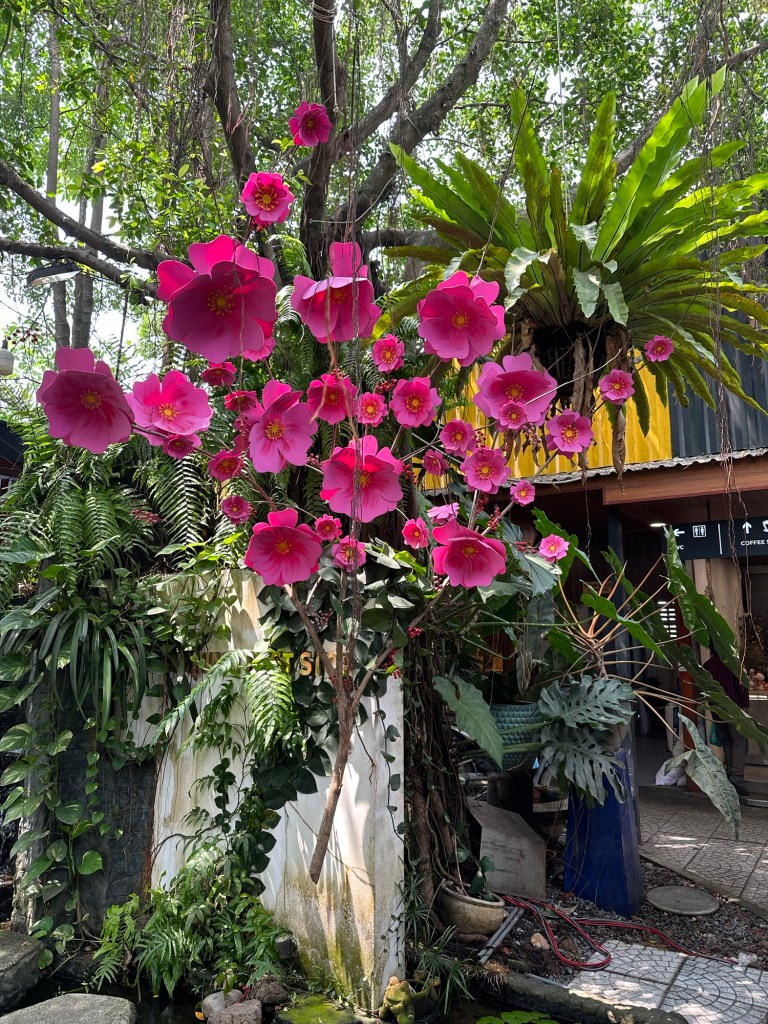
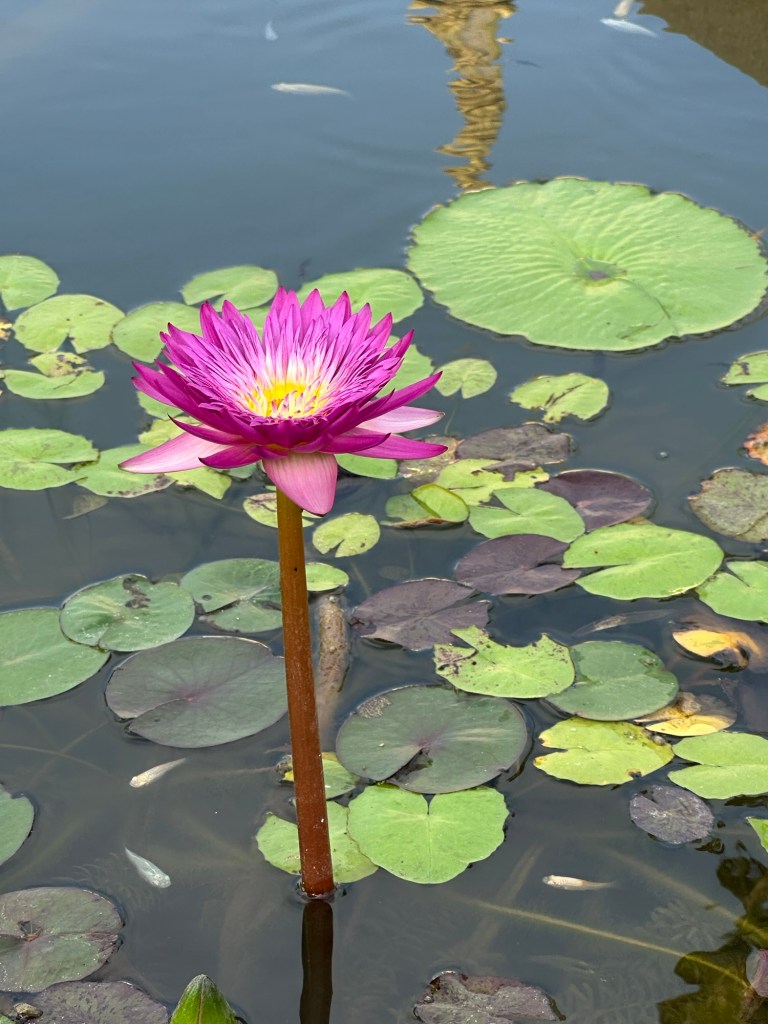
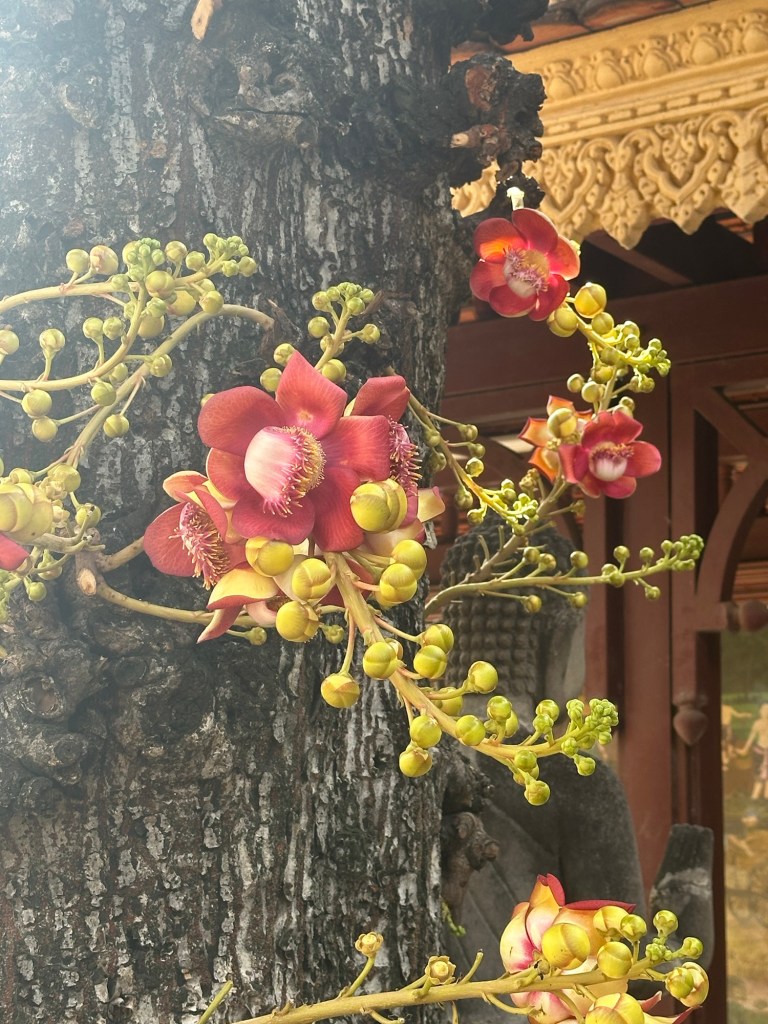
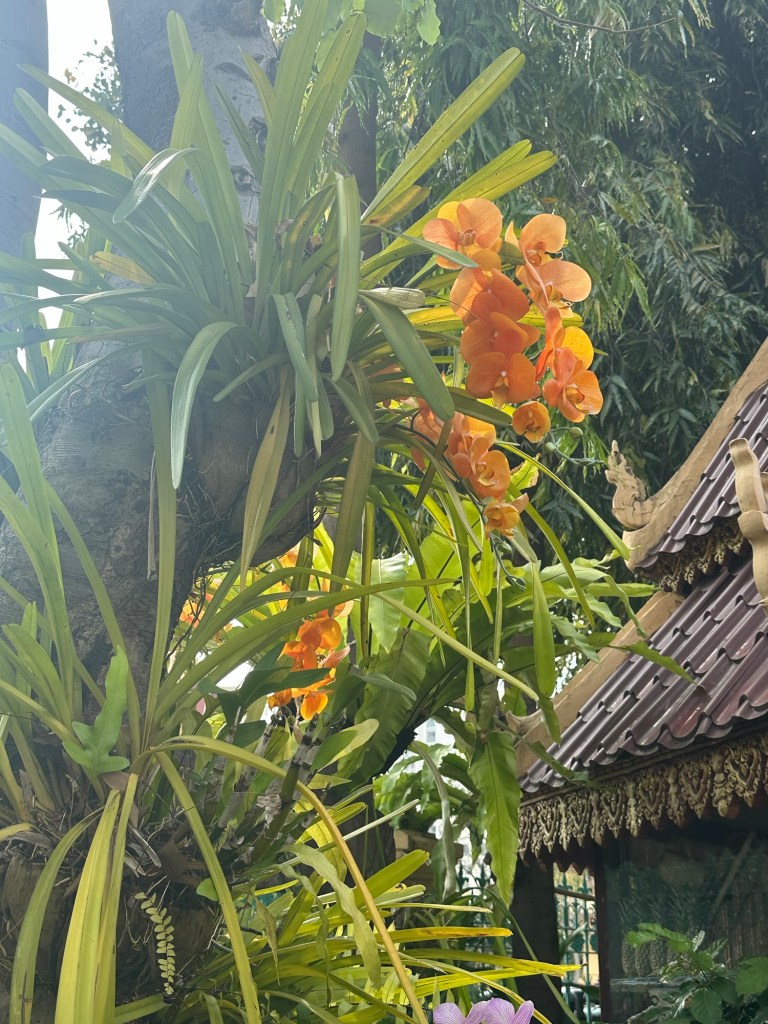
There were also some amazing trees and flowers.
Next we visited the Genocide Museum, an old school building where prisoners were held in the days of the Khmer Rouge. It was a place of interrogation and torture. I did not visit the torture part, as I was finding the whole thing overwhelming. No pictures.
This was followed by a visit to the Killing Fielda Memorial a little way out of town. Again, a very sad and moving place.
I will need to do some more reading to understand this whole period of Cambodian history. Suffice it to say that they were starting from a very low base after the Khmer Rouge fell, and have done amazingly well to build back to where they are.
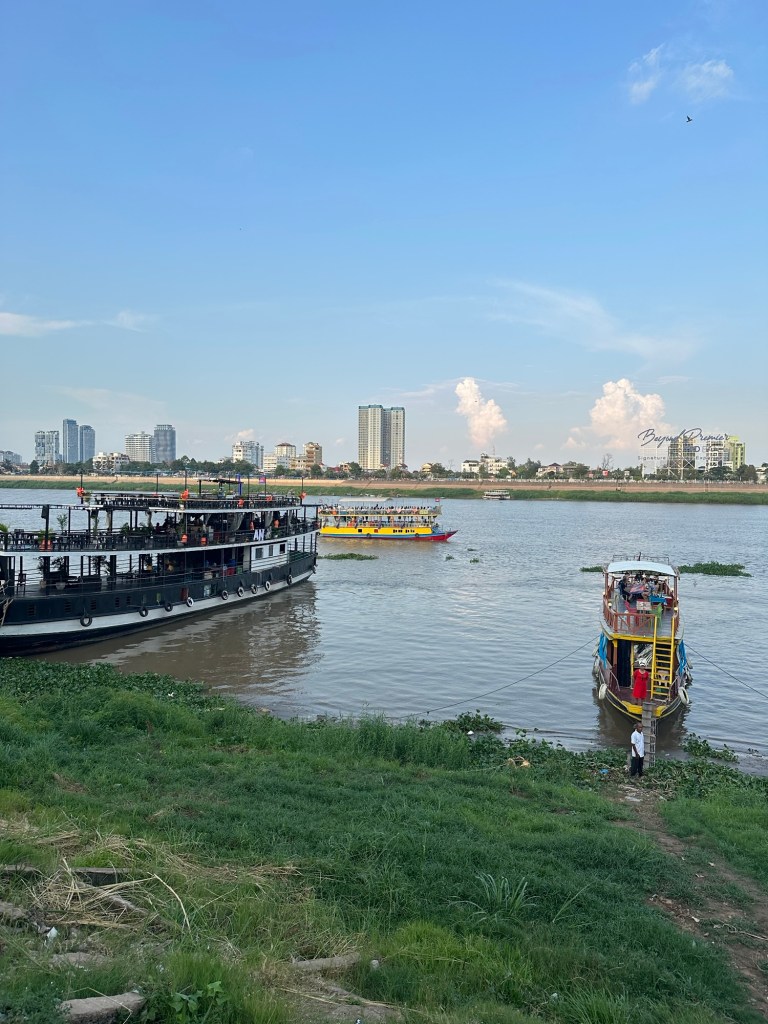
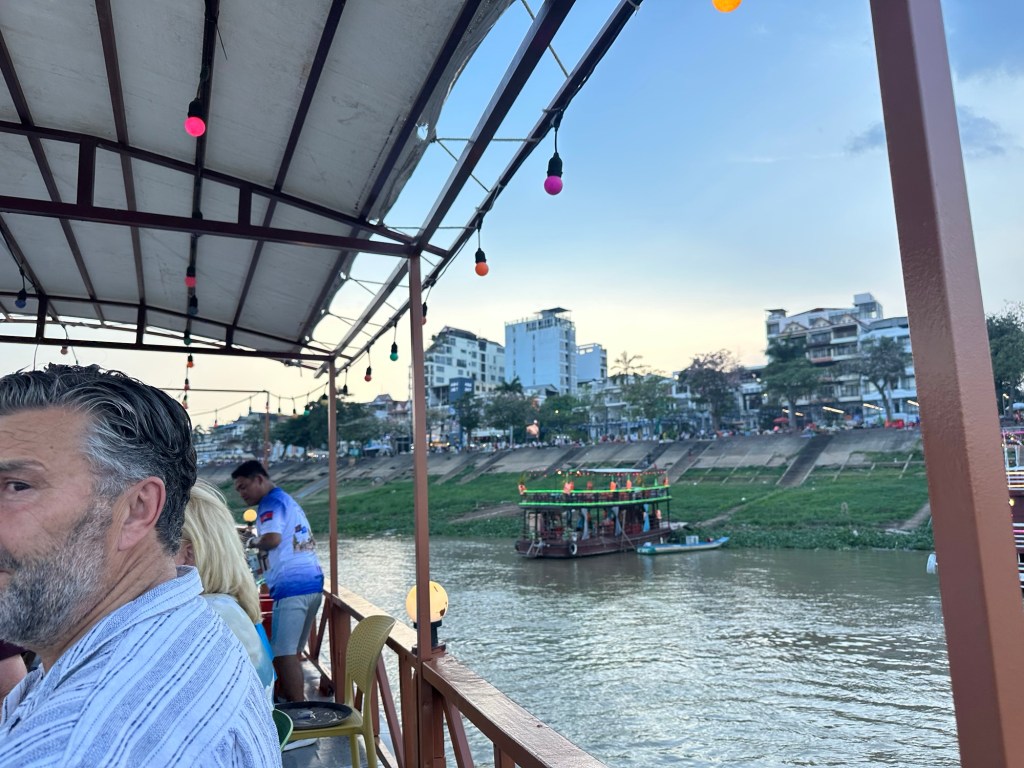
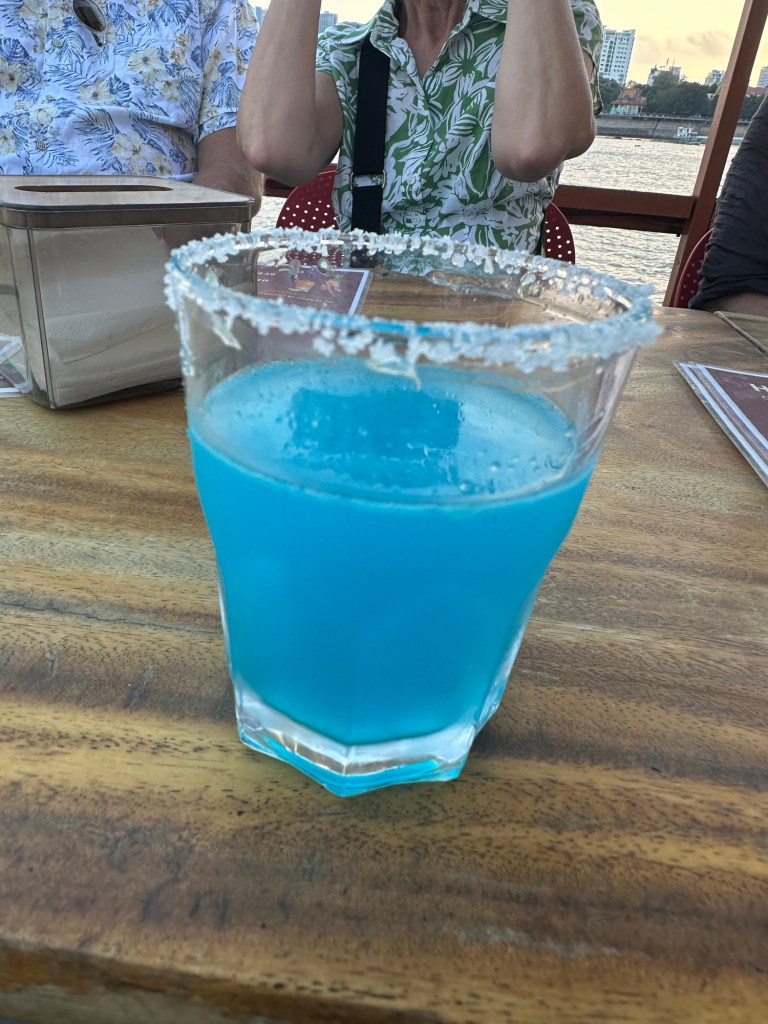
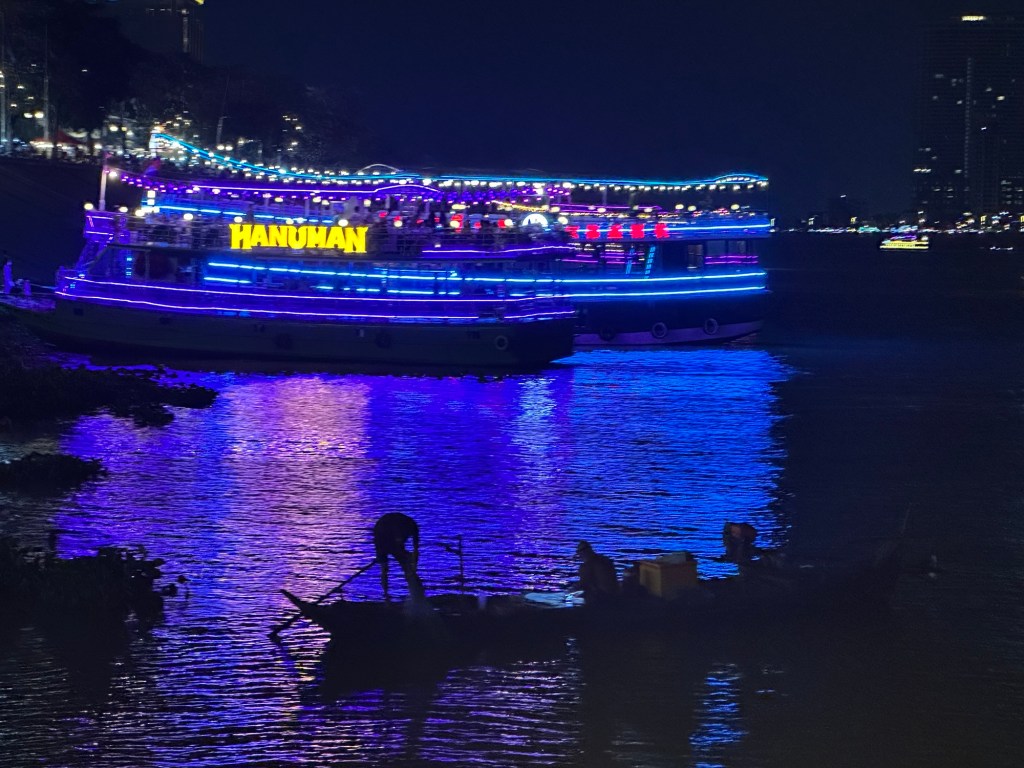
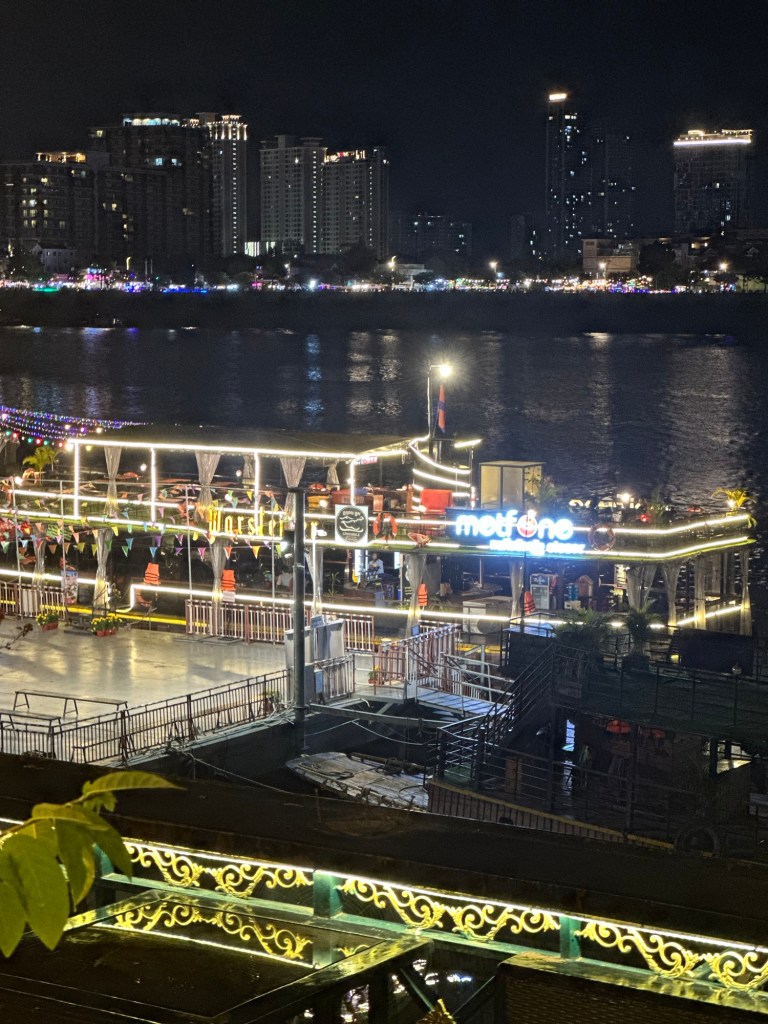
In the early evening, we went on a cruise on the Mekong. Had a few drinks (mine was a blue margarita) and looked at the city from the river. It was cool and pleasant, and was the change of pace we needed.
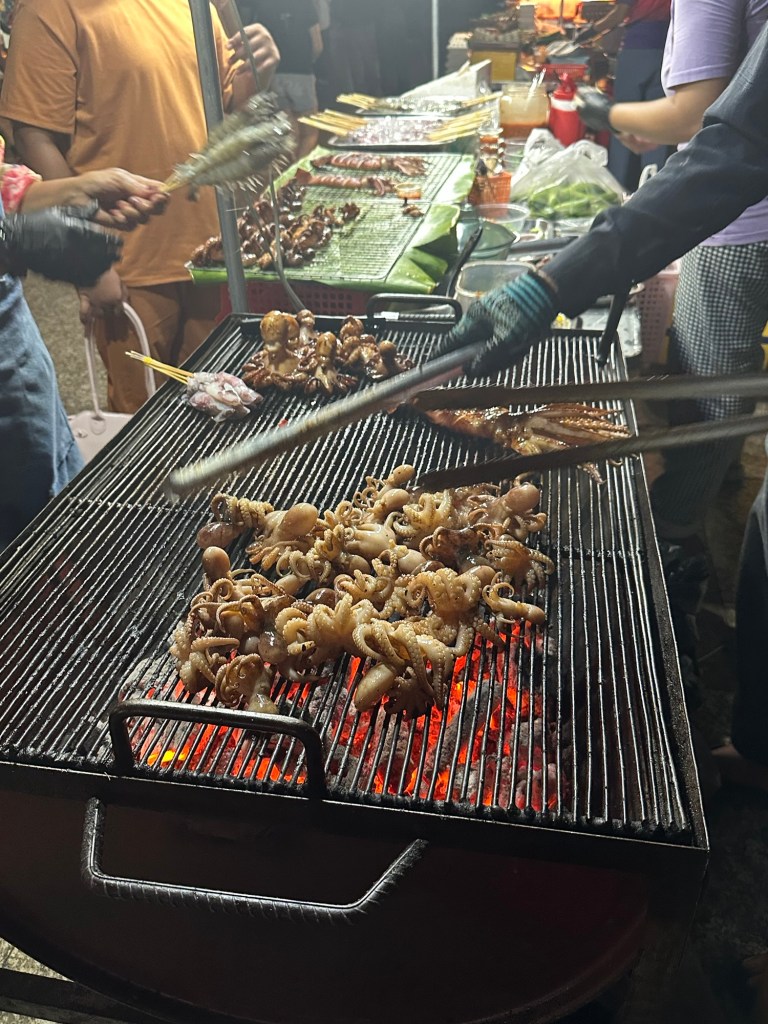
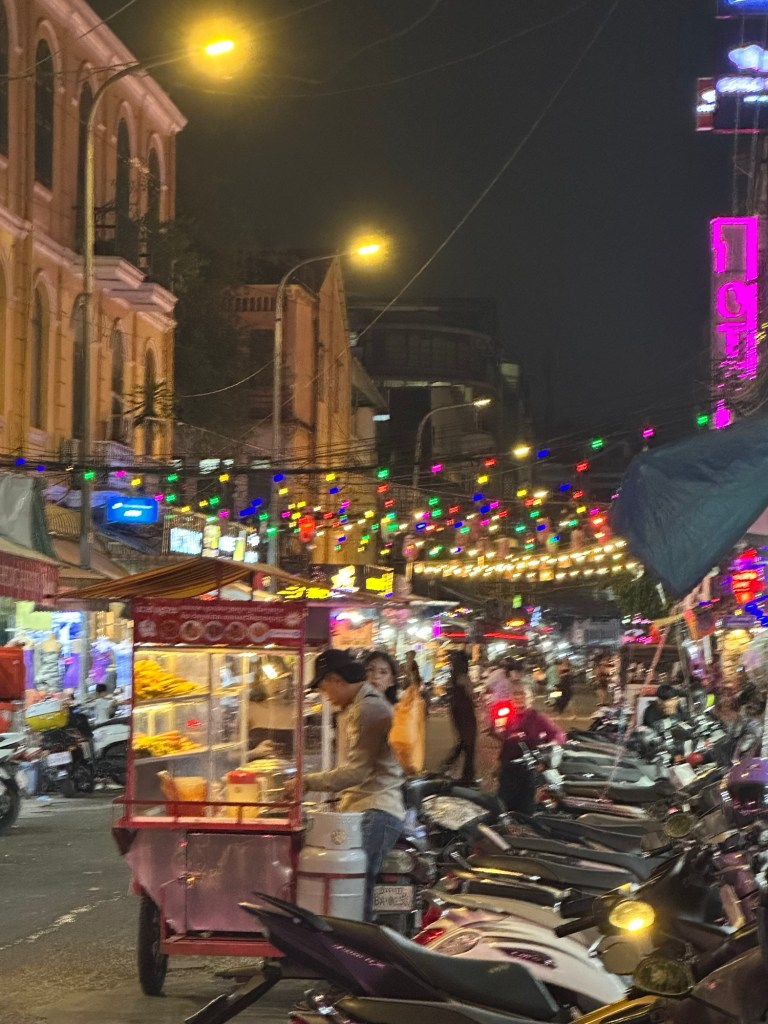
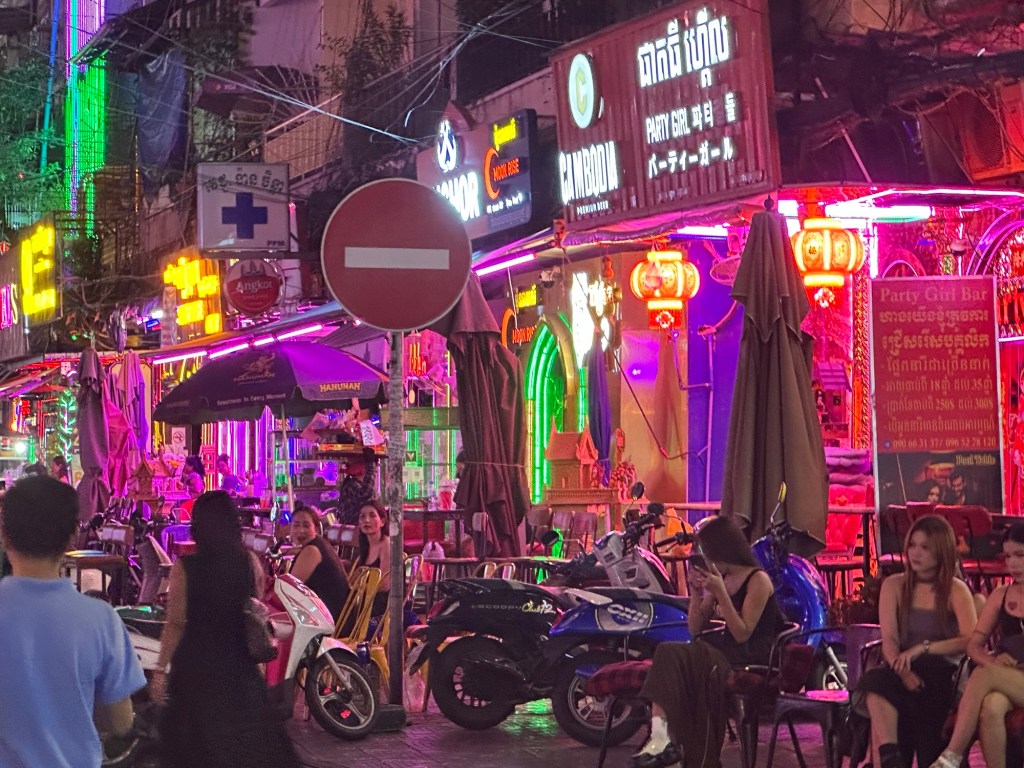
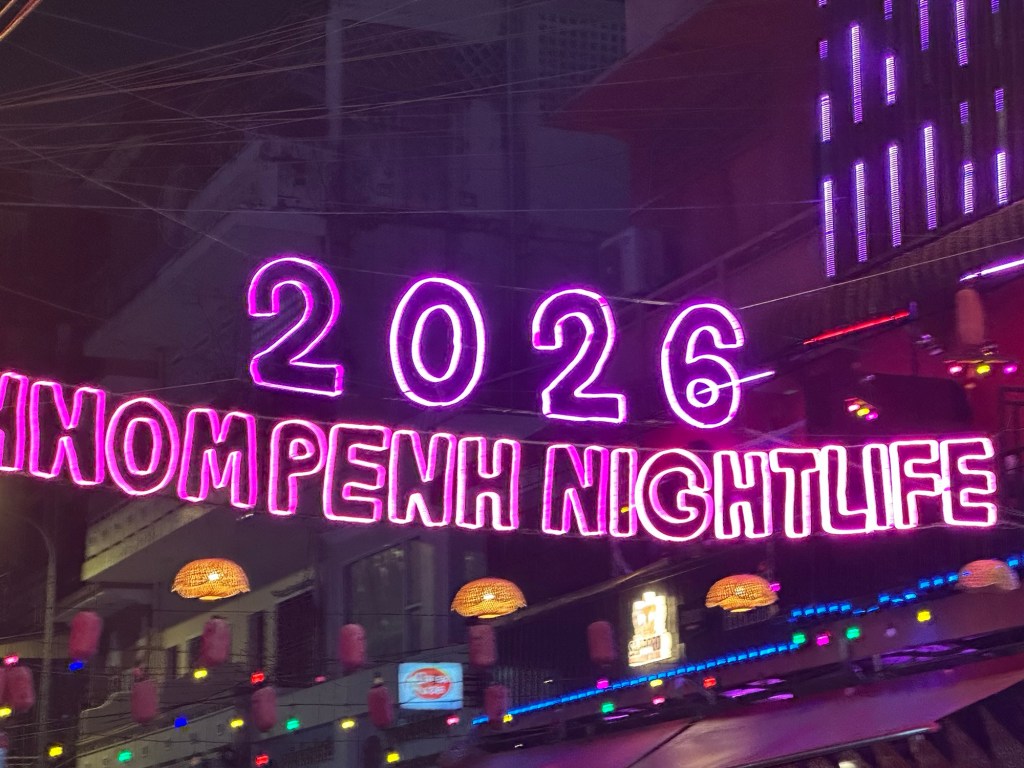
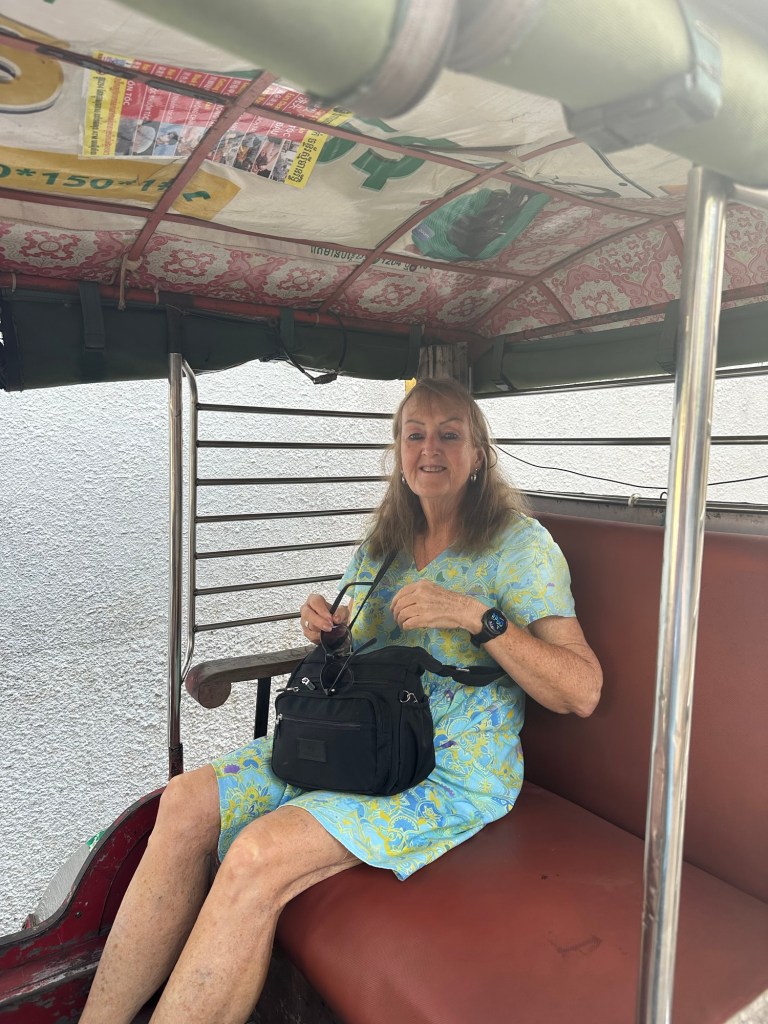
Back to the hotel in tuk tuk, through the “entertainment” district.Dinner in a restaurant near the hotel. Amok chicken. Yum.
A long day travelling. Our flight left Sydney one hour late, but was quite pleasant. Vietnam Airlines. A bit disorganised, but the seats were roomy, the service nice and the food good.
Changed planes in Ho Chi Minh. Also chaotic. Arrived in Phnom Penh more or less on time. They have a new airport which is very pretty.
We are staying in a lovely hotel in a very cool part of town. All teak and pretty paintings. Really comfy.
Day 2
A really relaxing day. Breakfast in the hotel. Terrible tea., so we went along the road and had an excellent coffee.
A short trip in an auto (tuk tuk equivalent) to visit the famous Russian Market.
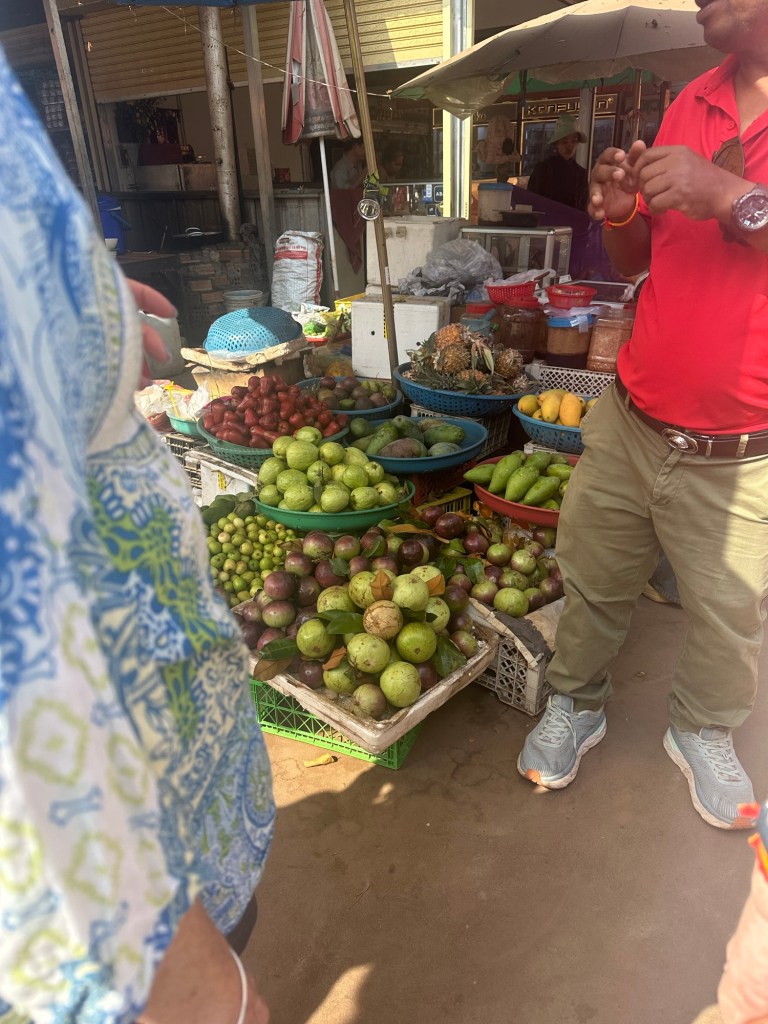
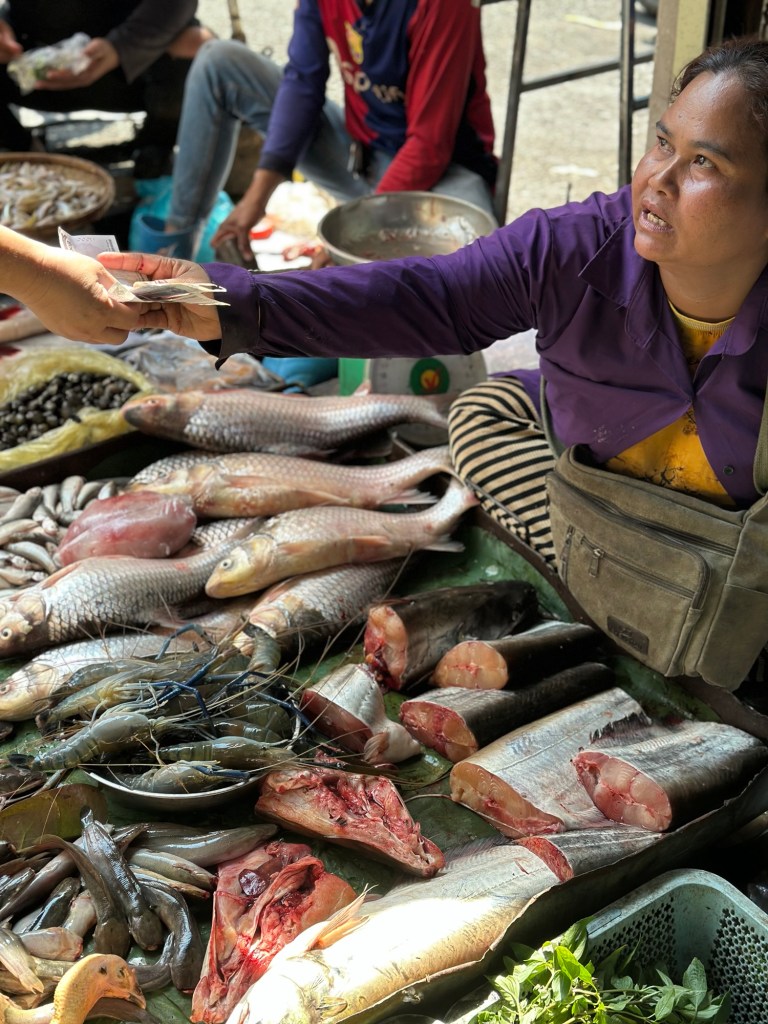
We wandered around the myriad stalls, selling everything from fresh fish to motorcycle parts and everything in between. The market covers acres.
Naturally I gravitated towards the silks and other glorious fabrics. Bought a couple of pieces…..no surprises there.
We also bought some gemstones from a nice lady called Mrs Mony. I hope I haven’t got too cocky from my gemstones-buying successes in India, but I think we got nice things at very good prices.
Back at the hotel, we had a lovely swim in the roof-top infinity pool, and lunch by the pool. Later, I had a one-hour foot massage while Ruth went off to get her nails done.
In the early evening, we met up with our tour group. We are 12 altogether. Mostly British. An American couple. All roughly our age and very pleasant. Our tour leader is called Sareth.
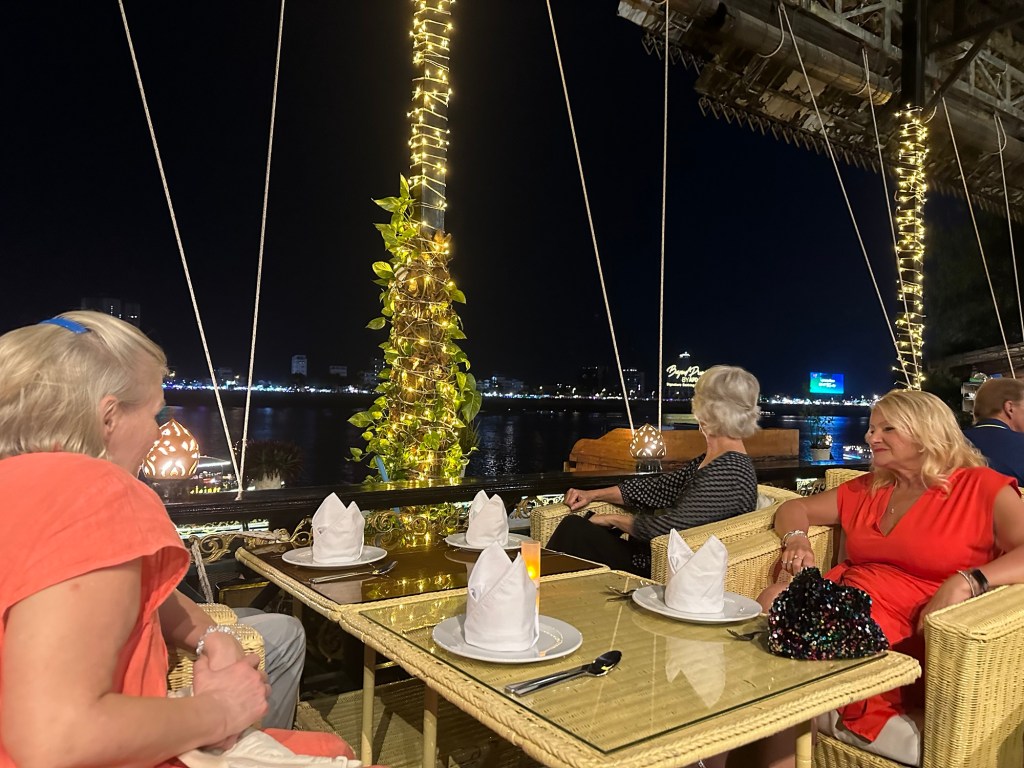
We were taken out to dinner at a restaurant on the Mekong River. Really great spot. Lovely Khmer food.
 MissTtravels